
Choose a dewatering pump intake position by considering the water you want to remove, settled sediment, floating debris, minimum operating level and the pump’s suction requirements. A floating intake can follow a changing water surface and draw from clearer water above bottom deposits, but it still needs adequate submergence, support and a suitable suction connection. A bottom or fixed intake may serve a different drawdown or solids-handling duty. Neither arrangement removes the need to manage discharge quality. Verify the complete operating range and the actual pump limitations rather than selecting an intake only because it is described as floating or heavy duty.
This guide concerns where water enters the pumping system. Use the dewatering maintenance guide for the wider equipment inspection routine. Plan downstream treatment and outlet monitoring separately. Intake protection can reduce avoidable sediment pickup, but it cannot guarantee compliant discharge.
Start with the required water-removal task
Clarify whether the objective is to draw relatively clear standing water, lower groundwater in an excavation, empty a sump containing sediment, or move a mixture that intentionally includes solids. These tasks may require different pumps and intake arrangements. A pump selected for water transfer should not be assumed suitable for abrasive sludge because a screen is added.
Record the expected inflow, operating duration, water-level range, sediment condition, debris type and available access. Identify whether contaminants or special permit conditions apply. A clear surface layer does not prove the water is chemically suitable for release. Obtain the required assessment and discharge authorization before starting the work.
Identify where the cleaner water actually is
Observe the water column without disturbing the bottom unnecessarily. Settled material may collect at the base while leaves or oily debris remain at the surface. Wind, rainfall, excavation activity and the pump itself can change that distribution. A useful intake location may therefore be below surface debris and above settled sediment, rather than exactly at the surface.
ال Wisconsin DOT dewatering training identifies floating suction hoses and clear stone as measures to limit sediment uptake and discusses discharge inspections. Its project and permit references apply in their stated jurisdiction; requirements elsewhere must be checked separately.
Do not turn a general concept into a universal immersion depth. The required submergence depends on intake geometry, flow, surrounding boundaries and manufacturer guidance. A device that remains visibly underwater can still draw air through a vortex.
Compare floating, fixed and bottom arrangements
| التنظيم | Potential advantage | Main condition to verify |
|---|---|---|
| Floating screened intake | Follows changing water level above settled deposits | Stable flotation, adequate immersion and free hose movement |
| Fixed raised intake | Predictable support and position | Usable depth throughout drawdown and protection from deposits |
| Bottom intake or sump-mounted pump | Can access lower remaining water where designed for it | Actual solids duty, sediment accumulation and minimum operating level |
| Protected sump intake | Separates the collection point from active work | Sump stability, access, maintenance and treatment capacity |
This comparison is qualitative. It does not rate a particular Borra product or establish a design detail. The chosen arrangement must match the installed pump and site conditions.
A floating assembly needs more than buoyancy. Its shape and support must resist tipping, maintain the intended inlet orientation and accommodate hose forces. A fixed intake needs a plan for falling water levels. A bottom arrangement needs a realistic assessment of what it will ingest as the water becomes shallow.
Check suction conditions across the entire drawdown
For a surface pump, falling water levels increase static suction lift even when a floating intake remains correctly positioned below the surface. The float follows the water; it does not lower the pump. Suction losses from the hose, fittings and strainer also matter, and restrictions can become worse as debris accumulates.
Document the pump elevation and the highest and lowest expected water levels. Use the actual pipe dimensions, length and fittings in the hydraulic assessment. Account for the liquid temperature and available inlet conditions with the manufacturer’s method. Do not treat a marketing description such as high suction lift as a guarantee for every site.
ال دليل الشفط الذاتي ورفع الشفط provides background for a surface-pump arrangement. It does not replace the specific pump curve, priming instructions or suction assessment. An intake that reduces sediment pickup can still leave the pump short of adequate inlet conditions.
Treat the hose as part of the intake system
A floating intake may change position throughout the pumping period. The hose must accommodate that movement without pulling the intake onto its side, trapping it against a bank or forming a damaging bend. Use a suction-rated assembly suitable for the duty, with supported connections and an approved handling method.
Check the route at high and low water levels. Look for points where movement can create an air pocket, collapse a hose, expose a connection or snag floating debris. Avoid using the hose as an improvised lifting sling. Retrieval and positioning should use the manufacturer’s designated provisions and a planned safe method.
For a long or complex line, review self-priming suction-pipe sizing before selecting accessories. A screen and floating frame do not compensate for an undersized or leaking suction line.
Match the screen to debris and pump limitations
Establish which debris must be excluded and what material the selected pump is designed to handle. A screen opening is not a substitute for a verified solids-passage specification. Also distinguish particle size from abrasiveness: small sand can still cause wear even when it passes through a pump.
Provide enough effective inlet area for the approved flow and expected blockage condition, using the designer’s and manufacturer’s requirements. Do not prescribe a generic mesh or open-area ratio without that basis. A fine screen can reduce large debris entry while increasing maintenance and suction loss.
Decide how the screen will be inspected and cleaned without entering unsafe water or an unstable excavation. Record the condition that triggers intervention, who can stop the pump, and how the intake is retrieved. A screen that cannot be maintained during the actual job is a weak design choice even if its initial flow is acceptable.
Recognize when bottom drawdown changes the duty
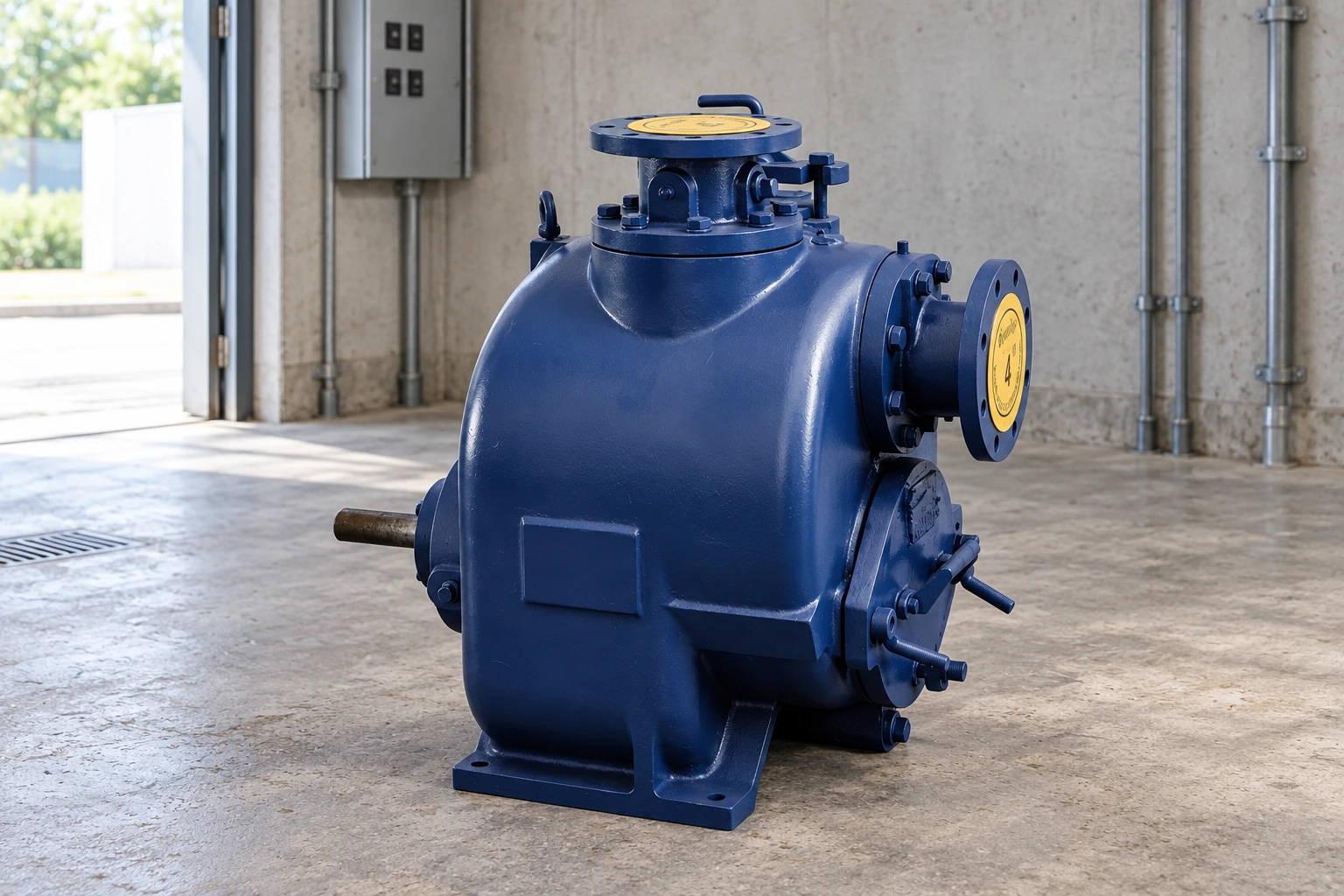
As the water level approaches the sediment layer, an initially clear-water task can become a solids-removal task. Continuing with the same intake position and flow may disturb deposits or draw a concentrated mixture. Plan that transition before the water reaches the critical level.
Possible responses include stopping at an agreed level, repositioning an approved intake, using a separately selected solids-handling method, or changing the treatment arrangement under the approved plan. Do not promise complete drying from a floating intake that requires immersion. Do not assume a submersible pump can operate dry simply because it is positioned at the bottom.
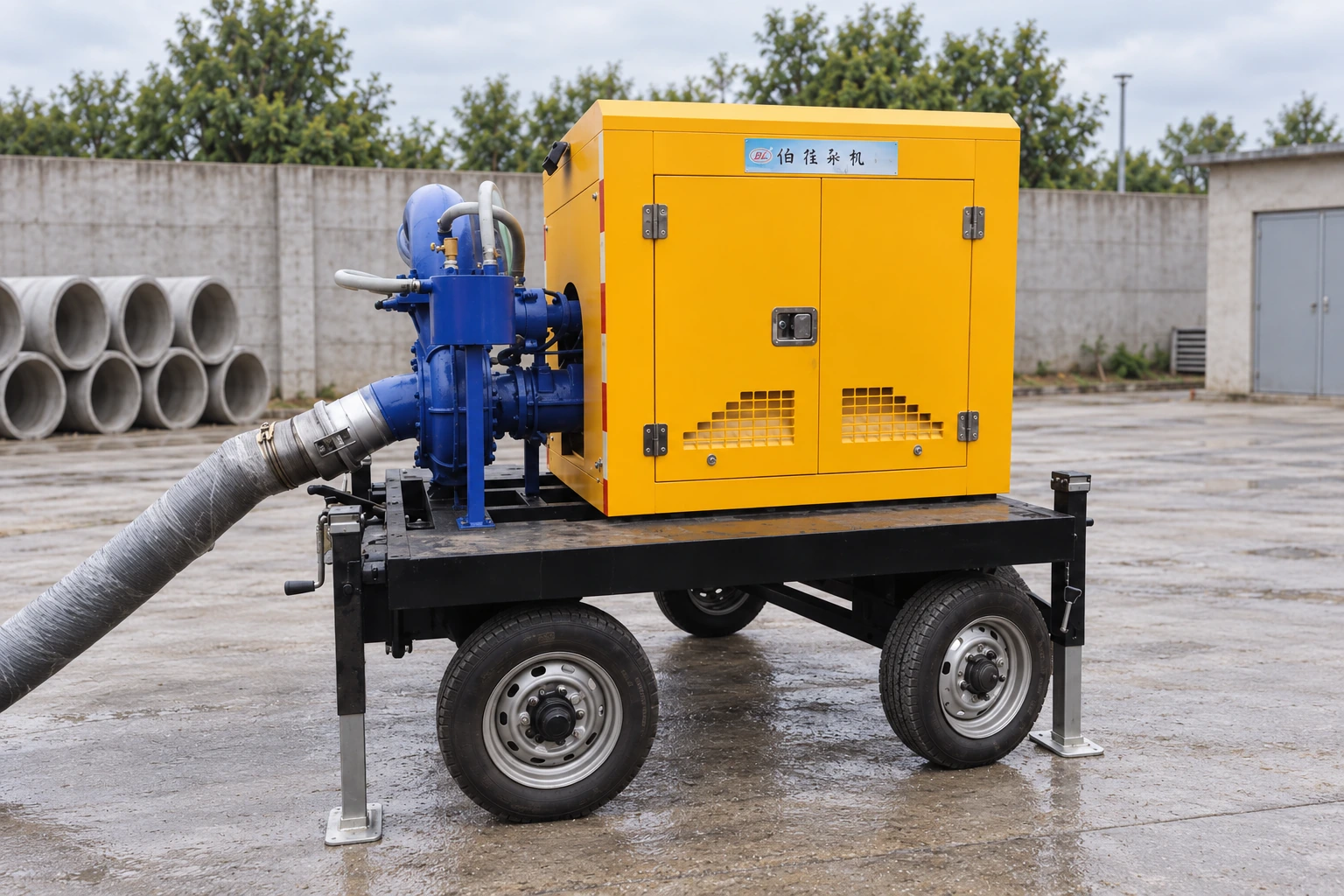
The pictured مضخة تصريف ديزل متنقلة CHWY illustrates a real Borra product category. It does not establish that the shown unit includes a floating intake, a particular screen or a solids-handling capability. Confirm the supplied assembly and model-specific data with the project documents.
Coordinate intake selection with treatment capacity
An intake that draws clearer water may reduce sediment loading, but the discharge still requires the selected controls and monitoring. Size the pumping operation around both the excavation’s needs and the treatment system’s permitted capacity. Increasing pump output can shorten nominal drawdown time while overwhelming a settling or filtration stage.
Document the relationship between intake condition, pump rate and observed discharge quality. If water quality deteriorates, investigate whether deposits were disturbed, the intake moved, a screen blocked or inflow changed. Do not respond automatically by increasing suction or adding chemicals without an approved treatment plan.
ال NCTCOG construction dewatering guidance provides additional planning background. Its practices must be evaluated against the actual permit and site, rather than treated as permission to discharge at any location.
Test the arrangement before sustained pumping
At an approved initial rate, observe intake stability, immersion, hose position, priming behavior and the discharge controls. Record the water level and intake position so a later change can be recognized. Check for air entry and unexpected sediment pickup without approaching moving machinery or unsafe edges.
Repeat observations as the water falls and after rainfall or changes to excavation work. The most informative test includes the expected low-water condition, not only a full sump. If that condition cannot safely be reproduced, record the limitation and define the operational stop point until it is verified.
Keep a simple shift record: water level, pump condition, screen condition, intake position, discharge observations, corrective action and operator. Photographs should document the real setup and time; product illustrations are not evidence that a particular site installation has been inspected.
The educational video below explains sediment behavior as background. It does not demonstrate installation of a floating pump intake or validate the discharge controls for this project.

الأسئلة الشائعة
هل ينتج المدخل العائم دائمًا مياه نظيفة؟
No. It can reduce pickup of settled material where a clearer layer exists, but suspended fine particles, floating contamination and dissolved pollutants may remain. Evaluate the actual water and maintain the required treatment and monitoring.
هل يمكن أن يحل مدخل عائم مشكلة السحب الزائد؟
No. It follows the water surface while a surface pump stays at its installed elevation. As the water falls, static suction lift increases. Evaluate the complete suction condition at the lowest permitted operating level.
Should a bottom intake be placed directly in mud?
Only an arrangement specifically designed and approved for that duty should be used. Many water-transfer systems need separation from deposits. Verify the pump’s actual solids and abrasion limits and the intended drawdown method.
Can I attach any float to an existing strainer?
Do not assume an improvised assembly will remain stable or adequately submerged. Hose forces, inlet geometry, structural support and retrieval need review. Obtain a compatible arrangement supported by the equipment documentation and site design.
What belongs in an intake-selection inquiry?
Provide water levels, pump elevation, required flow and head, suction-line details, debris and sediment description, water assessment, operating duration, discharge constraints and access conditions. Ask for the actual minimum operating level and accessory compatibility rather than relying on a product photograph.