
Diesel pump exhaust piping must keep engine backpressure within the engine manufacturer’s limit, support its own weight, accommodate thermal movement and discharge exhaust where it cannot create an exposure or recirculation problem. Pipe diameter alone does not establish suitability. The silencer, bends, flexible section, outlet arrangement and any aftertreatment all contribute to the installed system.
This guide is for purchasers and project engineers reviewing stationary or temporary diesel-driven pumping equipment. It does not provide a universal exhaust diameter, clearance or backpressure limit. Obtain the actual engine data and applicable site requirements. Fire-pump installations need their specific approved design and acceptance process in addition to the general engine considerations discussed here.
Start with the supplied engine identity
Record the engine model, rating, speed, exhaust outlet arrangement and applicable emissions configuration. Different engines fitted to similar-looking pumps can have different exhaust-flow data, temperature limits and allowable restrictions. A pipe arrangement accepted for one package should not be copied to another without review.
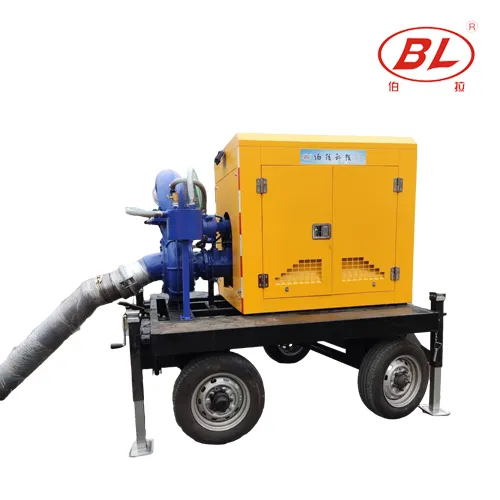
A مضخة تصريف ديزل متنقلة CHWY is a relevant equipment reference. Its product photograph does not establish a permitted exhaust extension or confirm that a particular silencer and support design are included. Ask for the supplied engine documentation and package drawings before specifying changes.
Define responsibility for the complete route from the engine connection to the final outlet. If the pump supplier provides only a short factory assembly and the contractor adds the remaining pipe, neither party should assume the other has checked the combined restriction, structural loading and discharge location.
Understand what backpressure represents
Exhaust backpressure is the restriction the engine experiences while expelling combustion gases. The allowable value and measurement method belong to the actual engine documentation. Excessive restriction can adversely affect engine operation; the appropriate response is an engineering review, not an improvised increase in speed or fuel setting.
The complete route contributes resistance. Include straight pipe, bends, transitions, silencer, flexible elements, rain protection and aftertreatment where fitted. The clean condition is not the only condition worth considering: deterioration, blockage and component replacement can change the installed resistance over time.
ال Caterpillar exhaust-system application guide explains backpressure, water ingress, support and thermal-growth considerations. It is technical background, not proof that a Borra package uses a Caterpillar engine or that its limits apply to another engine.
Obtain the data needed for a calculation
Request the exhaust mass or volumetric flow and its reference conditions, gas temperature, allowable backpressure and prescribed measurement location. Confirm units carefully. A flow quoted at standard conditions cannot simply be treated as the hot volume moving through the installed pipe.
Obtain pressure-loss data for proprietary components at the relevant flow and temperature. A silencer’s connection size is not its pressure-loss curve. An elbow count without bend geometry is also incomplete. The designer should identify the calculation method and assumptions, including the treatment of equivalent lengths where used.
Document any future connection allowance explicitly. Leaving an outlet available for an extension does not mean that every extension is acceptable. If the temporary pump may be relocated or enclosed later, require a fresh review of the new route rather than treating the original acceptance as permanent authorization for modifications.
Separate flexible connection from structural support
A flexible exhaust section can accommodate the movements for which it was designed. It is not automatically a hanger, a universal expansion joint or permission to misalign the pipe. Its allowable movements and installation orientation need to come from its supplier.
Support pipe and silencer weight independently as required by the engine and component instructions. Avoid imposing unverified loads on the engine outlet or turbocharger. Consider the supported system at both cold and operating temperatures, including movement of the package and any building attachment.
ال engine-manufacturer installation publication provides further context for package interfaces and installation review. Use the actual supplied engine manual to determine the applicable details. Do not convert a generic illustration into a claim about the construction of an unrelated product.
Account for thermal growth and hot surfaces
Exhaust piping changes length as it heats. The support and expansion arrangement must permit the intended movement without transferring damaging force to the engine or distorting joints. A rigid line bolted between two fixed points may require a designed expansion solution rather than an extra loose clamp.
Protect people and nearby materials from hot surfaces using the approved guarding, insulation and separation arrangement. Insulation can change component temperatures and inspection access, so confirm its suitability for the supplied assembly. Avoid assuming that covering a pipe solves every heat or fire exposure concern.
Plan inspection access around the silencer, flexible section and joints. Components hidden behind permanent panels can make leaks or deterioration difficult to detect. Where temporary barriers are used, make sure they remain stable and do not obstruct cooling airflow or the operator’s safe access to controls.
Prevent rainwater and condensate reaching the engine
Review the route for low points, rain entry and drainage. A vertical outlet can admit weather, while a long horizontal run can collect liquid if its slope and drainage are unsuitable. The correct arrangement depends on the engine and exhaust-system design; do not drill an improvised drain hole in a supplied component.
Use approved drains, traps or weather-protection devices where specified and include their restriction in the design. Confirm where drainage goes and how it will be maintained. A drain that cannot be reached or is routinely left blocked offers little practical protection.
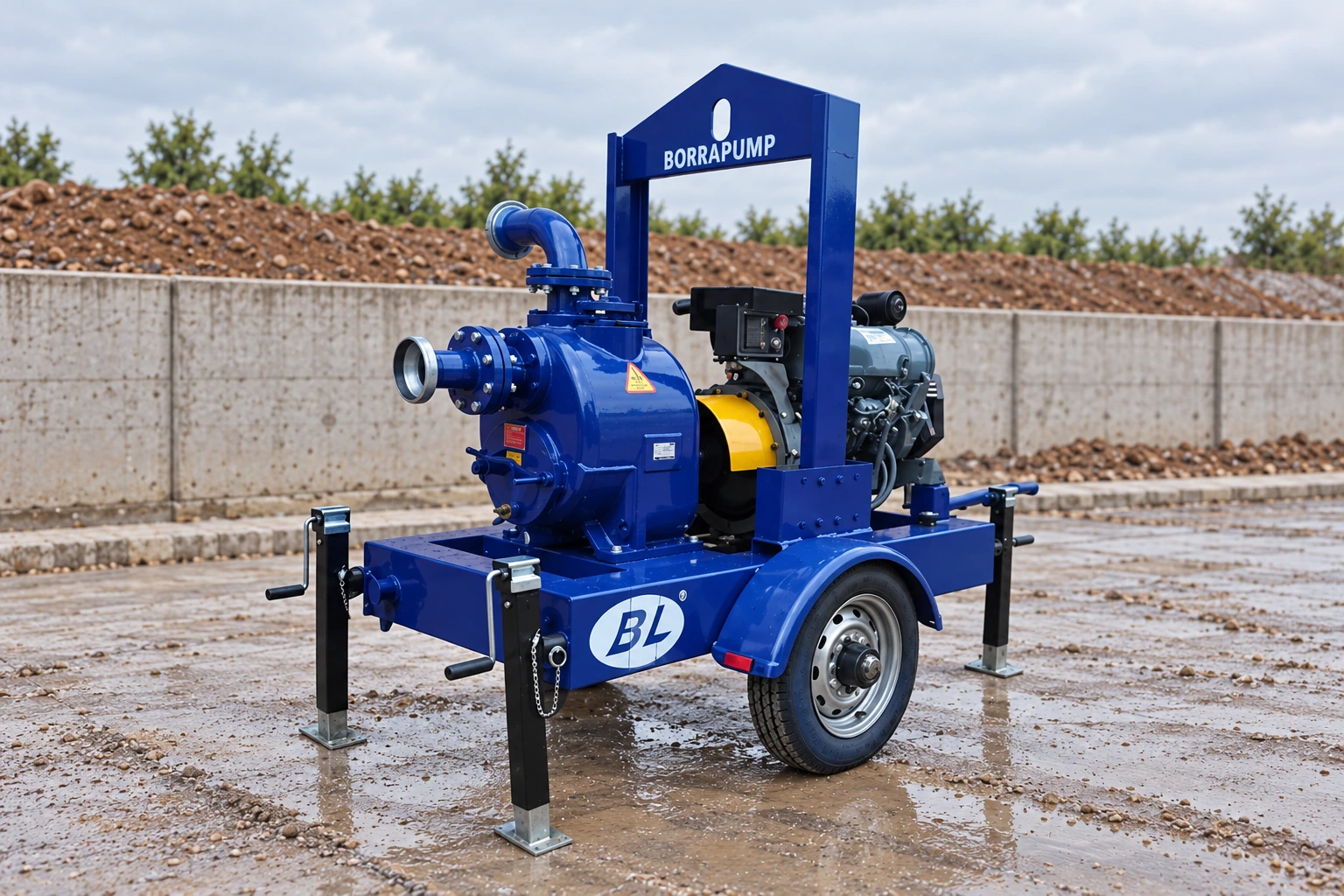
Inspect the arrangement after relocation or transport. A mobile package may be parked at a different inclination, changing where water collects. An extension that was satisfactory at one location can create a new low point at the next. Record the actual setup rather than relying on the original workshop photograph.
Check the final discharge location
Assess nearby doors, windows, air intakes, work positions and adjacent occupied areas. Moving the outlet farther from the pump may solve one local problem while creating recirculation at another intake. Exhaust routing and ventilation must therefore be reviewed together.
Carbon monoxide and other combustion products make improvised indoor operation particularly hazardous. Use the site’s competent assessment and applicable exposure controls. An exhaust pipe through a doorway does not by itself establish safe indoor operation or adequate cooling and combustion air.
For equipment near a generator or another engine, assess combined exposure and airflow conditions. Do not connect multiple engine exhausts to a common system without a specifically engineered and approved design. A convenient shared stack can create unwanted interactions that are absent from a single-engine arrangement.
Use a procurement and inspection table
| عنصر مراجعة | Information required | Evidence before acceptance |
|---|---|---|
| Engine restriction limit | Exact engine model and approved data | Applicable limit and measurement method |
| cURL Too many subrequests by single Worker invocation. To configure this limit, refer to https://developers.cloudflare.com/workers/wrangler/configuration/#limits | cURL Too many subrequests by single Worker invocation. To configure this limit, refer to https://developers.cloudflare.com/workers/wrangler/configuration/#limits | cURL Too many subrequests by single Worker invocation. To configure this limit, refer to https://developers.cloudflare.com/workers/wrangler/configuration/#limits |
| cURL Too many subrequests by single Worker invocation. To configure this limit, refer to https://developers.cloudflare.com/workers/wrangler/configuration/#limits | cURL Too many subrequests by single Worker invocation. To configure this limit, refer to https://developers.cloudflare.com/workers/wrangler/configuration/#limits | cURL Too many subrequests by single Worker invocation. To configure this limit, refer to https://developers.cloudflare.com/workers/wrangler/configuration/#limits |
| cURL Too many subrequests by single Worker invocation. To configure this limit, refer to https://developers.cloudflare.com/workers/wrangler/configuration/#limits | cURL Too many subrequests by single Worker invocation. To configure this limit, refer to https://developers.cloudflare.com/workers/wrangler/configuration/#limits | cURL Too many subrequests by single Worker invocation. To configure this limit, refer to https://developers.cloudflare.com/workers/wrangler/configuration/#limits |
| Water ingress | Outlet protection, low points and drainage | Accessible approved details and maintenance plan |
| Exhaust exposure | Outlet location, intakes and work areas | Site-specific discharge and ventilation assessment |
| التشغيل | Representative operating condition | Recorded backpressure and final configuration |
The table is a review framework rather than a numerical specification. The supplied engine documentation determines the acceptance values. Keep responsibility for unresolved items visible; a purchase order that says only “exhaust included” leaves too much uncertainty about the final site route.
Verify the installed system under the approved test plan
Measure backpressure at the specified location and operating condition using suitable equipment and qualified personnel. Record engine speed, load, instrument details and the final route. A reading at an undocumented tapping cannot automatically be compared with a limit defined at another location.
Test the completed assembly, including the intended silencer, weather protection and extensions. If a component is added afterward, reassess the affected condition. A successful test of the bare engine outlet does not prove the full installed system.
Observe for leaks, abnormal movement, heat exposure and interference with cooling airflow. Preserve the final drawings and any settings or configuration restrictions. For a diesel dewatering installation, coordinate this work with the broader dewatering maintenance schedule.
Keep engine and pump diagnoses separate
If a diesel-driven pump loses performance, compare engine speed, pump duty and exhaust condition before assuming a hydraulic fault. Restricted exhaust is one possible engine-side issue, but it is not a diagnosis from smoke or low flow alone. Use the engine service procedure to investigate symptoms.
ال diesel-pump fuel-consumption guide explains why operating duty matters to fuel use. The مقارنة بين الديزل والكهرباء ذاتية السحب covers power-source selection. Neither replaces engine-specific exhaust verification.
When asking for support, send the engine identity, complete route, component data, measured restriction and operating condition. This lets the supplier assess the actual installation without guessing from a nominal pipe diameter or an isolated photograph.
Further learning: combustion emissions
The NPTEL lecture below introduces engine-emission categories. It explains why exhaust discharge deserves attention, but it does not design the piping, establish local exposure limits or certify a pumping installation.
الأسئلة الشائعة
Can I choose exhaust diameter from the outlet size alone?
No. The full route, hot exhaust flow, component losses and engine restriction limit must be reviewed. A connection that fits the engine can still lead to excessive installed resistance after bends, a silencer and an extension are added.
Does a flexible section support the exhaust pipe?
Not unless its supplier explicitly designs it for that role. Pipe and silencer weight normally require an appropriate support arrangement. Confirm allowable movements and loads rather than using the flexible section to correct structural or alignment problems.
Can I extend a mobile pump exhaust on site?
Only after reviewing the actual extension against the supplied engine and site requirements. Include added restriction, support, thermal growth, rain protection and discharge exposure. The original factory arrangement does not automatically approve a later modification.
Is an exhaust hose outside a doorway enough for indoor use?
No. The complete exposure, ventilation, cooling and combustion-air arrangement needs a competent assessment. Routing exhaust outside does not alone establish safe indoor operation or prevent gases re-entering occupied spaces.
What should the commissioning record contain?
Record engine identity, route and component configuration, operating load and speed, instrument and tapping location, measured backpressure and the applicable acceptance basis. Include final support and discharge-location checks and any restrictions on future changes.