
Understanding how fire fighting pumps operate is important if you want to save lives and property through fire protection. A fire fighting pump is an invaluable resource in fire protection whether you are in the city or country. In this article, we take a look at different kinds of fire fighting pumps, their benefits, and how they are utilized to help people understand this essential piece of equipment used for fighting fires.
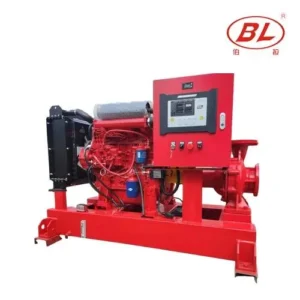
Types of Fire Fighting Pumps
There are a variety of fire fighting pumps on the market, each one having been designed to meet specialized needs in different environments:
1.Centrifugal Pump: The centrifugal pump is a standard design that utilizes an impeller rotating inside a casing, which enhances the velocity of the water. The centrifugal pump’s design makes it ideal for use in general firefighting applications, as it will maintain a steady flow rate.
2.Positive displacement pumping devices utilize a chamber containing an amount which is forced (displaced) out through the discharge line when the chambers are filled with liquid. For instance, positive displacement pumps would be highly suitable to applications needing high-pressure discharge as in tall strata-built structures like skyscrapers (multi-storey buildings).
3.Electric Pumps: These electric-driven pumps are appropriate for fixed-response fire protection systems. Electric pumps can be used to provide protection in residential & small business buildings.
4.Diesel Fire Pumps: These powerful and mobile fire pumps can be used in very remote locations without being dependent on any electrical power source.
Advantages of Fire Fighting Pumps
Investing in a fire fighting pump offers numerous advantages, enhancing fire safety preparedness:
To extinguish fires efficiently, firefighters must utilize fire pumps with strong high-pressure water supplies needed for effective extinguishing of the fire.
Rapid Response: These types of pumps can be rapidly deployed in the case of an emergency and are therefore excellent sources for immediate action in response to a fire emergency.
Fire fighting pumps can be used in a variety of settings. Therefore, their designs accommodate the use of different water sources.
Reliability of a fire pump means that if there is a fire, it will provide reliable service under very difficult conditions, adding an element of safety to your environment.
Applications of Fire Fighting Pumps
The applications of fire fighting pumps are vast and diverse:
Fire fighting pumps used in residential buildings can be additionally pressurised by potable water (in some areas) and help firefighters acquire the water needed to fight a fire in a building. Similarly, fire fighting pumps are critical when responding to industrial fires where firefighters’ need access to large quantities of water; fire fighting pumps enable firefighters access to sufficient supply and pressure of water for large-scale fire suppression activities and help ensure that agricultural crops have sufficient access to irrigation and fire protection.
What is the Working Principle of a Fire Fighting Pump?
Fire fighting pumps are designed to convert mechanical energy into hydraulic energy. When water is drawn through the impeller of a fire fighting pump, it is accelerated to much higher pressure and delivered through hoses and nozzles to the fire. The production of pressure is achieved through the rotation of the impeller, creating a low-pressure zone in front of the impeller which draws in water.
What Are the Uses of a Fire Fighting Pump?
Fire fighting pumps are used in various scenarios, including:
– Supplying water to fire hydrants and hoses during emergencies.
– Supporting sprinkler systems in high-rise buildings.
– Assisting firefighters in wildland firefighting efforts.
– Providing water supply for training exercises.
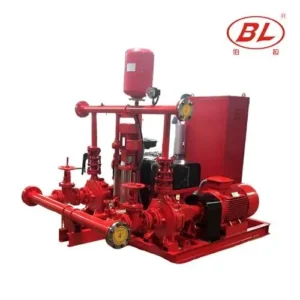
What Are the Advantages and Disadvantages of Fire Fighting Pumps?
In addition to being advantageous, there are disadvantages to purchasing fire fighting pumps.
Benefits Include: Operating Independently, Being Adaptable, High Pressure Systems, and Moving Water Compatible with Other Materials Properly.
The drawbacks include maintenance requirements, possible mechanical malfunctions, reliance on electrical power sources for electrical pumps, and the initial outlay.
Ultimately, the choice of pump will depend on specific needs and circumstances.
To sum up, comprehending firefighting pumps is vital for developing appropriate fire safety plans. Through careful consideration of the different types, benefits and uses of pumps, informed choices can be made regarding fire protection. The right pump, when used properly, can provide the user with an incredibly useful resource that could lead to saving lives or property after an emergency occurs.