
Buyers often conflate bomba de aumentos with generic pressure pumps; the distinction affects staging, controls, and whether a packaged booster set is required. This guide focuses on practical hydraulic sizing, application fit, and procurement documentation for export and U.S. project buyers. Where equipment selection is involved, cross-check public specifications on borrapumps.com and confirm project-specific limits with your consulting engineer or AHJ. Section checklists can be reused as RFQ attachments and commissioning handover outlines.
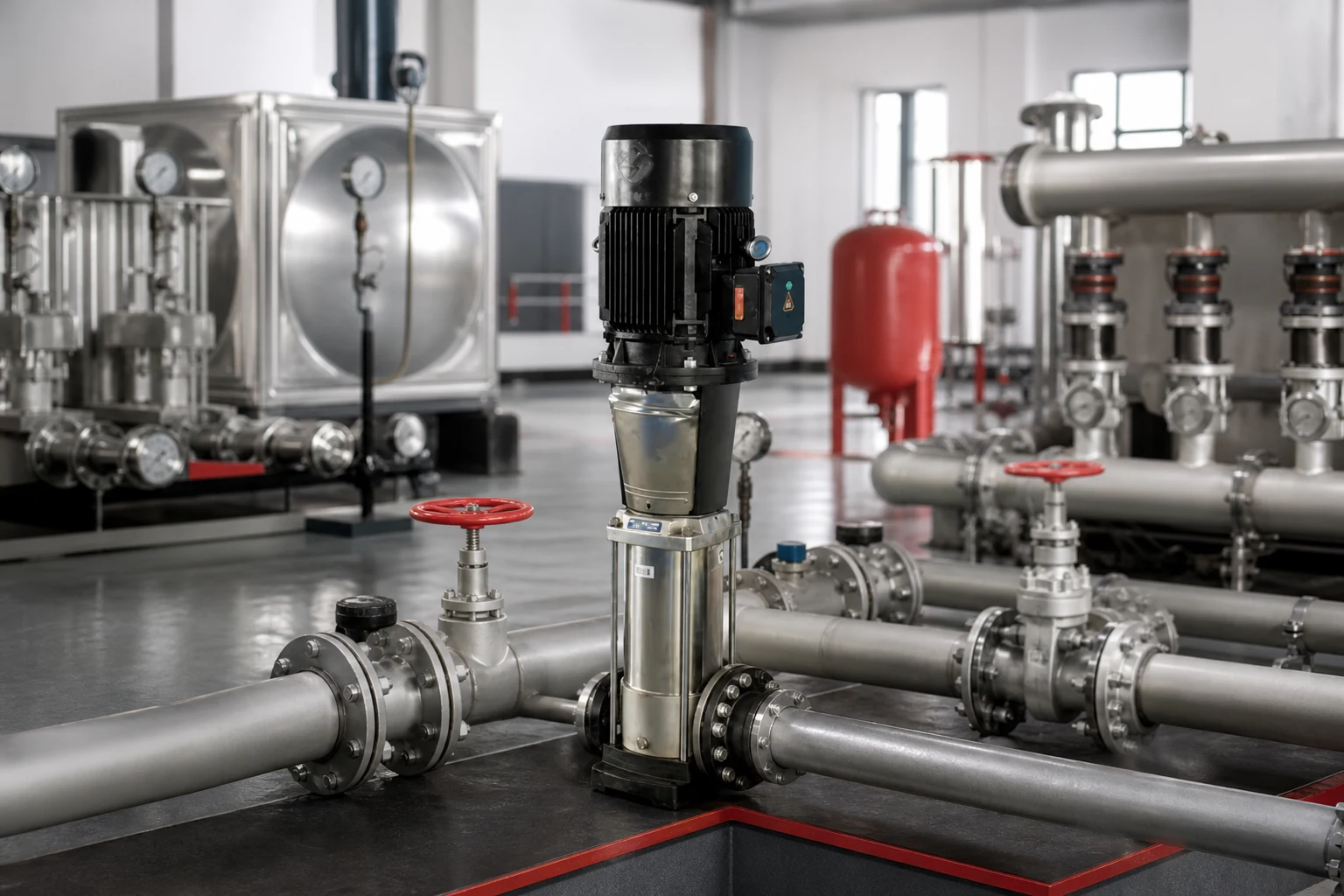
Part 1. Booster Pump Definition
Booster pumps raise pressure in an existing piping network serving multiple outlets or zones.
Applications include high-rise water supply, irrigation headers, and municipal zone boosting.
Define design flow (GPM or m³/h) and total dynamic head before comparing catalogs—horsepower alone is not a sizing basis.
Review suction lift, water temperature, and entrained air; they affect NPSH margin and priming strategy.
Cross-check related BORRA pump lines against your hydraulic calculation, not marketing peak points.
For export projects, confirm voltage, frequency, enclosure, and local listing expectations early in RFQ.
Request pump curves at the actual duty point—including NPSH data—not only catalog peak efficiency points.
Confirm suction piping, strainers, and priming method before finalizing self-priming versus submersible options.
Define who owns startup, training, and spare impeller or seal kits in the purchase order—not after shipment delays.
Compare quotations on a normalized basis: duty-point head/flow, materials, driver type, warranty, and commissioning scope.
For fire-related packages, coordinate hydraulic calculations with AHJ requirements before locking pump curves.
Retain pump curves, vibration baselines, and controller settings in the O&M file after turnover.
Before adding parallel capacity, verify suction piping, anchors, and electrical feeders can support the upgrade.
Part 3. Field Application and Installation Notes
On site, booster pump selection should be validated against as-built piping, suction entry, and discharge routing—not only spreadsheet estimates.
Verify alignment, coupling guard, and anchor points before wet testing; misalignment accelerates seal and bearing wear.
For temporary dewatering, plan discharge permits, sediment control, and hose routing before mobilizing equipment.
Document startup sequence, alarm setpoints, and responsible operator contacts in the handover package.
When multiple pumps operate in parallel, confirm staging logic avoids short cycling at partial demand.
Export skids should include lifting points, nameplate photos, and spare seal kit part numbers in the O&M binder.
Parallel staging (duplex/triplex) improves redundancy when peak demand exceeds single-pump duty.
Variable speed control can reduce energy use when demand varies across shifts or occupancy.
Align control logic with utility or fire authority requirements before panel build.
Document test header, relief, and isolation valve locations on as-built drawings.
Request pump curves at the actual duty point—including NPSH data—not only catalog peak efficiency points.
Confirm suction piping, strainers, and priming method before finalizing self-priming versus submersible options.
Define who owns startup, training, and spare impeller or seal kits in the purchase order—not after shipment delays.
Compare quotations on a normalized basis: duty-point head/flow, materials, driver type, warranty, and commissioning scope.
For fire-related packages, coordinate hydraulic calculations with AHJ requirements before locking pump curves.
Retain pump curves, vibration baselines, and controller settings in the O&M file after turnover.
Before adding parallel capacity, verify suction piping, anchors, and electrical feeders can support the upgrade.
| Check item | Por qué importa | Typical owner |
|---|---|---|
| Duty-point run test | Confirms curve match | Commissioning agent |
| NPSH / priming check | Prevents cavitation | Mechanical contractor |
| Control alarm test | Ensures fault visibility | Electrical contractor |
| As-built P&ID update | Supports future retrofits | Owner O&M |
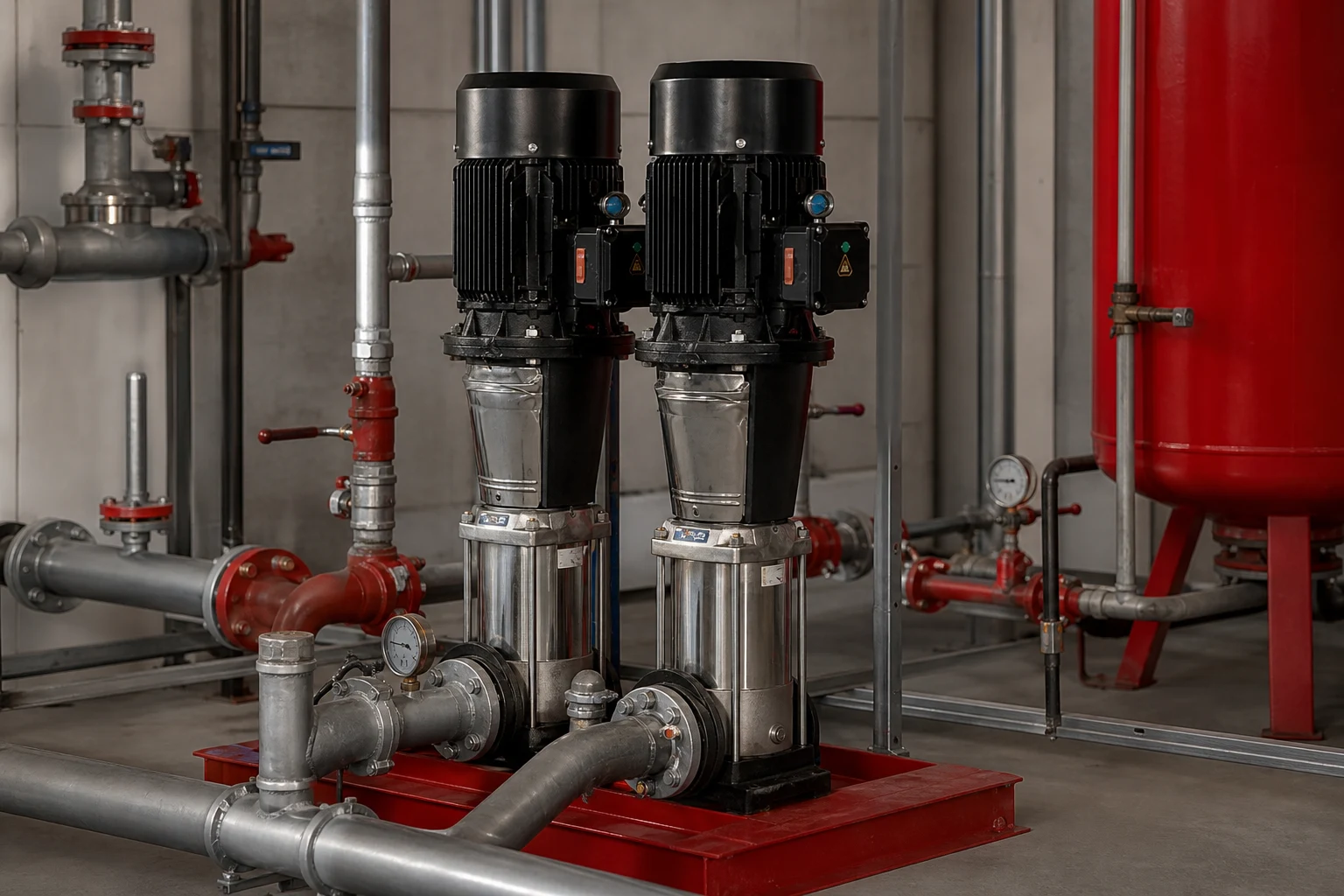
Part 4. Documentation and Handover Checklist
Industrial acceptance should not rely on energization alone—documentation proves ratings, safety, and maintainability for the next maintenance cycle.
Use the tables below as a pump RFQ checklist—hydraulic duty, materials, and driver type should be explicit.
For product-specific datasheets, cross-check related BORRA product pages and request missing test data.
When comparing quotations, normalize Incoterms, warranty scope, and included commissioning.
Include lift points, anchor details, and shipping Incoterms in export RFQs to avoid site surprises.
Clarify warranty response, spare parts lead time, and whether factory or local integrator performs startup.
Retain pump curves, vibration baselines, and controller settings in the O&M file after turnover.
Before adding parallel capacity, verify suction piping, anchors, and electrical feeders can support the upgrade.
| Document / item | Propósito | When to request |
|---|---|---|
| Pump performance curve | Verify duty point, efficiency, and NPSH | Before purchase order |
| Factory test / hydrostatic report | Prove rated head and flow | Contract negotiation |
| Installation manual + wiring diagram | Field assembly and controls | Design phase |
| Spare parts list (seals, impeller, bearings) | Lifecycle planning | Before energization |
| Commissioning checklist | Acceptance at duty point | Before handover |
| Application | Typical pump type | Key selection note |
|---|---|---|
| Building water boost | Vertical multistage / inline electric | Size on peak GPM and TDH; consider VFD staging |
| Fire protection | Split-case, end suction, or vertical turbine | Match NFPA hydraulic demand and suction condition |
| Construction dewatering | Self-priming, submersible, or trailer diesel | Match solids content and portability |
| Municipal wastewater | Non-clog submersible or dry-pit | Confirm solids passage and rag handling |
Part 5. Commissioning, Monitoring, and Long-Term Operations
Commissioning should verify duty-point flow and head on the pump curve, not only motor rotation direction.
Functional tests include priming time, vibration checks, seal flush operation, and control alarm verification.
Log baseline pressure and flow after startup for future troubleshooting comparisons.
Train maintenance staff on lockout/tagout, impeller clearance checks, and bearing lubrication intervals.
Schedule periodic inspection of couplings, seals, and strainers—especially on dewatering and wastewater service.
Keep spare seal kits and critical impeller parts based on lead time, not catalog defaults alone.
Review driver maintenance separately—diesel engines need fuel, battery, and exhaust checks; motors need insulation and thermal history.
After major load changes, re-evaluate whether the original duty point still matches actual operating hours and flow profile.
Retain pump curves, vibration baselines, and controller settings in the O&M file after turnover.
Before adding parallel capacity, verify suction piping, anchors, and electrical feeders can support the upgrade.
Recommended BORRA Products
For project support, explore our related product line, solution options, and OEM/ODM capabilities on borrapumps.com.
Preguntas frecuentes
Are booster and pressure pumps identical?
Not always—booster describes adding pressure to a network; pressure pump is a generic catalog term.
When is booster the right word?
When restoring zone or building pressure across an existing piping network.
What is a packaged booster set?
Pump(s), controls, and accessories engineered for constant outlet pressure or staging.
How should buyers write RFQs?
Use duty point flow/head and control goals instead of ambiguous product names.
Do both need VFD?
Boosters with variable demand often benefit; simple transfer may not.
What documents clarify intent?
Hydraulic calc, single-line diagram, and control sequence of operation.
Referencias
Ready to discuss your project? Contacto BORRA engineering support with your project parameters and technical requirements.