
Constant Pressure Booster Pump: Key Comparison for Home & Garden Water Boosting
A Sydney quote exposed the difference between pressure and usable supply.
When a procurement manager in Sydney encountered repeated complaints from an installer network, she issued a fast quote for a compact garden-water package and sent a setup tutorial with it. The first trial looked acceptable at an open tap, then sprinkler throw visibly collapsed as a second outlet opened. The reversal came after the team plotted the actual duty point: the apparent failure was not a defective product, but selection on a static-pressure claim instead of system resistance, source conditions, and simultaneous demand.
Why a constant pressure booster pump comparison must begin with the duty point.
Summary: A buyer should compare the required flow and total dynamic head at real simultaneous demand, then match source conditions and controls before comparing a constant pressure booster pump, a DAB booster pump, or a garden hose booster pump. ISO 9906 is useful for understanding centrifugal-pump performance acceptance testing, while installation design still determines the delivered result. Ask suppliers for the duty curve, control logic, materials, documentation and destination-market fit; that short checklist reduces returns more reliably than choosing by maximum head or a familiar brand label.
A constant pressure booster pump normally combines a pump, pressure sensing and control so that pressure is managed as demand changes. It is a system approach, not a promise that every outlet receives the same pressure under every hydraulic condition. For distributors, the useful comparison is between the customer’s demand profile and the package’s controllable operating envelope.
The term DAB booster pump is often used in enquiries as a shorthand for a familiar branded package category. It should not replace a specification. A buyer still needs to establish required flow, head, incoming supply, noise expectations, fluid contact requirements and the local electrical arrangement before treating any DAB booster pump alternative as comparable.
A garden hose booster pump is usually evaluated around a hose-end application, a storage tank or irrigation zone rather than whole-property pressure management. It can be the sensible route when the demand is limited and predictable, but its source and hose losses must be part of the calculation. For a practical installation sequence, see this garden hose booster pump.
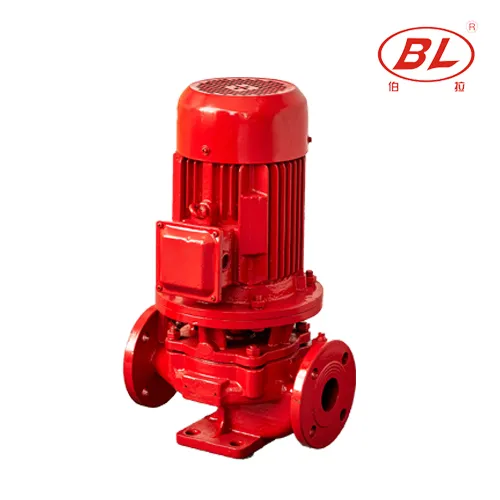
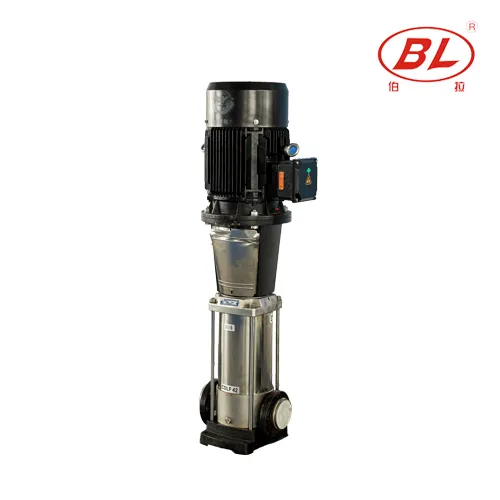
Specify a constant pressure booster pump from hydraulic facts, not catalogue headlines.
What duty point and total dynamic head are required?
Set the duty point as flow at the outlets that may operate together, not the largest single outlet. Total dynamic head combines pressure difference, elevation, velocity change and loss through pipe, valves, filters and fittings. A 1 bar pressure difference is approximately 10.2 m of water head, which helps a buyer check whether a pressure target is plausible. ISO 9906 describes performance acceptance testing for rotodynamic pumps; it is a test scope, not a site-sizing certificate.
TDH = (p2 - p1)/(rho*g) + (z2 - z1) + (v2^2 - v1^2)/(2*g) + hLIn this relationship, pressures are absolute or gauge on a consistent basis, rho is fluid density, g is gravitational acceleration, and hL is piping loss. Compare the calculated point with the supplied curve and confirm the test basis. A garden hose booster pump can look satisfactory on a short hose yet fall away when fittings, filters and a longer run raise hL.
Can the source supply the pump without cavitation risk?
Source-side design is separate from discharge head. For water near 20 °C, vapour pressure is roughly 2.34 kPa, so warm water, suction lift and a restrictive strainer reduce available NPSH. Use the supplier’s NPSH required curve at the selected flow and leave a documented margin; do not infer it from maximum head. ISO 9906 can support a conversation about hydraulic testing, but it does not prescribe an installation’s NPSH margin.
NPSHa = (pabs,source - pv)/(rho*g) + static suction head - suction-line lossesThis is particularly important when a DAB booster pump request is intended for tank suction rather than a positive-pressure municipal inlet. The buyer should state minimum liquid level, liquid temperature, suction pipe diameter and filter condition in the enquiry, then have the proposed configuration reviewed against those conditions.
Will the controls avoid rapid cycling at small demand?
Controls need a demand signal and a stable response, not merely a pressure switch. A pressure change of 1 bar is about 100 kPa, yet a small pressure-band setting can make minor leakage or a small draw repeatedly start and stop a pump. Review minimum-flow logic, dry-run protection, pressure-sensor location and the volume available to absorb demand changes. IEC 60335-1 addresses household electrical appliance safety in its applicable scope; it does not prove that a control strategy suits a particular pipe network.
For an overview of the control trade-off, a constant-speed versus VFD booster-pump guide is a useful starting point. The correct constant pressure booster pump specification records the pressure setpoint, allowable variation, expected minimum flow and the electrical supply instead of assuming that all control packages behave alike.
Compare the constant pressure booster pump route with a point-of-use garden route.
The two routes solve different commercial problems. A controlled package suits several variable outlets when the inlet and pipe network are known; a point-of-use package can be simpler when the garden load is isolated. Neither route can compensate for a poor source, undersized pipework or undisclosed peak use.
| Comparison area | Controlled packaged route | Point-of-use garden route |
|---|---|---|
| Performance | Selected around a multi-outlet duty point | Selected around a defined hose or zone duty |
| Stability | Can regulate pressure when sensing and minimum-flow logic fit the system | More sensitive to hose length, nozzle setting and extra outlets |
| Compatibility | Requires declared inlet, pipework, electrical and fluid conditions | Requires compatible suction source, hose fittings and intended water use |
| Initial cost | Usually includes more control and integration scope | Usually has a narrower application scope |
| Total cost of ownership | Depends on commissioning, energy at duty and service access | Depends on correct use, source cleanliness and avoidance of overload |
A DAB booster pump comparison should therefore use documented operating conditions, not name recognition alone. Similarly, a garden hose booster pump is not an economical substitute if the buyer actually needs pressure stability across indoor and outdoor simultaneous use; its lower system scope may move cost into callbacks and retrofit work.
Procurement cost drivers reveal the real constant pressure booster pump value.
Purchase price is only one commercial input. The procurement file should make hidden scope visible, especially when a quotation is compared across different controller, material, documentation and commissioning assumptions.
| Factor | Commercial consequence | Procurement question |
|---|---|---|
| Duty and control scope | Under-scoping can create returns or site variation | What flow, TDH and pressure-control range is included? |
| Source and fluid conditions | Unstated limits can transfer risk after delivery | What are the minimum inlet conditions and water-contact assumptions? |
| Materials and seals | Incompatible selections shorten service intervals | Which wetted materials and seal arrangement are quoted? |
| Electrical and documentation | Mismatch delays commissioning or market entry | Which supply, protection and destination documents apply? |
| Serviceability | Poor access raises downtime and labour cost | Which wear parts, manuals and support route are available? |
LCC = acquisition + installation + energy + maintenance + downtime/returns costThis lifecycle formula is an illustrative buying framework, not a price prediction. It helps a distributor compare a DAB booster pump request with another package on equal scope. It also keeps a garden hose booster pump quotation honest: lower acquisition cost may be appropriate for an isolated zone, but not when the use case needs broader control, compliance evidence or installer support.
Standards set the evidence boundary for a constant pressure booster pump.
ISO 9906 is relevant when a supplier states hydraulic performance acceptance for rotodynamic pumps; buyers should ask which grade, test arrangement and duty conditions underpin the claim. It is not a blanket safety or installation approval. IEC 60335-1 is relevant where a product falls within the household electrical-appliance safety scope, and the final applicability depends on the intended product and market.
CE is a market-conformity marking for applicable European requirements, not universal proof of performance, potable suitability or acceptance everywhere. If drinking-water contact is in scope, NSF/ANSI 61 addresses health effects of drinking-water system components and materials within its market scope; it does not certify every pump for every national requirement. Destination rules, declarations and materials evidence must be checked against the supplied configuration.
Unsupported claims can delay tender approval, import clearance, commissioning and warranty resolution. For a constant pressure booster pump, the commercial question is whether the test documents, electrical information, material declarations and labeling actually match the configured system – not whether a standard name appears on a brochure.
Select a constant pressure booster pump by evidence, application boundary and supportability.
- Collect a duty schedule for simultaneous outlets, elevation, pipe sizes, fittings and desired outlet pressure.
- Record the minimum source pressure or tank level, liquid temperature, suction arrangement and water quality before comparing any DAB booster pump package.
- Decide whether an isolated garden hose booster pump duty is sufficient, or whether variable multi-outlet demand requires coordinated pressure control.
- Request a curve-based selection, control description, electrical data, materials list and documents tied to the exact quoted configuration.
- Plan commissioning checks at the agreed duty point, including low-flow behaviour and realistic simultaneous outlet use.
Borra Pumps provides configurable water-supply booster equipment with ISO 9001 Quality Management System and CE certification, subject to configuration and destination-market review. Buyers can examine its booster regulator water-supply equipment as a starting point, then confirm duty, documentation and final market applicability with the supplier.
Frequently asked questions clarify a garden hose booster pump comparison.
What is the first number to specify for a constant pressure booster pump?
Specify flow at the required total dynamic head, followed by the pressure-control target and source conditions. Maximum head alone does not show whether the system will meet simultaneous demand. A curve-based selection should be checked at the actual duty point.
Is a DAB booster pump automatically comparable with another booster package?
No. A DAB booster pump enquiry identifies a reference category or brand preference, but comparable offers still need the same duty, inlet, controls, materials, electrical supply and documentation. Ask each supplier to state exceptions clearly.
When is a garden hose booster pump the appropriate choice?
A garden hose booster pump is appropriate when a defined outdoor zone has a known source and limited demand. It becomes a weak fit when users expect whole-property stability or add outlets beyond the original duty. Confirm hose losses and nozzle flow before ordering.
Does ISO 9906 certify the installed system?
No. ISO 9906 concerns acceptance testing of rotodynamic-pump hydraulic performance under defined conditions. It supports evidence for a stated duty, while the installer remains responsible for the actual system design and commissioning conditions.
Do CE and NSF/ANSI 61 mean the same thing?
No. CE relates to applicable European market-conformity obligations, while NSF/ANSI 61 concerns health effects of drinking-water system components within its scope. The buyer should check both the destination market and the intended water-contact use.
References guide the next DAB booster pump procurement step.
- ISO 9906: Rotodynamic pumps – hydraulic performance acceptance tests
- IEC 60335-1: Household and similar electrical appliances – safety
- NSF/ANSI 61 drinking-water system component information
- Hydraulic Institute pump-industry resources
Measure the duty, respect the source, verify the evidence – then the specification can carry the sale and the installation can carry the promise.
For a configuration discussion at the moment of selection, contact Borra Pumps through its water supply booster pump category.