
How far a transfer pump can move water is governed by required flow, total head from elevation and friction, suction condition, liquid properties, and the manufacturer’s verified curve for the offered model – not by a marketing slogan that quotes a single meter or foot number. Route planning replaces distance folklore with measurable inputs. This guide helps contractors and buyers structure those inputs before comparing offers.
Part 1. Why Distance Slogans Fail as Specifications?
Searchers asking how far can a transfer pump move water often receive a single number. That number hides the operating point. The same machine can look long-range at low flow in large pipe and short-range at high flow in small hose.
| Slogan pattern | Hidden variable | Better question |
|---|---|---|
| Moves water X meters | Flow and head basis missing | At what flow and total head? |
| Works with any hose | Diameter and condition ignored | Which ID, length, and fittings? |
| Same as last job | Site differences ignored | What elevation and line changed? |
| Bigger horsepower goes farther | Operating point ignored | Where does the duty sit on the curve? |
Write the duty as relocating a defined volume rate between known endpoints. Then friction, lift, and suction become calculable. Cluster basics live on the Water Transfer Pump pillar et une pompe de transfert d'eau.
Part 2. Which Elevation and Friction Inputs Must Be Written Down?
Static elevation change and line losses usually dominate long routes. Record levels, planned length, diameter, material, and fittings before anyone debates pump size.
| Input | What to capture in the field notes | Effect on feasible distance |
|---|---|---|
| Required flow | Design rate with source availability | Higher flow usually raises friction head |
| Elevation change | Source surface to destination discharge height | Adds or subtracts static head |
| Line length and diameter | As-planned route, not wishful shortcuts | Dominates friction on long runs |
| Fittings and hose condition | Count, type, kinks, wear | Adds losses and restrictions |
| Liquid description | Temperature, solids, viscosity clues | Changes losses and model family |
Hydraulic Institute selection practice treats the operating point – flow and head together – as the basis for model discussion. A distance claim without that pair is not comparable across suppliers.
Part 3. Why Suction Conditions Can Cancel a Long Discharge Plan?
A discharge line that looks feasible on paper still fails if suction lift, air leaks, or strainer losses sit outside verified limits. Teams sometimes lengthen the discharge hose while ignoring a marginal suction arrangement.
| Suction check | Why it blocks delivery | Field symptom |
|---|---|---|
| Excessive suction lift for the model | Pump cannot establish or hold prime | Runs but moves little water |
| Air leaks on suction joints | Loses prime under load | Intermittent sputtering |
| Undersized or clogged strainer | Starves the impeller | Cavitation noise, low flow |
| Long soft suction hose collapse | Restricts inlet | Flow collapses as speed rises |
Important: Reject unsupported distance claims such as a fixed meter or foot rating without flow and head conditions. Demand the curve basis for the offered model before treating distance language as engineering evidence. (Hydraulic Institute)
Priming method matters on many transfer setups; see how to prime a water transfer pump when suction arrangement is part of the distance debate.
Part 4. How Should Distance Claims Be Checked Against Model Curves?
Ask suppliers to place the proposed duty on a verified curve. If the claim cannot be expressed as flow and head with assumptions stated, it is marketing language, not a selection basis.
| Claim to challenge | Replacement question | Evidence to request |
|---|---|---|
| Moves water X meters | At what flow and head? | Curve with stated conditions |
| Works with any hose | Which diameter and length? | Loss calculation basis |
| Matches last site | What differed on that site? | Prior duty record |
| Horsepower proves distance | Where is the operating point? | Curve annotation |
When distance is debated, archive measured elevations, hose or pipe diameters, fitting counts, and the flow basis used in the conversation so later quotes stay aligned.
Part 5. How Do Temporary Hose Layouts Differ From Permanent Pipe?
Temporary layouts still need the same input discipline. Hose adds kink risk, diameter changes between sections, and elevation of draped runs that permanent drawings sometimes omit.
| Layout type | Extra review item | Common miss |
|---|---|---|
| Temporary hose | Kinks, couplings, ID changes | Assuming garden-hose losses |
| Permanent pipe | Material roughness and fittings | Ignoring elevation pockets |
| Mixed temporary/permanent | Transition fittings and adapters | Loss spike at adapters |
| Mobile trailer pump | Relocated endpoints each shift | Reusing yesterday’s distance claim |
Troubleshooting after a failed long run should start with measured route data, not a larger label. See water transfer pump troubleshooting for symptom sorting after inputs exist.
Part 6. Which BORRAPUMP Routes Fit Documented Transfer Duties?
Discuss product routes only after endpoints, elevations, line description, and flow are written down.
| Route signal | BORRAPUMP discussion | Send with quote |
|---|---|---|
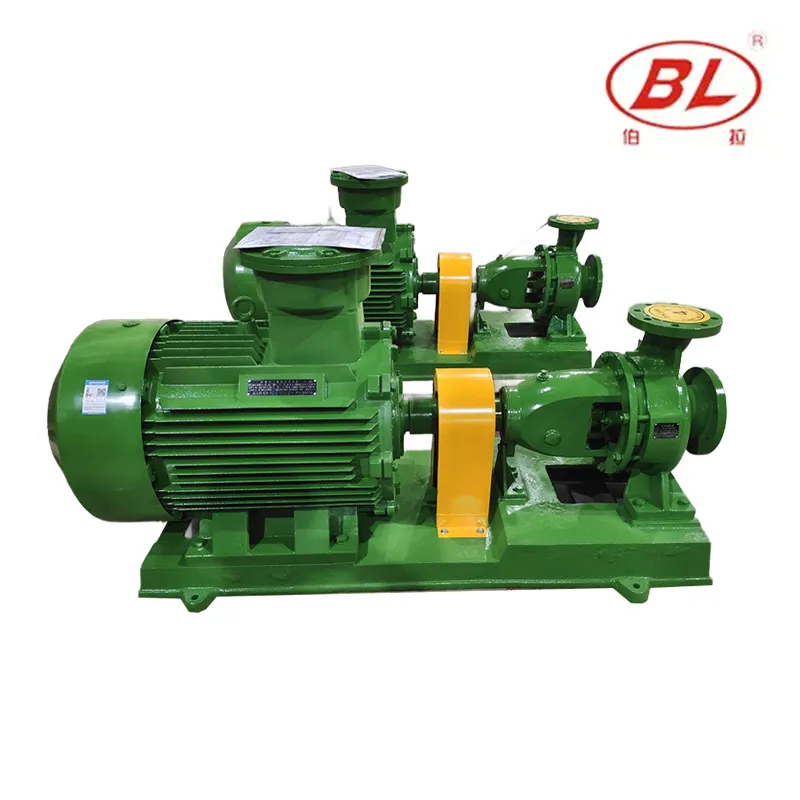
| Clean surface transfer with documented flow and head | IS Clean Water Centrifugal Pump | Endpoints, elevations, line ID/length, flow, liquid, power, destination |
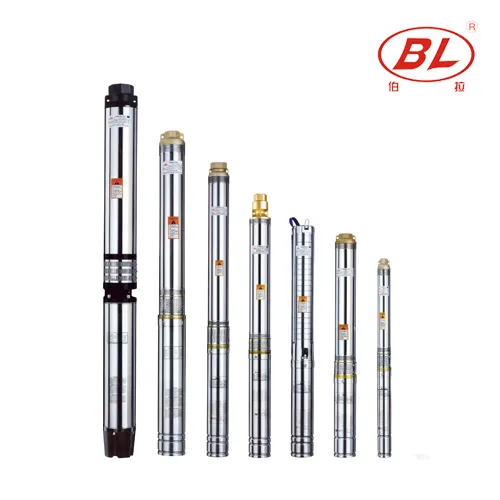
| Deep-source transfer where well depth dominates | Pompe de puits profonds QJ pour irrigation | Depth basis, flow, power supply, liquid, destination |
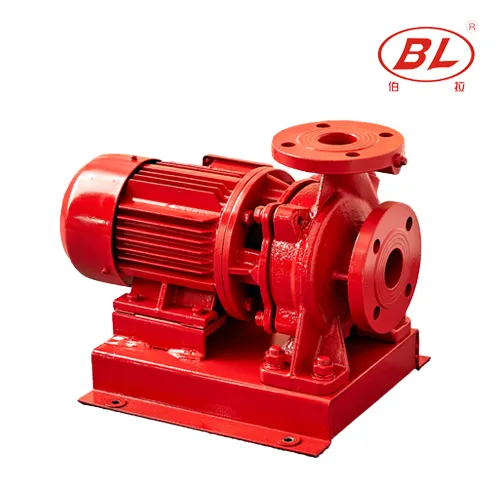
| Inline clean transfer orientation constraints | ISW End-Suction Horizontal Inline Pump | Duty point, piping orientation, suction condition |
Why not quote a universal meter or foot distance from marketing copy: distance without flow, head, and line assumptions is not engineering evidence and cannot be compared across offers.
Bring measured route data into the Water Transfer Pump pillar context or contact BORRAPUMP for a model-specific curve review.
Part 7. Which Distance Claims This Guide Will Not Support?
Fits:
- Replacing distance slogans with route variables for clean-water transfer planning.
- Structuring RFQ inputs after elevations and line descriptions are measured.
Does not fit:
- Publishing a universal maximum distance table.
- Fire-flow layout design or fire pump sizing.
- Guaranteeing delivery distance from this article alone.
Must be confirmed before quote:
- Endpoints, elevations, line length and diameter, fittings, required flow, liquid description, suction arrangement, power supply, quantity, and destination.
FAQ
How far can a transfer pump move water in practical project terms?
Only as far as the verified duty allows for the specific model at the documented flow, head, and line conditions. There is no universal distance number.
Why do long hose runs shrink the usable delivery distance?
Small diameter, long length, and fittings increase friction head, which consumes pump capability that would otherwise appear as reach.
Does a longer discharge path always require a larger pump?
Not automatically. First quantify flow and total head; then compare verified curves. Line redesign sometimes recovers more distance than a larger nameplate.
Can suction problems look like a discharge-distance failure?
Yes. Air leaks or excessive suction lift can stop delivery even when discharge length is modest.
Which field measurements should be collected before asking for a quote?
Capture endpoint elevations, route length and diameter, fittings, required flow, liquid description, and suction arrangement notes.
Are temporary hose layouts reviewed with the same inputs as permanent pipe?
The same core inputs apply. Temporary hose adds kink, diameter-change, and relocation risks that must be written into the duty notes.
Can another project’s pumping distance be used as proof on this site?
No. Different flow, elevation, and line details change the feasible distance.
Does this article guarantee a maximum transfer distance?
No. Guarantees require verified model data and responsible project review against the measured route.