
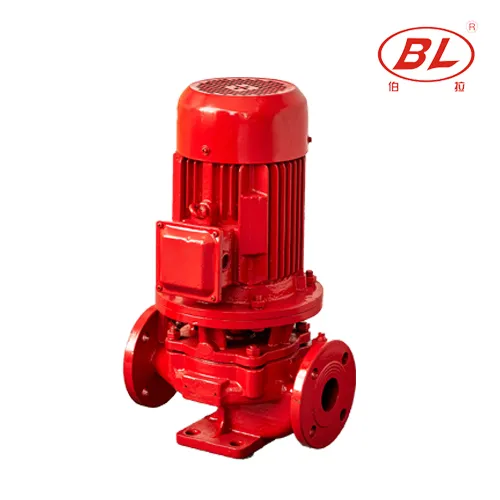
The choice between an inline pump and an end suction pump is mainly a system-layout and maintenance decision after the hydraulic duty is known. Both can be centrifugal pumps and both must be selected from the required flow, total dynamic head, liquid, temperature, operating range, NPSH margin, materials, motor, and controls. An inline pump places suction and discharge on a common pipe axis, often reducing floor space and simplifying straight-through piping. An end suction pump takes liquid axially into the impeller and normally discharges radially, often giving familiar base-mounted access and a broad selection range. Neither arrangement is universally more efficient or more reliable; compare certified curves and the complete installation.
Ce guide est un cadre d'ingénierie et d'approvisionnement préliminaire. Confirmez chaque valeur calculée, limite de fonctionnement, exigence de sécurité et obligation réglementaire par rapport aux documents actuels du projet, aux données approuvées du fabricant et à l'examen de l'ingénieur responsable avant de sélectionner un équipement ou de modifier un système installé.
Compare the layouts, not just the names
Vertical inline pumps can fit crowded mechanical rooms because the motor and pump rise above the pipe centerline. Horizontal inline variants also keep straight-through connections. End suction pumps normally need more floor length, a base, alignment provisions when separately coupled, and a change in piping direction. Those differences affect structure, lifting access, nozzle loads, drainage, and removal paths. An inline pump saved on floor area can become difficult to service if the ceiling, pipe rack, or lifting route is ignored. An end suction pump can be easy to inspect but expensive to install if the base and piping are poorly coordinated. Draw the installed envelope, not only the pump outline.
Hydraulic selection remains the first gate
Build the system curve and identify normal, minimum, and maximum operating conditions. Compare each candidate's flow-head curve, efficiency, absorbed power, recommended operating range, shutoff head, NPSH requirement, and motor rating. A label such as inline or end suction does not reveal efficiency at the duty point. Check liquid temperature and properties, suction pressure, altitude, and whether speed control is planned. For parallel operation, compare combined curves and control logic. Avoid selecting a pump only because its connection size matches the pipe. Pipe size is chosen from system hydraulics and velocity criteria; the pump nozzle can legitimately differ when transitions are designed correctly.
Review suction piping and NPSH
Both arrangements need a stable, air-free suction flow and enough NPSH available. Avoid high points that trap air, unsupported piping, abrupt disturbances close to the inlet, and reducers arranged in a way that collects gas. Follow the manufacturer's required straight-run and fitting guidance rather than a universal rule. An end suction pump often makes the axial inlet visually obvious, while an inline casing can tempt designers to treat it like a valve placed anywhere in the pipe. It is still a pump with inlet-flow requirements. Calculate suction losses at the worst flow and temperature, include filters and strainers, and compare NPSH across the operating range with the project's margin criterion.
Table de décision du projet
| Decision point | Inline pump | End suction pump |
|---|---|---|
| Pipe connection layout | Suction and discharge usually share an axis | Axial suction and radial discharge |
| Floor space | Often compact | Usually needs more base length |
| Service access | May require vertical lifting clearance | Often offers horizontal/back-pull-out access |
| Foundation/support | Manufacturer-specific frame or structural support | Commonly base and foundation arrangement |
| Hydraulic suitability | Depends on certified curve and system | Depends on certified curve and system |
| Best choice | When straight-through layout and maintainability both work | When base-mounted access and duty range fit the site |
Installation and structural differences
A base-mounted end suction unit may require a rigid foundation, grout, coupling alignment, pipe-strain checks, and re-alignment after piping. A close-coupled design changes those tasks but does not eliminate nozzle-load and support requirements. An inline pump may be supported by the building, a dedicated frame, or the piping arrangement defined by the manufacturer; it should not be left hanging from unverified pipework. Consider center of gravity, seismic requirements, vibration isolation, access platforms, drain routing, motor terminal access, and lifting points. Verify whether the motor can be removed vertically without cutting pipe or dismantling the ceiling. Installation drawings should show service clearances and component-removal paths.
Maintenance and lifecycle access
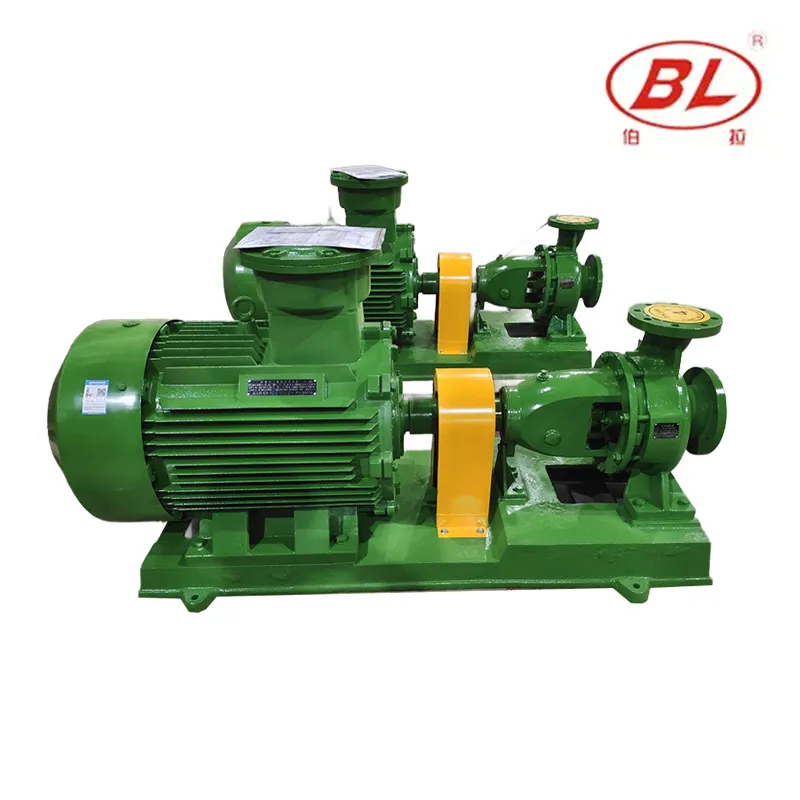
List expected tasks: seal inspection or replacement, bearing work, coupling inspection, motor removal, impeller access, casing drain, alignment, and condition monitoring. Ask what must be disconnected for each task and whether a standby pump is available. Inline pumps can offer compact cartridge or motor removal in some designs, but a tall vertical lift may require permanent handling equipment. End suction back-pull-out designs may allow the rotating assembly to be removed while leaving casing and piping in place, provided clearance exists. Compare actual manuals, spare parts, technician skills, and outage duration. The best layout is the one the site can safely isolate, drain, lift, inspect, and return to service.
Make the final comparison on one data sheet
Issue both suppliers the same duty points, liquid data, system curve, operating hours, control method, voltage, environmental conditions, materials, seal requirements, nozzle and flange standard, base or support scope, tests, documentation, and delivery boundaries. Request dimensional drawings, weights, lifting points, curves, motor data, NPSH, allowable nozzle loads, vibration criteria, and maintenance instructions. Score hydraulic fit, efficiency at actual operating points, installation cost, service clearance, spares, and lifecycle risk separately. During commissioning, record flow, pressure, current, vibration observations, valve positions, control response, leaks, and baseline noise. Do not declare one configuration superior based only on purchase price or footprint.
Comment comparer les offres des fournisseurs
For a lifecycle comparison, price the complete installed and maintainable arrangement. Include foundation or support steel, base and grout, flexible connectors only where justified, isolation and check valves, reducers, instruments, alignment work, lifting equipment, access platform, drainage, vibration monitoring, spare seal or cartridge, and the labor to remove the motor or rotating assembly. Check whether the quoted motor efficiency class, enclosure, bearing arrangement, and seal are equivalent. Review how each pump behaves at minimum flow and under variable-speed control, including the location of the duty points on its curve. A compact inline quotation can lose its advantage if ceiling work or a permanent hoist is required; an end suction quotation can become expensive if civil work and alignment are omitted. Make exclusions visible and compare energy at representative operating hours rather than at one ideal point.
Comment ce guide se connecte à l'équipement BORRAPUMP
Cet article soutient l'examen préalable des projets pour inline pump vs end suction pump gamme de produits. Il n'attribue pas de modèle final. Veuillez envoyer les conditions de service, les données sur le liquide, l'alimentation électrique, les plans d'installation, les commandes, la quantité et la destination afin de pouvoir vérifier la configuration du produit par rapport au projet réel.
Guides d'ingénierie BORRAPUMP associés
Authoritative sources and further learning
U.S. Department of Energy Pump Systems Hydraulic Institute Pump FAQs OSHA Control of Hazardous Energy. These sources establish general engineering, safety, or regulatory context; the current adopted rules, equipment manuals, and project approvals remain controlling.
Educational video by Practical Engineering: Do Pumps Create Pressure or Flow?. It explains background principles and does not replace project-specific instructions.
Foire aux questions
Is an inline pump always more compact?
It usually uses less floor area, but the complete service and lifting envelope may still be large.
Which type is more efficient?
Compare certified curves at the actual duty points. Configuration name alone does not determine efficiency.
Can an inline pump be supported only by piping?
Use the manufacturer's support instructions and a verified structural design; do not assume the pipe can carry the equipment.
Which pump is easier to maintain?
It depends on the exact construction, removal path, lifting equipment, isolation, spares, and site skills.
Final procurement checkpoint
Before order placement, reconcile the approved duty and drawings with the supplier curve, motor or driver, materials, dimensions, weights, connections, controls, accessories, tests, documentation, spare parts, delivery boundary, and destination requirements. Record every assumption that remains open. Installation, electrical work, hazardous-liquid handling, fire-protection work, excavation activity, and energized testing must be performed by qualified personnel under approved procedures and applicable rules.