
Buildings that cannot rely on the incoming supply to hold service pressure at every fixture add pressure-raising equipment, and vertical multistage pumps are one of the common machines applied to that duty. The vertical arrangement keeps the footprint small…
Réponse directe
Vertical multistage pump selection for building pressure starts from the project’s verified flow, pressure, and control concept; staging is a means of reaching a pressure duty in a compact footprint, not a specification by itself. Cet article est un outil d'aide à l'examen de projets destiné aux entrepreneurs, ingénieurs, distributeurs et équipes d'approvisionnement. Il ne remplace pas un ingénieur, une autorité, un plan de mise en service ou la documentation vérifiée du fabricant de l'équipement.
1. Where Vertical Multistage Pumps Fit
Buildings that cannot rely on the incoming supply to hold service pressure at every fixture add pressure-raising equipment, and vertical multistage pumps are one of the common machines applied to that duty. The vertical arrangement keeps the footprint small for plant rooms, and the multistage construction reaches pressure duties that single-stage machines of similar size do not. Neither fact selects a pump: they explain why the family appears on shortlists for building supply, pressure boosting, and similar clean-water services.
This article walks the selection as a review process for building projects: the inputs that must exist, the integration questions, and the data an inquiry should carry.
2. Selection Inputs the Project Provides
A defensible selection cannot begin until these inputs exist in writing with sources.
| Entrée | What the project documents |
|---|---|
| Demand flow | The design flow and how it varies through the day, from the building design. |
| Required pressure | The pressure needed at the critical fixture or level, from the hydraulic design. |
| Incoming supply | The available source pressure and its variation, from records or the utility. |
| Water description | Temperature and quality, confirming a clean-water duty. |
| Concept de contrôle | How the system responds to varying demand, from the project design. |
| Space and access | Plant-room dimensions, service clearances, and routing. |
3. Why Staging Suits Pressure Duties
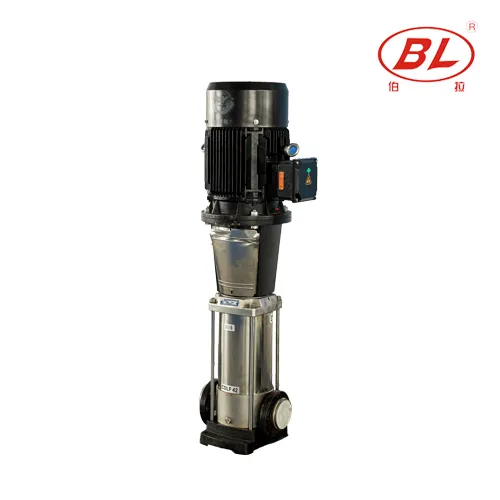
A multistage pump stacks impellers so each stage adds energy to the same stream. The concept matters for buildings because pressure duties there are usually about height and fixture requirements rather than large volumes, and a staged machine reaches such duties in a slim vertical package. The right number of stages for a given duty is an outcome of engineering selection against manufacturer curves, never a figure carried from another project.
Treat stage count, motor size, and material options as results of the verified duty, and the shortlist stays honest.
4. System Integration Questions
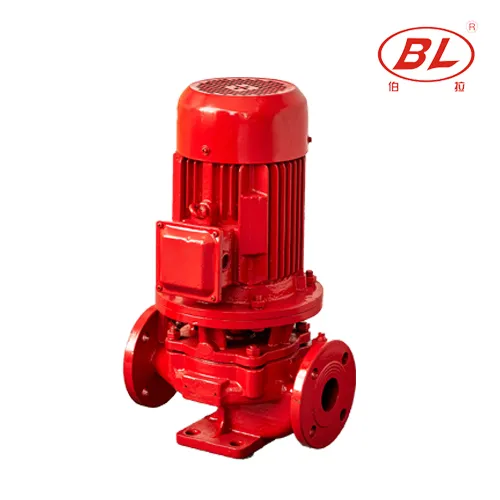
A building pressure pump lives inside a system: controls that start, stop, or modulate it as demand changes, any tanks or vessels the design uses to stabilize operation, isolation and check arrangements for service, protection against running without water where the design requires it, and instrumentation that lets the operator see what the system is doing. Which of these apply, and how, comes from the project design documents.
During review, trace each integration item to its drawing and specification reference; unattributed features in a quotation are questions, not bonuses.
5. Single Pump vs Packaged Booster Sets
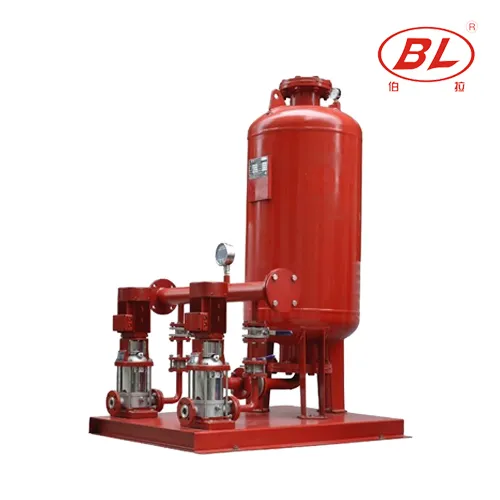
Many building duties are served by packaged sets that combine several pumps with controls on one base.
| Aspect | Single pump | Packaged set |
|---|---|---|
| Variation de la demande | One machine follows the whole profile. | Duty can be shared and rotated across pumps per the control design. |
| Continuité du service | Service takes the duty offline unless the design adds standby. | Design may allow service on one pump while others carry duty. |
| Scope character | Component purchase; integration is by the project. | Supplier-integrated package; scope boundaries must be stated. |
| Review focus | Duty match and system integration items. | Package scope, controls documentation, and interface points. |
The choice is a design decision from the demand profile and continuity expectations, made before brands are compared.
6. RFQ Checklist for Building-Pressure Duties
The inquiry carries the demand and pressure data with sources, the incoming supply information, the water description, the control concept, the plant-room constraints, the preference between single pump and packaged set if one exists, and the documents required. Ask suppliers to identify specific models, the curves behind the offered duty, and exactly what the package includes and excludes, and keep those answers as the acceptance reference.
Voir le Guide de la pompe de surpression BORRAPUMP pour des ressources associées, ou contactez BORRAPUMP avec des données de projet contrôlées pour une discussion sur les lots.
7. Limites d'adéquation et de conformité
Cet article ne certifie aucun système, ne dimensionne aucun équipement et ne revendique aucune approbation par rapport à une norme, une homologation ou une autorité locale mentionnée. Il s'agit d'une aide à l'examen. Le choix final, l'installation, les essais et la réception nécessitent les documents du projet en cours, les professionnels responsables, les autorités applicables et les données vérifiées du fabricant pour l'équipement spécifique fourni.
FAQ
À quoi sert une pompe multicellulaire verticale dans les bâtiments ?
Généralement pour les applications de surpression dans l'alimentation en eau propre des bâtiments, lorsqu'une machine verticale compacte doit atteindre la pression requise par la conception hydraulique.
De combien d'étapes a besoin un service de construction ?
Le nombre d'étages est le résultat d'une sélection par rapport aux courbes du fabricant pour les conditions de service vérifiées. Ce n'est pas un chiffre à copier d'un projet à l'autre.
Quels intrants doivent exister avant que la sélection ne commence ?
Débit de demande documenté, pression requise au point critique, données d'alimentation entrante, description de l'eau, concept de régulation et contraintes du local technique.
Quand un surpresseur monobloc est-il préférable à une pompe unique ?
Lorsque le profil de la demande et les attentes en matière de continuité de service dans la conception du projet favorisent le partage et la rotation des tâches. Il s'agit d'une décision de conception, et non d'une option par défaut.
Une pompe multicellulaire verticale gère-t-elle l'eau sale ?
These machines are generally applied to clean-water duties. The water description is confirmed against the manufacturer’s data during selection.
What should a comparable quotation include?
Specific model identification, the curve basis for the offered duty, materials, controls and package scope with inclusions and exclusions, and the requested documents.