
Job-site language sorts pumps into casual families: trash pumps for dirty water full of debris, drainage pumps for getting water out of the way. The labels are useful shorthand and terrible purchase criteria, because different manufacturers draw the lines…
Direct Answer
Trash pump vs drainage pump is a naming comparison, not a specification: the labels signal what a product family emphasizes, and only the manufacturer’s verified data confirms what a specific model passes and delivers. This article is a project-review aid for contractors, engineers, distributors, and procurement teams. It does not replace an engineer, an authority, a commissioning plan, or the equipment manufacturer’s verified documentation.
1. Naming Is Not a Specification
Job-site language sorts pumps into casual families: trash pumps for dirty water full of debris, drainage pumps for getting water out of the way. The labels are useful shorthand and terrible purchase criteria, because different manufacturers draw the lines differently and neither label carries a number. Two products wearing the same name can differ in what they pass, how they are serviced, and how they are driven.
The productive move is to treat the label as a starting shelf, then compare documented site needs against verified data for specific models. This article structures that comparison for crews and buyers, and it applies whether the equipment is being purchased, rented, or pulled from an existing fleet, because the mismatch costs the same in every case.
2. What Each Label Usually Emphasizes
As shorthand, the two names lean toward different priorities.
| Aspect | Trash pump as a label | Drainage pump as a label |
|---|---|---|
| Duty emphasis | Moving water heavily loaded with solids and debris. | Removing accumulating water from pits, floors, or excavations. |
| Typical construction cue | Designs that pass larger solids and open for clearing. | Compact units, often submersible, sized for the sump or pit. |
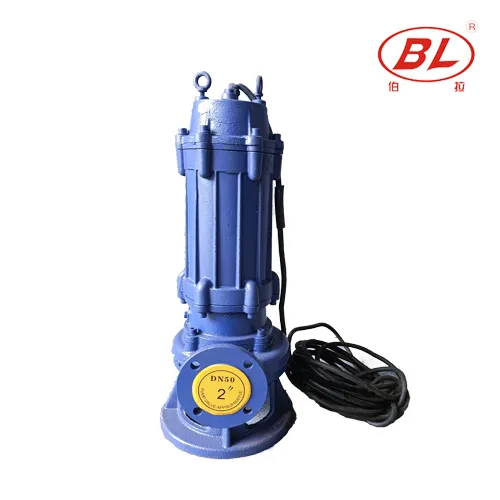
| Common arrangement | Surface units, frequently engine-driven and mobile. | Electric submersible units with level control where fitted. |
| What the label omits | Actual solids size, flow, and lift for the model. | Actual solids tolerance and duty limits for the model. |
Every cell above is tendency, not fact, which is exactly why the verified data sheet decides.
3. Solids-Handling Questions to Verify
Solids handling is where the naming causes the most trouble. For any candidate model, ask what solids size the manufacturer states it passes, how the design behaves with stringy or fibrous debris, how the pump is opened and cleared on site, and what wear the expected solids impose on wetted parts. Then hold those answers against a written description of the water the site actually has, not the water the label implies.
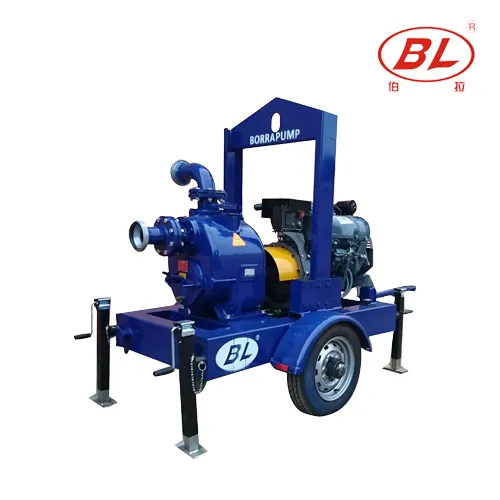
If the site cannot describe its water, that is the first task: sample it, note debris types, and record how conditions change with weather and work phases.
4. Site Logistics and Driver Questions
The two shelves also differ in how they usually arrive on site. Engine-driven surface units bring mobility and independence from site power, along with fueling, towing, and securing routines. Electric submersibles bring quiet, compact operation, along with cable routing, supply reliability, and retrieval-for-service questions. Neither set is better; the site’s power situation, attendance plan, and relocation frequency decide which routine the crew can actually sustain.
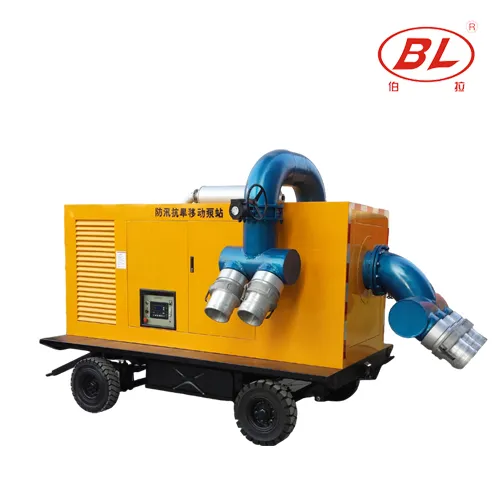
Write the logistics answer down alongside the hydraulic duty, because it eliminates candidates just as firmly.
5. Data to Collect Before Choosing
Whichever shelf looks likely, the decision needs the same written inputs.
| Input | Why it decides |
|---|---|
| Water description | Solids type and load bound the feasible designs and the screening plan. |
| Duty data | Required flow and lift with their source, not a guess at the counter. |
| Power and mobility | Available supply, fueling capability, and how often the setup moves. |
| Service plan | Who clears blockages and how fast the pump must return to work. |
| Discharge conditions | Where the water may go and what the project documents require on the way. |
6. Procurement Checklist
Send the inquiry with the water description, the duty data and sources, the arrangement preference if one exists, the power and mobility situation, the service plan, the discharge conditions, and the documents required. Ask suppliers to quote specific models with verified solids and duty data rather than family names, and file their answers as the acceptance reference for delivery.
See the BORRAPUMP Drainage Pump guide for related resources, or contact BORRAPUMP with controlled project data for a package discussion.
7. Fit and Compliance Boundary
This article does not certify a system, does not size equipment, and does not claim approval to any named standard, listing, or local authority. It is a review aid. Final selection, installation, testing, and acceptance require the current project documents, responsible professionals, the applicable authorities, and the manufacturer’s verified data for the specific equipment supplied.
FAQ
Une pompe de vidange est-elle simplement une pompe de drainage plus puissante ?
No. The names emphasize different duties, and neither is a specification. A specific model’s verified data states what it passes and delivers.
Une pompe de drainage peut-elle gérer de l'eau chargée de débris ?
Only if the specific model’s verified data says so. The label alone does not establish solids tolerance.
Quelles informations solides un acheteur devrait-il demander ?
Les solides indiqués que le modèle fait passer, le comportement avec les débris fibreux, comment la pompe s'ouvre et se nettoie, et l'attente d'usure pour l'eau décrite.
Quoi de mieux pour une excavation inondée ?
Quelle que soit la route qui correspond à la situation documentée en matière d'eau, de devoir, de puissance et d'accès. Les données du site décident, pas l'étiquette.
Les deux parcours nécessitent-ils un plan de sortie ?
Oui. L'eau du chantier transporte généralement du limon ou des débris, et les documents du projet précisent où et comment elle peut être rejetée.
What should a quotation contain to be comparable?
Specific model identification, verified duty and solids data with stated conditions, the service and documentation scope, and clear inclusions and exclusions.