
In a trash pump vs slurry pump comparison, the important difference is the solids-handling duty. A trash pump is commonly selected for dirty water containing intermittent debris. A slurry pump is selected around a sustained mixture of liquid and solids, where abrasion, concentration and sometimes viscosity influence the entire hydraulic design. Passing a large pebble once does not prove that a pump can move abrasive mineral slurry throughout a shift. Compare the actual liquid, particles, operating point and maintenance duty before choosing either category. This guide explains the boundary for contractors and industrial buyers evaluating temporary drainage, quarry water and solids-bearing transfer.
Start with the mixture, not the pump name
The word trash usually describes unwanted material in otherwise water-like drainage: leaves, small stones, pieces of vegetation and other site debris. The word slurry describes solids carried in liquid as part of the process. Neither word is a complete specification. Two sites may both call their liquid muddy water while one has occasional soft silt and the other has a continuous load of sharp mineral particles. That difference can change wear, power demand, blockage risk and the suitability of a proposed pump.
Record how the mixture changes after rain, during excavation and near the end of drawdown. Take representative samples rather than selecting from the cleanest-looking surface water. Ask whether settled solids become concentrated at the intake. Guidance on solids-bearing fluids from the Hydraulic Institute explains why particle characteristics and the mixture itself belong in pump selection. A photograph of the water is useful context, but it cannot replace those observations.
Compare the selection questions side by side
The table is a qualitative decision aid, not a product rating. Different designs exist within both categories. Obtain the selected model’s documented limits and any required corrections for the real mixture before purchase.
| Question | Dirty-water trash duty | Slurry duty | What the buyer should provide |
|---|---|---|---|
| Why are solids present? | Intermittent debris enters drainage water | Solids form a persistent part of the process stream | Source of water and expected changes during operation |
| What can block the passage? | Oversize debris, rags and tangled vegetation | Coarse particles, agglomerates and settling deposits | Largest credible particle plus shape and fibrous content |
| What controls wear? | Debris hardness and frequency still matter | Particle hardness, concentration and velocity often dominate | Material identity, representative samples and duty hours |
| How is performance checked? | Verify flow and head at the installed operating point | Also review mixture effects and any supplier corrections | Flow range, pipeline profile and measured fluid properties |
| What happens during a stop? | Loss of prime or trapped debris may delay restart | Settled solids may obstruct the pump or line | Shutdown duration, flushing provision and restart procedure |
Solids passage is only one part of suitability
Solids passage describes a geometric clearance under the manufacturer’s stated definition. It does not automatically define abrasion resistance, permitted concentration or ability to handle long fibers. A round stone and a flexible rag can interact with the same passage very differently. Inlet size also is not proof of the internal passage size. Request a clear written description of the model’s solids-handling limit, including the kind of solids and the conditions behind that statement.
For a closer discussion of this distinction, use our trash pump solids-size guide when it is published. If a quotation gives only the inlet connection diameter, treat the solids limit as unanswered. Do not test an unknown pump by deliberately feeding an oversize object into it. Inspection and blockage removal require shutdown, isolation and the equipment’s maintenance procedure.
Separate abrasive wear from immediate blockage
A pump may deliver water normally while hard particles gradually wear its casing, impeller, seal environment or other wetted parts. The absence of a blockage does not show that the selection is durable. Particle shape matters as well as size: angular mineral fragments may behave differently from rounded organic debris. Duty duration matters too. A brief emergency drawdown and continuous mineral processing should not be assigned the same maintenance assumptions.
Ask the supplier which wetted components are designed for the proposed mixture and what inspection points indicate developing wear. Avoid assigning a service-life number without relevant field data. For drainage with changing silt levels, describe both normal and worst credible conditions. Our muddy-water pump selection discussion explains how intake position and sediment management can reduce avoidable loading, while still leaving material suitability to the specific selection.
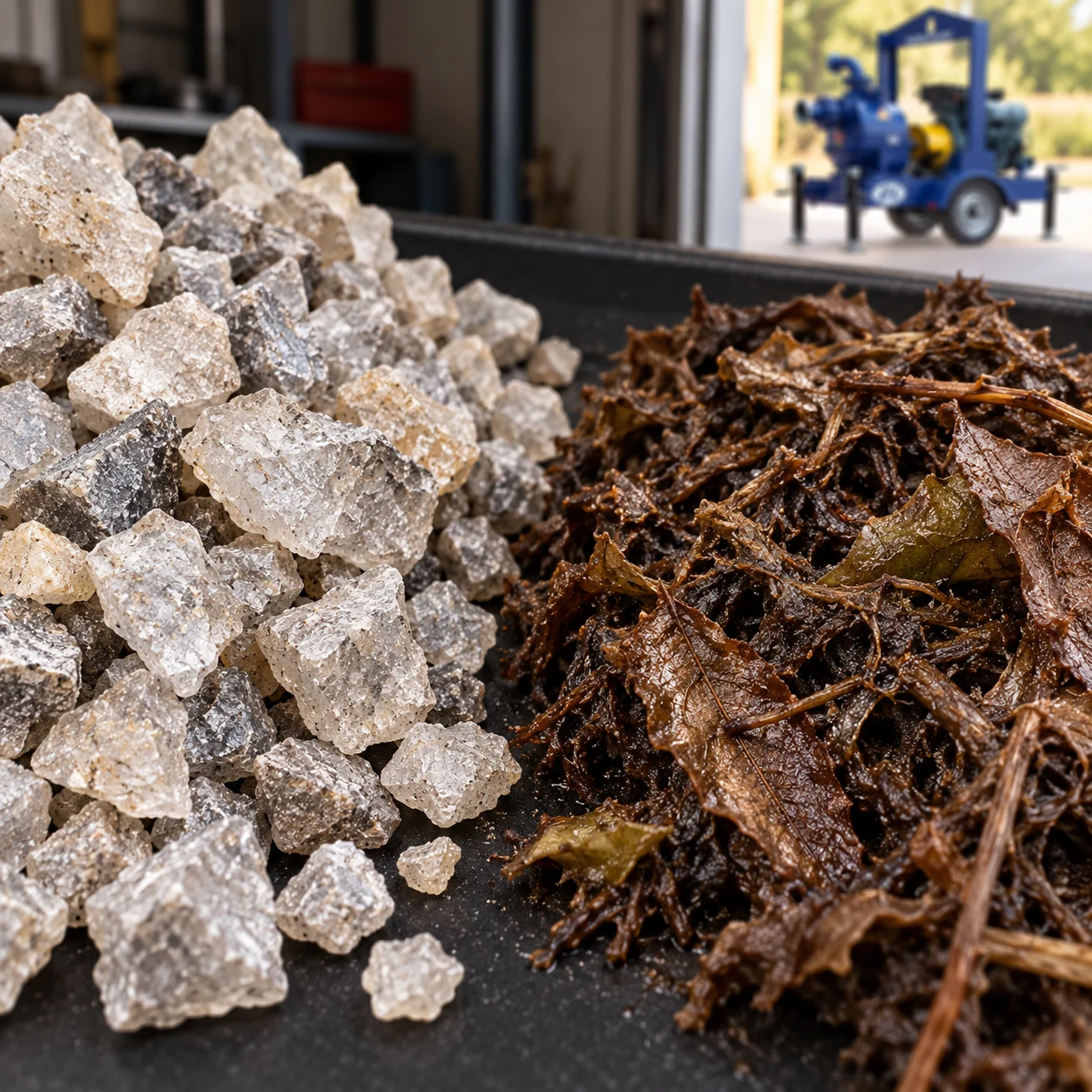
Concentration and viscosity change the engineering task
Use an agreed definition when reporting concentration. A percentage by mass and a percentage by volume are not interchangeable. Tell the supplier which method produced the value and provide particle material or density information when known. A single sample taken immediately after flushing may understate the mixture seen during production. Repeated observations across the operating cycle give a more useful selection basis.
Some mixtures remain close to water in behavior; others become more viscous or develop more complex flow behavior. Do not assume a water performance curve applies unchanged to every slurry. Ask whether hydraulic, power or wear corrections are required and which data supports them. Where laboratory testing is needed, arrange it before locking in pump size. The USGS guidance on sediment transport measurement provides context for collecting meaningful sediment information; an engineering selection still needs the site’s actual mixture and duty.
Evaluate flow, head and the full pipeline
Choose an operating point using the required delivered flow and the resistance of the installed system. Include elevation changes, pipe or hose length, fittings and the condition of the discharge destination. A pump’s maximum flow and maximum head are separate limits and should not be combined into a fictional operating point. The US Department of Energy pumping-system sourcebook explains the value of assessing the whole system rather than the pump alone.
For solids-bearing lines, ask whether the proposed flow keeps the material moving without creating unacceptable wear. The appropriate answer depends on the mixture, line and duty; there is no universal velocity that this article can safely assign. Long shutdowns can leave deposits that make restart harder. Our dewatering head calculation guide helps organize the water-system inputs, but slurry-specific adjustments must come from a qualified selection.
Match priming and installation to the real site
A surface-mounted pump needs a viable suction arrangement. Review the vertical difference to the water surface, intake submergence, airtight connections and hose suitability under suction conditions. Lowering the water level can increase the suction challenge even if the discharge route remains unchanged. A successful initial prime is not evidence that the pump will remain suitable throughout the full drawdown.
Some slurry installations use arrangements designed specifically around flooded suction, process vessels or continuous feed. Do not transfer the setup of a temporary trash-water trailer pump into such a process without review. Conversely, a process-oriented selection may be unnecessarily complicated for intermittent drainage of water-like liquid. Compare installation, maintenance access, power availability and the consequences of a stop alongside the hydraulic duty.
Consider containment, maintenance and restart
Plan where drained water and removed material will go. Solids handling at the pump does not authorize discharge of contaminated water, nor does a clear-looking outlet prove that treatment requirements are met. Include settling or treatment arrangements where the project requires them. Protect the pump’s intake from large foreign objects while keeping the intake arrangement compatible with the required flow and available suction conditions.
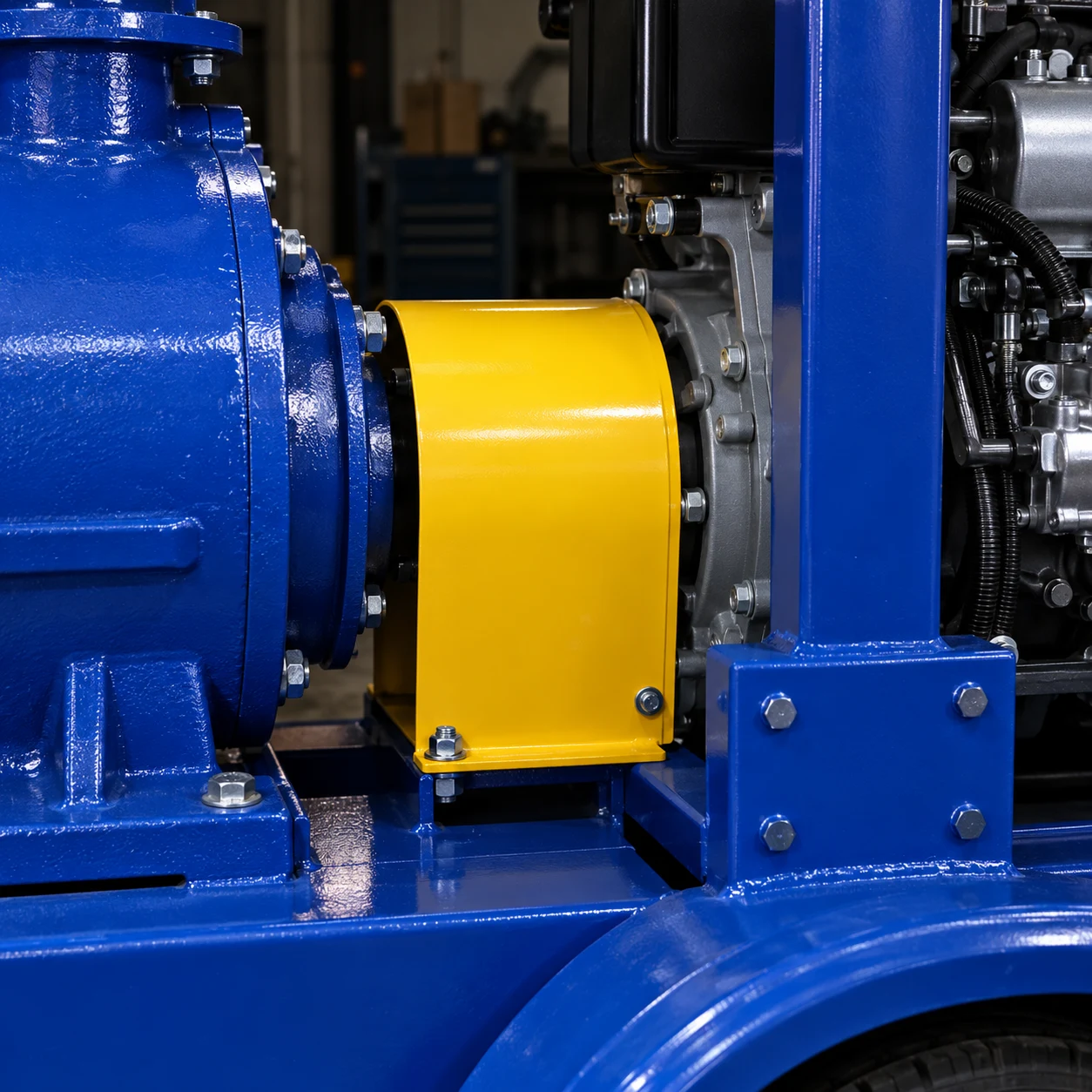
A maintenance plan should identify inspection access, safe isolation, replacement wear parts, spare seals where appropriate and the expected shutdown procedure. Review flushing with the supplier rather than assuming clean water can always be added to a process mixture. Keep coupling guards and other protective covers installed during operation. A long maintenance interval in an unrelated clean-water application is not evidence for the proposed solids-bearing duty.
Choose a Borra product only within its documented boundary
Le Borra SCPY trash-water trailer pump is a product to discuss for relevant mobile drainage duties. Its product identity does not establish a blanket mineral-slurry rating. Provide the mixture description, flow and head range, suction conditions and expected running hours for review. If a sustained abrasive or viscous slurry exceeds the verified product boundary, request an appropriate alternative rather than forcing a trash-pump selection.
Use the trailer pump product category to compare mobile configurations, then make the inquiry specific. Include the largest particle, fibers, concentration method, sampling conditions, destination country and site access. Ask the supplier to state confirmed suitability, exclusions and required maintenance in the quotation. This approach makes competing proposals easier to compare and reduces the chance of buying equipment on a vague solids-handling claim.
Foire aux questions
Can a trash pump move slurry?
Some water-like mixtures with solids may be suitable for a particular trash pump, but sustained abrasive or viscous slurry needs specific review. Obtain confirmation for the actual mixture and duty instead of relying on the category name.
Does a larger inlet mean a larger solids passage?
No. The inlet connection diameter and the documented internal solids passage describe different things. Ask for the model’s stated passage and solids-handling conditions.
Why does a pump wear even when it never blocks?
Particles can pass through while gradually eroding wetted parts. Hardness, shape, concentration, velocity and operating hours affect wear independently of immediate blockage.
What information should a buyer send first?
Send the liquid source, representative solids description, concentration method, flow and head range, suction arrangement, duty hours and shutdown conditions. Add samples or test results when the mixture requires them.
Formation continue
This independent educational lecture provides background for the fluid and pump principles discussed above. It does not verify a Borra product rating or replace the project selection.

Watch NPTEL IIT Kharagpur: Lecture 51 : Fluid – solid transport