
Centrifugal pump spare parts identification starts with the installed pump’s serial number, assembly drawing and bill of materials, not a photograph or a nominal connection size. A replacement must match the applicable revision, material, dimensions and operating duty. Two parts that look alike can have different fits, rotation details, seal interfaces or hydraulic geometry. Before ordering, connect each requested item to a documented position in the actual assembly and obtain written confirmation of any proposed substitution. This guide explains how a buyer and maintenance team can build that evidence without treating visual similarity as proof of interchangeability.
Start with the installed assembly, not the catalog family
Record the equipment tag, manufacturer, complete model designation and serial number from the installed unit. Photograph the nameplate straight on and transcribe it into the inquiry. Keep the original photograph alongside the transcription so an ambiguous character can be checked. Add the installation location and work-order number to prevent records from two similar pumps being mixed during an outage.
A family name may describe many configurations. The supplied unit can differ in impeller diameter, shaft length, seal arrangement, motor interface or material combination. Describe any documented modifications since commissioning. If a replacement motor, repair shaft or changed seal chamber was installed previously, the original sales literature may no longer represent every component in service. Ask which drawing revision applies to the current assembly before requesting a quotation.
Reconcile three identifiers for every requested item
The equipment identifier locates the pump. The drawing position locates the component within that pump. The part number and revision define the item being supplied. Put all three on the purchase request rather than sending a handwritten list such as bearing, seal and gasket. A drawing position alone is not a complete part specification when the same drawing covers alternative materials or sizes.
If the old part carries a marking, record it exactly, including suffixes and symbols. A bearing designation can include details beyond its basic size. A casting number can identify an unfinished casting rather than the fully machined spare. Markings therefore support identification but must be reconciled with the bill of materials. When numbers conflict, preserve both records and request clarification; do not silently choose whichever number appears in stock.
Build an interchangeability evidence table
Use a table to separate confirmed matches from open questions. The decision is whether the proposed item is approved for the actual assembly and duty, not whether it belongs to a similar pump family. This is a procurement control sheet, not a universal dimensional acceptance standard.
| Verification item | Bukti untuk diminta | Reason to hold the order |
|---|---|---|
| Identitas peralatan | Nameplate, serial number and assembly revision | Supplier cannot link the spare to the installed unit |
| Component identity | Bill-of-material position and current part number | Casting mark is offered as the only identifier |
| Mating dimensions | Controlled drawing and applicable tolerances | Nominal diameter matches but fits are unspecified |
| Material and seals | Material specification and fluid-duty confirmation | Substitute is described only as equivalent metal or rubber |
| Hydraulic configuration | Impeller identification, diameter and relevant geometry | Similar appearance is the only hydraulic comparison |
| Dokumentasi | Written substitution approval and inspection requirements | Approval is verbal or excludes the actual service conditions |
Itu EPRI vertical pump maintenance guide illustrates why critical dimensions and as-found/as-left records matter during pump refurbishment. Its guidance concerns the equipment covered by that document; it does not establish interchangeability for a BORRAPUMP model. Use the applicable supplied drawings for the final decision.
Check mating interfaces as a connected chain
A shaft, sleeve, key, impeller and seal do not work independently. The replacement shaft may fit the bearing while placing the impeller or seal at the wrong axial position. Compare functional interfaces across the assembly: bearing seats, shoulder locations, thread engagement, keyway geometry, sleeve interfaces and coupling attachment. The actual list depends on the pump construction and approved drawing.
For dimensional work, state how the measurement was taken and which datum was used. A diameter recorded without its location can hide a stepped seat or worn region. A length measured from an unspecified shoulder is difficult to compare. If damage prevents a reliable measurement, mark the value as uncertain and request the original dimension. Do not turn a worn component’s measured size into the target manufacturing dimension for its replacement.
Use the separate pump shaft keyway inspection guide when evaluating a damaged key joint. Identification of an available key does not resolve damage to the shaft slot or hub.
Separate mechanical fit from hydraulic suitability
An impeller can fit the shaft yet be unsuitable for the duty. Its geometry, diameter, rotation and interaction with the casing influence performance. Confirm the part against the original configuration and any approved rerating documentation. If a supplier proposes another impeller, request the engineering basis and relevant performance information instead of assuming that a matching bore guarantees equivalent operation.
Likewise, a casing or cover must satisfy more than bolt-hole alignment. Pressure boundaries, sealing faces, drain arrangements and material suitability need review against the actual service. The Buku sumber daya sistem pompa Departemen Energi AS treats pump performance as part of the wider system. A spare-part substitution should not be evaluated in isolation from the required flow, head and operating conditions.
Record the normal duty and known excursions in the inquiry. Avoid inventing a maximum temperature or pressure from a product image. Where the site’s limits are unknown, identify that missing information explicitly and obtain it from the responsible engineer before approving a substitution.
Specify materials and soft parts without guessing
Terms such as stainless, rubber or high temperature are incomplete purchase specifications. Request the applicable material designation, seal compound and relevant documentation for the service. Identify the pumped liquid, concentration where relevant, temperature range, cleaning chemicals and exposure conditions. Compatibility with the normal liquid does not automatically establish compatibility with a cleaning or preservation fluid.
For a seal assembly, confirm the complete arrangement and mating interfaces. A component with a matching outside diameter can have different working length or spring loading requirements. For gaskets, identify the correct joint and approved material rather than copying the compressed thickness of an old gasket. Existing parts provide useful evidence, but their deteriorated condition can distort both dimensions and material identification.
Do not machine or modify an uncertain spare simply to make it assemble. Any proposed alteration needs an approved disposition, suitable inspection and updated records. A convenient workshop adjustment can create an undocumented configuration that makes the next repair harder to identify.
Handle superseded and aftermarket part numbers transparently
A superseded part number may represent a direct replacement, a kit containing additional items or a change that requires another component to be replaced at the same time. Ask for the replacement chain and installation conditions in writing. Include any required companion parts in the purchase order so the maintenance team does not discover the dependency after dismantling.
For an aftermarket proposal, request evidence for the claimed equivalence and define who accepts the engineering responsibility. A dimensional comparison is useful but may not address material processing, hydraulic performance or fatigue-sensitive details. The level of documentation should reflect the consequences of failure and the site’s quality requirements. Neither a low price nor an original-looking package is an engineering acceptance criterion.
Record approved substitutions in the equipment history and revise the spare-parts list through the site’s document-control process. Keep the old identifier as a searchable reference. Otherwise, the next buyer may reorder an obsolete item because the replacement history exists only in an email inbox.
Inspect received parts before releasing them to maintenance
At receipt, compare the purchase order, delivery documentation and physical markings. Check for shipping damage, corrosion, preservation condition and missing components. Keep labels and certificates linked to the individual package. If several identical-looking items arrive together, maintain their traceability while packaging is opened and parts are moved to storage.
Perform the agreed inspections before the outage where practical. Verify the critical interfaces and documentation using approved methods, without damaging preserved surfaces. Quarantine mismatches rather than placing them in the usable spare bin. A part should not acquire approved status merely because it has been in the storeroom for several months.
Gunakan bearing-fit inspection guidance for the separate question of seat acceptance. A correct replacement bearing cannot compensate for an out-of-limit shaft or housing. Record both the part identification and the condition of the receiving assembly.
Prepare a useful BORRAPUMP inquiry package
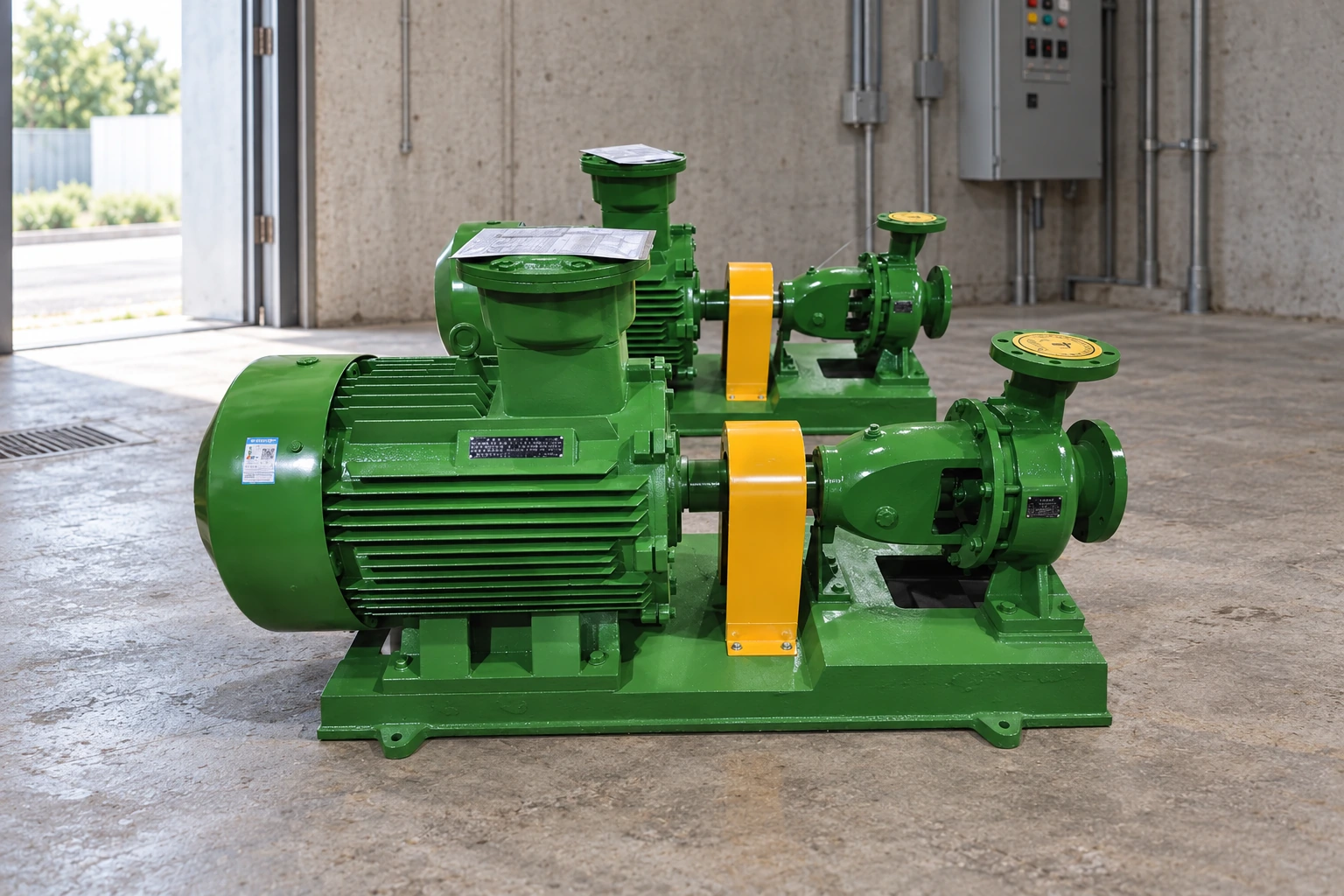
Untuk IS clean-water centrifugal pump range, begin with the actual supplied unit’s nameplate and documents. The product page helps identify the family; the illustration does not reveal every internal component or prove that a spare fits all units in that family. Send the serial number, drawing position, photographs, available part markings, service conditions and required quantity together.
If the pump cannot be identified confidently, request an identification review before a firm interchangeability decision. Explain what information is missing and whether the old part is available for controlled inspection. Provide the required delivery date, documentation requirements and inspection hold points. Those details make the inquiry actionable without implying that BORRAPUMP has already approved a replacement.
Keep this identification workflow alongside the broader dewatering pump maintenance schedule. Routine maintenance determines when work is needed; this guide controls what is ordered for that work. They answer different questions and should share the same equipment history.
For background on why nominal dimensions do not fully define a mating component, the NPTEL lesson below explains limits, fits and tolerances. It is general engineering education, not approval of a particular pump spare or a substitute for its drawing.

Pertanyaan yang sering diajukan
Can two pumps with the same model name use different spare parts?
Yes. Revisions, material options, impeller configurations and supplied arrangements can differ. Confirm the installed serial number and current bill of materials before ordering.
Is a casting number enough to identify a replacement?
Usually it is supporting evidence rather than a complete specification. The same casting may receive different machining or material treatment. Reconcile the marking with the finished-part number and drawing.
Should a worn shaft be copied for a new spare?
Not without an approved drawing and engineering review. Wear can change the dimensions, and copying those dimensions can reproduce a defective fit rather than the original design.
Does a matching bearing size prove interchangeability?
No. The complete designation, arrangement and specified interfaces still matter. Also inspect the shaft and housing because a correctly identified bearing cannot repair damaged seats.
What should happen when the proposed part number differs?
Hold the order until the supplier explains the revision or substitution, identifies required companion parts and provides the documentation needed for the site’s acceptance process.