
Deep well vs wellpoint dewatering is a choice between pumping groundwater from larger individual wells and drawing it through multiple small points connected to a surface suction system. Deep wells can suit deeper drawdown and productive water-bearing layers; wellpoints can suit distributed control around shallower excavations where the ground drains adequately. The decision depends on soil layering, permeability, groundwater pressure, excavation geometry, installation access, and the required response to a pump failure. Depth alone is not enough. Select the groundwater control method first, then specify pumps and support equipment from the verified design rather than choosing a familiar pump and assuming the ground will respond.
Understand what each system controls
A conventional wellpoint arrangement uses screened points connected by risers to a common header and surface pumping equipment. Groundwater moves toward the screens as pressure is lowered within the system. The header must handle the water collected and the air entering during startup or operation. Its position, elevation, joints, and connection to the pump all affect performance.
A deep-well arrangement uses larger screened wells with individual pumps, commonly submersible or vertical turbine equipment where the design requires them. Each well draws from the selected water-bearing layer and discharges through its own route or a collection main. The designer considers well penetration, filter construction, pump setting, operating level, and interaction between wells. The arrangement must control groundwater where the excavation needs it, not just produce a large flow at one borehole.
Neither method is simply a way to empty visible puddles. Sump drainage remains useful for surface runoff and local water collection, but removing collected water is different from lowering groundwater pressure before it reaches the excavation. Keep these duties separate in drawings and equipment schedules so that a sump pump is not mistakenly credited with controlling a deep pressurized layer.
Start with soil layers and groundwater evidence
A ground investigation should identify the layers requiring control, the water levels or pressures within them, and the material through which water must travel. Permeability, thickness, continuity, and boundaries influence both method selection and equipment quantity. A thin permeable seam over less permeable ground can behave differently from a thick, relatively uniform sand deposit, even where initial groundwater levels are similar.
NPTEL's dewatering design notes connect the investigation, pumping assessment, target drawdown, and well or point arrangement. Ask for observations tied to a common elevation datum and for the assumptions behind the proposed inflow. If the investigation identifies separate water-bearing layers, do not assume one water level describes all of them. The engineer may need piezometers or other observations at different depths.
A pumping trial can help assess groundwater response and refine assumptions. Record how the test was run, where levels were measured, and whether the test duration and pumping conditions represent the intended works. A short test that produces clear water does not automatically demonstrate that adjacent structures are unaffected or that the final excavation level can be maintained safely.
Compare the methods across the actual project constraints
| Faktor keputusan | Wellpoint arrangement | Deep-well arrangement |
|---|---|---|
| Collection method | Multiple screened points feed a shared suction header | Individual screened wells have their own pumping arrangements |
| Depth constraint | Surface suction conditions can require staging or another layout | Pump setting and well construction must suit the operating levels |
| Ground response | Point spacing and filters must match the soil and drawdown | Well penetration, yield and interaction must match the target layers |
| Site access | Allow room for header, points, protection and possible stages | Allow drilling access, wellheads, cables and discharge routes |
| Evidence for acceptance | Groundwater observations plus header and pump readings | Groundwater observations plus each well operating record |
The comparison table describes decision factors, not universal approvals. A project can use more than one method. For example, a designer may choose deep wells for a deeper water-bearing layer and a separate shallow drainage arrangement for water perched above a less permeable layer. The operating plan must explain how the components interact and which observation points demonstrate each required result.
NPTEL's explanation of wellpoint methods describes suction limitations and staged arrangements. Apply that discussion to the actual groundwater conditions rather than treating a textbook example as a universal product rating. For US excavation work, OSHA's excavation requirements also address accumulated water, precautions, and monitoring when water removal equipment is used. Determine the duties that apply to the particular work before excavation begins.
Examine suction limits and installation space
A surface wellpoint system must work within the suction capability of its complete arrangement. The pump elevation relative to the maintained water level, suction route losses, air leakage, and equipment design all matter. If the required lowering exceeds a verified single-stage arrangement, the designer may examine staged points, a different pump location, or another method. Increasing motor power does not eliminate the underlying suction constraint.
Staging can require additional space, access, installation work, and protection from construction traffic. Those requirements may conflict with a tight urban excavation or an excavation support sequence. Deep wells can sometimes be arranged around a work area with fewer surface collection points, but drilling access, well construction, utilities, headroom, and discharge routing still need review. Fewer wells do not automatically mean a simpler project.
Choose equipment against those practical limits. BorraPumps' QJ deep-well product family provides a relevant reference for slender borehole pump geometry, but a general irrigation product description does not independently establish suitability for a specific dewatering well. Verify water quality, minimum bore clearance, cooling requirements, pump setting, electrical arrangements, and operating curve for the proposed duty.
Distinguish borehole pumps from sump drainage pumps
A borehole pump must fit and operate within its well construction. Consider the casing diameter, screen design, water entry, cable route, permitted solids, and expected operating water level. The pump needs to remain within the manufacturer's cooling and operating limits as groundwater falls. A large maximum head on a catalogue page is not evidence that the equipment can tolerate abrasive groundwater or a low-yield well.
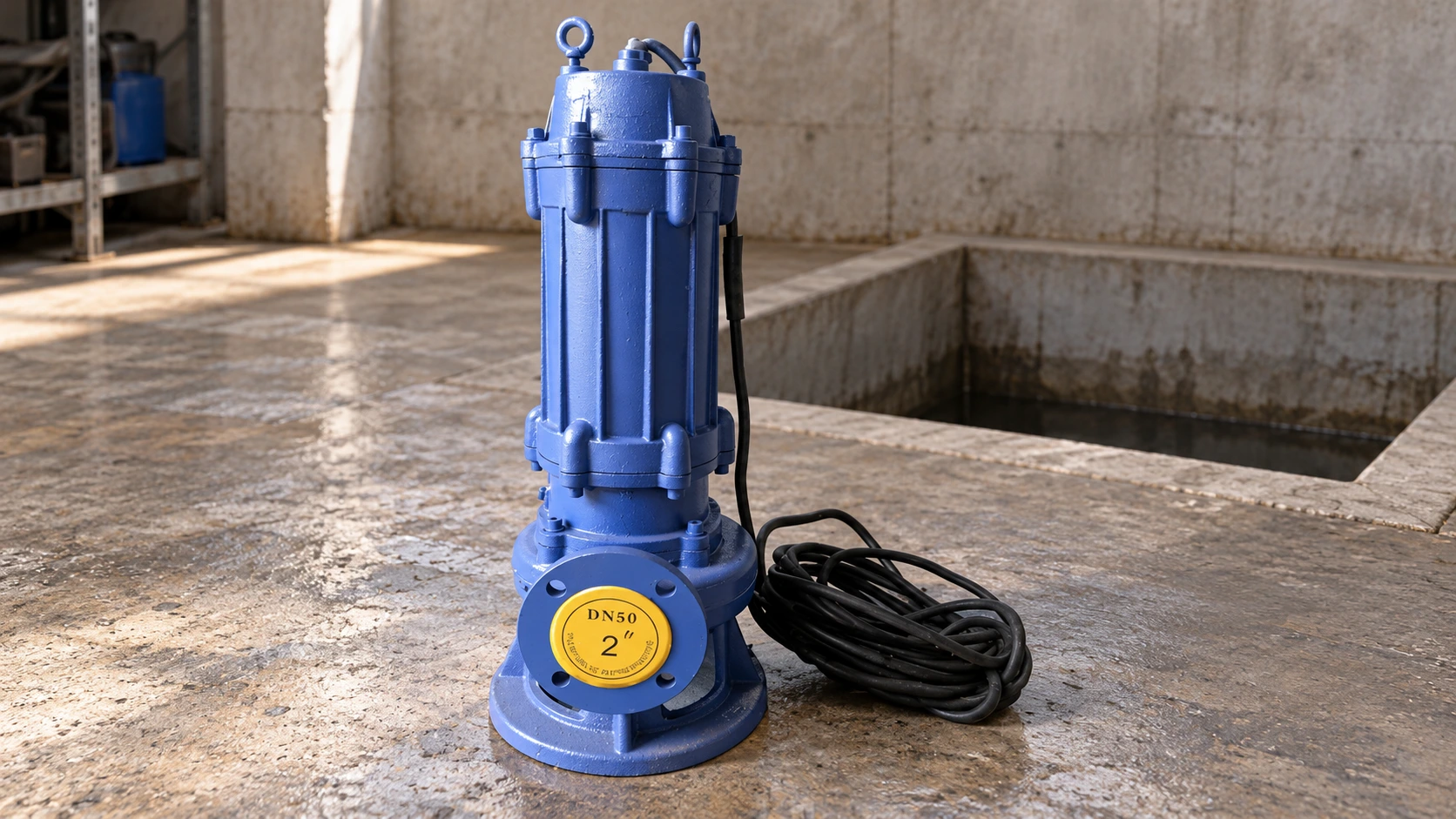
The WQ submersible sewage pump pictured below illustrates a different equipment family intended for drainage duties under its own specifications. Its wider casing, outlet position, and solids-related design should not be confused with a slender deep-well pump. The image is a product comparison, not a proposed installation in a borehole or evidence of groundwater control performance.
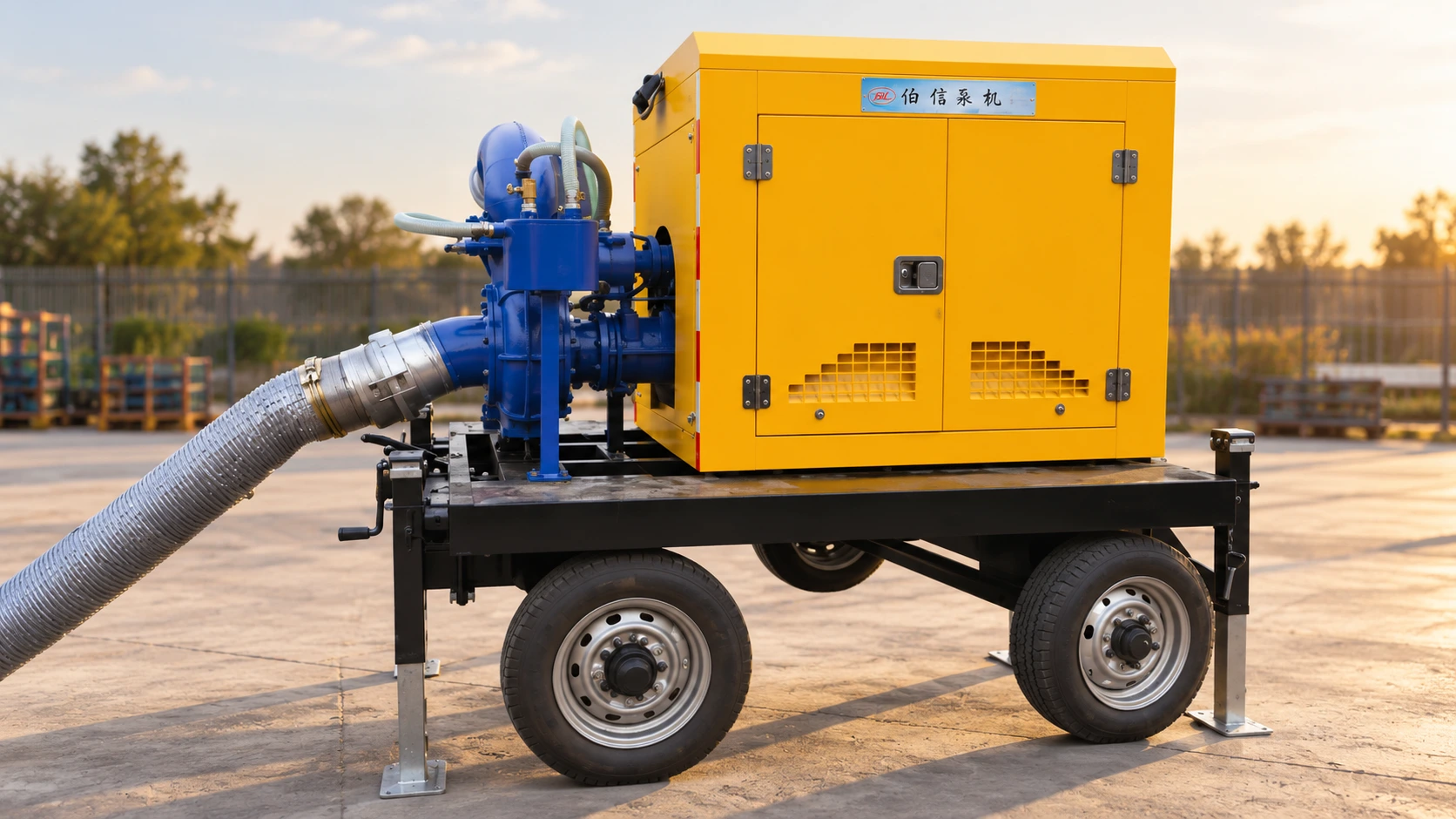
For the same reason, a trailer-mounted surface pump does not become a wellpoint package simply because it has a large inlet and an enclosed engine. Ask for documented air handling, vacuum equipment, controls, and the verified operating envelope when considering it for a suction header. The ZBCY trailer unit shown later identifies a real mobile product; the proposed application still needs its own written confirmation.
Compare operating cost through the required result
Compare proposals that achieve the same groundwater target for the same project period. Count installation, filters, headers or mains, power distribution, fuel handling, monitoring, operator attendance, treatment, standby equipment, and eventual removal. A low pump rental rate can be outweighed by a difficult installation or a discharge route that requires extra equipment.
Electrical power can affect both arrangements. Multiple deep-well pumps may require separate protection, switching, cables, and a coordinated restart plan. Surface packages may have their own starting and fuel logistics. Determine how the site will maintain enough capacity during maintenance or a supply interruption. The generator selection and pump motor starting guides provide supporting checks once the electrical equipment list is known.
Do not use a single assumed running hour or energy price to claim one method is always cheaper. Obtain the expected operating period and duty from the designer, then apply locally quoted costs. Include the response to a pump outage and the time available before groundwater recovery becomes unacceptable. Those conditions can change the value of standby capacity substantially.
Include monitoring, sediment control, and neighboring assets
The acceptance criteria should specify groundwater levels or pressures at agreed locations, not only total water pumped. Establish baseline observations before starting and continue them through excavation stages. An apparently strong discharge can coexist with inadequate control at a remote corner or in a separate layer. Match each observation point to the condition it is intended to demonstrate.
Unexpected sediment requires investigation. It can indicate unsuitable filter performance or another change in the system, and it should not be dismissed as proof that the pump is working hard. Keep groundwater observations and pumping records together so that sediment changes can be compared with changes in operating conditions. Follow the project's engineering procedure when sediment or groundwater behavior changes.
Assess effects on neighboring foundations, buried services, and water-dependent assets as part of the design and monitoring plan. Water removed from the ground also requires an authorized discharge route. Confirm applicable permits and treatment duties before startup. If the discharge destination, excavation geometry, or support arrangement changes, review the groundwater control plan rather than assuming the original comparison remains valid.
Turn the choice into a procurement and commissioning brief
Give bidders a clear target: excavation and groundwater elevations, investigated layers, estimated duty, site constraints, water quality, discharge route, power, and required availability. Ask them to identify which assumptions are included, what information remains missing, and how performance will be demonstrated. Separate equipment supply responsibility from groundwater design responsibility so that a quotation is not mistaken for an engineering approval.
Require curves and documented operating limits for the actual pump selection, together with an installation arrangement, instrument list, protection settings where applicable, and standby procedure. Plan a controlled startup, observation period, and changeover test before excavation depends on the system. Preserve the readings and the final equipment settings as the operating baseline.
Use the wellpoint pump selection and header layout guide when the method assessment favors wellpoints. The dewatering flow calculation guide and head calculation guide support the water-side duty; the broader construction pump types page helps compare equipment roles. These pages complement the site design without turning a general product illustration into a performance promise.
Pembelajaran lebih lanjut
The NPTEL IIT Kharagpur Dewatering Design Principle lecture supports the relationship between groundwater conditions and system design. It is provided as additional education rather than a substitute for the project investigation or the commissioning criteria.

Tonton kuliah tentang Prinsip Desain Desalinasi NPTEL.
Pertanyaan yang sering diajukan
Are deep wells always better for a deep excavation?
No. Depth matters, but soil layering, permeability, pressure, access, well construction, and the required drawdown response must also be assessed. A combined arrangement may be more appropriate than either method alone.
Can wellpoints handle every type of soil?
No. Their effectiveness depends on how groundwater moves through the soil and how the screens and filters are installed. Poor drainage or unsuitable ground can require a different arrangement or specialist treatment.
Is a submersible sewage pump the same as a deep-well pump?
No. They differ in geometry and intended operating conditions. Verify bore clearance, water quality, solids limits, cooling, setting, and the performance curve instead of selecting solely by the word submersible.
What should a method comparison cost estimate include?
Include installation, wells or points, filters, collection pipework, pumps, power, fuel, monitoring, treatment, standby equipment, operation, and removal. Compare proposals that achieve the same documented groundwater control target.
How do I know the selected method is working?
Check groundwater levels or pressures at agreed observation points against the design criteria. Also review operating readings, sediment, discharge conditions, and standby readiness. Pump flow alone does not prove the excavation is adequately protected.