
Persistent diesel dewatering pump black smoke calls for a controlled investigation of engine condition and pumping duty. Record when the smoke occurs, the engine speed, water output, alarms and recent changes, then follow the engine manufacturer’s shutdown and troubleshooting instructions. Restricted air intake, fuel-system problems, exhaust restriction and unsuitable loading are possible causes, but smoke color cannot identify a failed part by itself. Do not adjust fuel delivery or keep increasing speed to recover lost flow. Arrange safe drainage coverage before taking a critical pump out of service, and keep people away from exhaust exposure.
Describe the event before choosing a cause
Separate a brief observed event during a change of operating condition from smoke that persists under a steady duty. Record what the engine and water system were doing at the time. Was the pump starting, priming, taking load or operating after a hose change? A useful report links the symptom to the operating condition instead of simply saying that the engine smokes.
Photograph from a safe position if the site permits it, and record the time and asset identity. Do not stand in the exhaust plume to judge its color or smell. Lighting, background and mixed emissions can make visual descriptions unreliable. Treat the observation as a reason to investigate, not as a laboratory diagnosis.
Itu HSE construction guidance on diesel exhaust explains that emissions vary with engine condition, fuel, temperature and demand. It identifies black smoke as a sign requiring attention. It does not establish a permissible smoke duration or an operating limit for your engine.
Protect people and maintain drainage control
Keep workers clear of the discharge point and consider wind, nearby air intakes, excavations and enclosed areas. Outdoor placement does not automatically prevent accumulation in a pit or exposure at an occupied opening. Site controls must address the actual path of exhaust, not only the distance between the engine and the operator.
Follow the engine instructions and site shutdown criteria when smoke accompanies abnormal temperature, oil-pressure warnings, unstable speed, unusual noise or other serious symptoms. Do not continue running merely to obtain a longer video. A drainage supervisor should assess the consequences of stopping and arrange an approved standby unit or alternative control where necessary.
Consult the site’s dewatering standby pump contingency plan before intrusive work. A spare pump is useful only if it can be safely connected, started and operated at the required duty. Fault investigation and water-level control need coordinated ownership.
Build a comparable operating record
Capture engine speed, available load information, suction and discharge readings, water level, flow indication and the physical hose arrangement. Note whether instruments are present, serviceable and suitable for the readings claimed. If flow is estimated, label it as an estimate and describe the method instead of reporting an invented precision.
Compare with the same machine’s previous satisfactory operation when possible. Another unit may use a different engine, pump, impeller or control setting. A large difference in noise or smoke can identify a useful comparison, but it does not prove that the machines should operate at identical speed or pressure.
Itu diesel trash pump fuel consumption guide explains why actual duty matters when interpreting engine demand. A rising fuel-use observation is useful supporting evidence only when the operating hours, water duty and measurement method are comparable.
Inspect the air path without introducing contamination
After safe shutdown and isolation, inspect the accessible air-intake arrangement following the engine manual. Look for damaged or collapsed intake components, obstructed openings and a service indicator requiring attention where fitted. Record the installed filter identity and maintenance history. A visibly dirty exterior alone does not provide an acceptance measurement for the filter.
Use the prescribed service method. Do not operate without the filter to see whether the exhaust clears, and do not use an improvised cleaning method that damages the element or introduces dirt into the intake. Check that replacement parts and seals match the engine’s requirements before reassembly.
Itu NSW EPA explanation of smoky diesel engines lists intake restriction, fuel-system defects and exhaust backpressure among possible contributors to incomplete combustion. Its vehicle context supports the general fault categories, not a pump-specific repair instruction or permission to change engine calibration.
Review fuel condition and recent service changes
Record the fuel source, deliveries, storage conditions and any recent filter or water-separator service. Follow the engine manual for sampling and checking the installed fuel system. Visible contamination or an incorrect replacement component requires the appropriate corrective plan, but a clean-looking sample does not establish every property of the fuel.
Do not loosen high-pressure injection lines as a diagnostic shortcut. Injector, injection-pump, governor and electronic management investigations require qualified engine service and the manufacturer’s methods. Adjusting fuel delivery to conceal smoke can create overheating, emissions, reliability and load problems without correcting the underlying cause.
If the symptom began after service, compare the work order and parts identity with the approved requirements. Preserve removed parts and relevant samples when the service provider needs them. A documented chronology often narrows the investigation more effectively than replacing several unrelated components at once.
Check exhaust restriction and physical changes
Inspect the exhaust arrangement after cooling and isolation. A damaged outlet, changed silencer, trapped water or an unsuitable extension may deserve investigation. Do not remove emission-control equipment or operate an open exhaust as an informal test. Any backpressure measurement must use the engine manufacturer’s permitted method and limits.
Yang terpisah diesel pump exhaust piping guide covers design and support questions. Here the purpose is narrower: identify whether an actual change or defect coincides with the smoke event. A pipe that appears large enough is not proof that the complete installed system has acceptable resistance.
Include temporary weather covers and transport damage in the inspection. Confirm the safe operating arrangement before restart. Keep guards, shields and supports in their required condition rather than leaving components removed because the engine is easier to observe.
Relate the engine symptom to hydraulic load
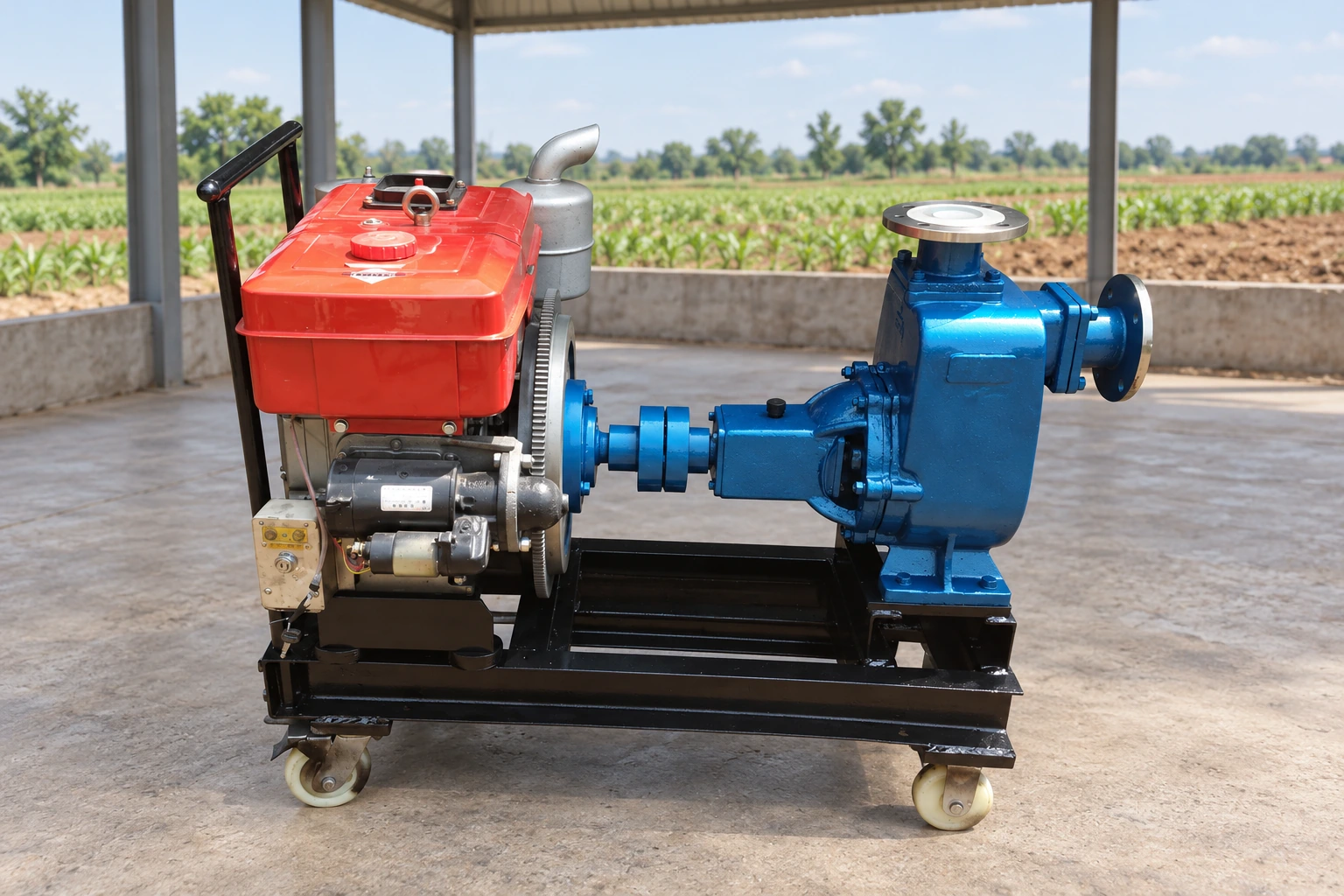
Review changes in water level, hose diameter, route, discharge location, solids and operating speed. The pump curve and engine data determine how those changes affect required power. Do not assume that increasing discharge resistance always increases shaft power or that opening a valve always reduces engine demand. Pump type and operating region matter.
For a surface centrifugal drainage pump, loss of expected water output can arise from the suction or priming system as well as the driver. Treat reduced flow and black smoke as two observations that may have a common cause or separate causes. Confirm the hydraulic condition instead of compensating for every flow problem by increasing throttle.
If an internal obstruction or rubbing condition is suspected, shut down and use the approved inspection procedure. Never reach into the pump or remove covers while automatic starting, stored pressure or rotating machinery can expose personnel. Record what was found before cleaning away the evidence.
Use a fault table to plan the next check
This table is an investigation aid rather than a diagnosis. It intentionally avoids numerical engine limits, which must come from the identified engine and pump documentation.
| Corak yang diamati | Bukti yang harus dikumpulkan | Next controlled investigation |
|---|---|---|
| Smoke after intake maintenance | Part numbers, sealing condition and service record | Verify correct assembly and permitted restriction checks |
| Smoke after a fuel delivery | Delivery identity and approved fuel inspection | Evaluate contamination and fuel-system service needs |
| Smoke after hose or duty change | Water levels, route, speed and operating readings | Compare required power with approved pump and engine data |
| Smoke after exhaust modification | Modification details and component condition | Review installed backpressure by the specified method |
| Smoke with warnings or abnormal noise | Alarm history and safe observations | Apply shutdown criteria and escalate engine inspection |
| Symptom disappears after several simultaneous changes | Complete work chronology | Identify remaining uncertainty before closing the defect |
Assign one person to coordinate the findings so hydraulic and engine technicians do not work from different assumptions. The record should identify the next test and its purpose, with a clear stopping condition. Avoid a parts-replacement sequence based only on which component is easiest to access.
Prove the repair at a defined duty
After authorized corrective work, prepare a controlled return-to-duty test. Confirm the water path, priming arrangement, guards, fluids and site readiness. Use the engine and pump instructions for startup and loading. Record the same operating variables used in the initial report so the before-and-after comparison is meaningful.
Observe exhaust from a safe location and verify alarms, speed stability and delivered water performance. A brief unloaded run may fail to reproduce a symptom that originally appeared under duty. Conversely, forcing the machine back into an unsafe condition to reproduce smoke is not an acceptable proof test. Resolve the method with the responsible service personnel.
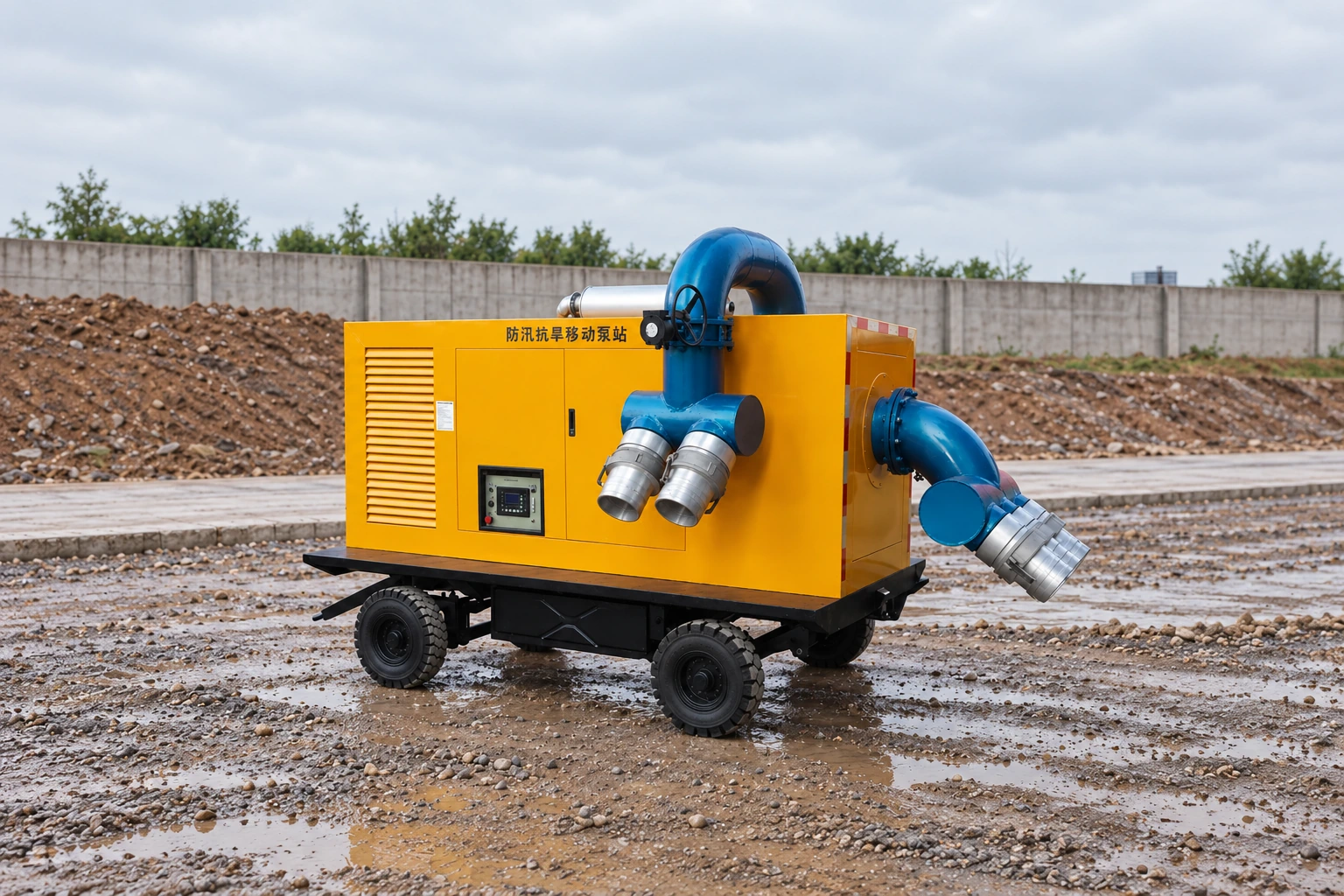
Untuk Pompa trailer diesel mobile Borra ZBCY, request the exact engine identity, operating curve and service documentation supplied with the offered unit. The photograph does not confirm its engine calibration or internal condition. Keep these documents with the asset’s maintenance record so future observations use the correct limits.
The diesel-engine animation below explains the combustion cycle as background. It is not a smoke-diagnosis demonstration or permission to adjust injection equipment. Use the actual engine instructions and qualified service findings for repair decisions.
Pertanyaan yang sering diajukan
Apakah asap hitam selalu berarti injektor telah gagal?
No. Air restriction, exhaust restriction, engine condition, fuel problems and loading can contribute. Smoke color alone cannot identify a failed injector. Use the engine manufacturer’s diagnostic sequence.
Can I increase speed to restore water flow?
Do not use extra throttle as an unexplained correction. Verify the permitted speed, hydraulic condition and engine load first. Investigate the loss of output and smoke together.
Should I remove the air filter for a quick test?
No. Follow the prescribed inspection and service method. Running without the required filter can introduce contamination and create an additional engine problem.
Is the exhaust safe when it no longer looks black?
Visible color does not measure exposure. Maintain the site’s exhaust controls and risk assessment even when the plume is difficult to see. Never use appearance as the sole safety check.
What proves the pump is ready to return to duty?
A documented correction and an approved operating test at a defined duty, with satisfactory engine and water-system observations. Record remaining limitations and follow-up rather than closing the fault solely because an alarm was reset.