
Select a warehouse fire pump from the approved sprinkler and hose demand for the actual storage arrangement, commodity, building height, rack configuration, and water supply. Warehouse risks can change sharply when storage height, aisle layout, packaging, plastics content, or sprinkler type changes. The pump cannot be chosen from floor area alone. Use the current protection design, water-supply curve, required duration, and full pump performance curve. Keep the calculation and acceptance record with the final project documents so future tests use the same basis.
Safety and scope: Fire pumps and their drivers are life-safety equipment. Hydraulic, electrical, diesel, fuel, battery, pressure, rotating-equipment, testing, and impairment work must follow the current approved design, manufacturer instructions, applicable standards, and the authority having jurisdiction. This guide explains the engineering decision path; it does not authorize field changes, bypasses, or operation by unqualified personnel.
Define the storage hazard
Document commodity classification, packaging, pallet type, storage height, rack or pile arrangement, aisle width, and planned changes. Protection must match actual use. Treat this as a system condition rather than an isolated component choice. Identify the source of every input, the unit used, the operating condition it represents, and the person responsible for approval. If information is preliminary, mark the assumption and test how the decision changes at a conservative boundary. This prevents a neat calculation from hiding an uncertain water level, pressure, valve position, driver condition, or simultaneous demand.
For warehouse fire pump, verify this section against the selected pump curve, the actual site arrangement, manufacturer instructions, and the current requirements accepted by the authority having jurisdiction. Check the installed condition as well as the drawing because pipe routes, elevations, supports, controls, and access often change during construction. Record the result in a form that can be repeated during commissioning and later inspection. Do not change a safety-critical setting or isolate fire protection without the approved impairment and restoration process.
Confirm the sprinkler design basis
Identify ceiling and in-rack sprinklers, design area, density or listed design criteria, hose demand, and duration from the approved calculation. The most useful evidence is measured or approved project data, not a copied rule of thumb. Identify the source of every input, the unit used, the operating condition it represents, and the person responsible for approval. If information is preliminary, mark the assumption and test how the decision changes at a conservative boundary. This prevents a neat calculation from hiding an uncertain water level, pressure, valve position, driver condition, or simultaneous demand.
For warehouse fire pump, verify this section against the selected pump curve, the actual site arrangement, manufacturer instructions, and the current requirements accepted by the authority having jurisdiction. Check the installed condition as well as the drawing because pipe routes, elevations, supports, controls, and access often change during construction. Record the result in a form that can be repeated during commissioning and later inspection. Do not change a safety-critical setting or isolate fire protection without the approved impairment and restoration process.
Review the water supply
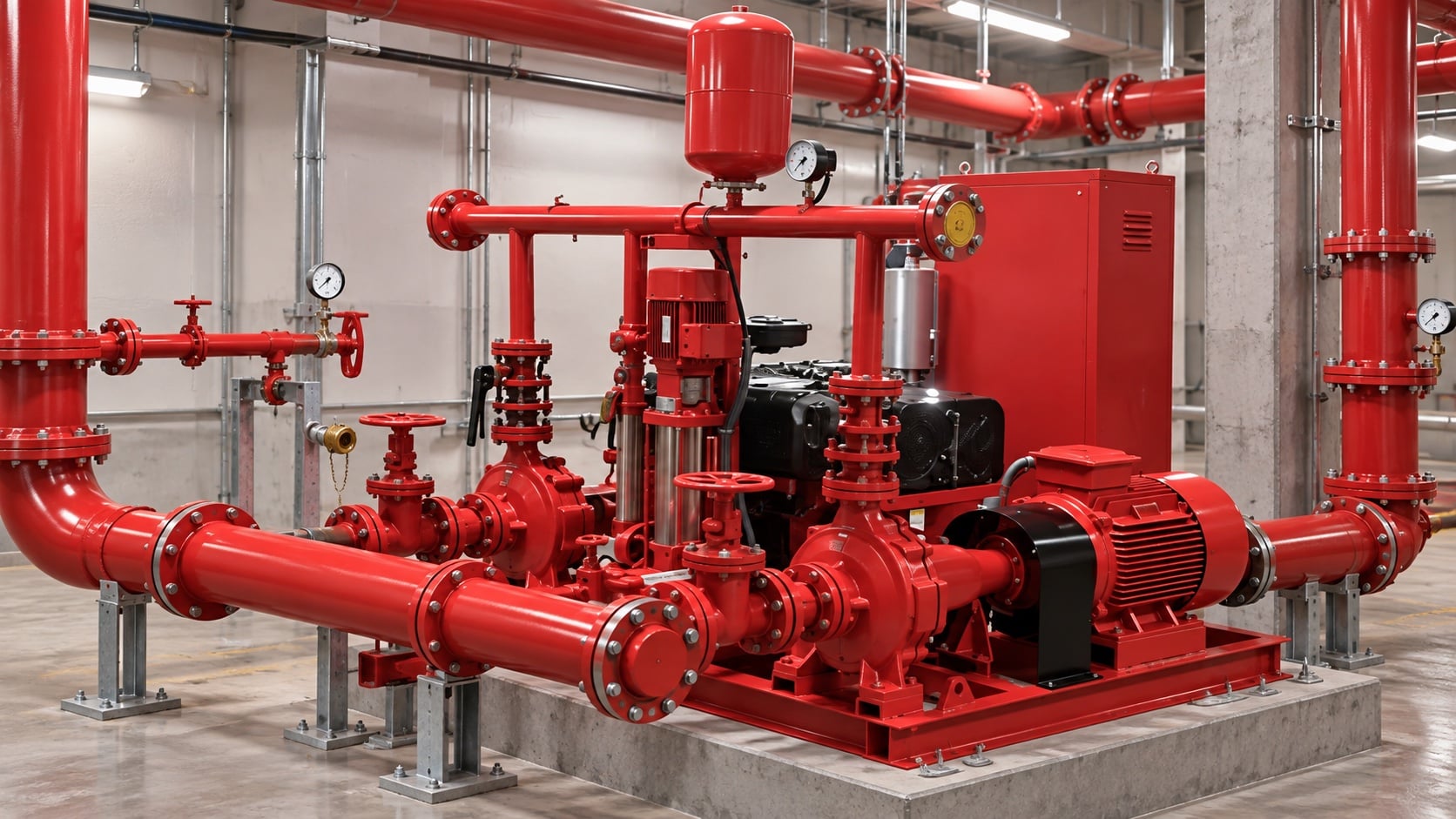
Use a current supply test or tank operating range. Compare demand with the supply curve at the same elevation and unit basis. Review this condition at normal, test, and credible abnormal states before procurement. Identify the source of every input, the unit used, the operating condition it represents, and the person responsible for approval. If information is preliminary, mark the assumption and test how the decision changes at a conservative boundary. This prevents a neat calculation from hiding an uncertain water level, pressure, valve position, driver condition, or simultaneous demand.
For warehouse fire pump, verify this section against the selected pump curve, the actual site arrangement, manufacturer instructions, and the current requirements accepted by the authority having jurisdiction. Check the installed condition as well as the drawing because pipe routes, elevations, supports, controls, and access often change during construction. Record the result in a form that can be repeated during commissioning and later inspection. Do not change a safety-critical setting or isolate fire protection without the approved impairment and restoration process.
Calculate the pump duty
Add elevation, pipe and device losses, and required residual pressure, then subtract dependable suction pressure. Keep uncertainty visible. The design team should turn this point into a traceable calculation or drawing note. Identify the source of every input, the unit used, the operating condition it represents, and the person responsible for approval. If information is preliminary, mark the assumption and test how the decision changes at a conservative boundary. This prevents a neat calculation from hiding an uncertain water level, pressure, valve position, driver condition, or simultaneous demand.
For warehouse fire pump, verify this section against the selected pump curve, the actual site arrangement, manufacturer instructions, and the current requirements accepted by the authority having jurisdiction. Check the installed condition as well as the drawing because pipe routes, elevations, supports, controls, and access often change during construction. Record the result in a form that can be repeated during commissioning and later inspection. Do not change a safety-critical setting or isolate fire protection without the approved impairment and restoration process.
Tabel keputusan praktis
| Warehouse input | Why it changes demand | Record needed |
|---|---|---|
| Commodity and packaging | Changes fire growth and sprinkler criteria | Approved hazard classification |
| Storage height | Changes required protection | Rack and pile elevations |
| Sprinkler type | Determines listed design method | Model and approval data |
| Water supply | Sets available pressure and flow | Current test or tank range |
| Hose demand and duration | Adds water and storage requirements | Approved hydraulic calculation |
| Future use | Can exceed original basis | Documented design envelope |
Check future storage changes
A future tenant or higher rack can invalidate the hydraulic basis. Define the envelope the pump and system are intended to support. Treat this as a system condition rather than an isolated component choice. Identify the source of every input, the unit used, the operating condition it represents, and the person responsible for approval. If information is preliminary, mark the assumption and test how the decision changes at a conservative boundary. This prevents a neat calculation from hiding an uncertain water level, pressure, valve position, driver condition, or simultaneous demand.
For warehouse fire pump, verify this section against the selected pump curve, the actual site arrangement, manufacturer instructions, and the current requirements accepted by the authority having jurisdiction. Check the installed condition as well as the drawing because pipe routes, elevations, supports, controls, and access often change during construction. Record the result in a form that can be repeated during commissioning and later inspection. Do not change a safety-critical setting or isolate fire protection without the approved impairment and restoration process.
Coordinate diesel or electric drive
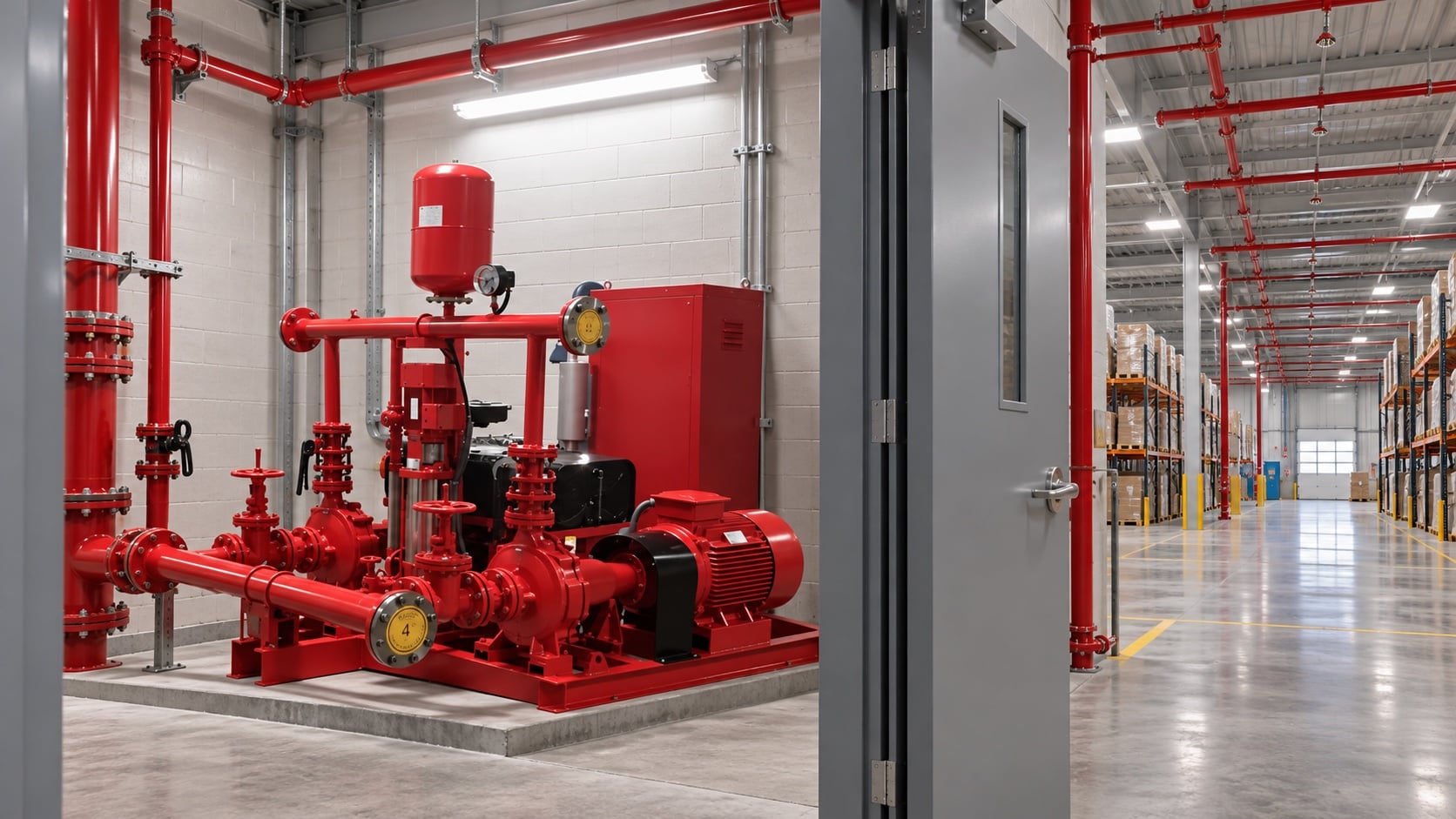
Consider power reliability, generator capacity, fuel, ventilation, exhaust, maintenance, and starting method without assuming one driver is universally better. The most useful evidence is measured or approved project data, not a copied rule of thumb. Identify the source of every input, the unit used, the operating condition it represents, and the person responsible for approval. If information is preliminary, mark the assumption and test how the decision changes at a conservative boundary. This prevents a neat calculation from hiding an uncertain water level, pressure, valve position, driver condition, or simultaneous demand.
For warehouse fire pump, verify this section against the selected pump curve, the actual site arrangement, manufacturer instructions, and the current requirements accepted by the authority having jurisdiction. Check the installed condition as well as the drawing because pipe routes, elevations, supports, controls, and access often change during construction. Record the result in a form that can be repeated during commissioning and later inspection. Do not change a safety-critical setting or isolate fire protection without the approved impairment and restoration process.
Plan safe flow testing
Provide an accessible test header, flow meter, or return route sized for required test flow and safe water disposal. Review this condition at normal, test, and credible abnormal states before procurement. Identify the source of every input, the unit used, the operating condition it represents, and the person responsible for approval. If information is preliminary, mark the assumption and test how the decision changes at a conservative boundary. This prevents a neat calculation from hiding an uncertain water level, pressure, valve position, driver condition, or simultaneous demand.
For warehouse fire pump, verify this section against the selected pump curve, the actual site arrangement, manufacturer instructions, and the current requirements accepted by the authority having jurisdiction. Check the installed condition as well as the drawing because pipe routes, elevations, supports, controls, and access often change during construction. Record the result in a form that can be repeated during commissioning and later inspection. Do not change a safety-critical setting or isolate fire protection without the approved impairment and restoration process.
Protect readiness during operations
Control blocked valves, damaged sprinklers, frozen pipes, impaired supplies, housekeeping changes, and maintenance outages through a documented impairment process. The design team should turn this point into a traceable calculation or drawing note. Identify the source of every input, the unit used, the operating condition it represents, and the person responsible for approval. If information is preliminary, mark the assumption and test how the decision changes at a conservative boundary. This prevents a neat calculation from hiding an uncertain water level, pressure, valve position, driver condition, or simultaneous demand.
For warehouse fire pump, verify this section against the selected pump curve, the actual site arrangement, manufacturer instructions, and the current requirements accepted by the authority having jurisdiction. Check the installed condition as well as the drawing because pipe routes, elevations, supports, controls, and access often change during construction. Record the result in a form that can be repeated during commissioning and later inspection. Do not change a safety-critical setting or isolate fire protection without the approved impairment and restoration process.
How this relates to BORRAPUMP equipment
BORRAPUMP supplies engineered pump equipment for water and fire-protection projects. Review the relevant BORRAPUMP product configuration as a starting point, then submit the required flow, head, water source, driver, power, controls, site conditions, applicable requirements, quantity, and destination. Final selection must use the project hydraulic basis and approved submittal; this guide does not claim that one catalog arrangement fits every jurisdiction or risk.
Panduan BORRAPUMP terkait
- Dasar-dasar desain sistem pompa pemadam kebakaran
- fire fighting pump selection
- diesel versus electric fire pumps
Authoritative references
The following sources establish the standards boundary, fire-safety context, and pump-system principles used in this guide. Always apply the edition and local adoption accepted for the project.
- NFPA 20 standard development page
- U.S. Fire Administration home fire sprinklers
- NIST fire protection research
Educational video
Latar belakang pendidikan oleh Practical Engineering: Apakah Pompa Menghasilkan Tekanan atau Aliran?. The video supports the underlying engineering concept and does not replace project-specific fire-protection requirements.
Pertanyaan yang sering diajukan
Can floor area size a warehouse fire pump?
No. Use the approved protection design for the actual commodity, storage, sprinklers, hose demand, and supply.
Why does packaging matter?
Packaging and plastics content can change fire behavior and the required sprinkler protection basis.
Should I add extra pressure for future growth?
Model defined future scenarios. Arbitrary oversizing can create pressure and testing problems.
What if warehouse use changes?
Reassess hazard classification, sprinkler design, water demand, storage, pump duty, and component pressure ratings.
Final verification checklist
Before approval, confirm the hydraulic basis, water-source condition, selected pump curve, driver and controller data, component pressure ratings, valve arrangement, test method, access, drainage, alarms, and restoration procedure. Resolve differences between drawings and the installed system. During commissioning, use calibrated instruments and record suction pressure, discharge pressure, flow, speed, driver condition, alarms, and abnormal observations at every required point. Keep the accepted results with the pump-room records so later inspections compare like with like.