
Centrifugal pump specific speed is a design index that relates rotational speed, flow and head at a defined reference condition, normally the best efficiency point. It helps describe the hydraulic character of an impeller and compare similar designs. It is not the actual shaft speed, a universal efficiency rating or a substitute for a performance curve. Before comparing two values, confirm the equation, units, head per stage, flow convention and reference point. A number calculated in one customary unit system can be very different from a number representing the same pump in another system.
This article explains how to read a specific-speed statement on a technical offer. It does not assign an index to a BORRAPUMP model without its documented performance data, and it does not provide impeller design instructions.
Begin with the meaning of similarity
Specific speed groups together the effects of flow, head and rotation rather than describing any one of them in isolation. At a comparable condition, a pump that handles a large flow at relatively low head has a different hydraulic design emphasis from one that handles a smaller flow at high head. The index helps communicate that relationship compactly.
It is useful when discussing radial, mixed-flow and axial-flow tendencies, but actual geometry and performance still need to be examined. A broad design classification does not prove solids passage, suction capability, mechanical reliability or material suitability. Never infer these attributes from an index or an external photograph. The impeller types article addresses geometry and application boundaries separately.
Write the equation and its units together
A common dimensional form is n_s = n × √Q ÷ H^0.75. The numerical result depends on the units chosen for rotational speed n, flow Q and head H. One convention uses revolutions per minute, cubic metres per second and metres. Another commonly uses revolutions per minute, US gallons per minute and feet. Their numerical results cannot be compared directly.
There are also dimensionless forms based on angular speed, flow and specific energy. Those require a clearly defined equation, including the treatment of gravitational acceleration. Do not remove unit labels from a manufacturer’s document and assume that every expression called specific speed is dimensionless. Ask for the convention whenever a chart or offer presents only an unexplained number.
Этот pump curve reading guide helps establish the original flow, head and speed values. Preserve those inputs beside the calculated index so another reviewer can reproduce it.
Use the correct reference point
Specific speed for hydraulic design comparison is normally evaluated at the best efficiency point for the stated speed and impeller. A value calculated from an arbitrary tender duty point can move simply because the buyer selected a different service condition. It may no longer describe the same reference used in published design charts.
Confirm whether the best efficiency point refers to the offered impeller trim or a maximum-diameter impeller. A chart that combines several impellers requires careful selection of the correct efficiency peak. If the supplier does not provide enough information to identify the reference, label the calculation provisional instead of presenting a precise design classification. An unqualified number can obscure missing curve data rather than resolve it.
Resolve stage head and inlet flow conventions
For a multistage pump, the head used in a design index generally needs to follow the selected convention for an individual stage rather than blindly using total developed head. Dividing total head by the number of stages assumes the stages are comparable and that the manufacturer’s definition permits that approach. Verify the actual design and method first.
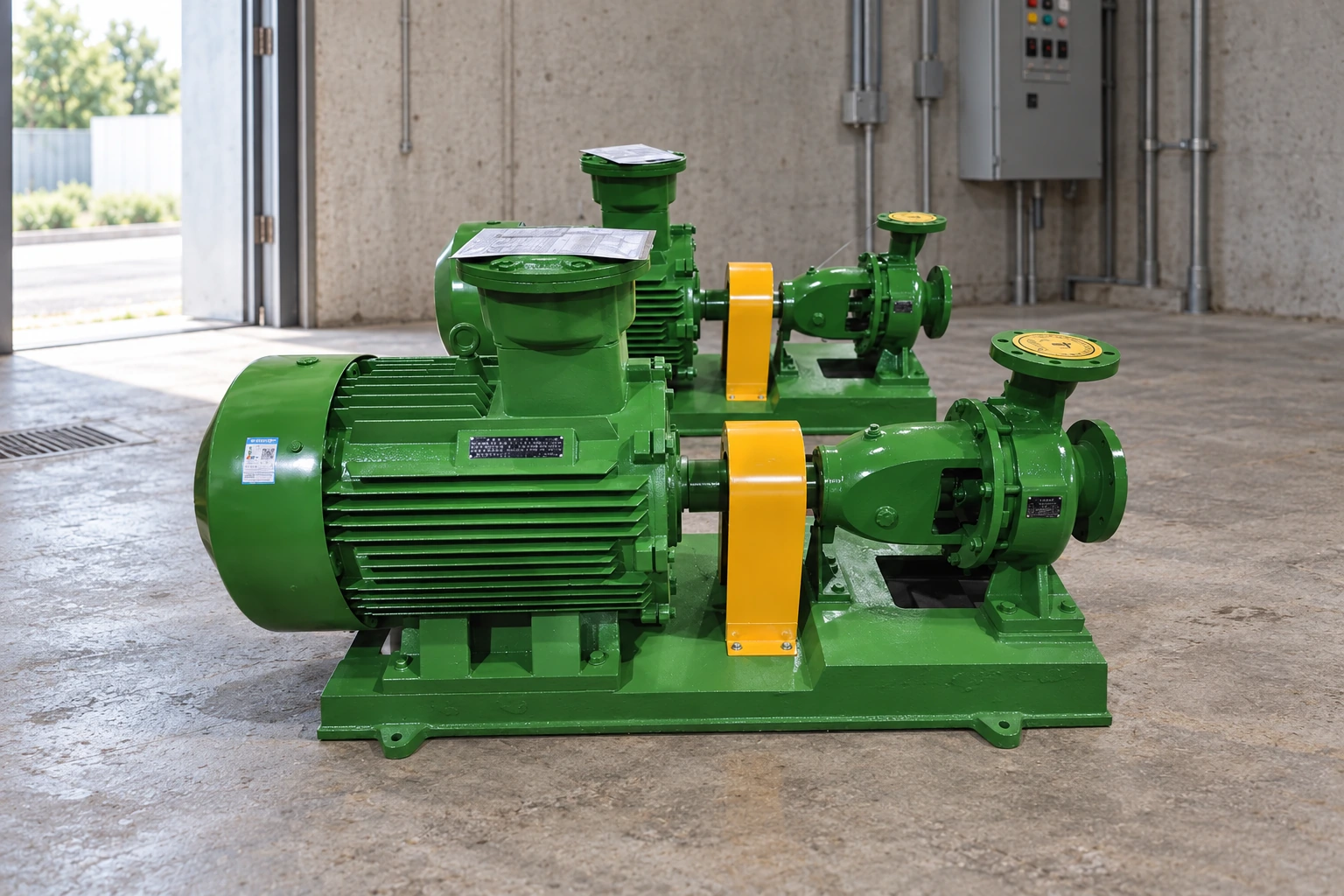
For a double-suction impeller, some conventions use flow per impeller eye. A total-flow calculation and a per-eye calculation produce different values. State the convention explicitly and compare like with like. Do not apply an unexplained factor from a different handbook to make two supplier numbers appear similar. These details matter especially when comparing horizontal split-case and single-inlet designs.
| Item to confirm | Why it changes the comparison | Доказательства для запроса |
|---|---|---|
| Flow unit | Changes the numerical index | Equation with units |
| Head basis | Total and per-stage head differ | Stage arrangement and definition |
| Reference point | Duty point may differ from BEP | Marked performance curve |
| Suction arrangement | Total and per-eye flow may differ | Impeller inlet convention |
| Speed | Frequency label may not equal shaft speed | Rated rotational speed |
| Impeller condition | Diameter and geometry affect the reference | Offered configuration |
This is a definition checklist, not a table of acceptable design limits. Limits and classifications must use a named method and the same convention throughout.
Work a numerical example without inventing a model
Assume an illustrative single-stage, single-inlet pump has a reference speed of 1,450 revolutions per minute, flow of 0.04 cubic metres per second and head of 25 metres. In the stated dimensional convention, the numerator is 1,450 × √0.04, or 290. The denominator is 25^0.75, approximately 11.18. The resulting index is approximately 25.9.
This result belongs only to that equation and those units. Entering 144 cubic metres per hour without converting to cubic metres per second would produce a very different and misleading number. Changing to US customary units also changes the result. The example does not establish an efficiency, a permissible operating range or the suitability of an actual product.
Interpret design tendencies carefully
At broadly comparable conditions, lower specific-speed designs tend toward relatively higher head and lower flow, while higher values tend toward relatively higher flow and lower head. This can support an initial discussion of hydraulic form. Classification boundaries differ with the unit convention and the reference source, so avoid copying an unlabeled threshold into a specification.
Efficiency is influenced by size, clearances, surface condition, mechanical losses and many other factors. An index associated with a certain design family is not a promise that every member will achieve the same efficiency. Request the offered pump’s curve and test basis. A selection should satisfy the actual duty and permitted range, not merely target a favourable-looking index.
Keep suction specific speed separate
Suction specific speed is a related but different index that uses a suction-head term rather than the developed head used in ordinary pump specific speed. Its interpretation depends on the definition of the NPSH condition and the same flow and unit conventions. Confusing the two can lead to an inappropriate suction assessment.
Do not use either index as a substitute for calculating NPSH available in the installation and comparing it with the manufacturer’s requirements and margin guidance. The Доступный КПН против требуемого показателя describes that project calculation. Source level, temperature, atmospheric pressure and suction losses remain important even when a design index appears ordinary.
Apply the index to procurement rather than guessing geometry
Use a specific-speed statement to ask better questions: Is the proposed design consistent with the duty? Are two offers using the same reference? Has a multistage arrangement been compared fairly with a single-stage arrangement? Why do two suppliers report different numbers for apparently similar conditions? Obtain the underlying definitions before treating the difference as a product advantage.
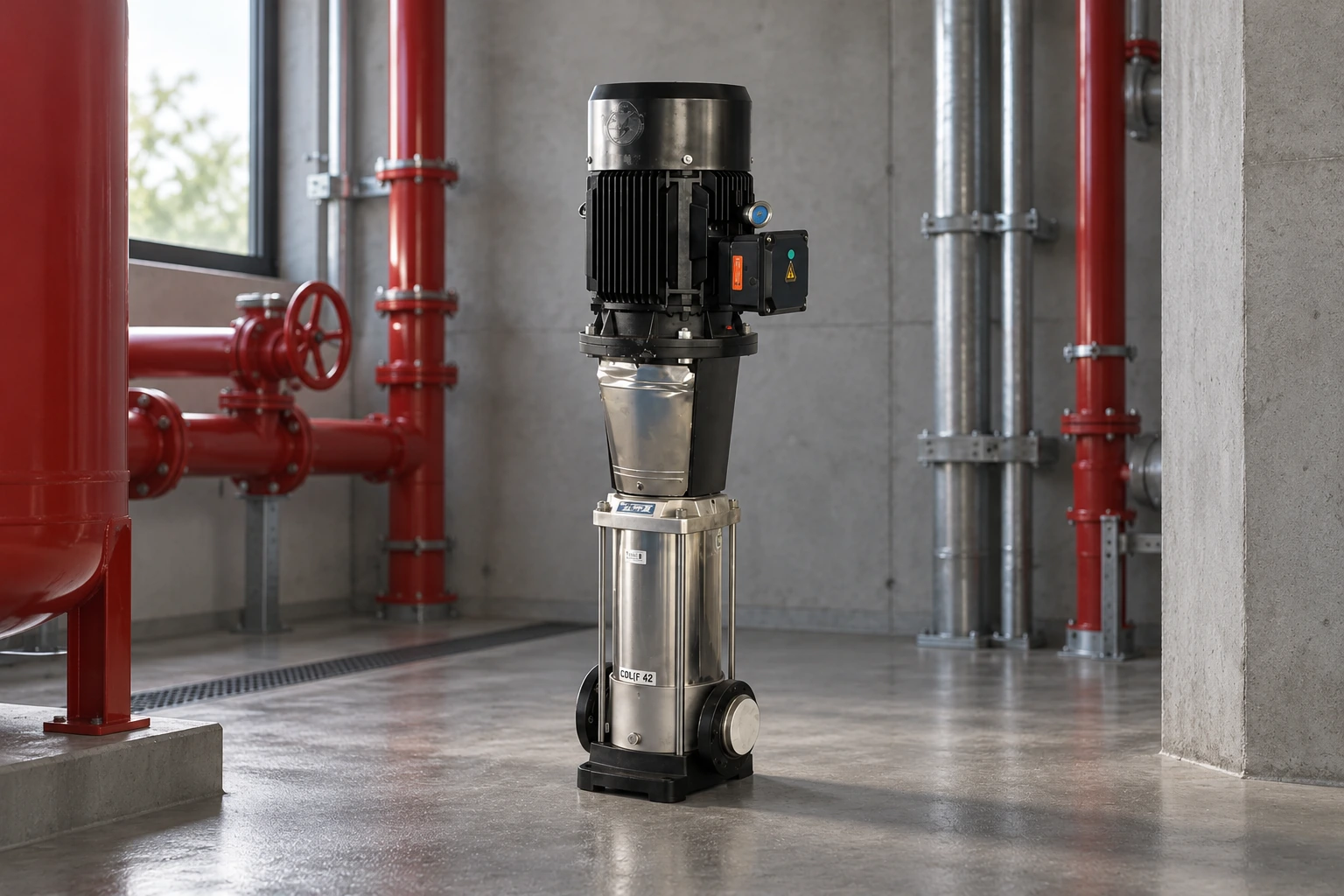
Этот CDL(F) vertical multistage product family illustrates why stage arrangement matters. The product name and image do not establish an individual stage head or specific speed. Obtain configuration data for the exact offered model, and keep project pressure, material and control requirements in the separate selection review.
Record what the index cannot answer
Specific speed does not tell a buyer whether a pump can run dry, handle a particular chemical or meet a specified fire-protection requirement. It does not determine an allowable sand concentration, seal compatibility or cable size. Those questions require different evidence. Keeping these boundaries explicit prevents a useful design shorthand from becoming an unsupported specification.
For a broader view of selection and energy performance, consult the Руководство по системам перекачки энергии Министерства энергетики США. For an engineering explanation of the index and its relationship to similarity, see Concepts NREC’s discussion of specific speed. Read each source with its own definitions rather than combining numerical limits from different conventions.
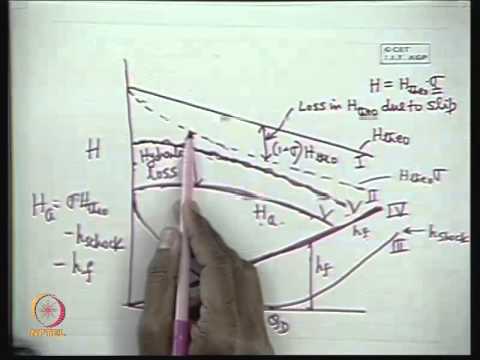
Further learning: NPTEL explains centrifugal pump characteristics. Use this educational background with the model-specific data and method discussed above; the lecture does not certify a BORRAPUMP model.
Часто задаваемые вопросы
Is specific speed the motor speed?
No. Motor or shaft speed is one input. Specific speed combines rotation, flow and head through a defined equation, so its number and meaning are different.
Can two unit systems describe the same pump with different numbers?
Yes. A dimensional specific-speed value changes with the selected flow and head units. Compare the equations and units before comparing numerical values.
Should I calculate it at the purchasing duty point?
For design classification, the normal reference is the defined best efficiency point. A duty-point calculation must be identified separately and should not silently replace the manufacturer’s reference.
Does a higher value mean a better pump?
No. It indicates a different hydraulic design relationship. Suitability depends on duty, efficiency, operating range, inlet conditions and the rest of the project requirements.
What if the offer gives no definition?
Ask for the equation, units, reference flow, head, speed and stage or inlet conventions. Keep the value unverified until those details are available.