
An emergency dewatering pump for a flooded basement should be selected only after people, power, structure, water contamination and the discharge route have been assessed. For a shallow, clean spill, a small utility pump may be enough. For a deeper sump with muddy water or debris, a solids-capable submersible pump may be more appropriate. Neither choice makes an electrically unsafe or structurally unstable basement safe to enter. First isolate hazards through qualified personnel, then estimate the water volume, required removal rate and lift, and finally verify that the proposed pump and hose can deliver water to an allowed outlet.
This guide is for facility managers and contractors planning equipment, not a substitute for an emergency response plan. A flooded basement can be a confined space, contain sewage or chemicals, or have energized equipment. If any of those conditions may exist, stop and use the site emergency procedure and qualified responders before placing a pump.
Make the site safe before choosing a pump
The first question is not the pump size. It is whether anyone may approach the water. Do not enter standing water to reach a breaker or unplug equipment. Ask the utility or a qualified electrician to isolate and confirm the electrical supply from a dry location. The CDC’s flooded-home guidance recommends using an electric pump only when an electrician has determined that power is safe. Commercial basements can also contain lift equipment, batteries, fuel systems and mechanical rooms with additional hazards. Site-specific lockout and entry procedures take priority.
Inspect from a safe position for cracked walls, displaced doors, floating tanks, gas odor and water entering under pressure. Rapid removal of deep floodwater may create an imbalance between saturated soil outside and the basement interior. Ready.gov’s preparedness guide advises slow pumping of a flooded basement where surrounding ground remains saturated. That homeowner rule is not a universal industrial pumping rate: a structural engineer should set the sequence for a large or damaged structure. If the building is unstable, do not use pump capacity to determine the drawdown rate.
Floodwater is not automatically clean rainwater. It may contain sewage, sharp debris, petroleum or cleaning chemicals. The CDC disaster cleanup guidance explains why protective equipment and contamination assessment matter. Record the likely source and obtain disposal direction before pumping to a storm drain, sewer or landscaped area. An unauthorized discharge can move the hazard off site rather than solve it.
Define the water-control objective
Separate an emergency first drawdown from continuous control. First drawdown removes accumulated water to a level where inspection and cleaning can begin. Continuous control handles new inflow while the underlying leak, flood or drainage failure is addressed. A pump sized only to empty the existing volume may lose ground if inflow continues. Conversely, an oversized machine can cycle rapidly in a shallow sump and draw air or sediment into the inlet.
Measure the approximate flooded floor area and average water depth from safe, remote observations. The initial volume is area multiplied by depth; use consistent units. For example, 120 square metres covered by an average 0.15 metre of water represents about 18 cubic metres before accounting for pits, walls and stored materials. That number is a planning estimate, not a promise of delivered pump flow. Add observed inflow, allowable drawdown rate, pump downtime and hose losses. The separate dewatering pump flow calculation guide explains how to translate these inputs into a required duty point.
If the water level is changing, mark a safe gauge point and record the level at fixed intervals while pumps are off or operating, subject to the response plan. An unexpectedly fast rise may mean an active service leak, groundwater connection or blocked storm drain. Do not treat a static one-time depth as a complete flow estimate. Stop pumping if the level behaves in a way that suggests a changing structural or utility hazard.
Choose a pump for the water actually present
The pump must handle both the liquid and what travels with it. A clean-water utility pump can be appropriate for relatively clear water and small particles within its published limits. A drainage or sewage-style submersible may be a better candidate where suspended dirt, soft debris or intermittent solids are expected, but its permitted solids size must be confirmed from the exact model data. Do not assume that a large discharge flange guarantees an equally large internal passage.
Этот BorraPumps WQ submersible sewage pump is a product family to evaluate for a suitable sump and water condition. Its page does not by itself establish the duty, motor protection, cable specification or solids clearance for this particular basement. Request the model curve and certified dimensions for the selected unit. Compare that with the wider drain pump range when the water is cleaner or the arrangement requires a different type. If long fibres, gravel or chemical contamination are present, disclose them before selecting any unit.
| Site observation | Pump-selection implication | Field check before use |
|---|---|---|
| Shallow, mostly clear floor water | A low-level utility unit may recover more water than a tall sump pump | Confirm minimum water depth and dry-running protection |
| Deeper pit with suspended grit | Consider a drainage/submersible design with verified wear and solids limits | Sample water safely and inspect inlet clearance |
| Soft debris or sewage risk | Select only a model rated for that material and an approved disposal route | Confirm contamination controls and manufacturer limits |
| Falling level with recurring inflow | Use level control and an available standby method | Test switches, alarms and restart behaviour |
This table is qualitative because the required particle size and hydraulic duty depend on the site and the exact product model. A pump type should never be inferred from a photograph alone.
Calculate lift and hose losses before selecting the model
The discharge destination is often above basement level. Measure the vertical rise from operating water surface to outlet, then include hose friction, fittings, any required outlet pressure and changes along the route. A long small-diameter hose can consume a large portion of available head even when the vertical rise appears modest. The installed flow is where the pump curve meets this system requirement, not the maximum flow printed on a catalog cover. Use the site dewatering head guide to organize measurements.
Lay out the hose so it does not kink, create a trip hazard, cross an energized area or discharge back toward the building. Secure joints and provide a controlled outlet that cannot scour soil or overwhelm a drain. If the receiving point is a municipal system, obtain the applicable approval. If the water may be contaminated, the discharge may need testing or treatment. Keep the outlet in view during initial operation so an unnoticed hose failure does not reflood another room.
Plan electrical supply and cable routing
For an electric submersible, verify the motor voltage, phase, current, starting method and protective device against the actual power supply. The unit’s cable, connection and control equipment must be suitable for the environment and kept in the configuration specified by the manufacturer. Do not improvise a plug or submerged splice. Use a qualified electrician to verify protection, grounding, generator compatibility if applicable, and the dry location of control components.
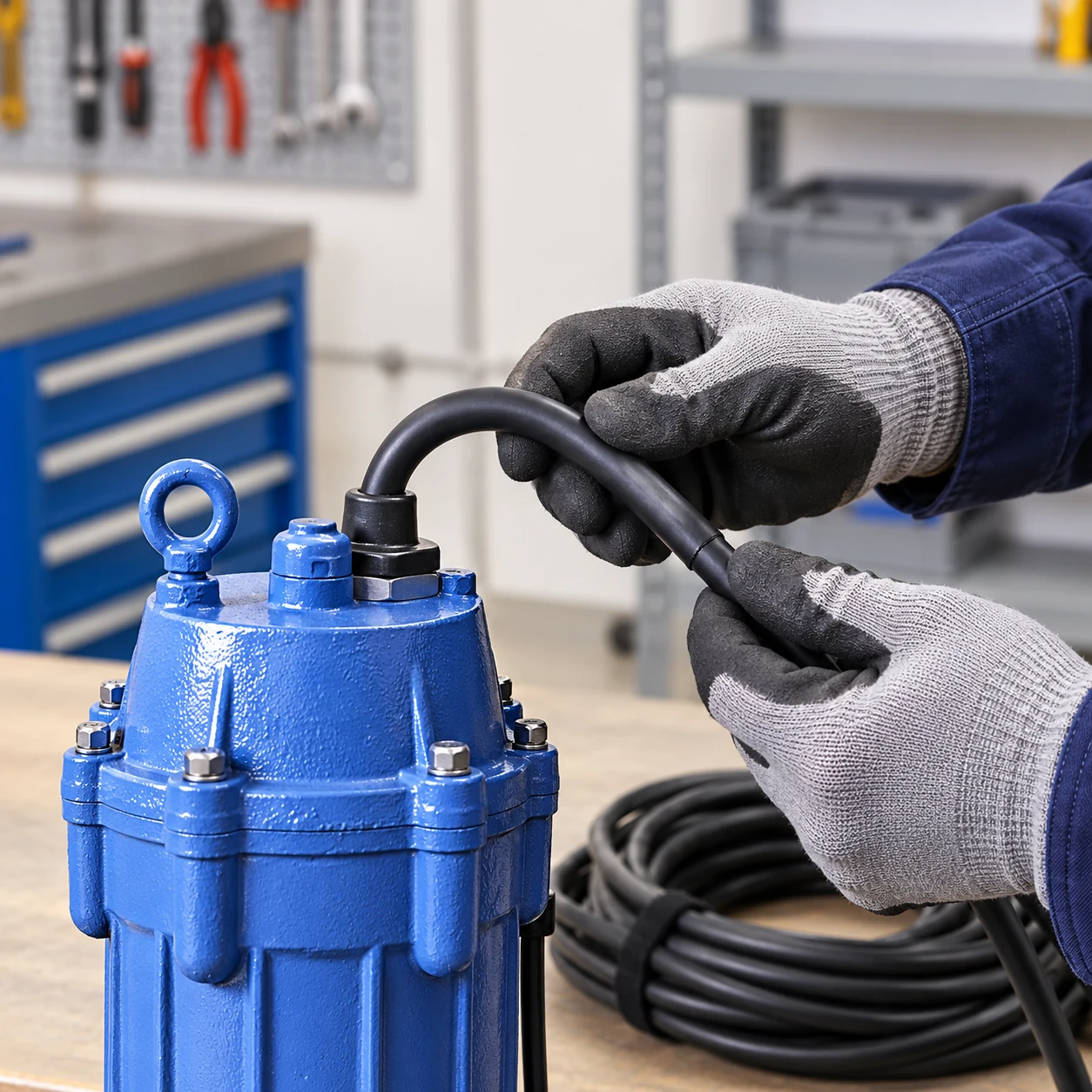
Route the cable independently of the discharge hose where possible, provide strain relief, and lower or raise the pump using its rated lifting arrangement rather than the power cable. Keep operators outside unsafe water. The site may require a float switch or level sensor with an alarm, but its position must allow adequate submergence and avoid debris. Test the control before leaving a running pump unattended. A single pump without backup is a weak plan where a renewed flood would damage critical equipment.
Set up, monitor and hand over the operation
After the hazards and disposal route have been cleared, position the pump on a stable base or in an appropriate sump. Prevent the inlet from sealing against a flat floor or drawing a dense sediment layer. Connect and secure the discharge, then start under supervision. Record water level, discharge condition, motor readings where available, and whether the delivered flow matches the intended drawdown. A sudden drop in discharge, repeated overload trip, vibration or an exposed inlet requires a stop and inspection.
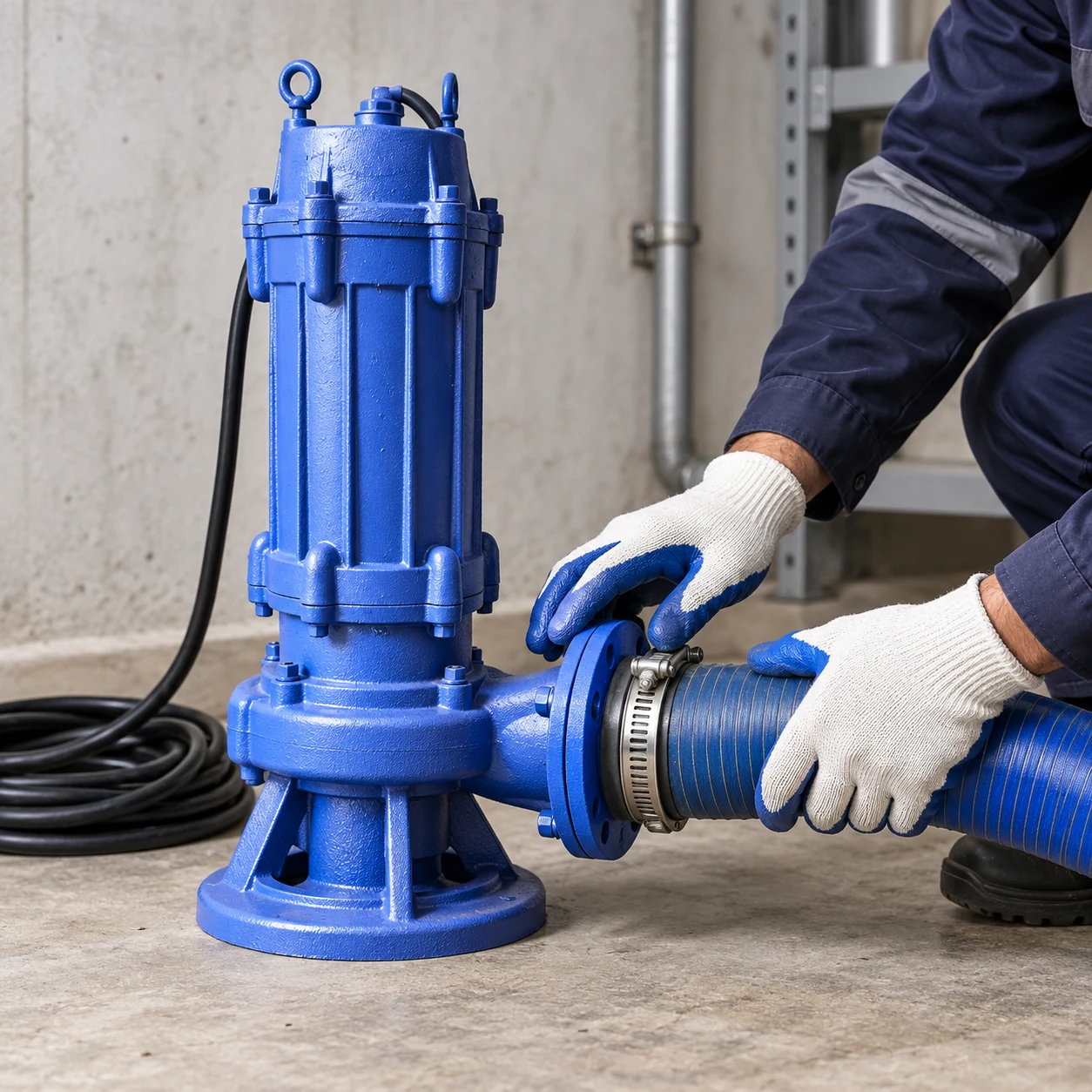
Do not leave a diesel engine operating inside the basement. If an engine-driven surface pump is used, position the engine outdoors where exhaust cannot enter the building, and verify suction lift against the pump and site conditions. Submersible and surface arrangements solve different access problems; neither makes unsafe entry acceptable. For a broader application comparison, see the tunnel dewatering selection guide, which addresses restricted access and discharge planning in a different setting.
As water recedes, reassess the structure and contamination rather than simply increasing pump speed. Protect remaining equipment from re-energization until inspected. Document pump hours, inspection findings, hose route, receiving point and any water-quality controls. The same notes help a facilities team decide whether the permanent sump, backflow protection or drainage system must be redesigned.
Educational video: centrifugal pump operating point
NPTEL’s Characteristics of a Centrifugal Pump explains why a pump’s actual flow depends on the system. Use it only as hydraulic background; it does not address floodwater electrical safety or structural drawdown limits.

What to include in an emergency pump request
Provide the estimated water volume, present and expected inflow, allowable drawdown sequence, minimum and maximum operating depths, liquid contamination, largest expected debris, basement-to-outlet elevation, discharge hose length and diameter, power supply, working-hour requirement, and approved receiving point. Include a photograph or sketch of the access route taken from a safe place. Ask the supplier for the pump curve at the required duty, minimum submergence, solids limits, cable and protection details, service access, and a standby plan. This is more useful than requesting a pump solely by outlet size or motor power.
Часто задаваемые вопросы
Can I run an electric dewatering pump while the basement is flooded?
Only after qualified personnel have confirmed the supply and installation are safe. Do not enter floodwater to reach a breaker or connect equipment, and follow the site’s emergency and electrical procedures.
Should a flooded basement always be pumped out as fast as possible?
No. If outside soil remains saturated or the structure is damaged, rapid drawdown can create a dangerous pressure imbalance. Obtain structural direction for the site; do not let available pump capacity set the rate.
Is a submersible sewage pump suitable for every flooded basement?
No. Its model-specific flow, head, solids passage, material compatibility, minimum water depth and electrical arrangement must match the actual water and installation. Shallow clean water may call for another type.
Where may the removed water be discharged?
Use only a site-approved receiving point after evaluating contamination, local permission, treatment and erosion control. A convenient drain or nearby waterway is not automatically an authorized outlet.