
Select a high-rise fire pump from the approved hydraulic demand for the highest and most demanding pressure zone, the reliable water source, pressure limits on lower floors, and the building's power and redundancy strategy. Elevation often dominates required head, but friction, residual pressure, standpipe or sprinkler demand, zoning, tank arrangement, and test conditions must also be modeled. A single very-high-pressure pump is not always the safest or most maintainable solution. Keep the calculation and acceptance record with the final project documents so future tests use the same basis.
ความปลอดภัยและขอบเขต: ปั๊มดับเพลิงและชุดขับเคลื่อนเป็นอุปกรณ์เพื่อความปลอดภัยในชีวิต งานระบบไฮดรอลิก ระบบไฟฟ้า ดีเซล เชื้อเพลิง แบตเตอรี่ ความดัน อุปกรณ์หมุน การทดสอบ และการจัดการข้อบกพร่อง จะต้องเป็นไปตามการออกแบบที่ได้รับอนุมัติในปัจจุบัน คำแนะนำของผู้ผลิต มาตรฐานที่เกี่ยวข้อง และหน่วยงานที่มีเขตอำนาจ คู่มือนี้อธิบายถึงเส้นทางการตัดสินใจทางวิศวกรรม โดยไม่ได้ให้สิทธิ์ในการเปลี่ยนแปลงหน้างาน การบายพาส หรือการปฏิบัติงานโดยบุคลากรที่ไม่มีคุณสมบัติ.
Map fire-protection zones
Identify every sprinkler, standpipe, hydrant, or special-hazard zone and its elevation. Record which zones can operate together and where pressure limits apply. Treat this as a system condition rather than an isolated component choice. Identify the source of every input, the unit used, the operating condition it represents, and the person responsible for approval. If information is preliminary, mark the assumption and test how the decision changes at a conservative boundary. This prevents a neat calculation from hiding an uncertain water level, pressure, valve position, driver condition, or simultaneous demand.
For fire pump for high rise building, verify this section against the selected pump curve, the actual site arrangement, manufacturer instructions, and the current requirements accepted by the authority having jurisdiction. Check the installed condition as well as the drawing because pipe routes, elevations, supports, controls, and access often change during construction. Record the result in a form that can be repeated during commissioning and later inspection. Do not change a safety-critical setting or isolate fire protection without the approved impairment and restoration process.
Calculate the controlling duty
Compare remote hydraulic scenarios rather than assuming the roof is always controlling. Include static rise, friction, equipment loss, and required residual pressure. The most useful evidence is measured or approved project data, not a copied rule of thumb. Identify the source of every input, the unit used, the operating condition it represents, and the person responsible for approval. If information is preliminary, mark the assumption and test how the decision changes at a conservative boundary. This prevents a neat calculation from hiding an uncertain water level, pressure, valve position, driver condition, or simultaneous demand.
For fire pump for high rise building, verify this section against the selected pump curve, the actual site arrangement, manufacturer instructions, and the current requirements accepted by the authority having jurisdiction. Check the installed condition as well as the drawing because pipe routes, elevations, supports, controls, and access often change during construction. Record the result in a form that can be repeated during commissioning and later inspection. Do not change a safety-critical setting or isolate fire protection without the approved impairment and restoration process.
Evaluate water-source reliability
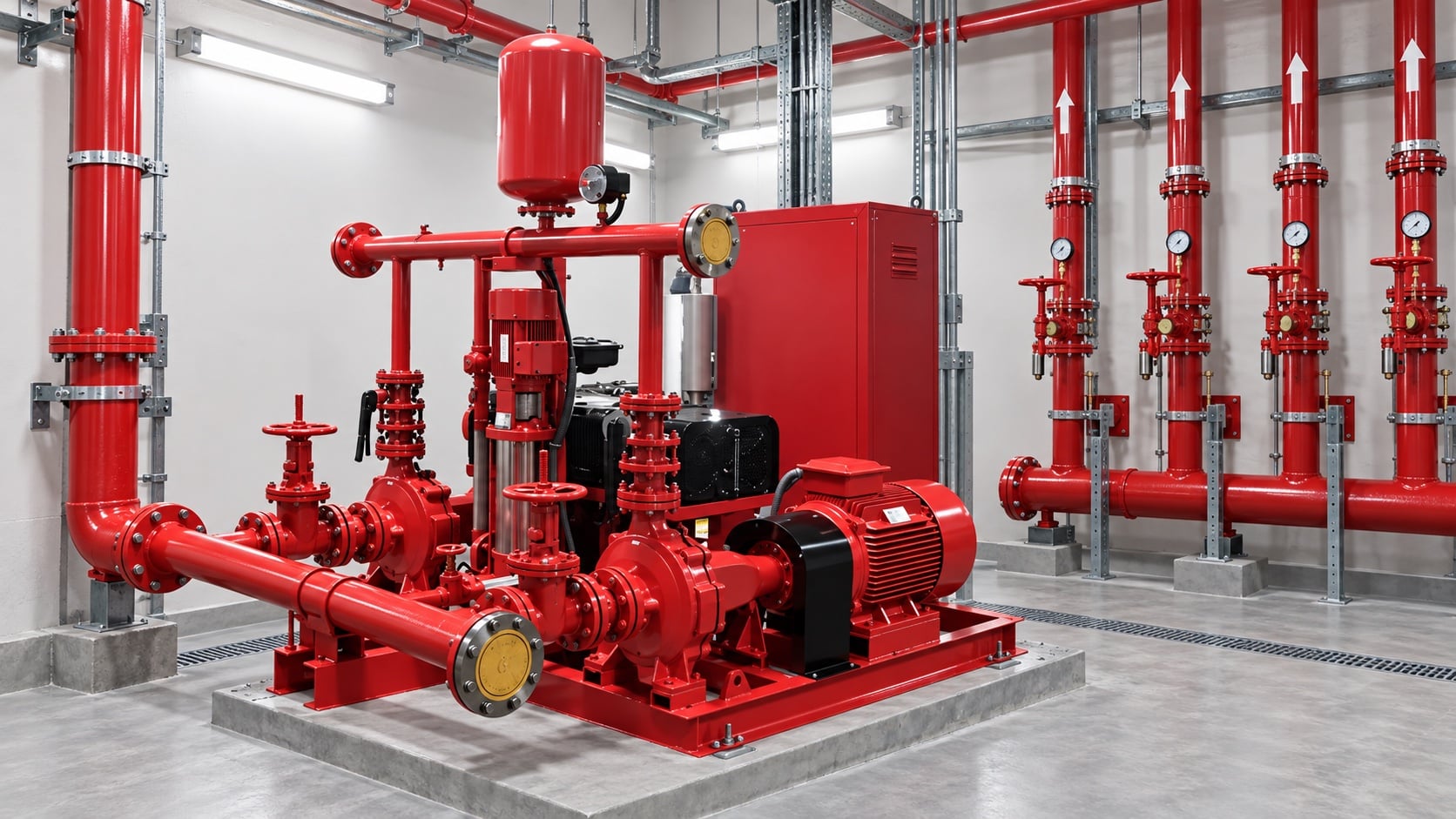
Confirm tank usable volume and level or the dependable municipal supply curve. Consider refill, seismic or structural constraints, and loss of one source where required. Review this condition at normal, test, and credible abnormal states before procurement. Identify the source of every input, the unit used, the operating condition it represents, and the person responsible for approval. If information is preliminary, mark the assumption and test how the decision changes at a conservative boundary. This prevents a neat calculation from hiding an uncertain water level, pressure, valve position, driver condition, or simultaneous demand.
For fire pump for high rise building, verify this section against the selected pump curve, the actual site arrangement, manufacturer instructions, and the current requirements accepted by the authority having jurisdiction. Check the installed condition as well as the drawing because pipe routes, elevations, supports, controls, and access often change during construction. Record the result in a form that can be repeated during commissioning and later inspection. Do not change a safety-critical setting or isolate fire protection without the approved impairment and restoration process.
Choose a zoning strategy
Compare direct pumping, intermediate tanks, pressure zones, pressure-regulating devices, and series arrangements. Review failure modes and firefighter operations. The design team should turn this point into a traceable calculation or drawing note. Identify the source of every input, the unit used, the operating condition it represents, and the person responsible for approval. If information is preliminary, mark the assumption and test how the decision changes at a conservative boundary. This prevents a neat calculation from hiding an uncertain water level, pressure, valve position, driver condition, or simultaneous demand.
For fire pump for high rise building, verify this section against the selected pump curve, the actual site arrangement, manufacturer instructions, and the current requirements accepted by the authority having jurisdiction. Check the installed condition as well as the drawing because pipe routes, elevations, supports, controls, and access often change during construction. Record the result in a form that can be repeated during commissioning and later inspection. Do not change a safety-critical setting or isolate fire protection without the approved impairment and restoration process.
ตารางการตัดสินใจเชิงปฏิบัติ
| High-rise decision | Question to answer | หลักฐาน |
|---|---|---|
| Pressure zones | Which elevations share a pressure range? | Approved riser and zone diagram |
| Controlling demand | Which scenario needs most pump head? | Hydraulic calculations |
| Lower-zone pressure | Can all components tolerate churn and transients? | Pressure review |
| Water storage | What volume and level are usable? | Tank design and operating range |
| Power strategy | How is pump availability maintained? | Electrical and driver study |
| Test route | Where will full test flow go? | Approved test plan |
Protect lower floors from excess pressure
Check churn, normal duty, and transient conditions at every elevation. Coordinate component ratings and approved pressure regulation. Treat this as a system condition rather than an isolated component choice. Identify the source of every input, the unit used, the operating condition it represents, and the person responsible for approval. If information is preliminary, mark the assumption and test how the decision changes at a conservative boundary. This prevents a neat calculation from hiding an uncertain water level, pressure, valve position, driver condition, or simultaneous demand.
For fire pump for high rise building, verify this section against the selected pump curve, the actual site arrangement, manufacturer instructions, and the current requirements accepted by the authority having jurisdiction. Check the installed condition as well as the drawing because pipe routes, elevations, supports, controls, and access often change during construction. Record the result in a form that can be repeated during commissioning and later inspection. Do not change a safety-critical setting or isolate fire protection without the approved impairment and restoration process.
Coordinate drivers and emergency power
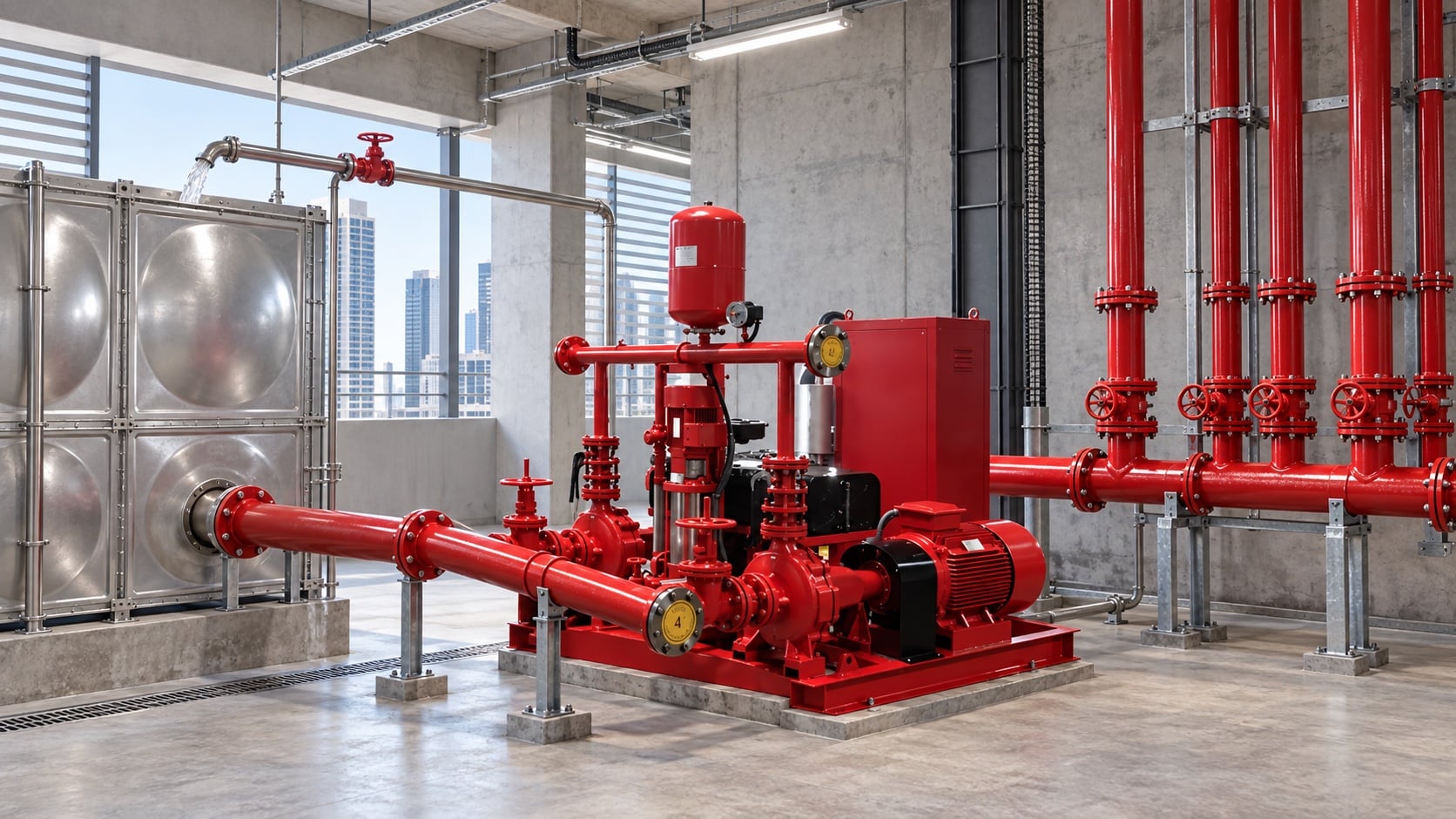
Review normal power reliability, alternate source, diesel option, starting current, fuel, ventilation, and controller arrangement as one system. The most useful evidence is measured or approved project data, not a copied rule of thumb. Identify the source of every input, the unit used, the operating condition it represents, and the person responsible for approval. If information is preliminary, mark the assumption and test how the decision changes at a conservative boundary. This prevents a neat calculation from hiding an uncertain water level, pressure, valve position, driver condition, or simultaneous demand.
For fire pump for high rise building, verify this section against the selected pump curve, the actual site arrangement, manufacturer instructions, and the current requirements accepted by the authority having jurisdiction. Check the installed condition as well as the drawing because pipe routes, elevations, supports, controls, and access often change during construction. Record the result in a form that can be repeated during commissioning and later inspection. Do not change a safety-critical setting or isolate fire protection without the approved impairment and restoration process.
Plan testing and maintenance access
Provide a test route that does not endanger occupants or flood the site. Ensure pumps, valves, controllers, and drivers can be isolated and serviced. Review this condition at normal, test, and credible abnormal states before procurement. Identify the source of every input, the unit used, the operating condition it represents, and the person responsible for approval. If information is preliminary, mark the assumption and test how the decision changes at a conservative boundary. This prevents a neat calculation from hiding an uncertain water level, pressure, valve position, driver condition, or simultaneous demand.
For fire pump for high rise building, verify this section against the selected pump curve, the actual site arrangement, manufacturer instructions, and the current requirements accepted by the authority having jurisdiction. Check the installed condition as well as the drawing because pipe routes, elevations, supports, controls, and access often change during construction. Record the result in a form that can be repeated during commissioning and later inspection. Do not change a safety-critical setting or isolate fire protection without the approved impairment and restoration process.
Commission every zone
Verify pump performance, controller sequence, pressure regulation, alarms, tank levels, and representative zone pressures under witnessed tests. The design team should turn this point into a traceable calculation or drawing note. Identify the source of every input, the unit used, the operating condition it represents, and the person responsible for approval. If information is preliminary, mark the assumption and test how the decision changes at a conservative boundary. This prevents a neat calculation from hiding an uncertain water level, pressure, valve position, driver condition, or simultaneous demand.
For fire pump for high rise building, verify this section against the selected pump curve, the actual site arrangement, manufacturer instructions, and the current requirements accepted by the authority having jurisdiction. Check the installed condition as well as the drawing because pipe routes, elevations, supports, controls, and access often change during construction. Record the result in a form that can be repeated during commissioning and later inspection. Do not change a safety-critical setting or isolate fire protection without the approved impairment and restoration process.
สิ่งนี้เกี่ยวข้องกับอุปกรณ์ BORRAPUMP อย่างไร
BORRAPUMP เป็นผู้จัดจำหน่ายอุปกรณ์ปั๊มน้ำที่ได้รับการออกแบบทางวิศวกรรมสำหรับโครงการน้ำและระบบป้องกันอัคคีภัย โปรดตรวจสอบข้อมูลที่เกี่ยวข้อง การกำหนดค่าผลิตภัณฑ์ BORRAPUMP เพื่อใช้เป็นจุดเริ่มต้น จากนั้นจึงส่งมอบอัตราการไหล เฮด (ความสูงของน้ำ) แหล่งน้ำ ชุดขับเคลื่อน กำลังไฟฟ้า ระบบควบคุม สภาพหน้างาน ข้อกำหนดที่เกี่ยวข้อง ปริมาณ และปลายทาง การเลือกขั้นสุดท้ายต้องใช้พื้นฐานทางชลศาสตร์ของโครงการและรายการย่อยที่ได้รับการอนุมัติ คู่มือนี้ไม่ได้อ้างว่าการจัดวางตามแคตตาล็อกชุดเดียวจะเหมาะสมกับทุกเขตอำนาจศาลหรือทุกความเสี่ยง.
คู่มือ BORRAPUMP ที่เกี่ยวข้อง
- คู่มือการทดสอบการยอมรับตามมาตรฐาน NFPA 20
- คู่มือการตรวจสอบและการทดสอบตามมาตรฐาน NFPA 25
- คู่มือชุดปั๊มรักษาแรงดัน
ข้อมูลอ้างอิงที่เชื่อถือได้
แหล่งข้อมูลต่อไปนี้เป็นกำหนดขอบเขตมาตรฐาน บริบทด้านความปลอดภัยจากอัคคีภัย และหลักการของระบบปั๊มที่ใช้ในคู่มือฉบับนี้ ให้ใช้ฉบับพิมพ์และการบังคับใช้ท้องถิ่นที่ได้รับการยอมรับสำหรับโครงการนั้นๆ เสมอ.
- หน้าการพัฒนามาตรฐาน NFPA 20
- CDC/NIOSH structure fire hazards
- U.S. Fire Administration fire sprinkler training manual
วิดีโอเพื่อการศึกษา
ประวัติการศึกษาโดย Practical Engineering: ปั๊มสร้างแรงดันหรือการไหล?. วิดีโอนี้สนับสนุนแนวคิดทางวิศวกรรมพื้นฐาน และไม่สามารถใช้แทนข้อกำหนดด้านการป้องกันอัคคีภัยเฉพาะของโครงการได้.
คำถามที่มักถูกถาม
Does the tallest floor always set pump size?
Not always. Compare all approved hydraulic scenarios, including flow, friction, residual pressure, and simultaneous demand.
When are multiple pressure zones useful?
They can help control pressure and improve maintainability, but the arrangement must be approved and analyzed for failure modes.
Can pressure-reducing valves solve any overpressure?
No. They require an approved design, correct ratings, test access, and a documented response to failure or bypass.
Should high-rise fire pumps have redundancy?
Use the redundancy required by the applicable code, authority, risk, and project design basis.
รายการตรวจสอบการยืนยันขั้นสุดท้าย
ก่อนการอนุมัติ ให้ตรวจสอบยืนยันเกณฑ์พื้นฐานด้านไฮดรอลิก สภาพแหล่งน้ำ กราฟปั๊มที่เลือก ข้อมูลชุดขับเคลื่อนและชุดควบคุม พิกัดความดันของส่วนประกอบ การจัดเรียงวาล์ว วิธีการทดสอบ การเข้าถึง การระบายน้ำ สัญญาณเตือน และขั้นตอนการคืนสภาพ ให้แก้ไขข้อแตกต่างระหว่างแบบแปลนและระบบที่ติดตั้งจริง ระหว่างการว่าจ้าง ให้ใช้อุปกรณ์ที่ได้รับการสอบเทียบและบันทึกความดันดูด ความดันจ่าย อัตราการไหล ความเร็ว สภาพชุดขับเคลื่อน สัญญาณเตือน และข้อสังเกตที่ผิดปกติ ณ จุดที่กำหนดทุกจุด จัดเก็บผลลัพธ์ที่ได้รับการยอมรับไว้กับบันทึกของห้องเครื่องสูบน้ำ เพื่อให้การตรวจสอบครั้ง ภายหลังสามารถเปรียบเทียบข้อมูลที่เทียบเคียงกันได้.