
A booster pump remote alarm test should prove the complete reporting path: an approved test condition at the booster controller produces the correct local indication, reaches the building monitoring system, and clears correctly after restoration. Seeing a fault lamp in the pump room is insufficient when the operator works elsewhere. Plan the test around the installed cause-and-effect schedule, protect the water supply, and use manufacturer-approved simulations rather than deliberately damaging equipment or creating dry running. Record the actual message, receiving location and response. This guide concerns domestic or service-water boosters; dedicated fire-pump controls require their own approved procedures.
Define exactly what the remote indication means
Start with the point list, controller drawing and monitoring-system description. A common alarm combines several faults into one signal. It may tell the operator that attention is needed without identifying which pump failed. An individual drive-fault point provides more detail, but only if the equipment actually supplies it. Do not label a common contact as a complete diagnosis.
Separate an alarm from a running indication and from a command. A pump-running point reports a state; a remote-enable command changes permission to operate. A test of one does not establish the other. Document whether running means a controller output, drive feedback or another verified condition. The wording on the monitoring screen should reflect that distinction.
For a new package enquiry, use the actual interface requirements with Borra’s booster-regulator water supply equipment. The product category is a starting point for discussion, not evidence that every protocol, relay or detailed alarm is included. Confirm the proposed controller and supplied documentation before committing to an interface design.
Set an operational boundary before touching the controls
Choose a period when the water service can tolerate the approved test. Identify sensitive users, minimum supply requirements and the person authorized to stop the work. A staged booster can lose redundancy while a fault is simulated even if pressure initially looks normal. Agree how remaining pumps will be supervised and how service will be protected.
Assign a local observer and a receiving-end observer. They should use a common time reference and a clear communication method. Agree which screens, notification routes and event records are in scope. If a message must reach an attended desk or callout service, stopping at an intermediate control panel leaves that requirement untested.
Electrical work belongs to competent personnel under the site’s isolation procedure. HSE electrical safety guidance provides general precautions for electrical risks, including difficult wet environments. It is not a booster wiring instruction. Do not bridge unidentified terminals, inject voltage into an unspecified contact or disconnect a live sensor merely because an example checklist uses that method.
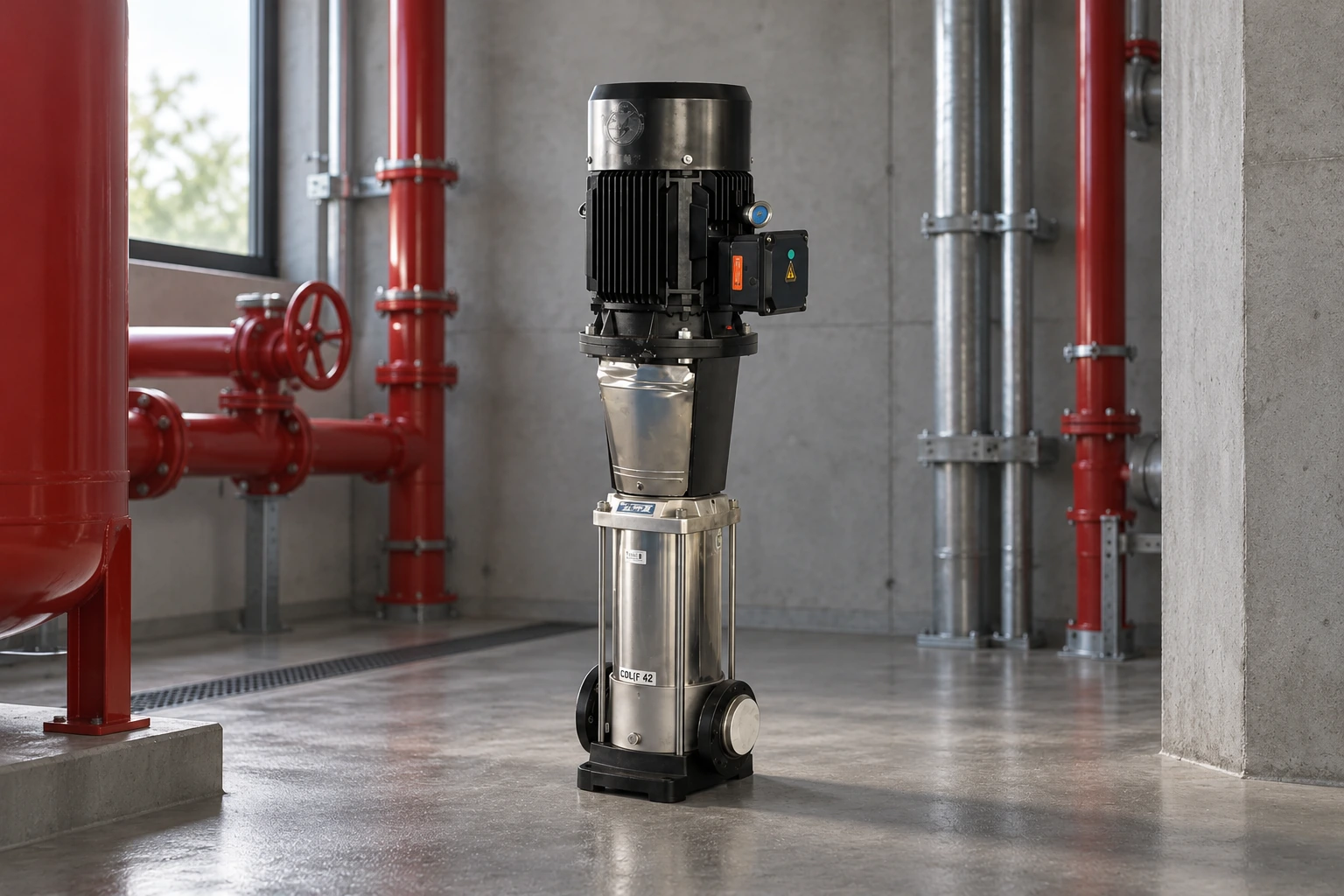
Build a test matrix from the approved point list
Use one row per reporting requirement rather than one row per pump alone. Include the initiating condition, expected local display, expected remote message and restoration behavior. Leave an explicit place for discrepancies. A useful record shows what was observed, not simply that someone pressed a test button.
เดอะ Hong Kong Housing Authority inspection and testing forms include a freshwater-booster example with remote running and common-fault contacts. That dated project framework demonstrates the value of named checks; it does not establish the feature set or required acceptance criteria for every building. Adapt the matrix to the installed equipment.
| Item to establish | Evidence at the booster | Evidence at the receiving end | Reason to leave open |
|---|---|---|---|
| Healthy starting state | Correct mode and no unexplained active fault | Correct equipment tag and current state | Existing fault masks the new event |
| Approved alarm simulation | Named alarm appears as expected | Matching message on the agreed screen | Wrong asset, reversed meaning or missing message |
| Acknowledgement | Alarm condition remains distinguishable | Operator action is recorded where provided | Acknowledgement hides an unresolved condition |
| การบูรณะ | Test condition removed and local state restored | Remote alarm returns to its specified normal state | Stale alarm or premature clear |
| Final availability | Automatic service and intended pumps available | Normal status reflects actual restoration | Forced point or bypass remains active |
Follow one event through the entire chain
Begin from a documented healthy state. Capture the controller mode, pump availability and current alarm history before the test. If an unrelated active alarm cannot be cleared legitimately, record it and determine whether it will prevent the common alarm from changing state. A common contact already in alarm may be unable to demonstrate an additional fault.
Apply only the approved simulation for the chosen event. Record its start time and the actual local text. Then follow the signal through the defined interface and into the receiving application. For a contact interface, a qualified technician may need to establish whether the contact changes at the package boundary. For a digital interface, the agreed point mapping and current communication state matter.
Do not assume all alarm categories have the same behavior. A warning, an unavailable standby pump and a package shutdown may have different priorities and destinations. Test representative events against the actual requirements. Avoid inventing a universal reporting delay: compare measured timing with the project specification or record that acceptance timing remains to be agreed.
Separate a missing message from a bad field condition
If the local controller reports the expected fault but the remote screen does not, concentrate the investigation on the reporting path. Check the equipment tag, interface definition, input mapping and receiving-system configuration through authorized personnel. Repeating the hydraulic disturbance is unlikely to resolve a mislabeled software point.
If no local alarm appears, first question the simulation and its approved prerequisites. The selected test function may exercise only a lamp or buzzer. A pump disabled by an operator may not be classified as a motor fault. Record these differences before declaring a controller defect or changing protective settings.
For a remote point that is permanently abnormal, compare the actual normal and alarm states with the design. Contact conventions can differ between packages. Power loss behavior also needs its own definition: a healthy-system contact and a simple fault contact may behave differently when the controller loses supply. Establish the installed scheme instead of reversing wires until the screen looks right.
Verify acknowledgement, clearance and event history
Ask the receiving operator to acknowledge the event using the normal work process. Where the system provides separate acknowledged and active states, verify both. An acknowledged event should not be mistaken for a repaired fault. Confirm that the operator can still determine whether the condition remains present.
Remove the simulated condition and record the actual sequence of local clearance, remote clearance and any required authorized reset. Some events can clear automatically while others remain latched. Use the documented controller behavior rather than forcing a reset rule onto every alarm. Check that the event history identifies the correct asset and remains useful after the screen returns to normal.
Review nuisance messages as well as missing ones. Several near-identical tags or repeated notifications can obscure the actionable event. Write a specific correction request naming the point, observed text, desired meaning and responsible party. Preserve the original event evidence so that a later retest can demonstrate the correction.
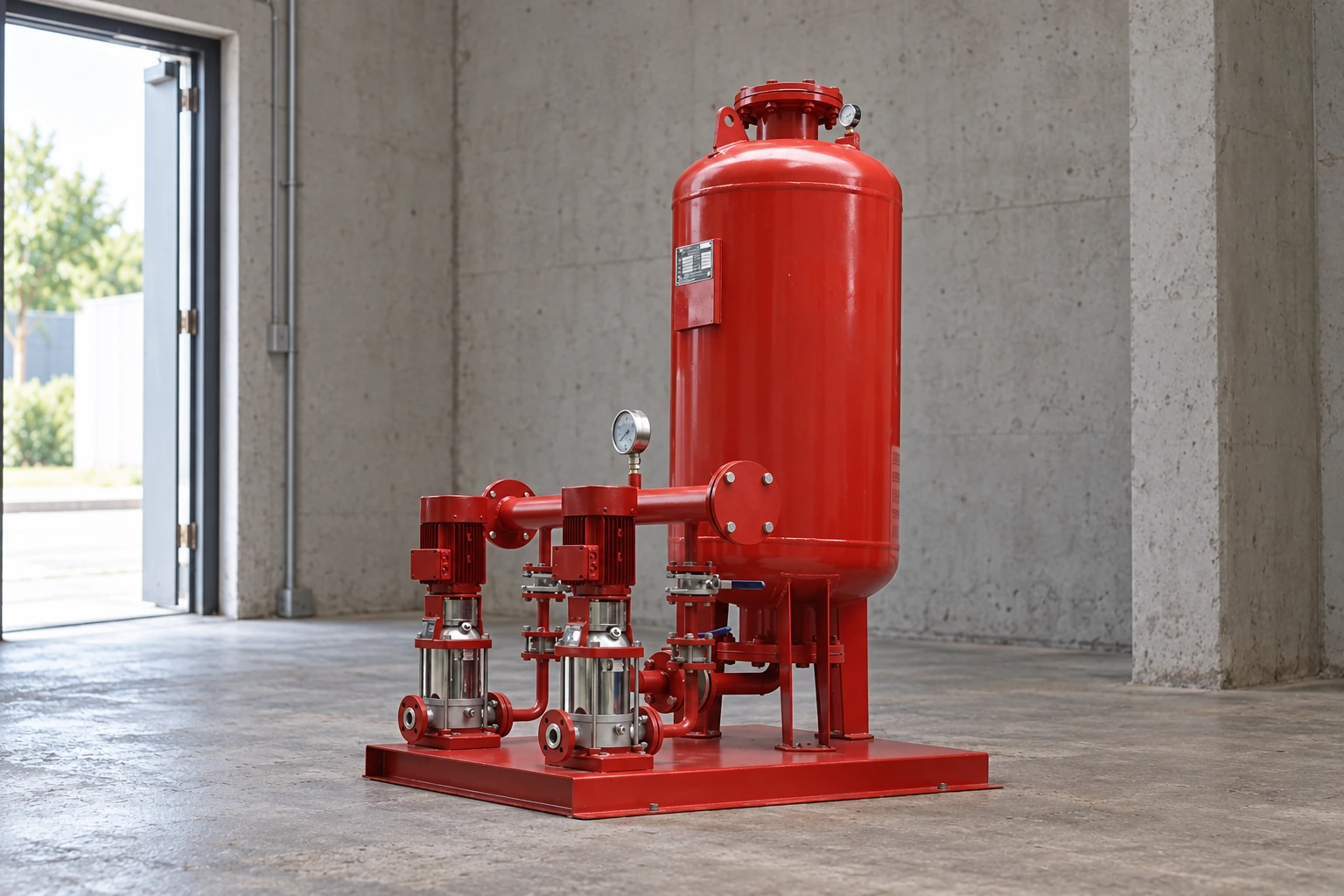
Restore the package and prove ordinary operation
Test completion requires removal of simulations, forced software values and temporary monitoring overrides. Confirm the intended operating mode locally. Check that any pump made unavailable for the test has been restored or clearly handed over as an unresolved defect. A normal remote screen alone cannot prove the package is ready.
Observe an ordinary demand response within the agreed service boundary. Record pressure recovery, available pumps and the absence of unexplained alarms. Use the broader เช็คลิสต์การเริ่มต้นบูสเตอร์ when full package performance needs acceptance; this article addresses the narrower reporting path.
Keep other functional tests distinct. A lead-lag alternation test establishes duty rotation, while restart after power failure addresses outage recovery. Those results can support handover, but neither replaces evidence that the required remote alarm reaches its destination.
Prepare a clear handover and retest request
Give the facility team the final point list, test matrix, screenshots or event extracts, controller identification and unresolved items. Record which communication method was actually supplied. Include the names of the local and receiving observers and identify any part of the route that was outside the test boundary.
A useful defect entry is precise: the local drive alarm appeared, the common alarm contact changed, but the receiving screen showed the wrong equipment name. That tells the controls team where to work. “Alarm failed” gives little direction and encourages unnecessary replacement of working equipment.
For future procurement, specify the information the operator needs and the expected receiving system. Ask whether contact ratings, isolation, protocol options, point mapping, power-loss behavior and documentation are included. Request a witnessed interface test where required. Avoid buying a communication option based only on a familiar protocol name without agreeing the actual points and supported functions.
พื้นฐานการศึกษา
The accompanying Practical Engineering video explains the relationship between pump flow, pressure and the connected system. It gives context for the hydraulic service that monitoring protects. It does not teach controller wiring, demonstrate this alarm test or establish acceptance criteria for a particular package.

คำถามที่มักถูกถาม
ไฟเตือนท้องถิ่นแสดงว่าการเตือนระยะไกลทำงานหรือไม่?
No. It proves only that a local indication appeared. The interface, receiving point, equipment label, notification route and restoration sequence still need to be checked against the approved requirements.
ควรให้ทุกข้อผิดพลาดของบูสเตอร์หยุดการทำงานของปั๊มทั้งหมดหรือไม่?
No universal rule applies. Different warnings and faults have different consequences. Verify the installed cause-and-effect schedule and manufacturer instructions rather than imposing shutdown behavior to make a test convenient.
สัญญาณเตือนทั่วไปสามารถระบุปั๊มที่ล้มเหลวได้หรือไม่?
Usually it provides a combined indication rather than complete fault detail. The exact meaning depends on the supplied controller. Operators may need local event information or additional individual points to identify the affected unit.
การตัดการเชื่อมต่อเซ็นเซอร์เป็นวิธีทดสอบปกติหรือไม่?
Only use that method if it is specifically approved for the installed equipment and performed under the required electrical and operational controls. A documented test mode may provide a safer suitable alternative.
อะไรบ้างที่ควรอยู่ในบันทึกการรับรองการเตือนระยะไกล?
Record the initiating test, equipment tag, local and remote observations, measured timing, acknowledgement, clearance, restoration and any unresolved discrepancy. State the tested boundary and identify any receiving destination that was not verified.