A break-tank booster draws from a stored, atmospherically separated supply, whereas a direct-mains booster draws from the incoming pressurized service. The right choice depends first on what the water authority and plumbing rules allow, then on the actual inlet pressure and flow, backflow protection, storage need, water quality management, space, and failure behavior. A break tank can buffer an intermittent supply and physically separate a booster from the public main, but it adds storage hygiene, level control, footprint, and maintenance. Direct connection avoids stored water and may save space, yet it must never depressurize the public main or defeat the required cross-connection controls. Obtain the utility’s written conditions before buying equipment.
Start with the incoming-water boundary
Ask the utility or authority having jurisdiction whether a pump may connect directly to the service, what minimum residual pressure must remain, what maximum draw is allowed, and which backflow device or air gap is required. Rules differ by location and building type. Do not infer that a packaged booster is approved for direct connection simply because its suction flange fits the incoming pipe. A building can have sufficient static pressure at night but inadequate pressure at the peak flow that matters to the designer.
Record incoming pressure and available flow during representative high- and low-demand periods. The pressure that matters is the dynamic pressure while water is moving through the service, meter, backflow device, and inlet pipe. Include pressure loss through those components. If supply pressure collapses at high flow, a direct booster may worsen the upstream condition; controls alone cannot create missing source water. The BorraPumps water-supply booster range shows relevant package types, but final suitability depends on the site’s hydraulic and regulatory boundary.
The US EPA’s Cross-Connection Control Manual describes how pressure differences can reverse flow and why backflow protection matters. This resource informs the risk assessment; local adopted rules and utility instructions govern the actual installation.
What a break tank changes
A break tank receives water from the service through an arrangement designed for the required separation. The pump then draws from the tank rather than directly from the utility line. This can protect the source boundary and provide useful operating volume when inlet delivery is lower than short peak demand. The tank does not create unlimited capacity: its usable volume and refill rate must cover the demand pattern, and its low-level protection must stop the pumps before air is drawn into the suction.
Storage introduces its own responsibilities. Size it from a demand and refill analysis, not from a convenient catalogue volume. Provide access for inspection and cleaning, overflow and drain arrangements, suitable covers and vents, level alarms, and a documented response to low level. Verify the actual outlet geometry so that unusable bottom volume is not counted as available water. Check room drainage and structural loading as well as the pump footprint.
Stored potable water requires a water-management plan appropriate to the building. The CDC’s potable-water systems guidance specifically addresses storage-tank sizing and control measures; its overview of water management programs explains continuous review of building-water hazards. A break tank therefore solves one boundary problem while adding a maintenance and water-quality obligation.
What direct mains connection changes
Direct connection can simplify the room and eliminate tank residence time. It can also preserve the useful pressure already provided by the main, so the booster supplies only the additional head required at the critical fixture. This is attractive where the utility permits it and the minimum dynamic inlet condition is stable. The arrangement still needs the required backflow protection, inlet-pressure monitoring, low-inlet shutdown or controlled turndown, and an operating sequence that avoids excessive demand on the service.
The booster control setpoint must reflect the lowest plausible inlet pressure, not merely the average observed during commissioning. A sensor on the discharge header alone cannot prove that the suction boundary remains acceptable. For more on control points, see the booster pressure-sensor placement guide. If inlet pressure or flow is unreliable, stopping the pump may protect the main but leave the building without water; this failure case should be explicit in the owner’s brief.
Compare the two routes against the same duty
Calculate the building’s design flow and required pressure at the controlling point first. Then compare each supply route at its worst credible inlet condition. The booster head-calculation guide shows how elevation, residual fixture pressure, friction, component losses, and available inlet pressure belong in one balance. Use one set of assumptions for both options so an apparently smaller direct-mains pump is not simply the result of a more generous inlet assumption.
| Decision question | Break-tank booster route | Direct-mains booster route | Tài liệu cần yêu cầu |
|---|---|---|---|
| Is source separation required? | A designed air gap or equivalent tank inlet arrangement may provide separation | Backflow control must meet utility and local rules | Written utility and code requirements |
| Can incoming flow cover short peaks? | Tank volume can buffer a defined deficit | Service must support pump draw at permitted residual pressure | Flow test and demand profile |
| What happens if the main weakens? | Stored water may sustain limited service until depleted | Pump should limit or stop on low inlet | Low-pressure and low-level sequence |
| What needs regular care? | Tank hygiene, level controls, overflow, pump | Inlet sensors, backflow device, pump | Maintenance plan and access |
| How much room is available? | Tank plus pump and working clearance | Pump and protection devices | Dimensioned plant-room layout |
| What is the energy picture? | Pump works from tank water level | Existing mains pressure may reduce required boost | Curves at representative inlet pressures |
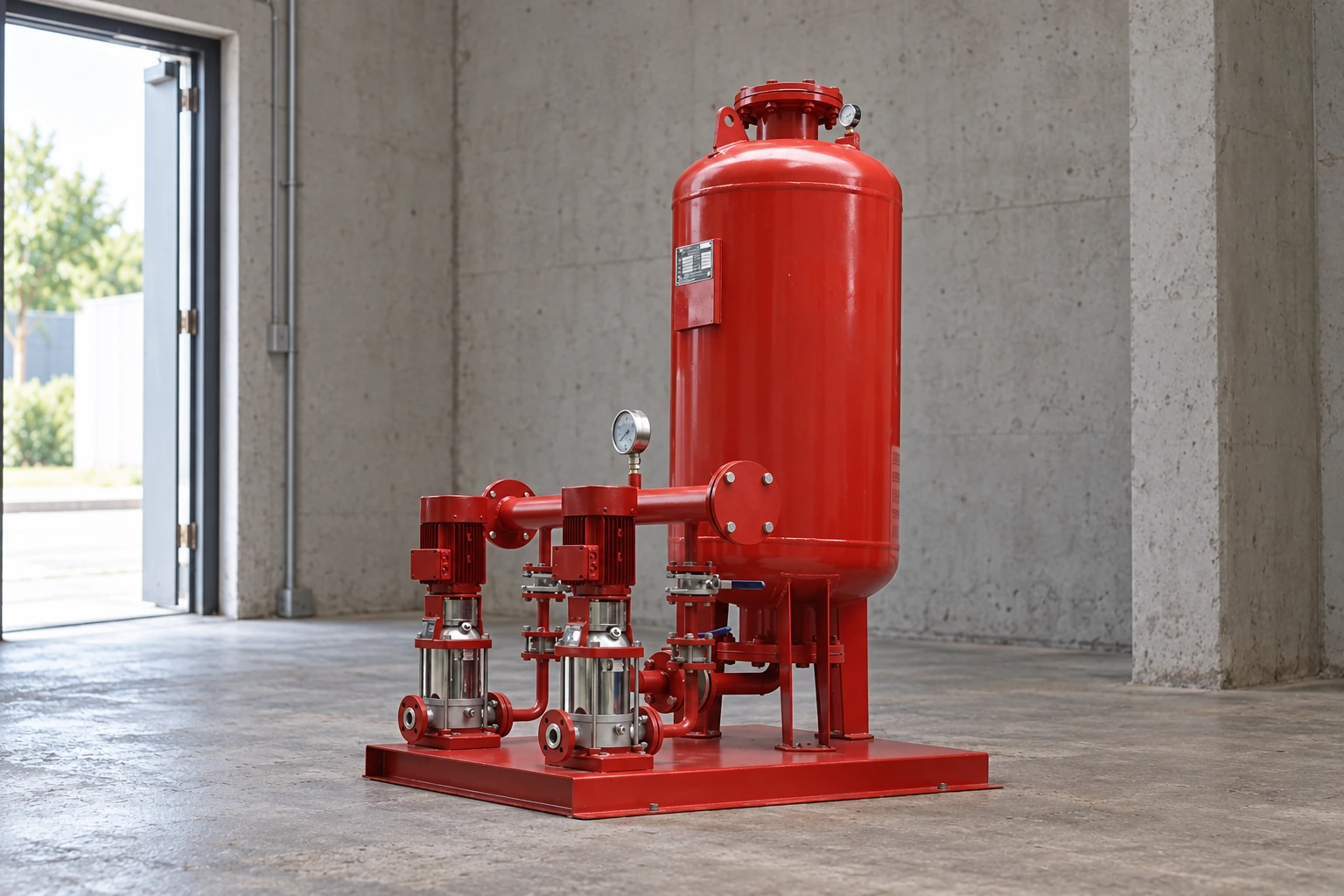
This comparison is qualitative. It is not a substitute for a certified backflow design, a water-quality assessment, or the selected pump’s curve. The BorraPumps booster-regulator equipment is a candidate product reference; do not assume that the photographed package includes a specific backflow device, tank, controller, or certified performance that is not documented on the product page.
Work through a realistic duty scenario
Suppose a building needs a short high-flow peak but the incoming service can replenish only a smaller sustained flow at an acceptable residual pressure. A direct booster cannot safely draw the missing flow from the main. A break tank may cover the peak if the usable storage above the low-level cutoff is sufficient and the following recovery period allows refill. The calculation is a water balance over time: usable storage required equals cumulative demand minus cumulative permitted refill during the period of deficit, with a separately chosen operating reserve. Do not size the tank from peak flow multiplied by an arbitrary number of minutes without examining the actual load shape.
In a different building, the service may deliver the full design flow while maintaining the utility’s minimum pressure. If rules permit direct boosting, using the available inlet pressure can reduce the added head. The designer still checks the booster at the highest inlet condition to prevent overpressure and at the lowest inlet condition to confirm duty. The two operating cases can lead to different pump speeds, stages, and pressure-protection needs. The US Department of Energy pump-system sourcebook explains why the installed system curve and operating range matter more than a single catalogue point.
Design the break-tank route completely
For a tank-fed arrangement, specify the tank inlet and overflow, usable level range, low-level alarm and trip, access opening, cleaning route, water-quality controls, suction geometry, isolation, drainage, and refill control. Keep suction pipe losses low and avoid an arrangement that traps air. Confirm whether the pump manufacturer permits the actual suction lift or expects a flooded suction. A nominally large tank is of little value if the outlet is too high or the suction line admits air.
Commission by measuring refill flow, pump draw, level change, suction and discharge pressure, and the response to a low-level signal. Simulate loss of incoming water if the operating plan requires it. Observe whether the pump restarts automatically after level recovers; an uncontrolled restart can surprise maintenance staff or create a pressure transient. Document who checks and cleans the tank and how the building receives water during a tank outage.
Design the direct route completely
For a direct arrangement, document the service size, meter and backflow-device loss, permissible pressure and flow envelope, inlet sensor location, low-inlet response, discharge-pressure limit, check valves, and staging logic. The controller should avoid repeatedly stopping and restarting near the inlet threshold. If the utility requires a flow limiter or a separate pressure zone, show it on the schematic and include its loss in the pump calculation.
Commission under meaningful demand, not only with every outlet closed. Record inlet and discharge pressures simultaneously while one and then multiple pumps run. Verify that the worst observed inlet condition is still within the accepted design envelope; otherwise document the limitation and revisit the route. The two-pump versus three-pump booster guide can help define staging and failure service after the source boundary is settled.
Ask suppliers and the water authority the same questions
Send the permitted connection method, design flow profile, minimum and maximum inlet pressure, required discharge pressure, water quality, temperature, electrical supply, redundancy target, room dimensions, and maintenance constraints. For the tank option, add usable volume, refill rate, level-control sequence, air-gap requirement, and cleaning access. For the direct option, add the utility’s residual-pressure condition, backflow arrangement, inlet trip, and maximum permitted draw. Request pump curves at each operating case, not just a motor rating.
Compare quotations on the whole system boundary. A lower pump price can be outweighed by tank construction, backflow hardware, controls, testing, or long-term hygiene work. Conversely, saving the tank is not a benefit if the utility forbids direct connection or the service cannot sustain peak demand. Record the decision and supporting tests so future operators know why the route was selected.
Các câu hỏi thường gặp
Does a break tank always improve water pressure?
No. The pump supplies the required pressure. The tank changes the source boundary and may buffer supply deficits, but insufficient storage or poor suction design can still cause low pressure.
Can a booster always connect directly to a city main?
No. Permission, minimum residual pressure, backflow requirements, and allowable draw are set by the relevant utility and local rules. Verify them for the project.
Is a break tank automatically safer for drinking water?
No. Separation can control one backflow risk, while storage creates water-quality and maintenance responsibilities. The complete design and management program determine safety.
Which option uses less energy?
It depends on the available inlet pressure, tank water level, demand pattern, pump selection, and control strategy. Compare measured or calculated operating points over the expected duty cycle.
Học tập nâng cao
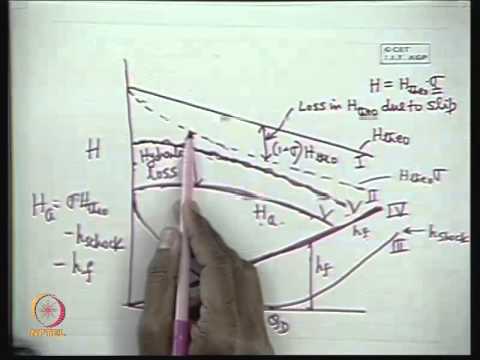
The NPTEL IIT Kharagpur lecture on centrifugal pump characteristics explains how pump and system curves establish the operating point. It supports the hydraulic comparison above; it does not replace utility approval or a project calculation.