
Fire pump churn pressure is the discharge pressure produced when the pump runs at or near zero flow. It is also called shutoff or no-flow pressure. Check it with the system arranged for an approved no-flow test, using calibrated suction and discharge gauges and the correct pump speed. Compare the net pump pressure with the accepted pump curve and historical baseline, while confirming that no part of the system is exposed to pressure above its rating. Keep the calculation and acceptance record with the final project documents so future tests use the same basis.
An toàn và phạm vi: Máy bơm phòng cháy chữa cháy và các thiết bị truyền động của chúng là thiết bị an toàn tính mạng. Công việc liên quan đến thủy lực, điện, dầu diesel, nhiên liệu, ắc quy, áp suất, thiết bị quay, thử nghiệm và khắc phục sự cố phải tuân theo thiết kế được phê duyệt hiện hành, hướng dẫn của nhà sản xuất, các tiêu chuẩn hiện hành và cơ quan có thẩm quyền. Hướng dẫn này giải thích lộ trình quyết định kỹ thuật; tài liệu này không cho phép thực hiện các thay đổi tại hiện trường, bỏ qua quy trình hoặc vận hành bởi nhân viên không đủ năng lực.
What churn pressure represents
At churn, the pump develops head while little or no water leaves the discharge. The reading reflects the pump curve, speed, suction pressure, gauge elevation, and system arrangement. Treat this as a system condition rather than an isolated component choice. Identify the source of every input, the unit used, the operating condition it represents, and the person responsible for approval. If information is preliminary, mark the assumption and test how the decision changes at a conservative boundary. This prevents a neat calculation from hiding an uncertain water level, pressure, valve position, driver condition, or simultaneous demand.
For fire pump churn pressure, verify this section against the selected pump curve, the actual site arrangement, manufacturer instructions, and the current requirements accepted by the authority having jurisdiction. Check the installed condition as well as the drawing because pipe routes, elevations, supports, controls, and access often change during construction. Record the result in a form that can be repeated during commissioning and later inspection. Do not change a safety-critical setting or isolate fire protection without the approved impairment and restoration process.
Prepare a safe no-flow test
Confirm valve positions, controller mode, suction availability, cooling or circulation provisions, and the approved procedure. Notify affected parties and prevent an unintended alarm or impairment. The most useful evidence is measured or approved project data, not a copied rule of thumb. Identify the source of every input, the unit used, the operating condition it represents, and the person responsible for approval. If information is preliminary, mark the assumption and test how the decision changes at a conservative boundary. This prevents a neat calculation from hiding an uncertain water level, pressure, valve position, driver condition, or simultaneous demand.
For fire pump churn pressure, verify this section against the selected pump curve, the actual site arrangement, manufacturer instructions, and the current requirements accepted by the authority having jurisdiction. Check the installed condition as well as the drawing because pipe routes, elevations, supports, controls, and access often change during construction. Record the result in a form that can be repeated during commissioning and later inspection. Do not change a safety-critical setting or isolate fire protection without the approved impairment and restoration process.
Use net pump pressure
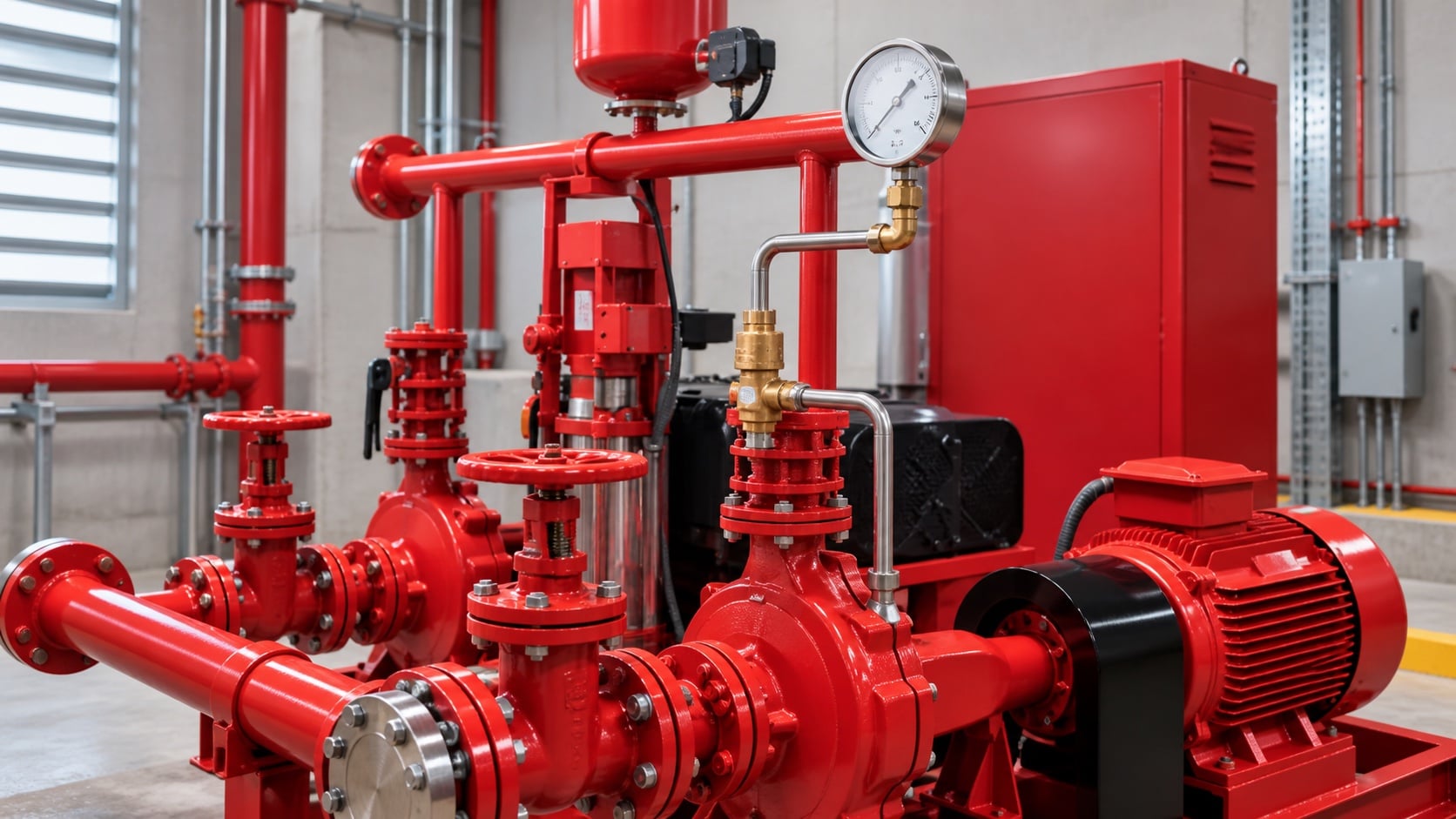
Record suction and discharge pressure at stable speed. Calculate the pressure rise across the pump rather than treating discharge pressure alone as pump performance. Review this condition at normal, test, and credible abnormal states before procurement. Identify the source of every input, the unit used, the operating condition it represents, and the person responsible for approval. If information is preliminary, mark the assumption and test how the decision changes at a conservative boundary. This prevents a neat calculation from hiding an uncertain water level, pressure, valve position, driver condition, or simultaneous demand.
For fire pump churn pressure, verify this section against the selected pump curve, the actual site arrangement, manufacturer instructions, and the current requirements accepted by the authority having jurisdiction. Check the installed condition as well as the drawing because pipe routes, elevations, supports, controls, and access often change during construction. Record the result in a form that can be repeated during commissioning and later inspection. Do not change a safety-critical setting or isolate fire protection without the approved impairment and restoration process.
Correct for speed and gauge elevation
A changed engine speed or electrical frequency changes pump head. Different gauge elevations can also distort comparisons when the difference is significant. The design team should turn this point into a traceable calculation or drawing note. Identify the source of every input, the unit used, the operating condition it represents, and the person responsible for approval. If information is preliminary, mark the assumption and test how the decision changes at a conservative boundary. This prevents a neat calculation from hiding an uncertain water level, pressure, valve position, driver condition, or simultaneous demand.
For fire pump churn pressure, verify this section against the selected pump curve, the actual site arrangement, manufacturer instructions, and the current requirements accepted by the authority having jurisdiction. Check the installed condition as well as the drawing because pipe routes, elevations, supports, controls, and access often change during construction. Record the result in a form that can be repeated during commissioning and later inspection. Do not change a safety-critical setting or isolate fire protection without the approved impairment and restoration process.
Bảng quyết định thực tế
| Quan sát | Possible cause | Kiểm tra tiếp theo |
|---|---|---|
| Discharge high, suction normal | High speed or wrong curve | Verify speed and pump records |
| Both suction and discharge high | Changed source pressure | Review supply condition |
| Net pressure low | Wear, air, low speed, bypass flow | Verify instruments and operating state |
| Pressure unstable | Air, suction disturbance, control issue | Inspect suction and test arrangement |
| Relief flow during normal churn | Setting or oversizing issue | Review approved pressure-control design |
Compare with the accepted curve
Use the certified or acceptance-test curve and a historical trend. A single generic target is not a substitute for the specific pump and project criteria. Treat this as a system condition rather than an isolated component choice. Identify the source of every input, the unit used, the operating condition it represents, and the person responsible for approval. If information is preliminary, mark the assumption and test how the decision changes at a conservative boundary. This prevents a neat calculation from hiding an uncertain water level, pressure, valve position, driver condition, or simultaneous demand.
For fire pump churn pressure, verify this section against the selected pump curve, the actual site arrangement, manufacturer instructions, and the current requirements accepted by the authority having jurisdiction. Check the installed condition as well as the drawing because pipe routes, elevations, supports, controls, and access often change during construction. Record the result in a form that can be repeated during commissioning and later inspection. Do not change a safety-critical setting or isolate fire protection without the approved impairment and restoration process.
Investigate high churn pressure
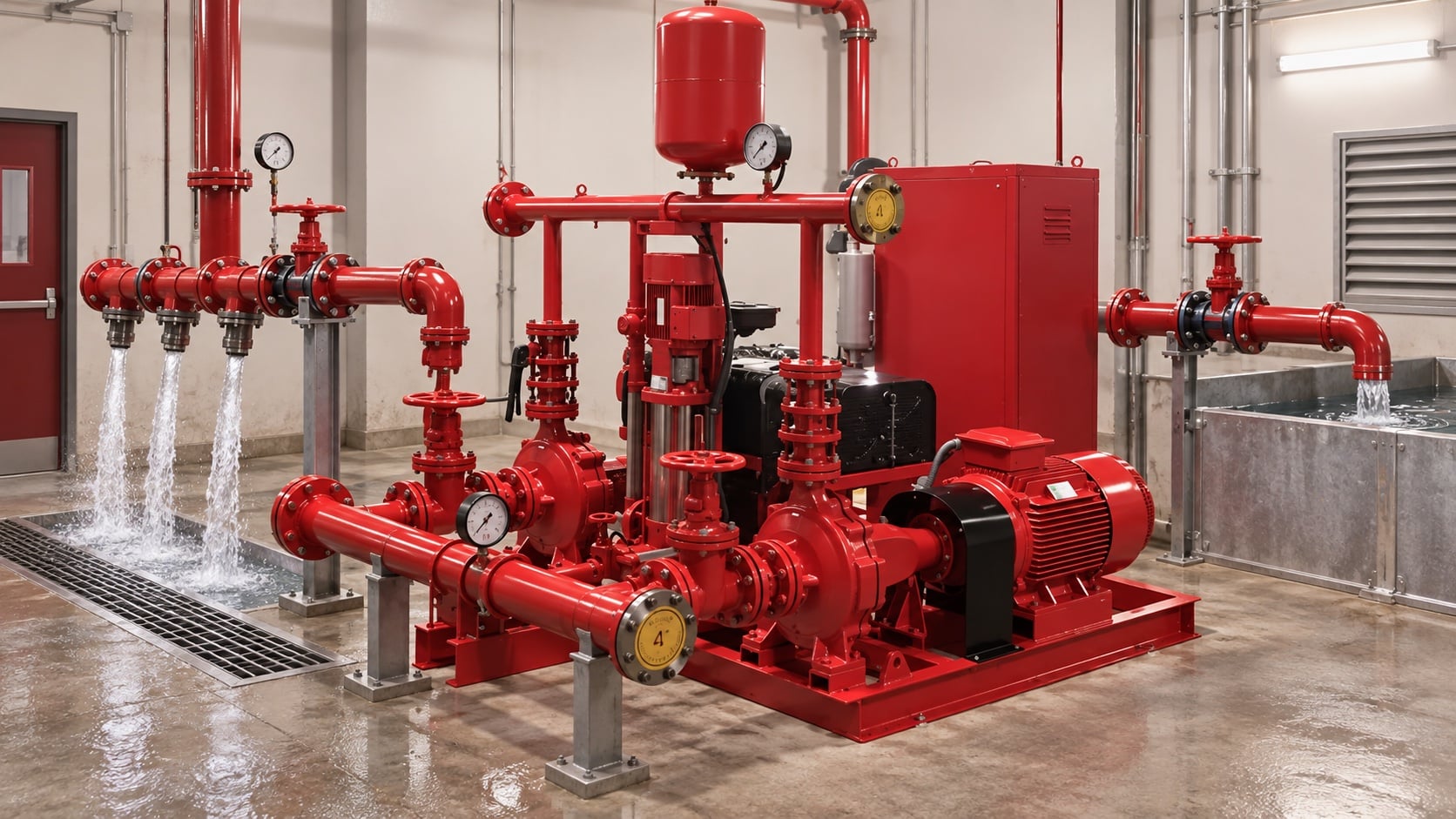
Check speed, suction pressure, valve arrangement, pressure-control devices, and whether the installed impeller or curve matches the record. Protect downstream components from overpressure. The most useful evidence is measured or approved project data, not a copied rule of thumb. Identify the source of every input, the unit used, the operating condition it represents, and the person responsible for approval. If information is preliminary, mark the assumption and test how the decision changes at a conservative boundary. This prevents a neat calculation from hiding an uncertain water level, pressure, valve position, driver condition, or simultaneous demand.
For fire pump churn pressure, verify this section against the selected pump curve, the actual site arrangement, manufacturer instructions, and the current requirements accepted by the authority having jurisdiction. Check the installed condition as well as the drawing because pipe routes, elevations, supports, controls, and access often change during construction. Record the result in a form that can be repeated during commissioning and later inspection. Do not change a safety-critical setting or isolate fire protection without the approved impairment and restoration process.
Investigate low churn pressure
Check gauge accuracy, pump speed, rotation, suction supply, internal wear, air, bypass flow, relief leakage, and configuration before concluding that the pump is damaged. Review this condition at normal, test, and credible abnormal states before procurement. Identify the source of every input, the unit used, the operating condition it represents, and the person responsible for approval. If information is preliminary, mark the assumption and test how the decision changes at a conservative boundary. This prevents a neat calculation from hiding an uncertain water level, pressure, valve position, driver condition, or simultaneous demand.
For fire pump churn pressure, verify this section against the selected pump curve, the actual site arrangement, manufacturer instructions, and the current requirements accepted by the authority having jurisdiction. Check the installed condition as well as the drawing because pipe routes, elevations, supports, controls, and access often change during construction. Record the result in a form that can be repeated during commissioning and later inspection. Do not change a safety-critical setting or isolate fire protection without the approved impairment and restoration process.
Record and restore the system
Document readings, time, speed, controller state, alarms, and observations. Return every valve and control to its normal position and verify readiness. The design team should turn this point into a traceable calculation or drawing note. Identify the source of every input, the unit used, the operating condition it represents, and the person responsible for approval. If information is preliminary, mark the assumption and test how the decision changes at a conservative boundary. This prevents a neat calculation from hiding an uncertain water level, pressure, valve position, driver condition, or simultaneous demand.
For fire pump churn pressure, verify this section against the selected pump curve, the actual site arrangement, manufacturer instructions, and the current requirements accepted by the authority having jurisdiction. Check the installed condition as well as the drawing because pipe routes, elevations, supports, controls, and access often change during construction. Record the result in a form that can be repeated during commissioning and later inspection. Do not change a safety-critical setting or isolate fire protection without the approved impairment and restoration process.
Điều này liên quan như thế nào đến thiết bị BORRAPUMP
BORRAPUMP cung cấp thiết bị bơm kỹ thuật cho các dự án cấp nước và phòng cháy chữa cháy. Xem lại phần liên quan Cấu hình sản phẩm BORRAPUMP làm điểm khởi đầu, sau đó gửi lưu lượng, cột áp, nguồn nước, động cơ, công suất, hệ thống điều khiển, điều kiện hiện trường, các yêu cầu hiện hành, số lượng và điểm đến được yêu cầu. Lựa chọn cuối cùng phải sử dụng cơ sở thủy lực của dự án và bản trình duyệt được phê duyệt; hướng dẫn này không khẳng định rằng một bố trí trong catalogue phù hợp với mọi khu vực tàijurisdiction hoặc rủi ro.
Các hướng dẫn BORRAPUMP liên quan
- lựa chọn bơm chữa cháy
- máy bơm chữa cháy diesel và máy bơm chữa cháy điện
- lựa chọn cụm bơm phòng cháy chữa cháy
Tài liệu tham khảo có thẩm quyền
Các nguồn sau đây thiết lập ranh giới tiêu chuẩn, bối cảnh an toàn phòng cháy chữa cháy và các nguyên tắc hệ thống bơm được sử dụng trong hướng dẫn này. Luôn áp dụng phiên bản và quy chuẩn địa phương được chấp thuận cho dự án.
- Trang phát triển tiêu chuẩn NFPA 25
- Trang phát triển tiêu chuẩn NFPA 20
- Tài nguyên hệ thống máy bơm của Bộ Năng lượng Hoa Kỳ
Video giáo dục
Nền tảng giáo dục bởi Practical Engineering: Máy bơm tạo ra áp suất hay lưu lượng?. Video hỗ trợ cho khái niệm kỹ thuật cơ bản và không thay thế các yêu cầu phòng cháy chữa cháy cụ thể của dự án.
Các câu hỏi thường gặp
Is churn pressure the same as rated pressure?
No. Churn is a no-flow condition; rated pressure is associated with the specified rated flow on the pump curve.
Should the discharge valve be closed?
Use only the approved test arrangement for the installed system. Valve position and any permitted circulation path must follow the project procedure.
Why use suction pressure?
The pump adds differential pressure. A change in incoming water pressure can change the discharge gauge without changing pump performance.
Can I adjust the relief valve to fix churn pressure?
Do not use a relief valve to hide an incorrect pump, speed, or system design. Review the approved design and applicable requirements.
Danh sách kiểm tra xác minh cuối cùng
Trước khi phê duyệt, hãy xác nhận cơ sở thủy lực, điều kiện nguồn nước, đường cong bơm đã chọn, dữ liệu bộ truyền động và bộ điều khiển, định mức áp suất của các bộ phận, bố trí van, phương pháp thử nghiệm, lối đi, hệ thống thoát nước, cảnh báo và quy trình khôi phục. Giải quyết các khác biệt giữa bản vẽ và hệ thống thực tế đã lắp đặt. Trong quá trình chạy thử, hãy sử dụng các thiết bị đã hiệu chuẩn và ghi lại áp suất hút, áp suất xả, lưu lượng, tốc độ, tình trạng bộ truyền động, cảnh báo và các quan sát bất thường tại mọi điểm yêu cầu. Lưu giữ các kết quả đã được chấp nhận cùng với hồ sơ phòng bơm để các lần kiểm tra sau có thể so sánh các yếu tố tương đương.