
Pump wire-to-water efficiency compares useful hydraulic power delivered across a defined boundary with the real electrical power entering that boundary. It combines the effects of the pump, motor and any drive or transmission included in the measurement. It is different from the pump hydraulic efficiency printed on a catalogue curve. To calculate it, measure flow, developed head and real input kilowatts at the same stable operating condition, use the correct liquid density, and state exactly where the electrical and hydraulic measurements were taken. A motor nameplate rating or an ammeter reading alone cannot establish the result.
This article explains a field-assessment method for electrically driven water-pumping installations. Electrical work and instrument installation require competent personnel and an appropriate safe procedure. The numerical example is illustrative, not a test report for a BORRAPUMP product.
Decide what the measurement includes
Draw the measurement boundary before collecting data. An electrical meter upstream of a variable-speed drive includes drive losses; a measurement at a different point may not. A site supply meter may also include lighting, heaters or other pumps. A whole-site electricity reading cannot be attributed to one pump without separating those loads.
Define the hydraulic boundary with equal care. Pump differential head between measurement sections is different from the useful pressure delivered at a distant outlet. Pipe friction between the pump and that outlet may be included in a broader service-efficiency assessment, but the result needs a different description. Make the chosen definition visible so that two tests can be compared fairly.
Measure real electrical input
Use an appropriate power measurement that accounts for the supply arrangement, voltage, current and power factor. Do not multiply a nominal voltage by a single current reading and describe it as measured real kilowatts. Three-phase systems, unbalanced supplies and variable-speed drive waveforms require suitable instruments and methods.
Record where the meter was connected, whether other loads were operating and the averaging period. Keep the measured speed and control state with the electrical result. A drive display can be useful operational information, but confirm its definition and accuracy before treating it as an independent measurement. The pump motor starting-current article concerns a separate transient condition; a short starting event should not be mixed with a stable efficiency test.
Establish flow independently
Measure the actual flow through the defined hydraulic boundary. Use an instrument suitable for the pipe, liquid and operating range, and follow its installation requirements. A meter affected by air, poor straight-run conditions or an inappropriate full-pipe assumption can create a convincing but incorrect efficiency calculation.
Where several branches or a bypass exist, determine which flows pass through the pump and which reach the useful service boundary. A recirculation line can make pump flow greater than delivered process flow. Document valve positions and branch operation. Do not substitute the duty flow from a quotation for a measurement and then present the result as a field-tested efficiency.
Calculate developed head consistently
For a pump test, account for pressure-head difference, elevation difference and any material velocity-head difference between the defined sections. Use the density of the pumped liquid when converting pressure to head. Two pressure gauges mounted at different elevations may need a correction, and different pipe diameters can make the velocity terms relevant.
Record suction pressure as well as discharge pressure. A high discharge pressure can partly come from a pressurized inlet rather than energy added by the pump. The pump head explanation gives the underlying distinction. Use calibrated instruments with ranges appropriate to the actual differential, and collect their readings simultaneously with flow and electrical power.
Apply the efficiency equation with explicit units
For an incompressible liquid, hydraulic power is density × gravitational acceleration × flow × developed head. Using kilograms per cubic metre, metres per second squared, cubic metres per second and metres gives watts. Divide by 1,000 to obtain kilowatts. Wire-to-water efficiency is hydraulic kilowatts divided by real electrical input kilowatts.
For an illustrative water calculation using density 1,000 kilograms per cubic metre, flow 0.02 cubic metres per second and head 30 metres, hydraulic power is 5.886 kilowatts when gravitational acceleration is taken as 9.81 metres per second squared. If measured input is 9 kilowatts across the stated electrical boundary, efficiency is approximately 65.4 percent.
| Số lượng | Illustrative value | What must be verified in a real test |
|---|---|---|
| Flow | 0.02 m³/s | Meter method and actual pump flow |
| Developed head | 30 m | Pressure, elevation and velocity terms |
| Liquid density | 1,000 kg/m³ | Temperature and fluid composition |
| Hydraulic output | 5.886 kW | Consistent SI calculation |
| Real electrical input | 9 kW | Boundary and power measurement |
| Wire-to-water efficiency | 65.4% | Simultaneous representative readings |
These inputs describe a hypothetical test. They do not establish an acceptable threshold for another installation. A result above 100 percent indicates an error in data, definitions, boundaries or units and requires investigation.
Compare the result with the right benchmark
Catalogue pump efficiency excludes losses outside its stated boundary. A combined field efficiency will normally include additional losses, so compare it with a compatible expected value rather than accusing the pump of failing because the percentages differ. The exact motor load, drive condition and selected pump point affect the expected result.
The NC State Extension pumping-plant performance guide explains the relationship between pumping equipment, power units and overall performance. Its assessment context should be preserved when using its examples or benchmarks. Do not copy a value from one power-unit type and apply it unchanged to a different arrangement.
Diagnose low efficiency in a useful order
First check the measurements and calculation: units, pressure signs, meter boundaries, time alignment and flow interpretation. Then compare the operating point with the accepted pump curve. A sound pump can have poor overall performance when it is oversized, heavily throttled or serving an unnecessarily high pressure requirement.
Next review recirculation, bypass flow, unnecessary parallel operation, inlet restrictions and changed system demand. Only after the duty and measurements are established should the investigation attribute a difference to wear, internal leakage or motor and drive performance. Keep hydraulic, electrical and mechanical inspections within their own safe procedures. Replacing equipment without identifying the loss can preserve the underlying problem.
Evaluate energy per delivered volume as well
Efficiency describes a power ratio at a condition. Energy per delivered volume, such as kilowatt-hours per cubic metre, also incorporates the required head and the way the installation operates. Compare this metric only with similar service requirements. Moving water to a much higher elevation can legitimately consume more energy per unit volume even with a well-selected pump.
For changing demand, record energy and volume over a representative interval and identify the included loads. Short tests at favourable conditions may not represent an irrigation season, building demand cycle or storm event. The NCAT energy-saving guidance for irrigators discusses practical assessment and system improvements. Use measured operating hours when translating a tested improvement into an annual estimate.
Check the product and service envelope before changing settings
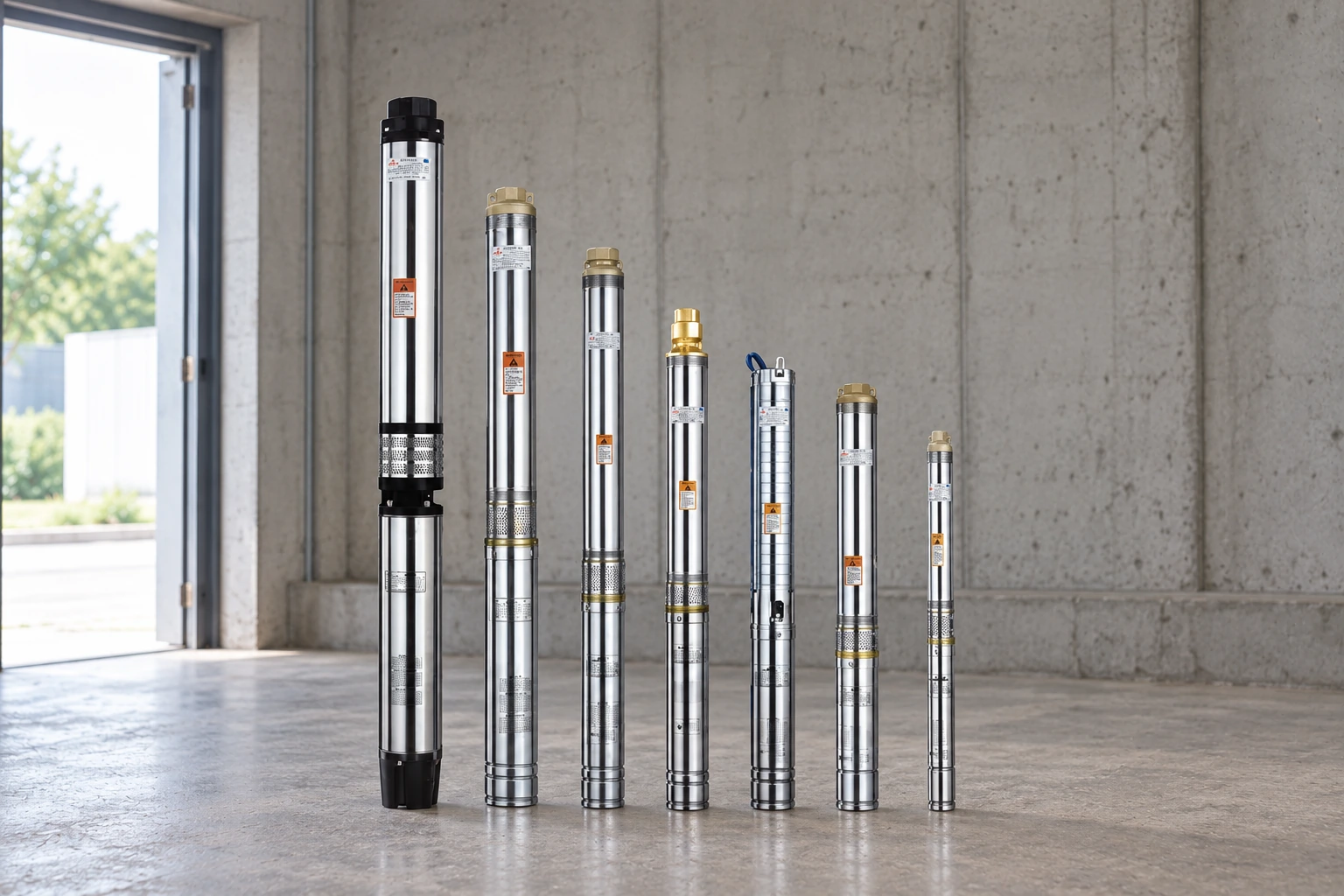
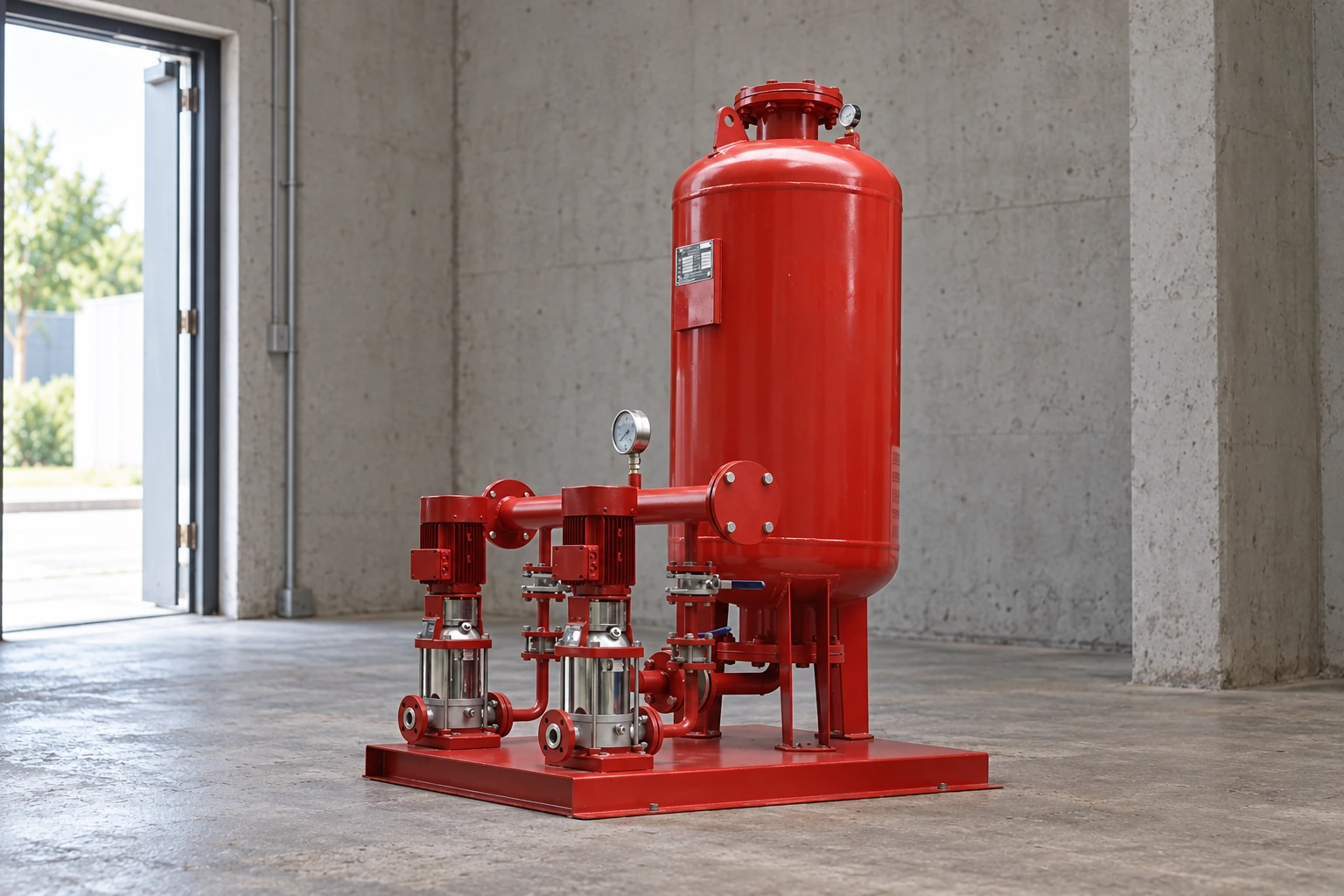
Một irrigation deep-well pump và packaged booster equipment may both benefit from a defined energy assessment, but their boundaries and service constraints differ. A well installation involves pumping water level and cable or motor arrangements; a building booster involves inlet conditions, demand and staging.
Do not reduce pressure below the required service level merely to improve an efficiency figure. Do not operate outside allowed flow, speed, cooling or suction conditions to produce a better test result. The Hướng dẫn định cỡ tăng áp tưới tiêu connects the required duty with product selection. Ask the supplier for the appropriate operating envelope before modifying controls or equipment.
Repeat the test after a defined improvement
Keep the original readings, instrument details and system state. After an approved change, repeat the measurement at a comparable delivered duty. If demand or source level has changed, account for the difference rather than treating all energy variation as a saving. Record uncertainty where the instruments or conditions limit precision.
A useful report states the original condition, action, final condition, measured power and volume, service compliance and remaining limitations. It should distinguish a point efficiency improvement from verified annual electricity reduction. That makes the result useful for maintenance and procurement instead of turning one percentage into an unsupported marketing claim.
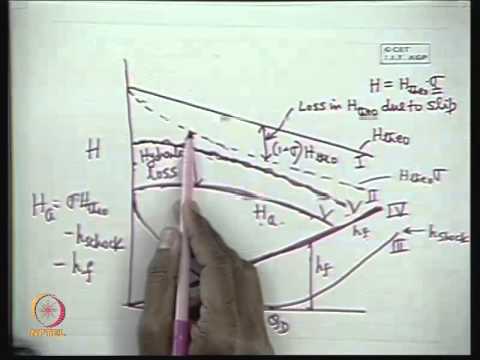
Further learning: NPTEL explains centrifugal pump characteristics. Use this educational background with the model-specific data and method discussed above; the lecture does not certify a BORRAPUMP model.
Các câu hỏi thường gặp
Is wire-to-water efficiency the pump’s catalogue efficiency?
No. The field measurement can include motor, drive and other losses within its defined boundary. Catalogue pump efficiency usually describes the hydraulic machine alone.
Can I calculate it from motor rated kilowatts?
A rating is not measured operating input. Use real input power at the tested duty and document the measurement method and electrical boundary.
Do I need suction pressure?
For pump differential head, yes, unless another valid method establishes that term. Discharge pressure alone can include pressure already present at the inlet.
Why did a better pump not reduce the bill as expected?
Demand, head, runtime, bypass flow and other loads may have changed or remained inefficient. Compare equivalent delivered service and measured energy before assigning a cause.
How often should I repeat the assessment?
Set a programme appropriate to operating hours and maintenance history, and repeat after significant duty or equipment changes. Use a comparable condition and preserve the measurement record.