Select a self-priming irrigation pump by the flow each irrigation zone needs, the total head at that flow, the lowest source water level, and the power available at the pump site. A self-priming design can restart after air enters the suction line within its rated limits, but it does not remove the need for an initial casing fill or adequate suction margin. For a diesel-driven package, match the engine’s continuous power and speed to the pump curve, and consider fuel, maintenance, noise, emissions, access, and altitude. For an electric package, confirm the supply and starting method. The equipment is suitable only if the exact model meets the hydraulic and site conditions, not because its nominal horsepower sounds large.
Calculate zone flow before looking at a pump curve
List each irrigation zone and the emitters or sprinklers that operate simultaneously. Sum their required flow at the pressure specified for their actual operating condition. Do not add every fixture in an entire farm if only one zone runs at a time, and do not size from one sprinkler if several run together. Include filter flushing, fertigation, or other concurrent demand only when those modes truly operate at the same time. The University of Florida IFAS irrigation design guide explains how zone flow and pipe size are linked.
Check the source’s sustainable delivery. A canal or pond may expose the intake at low water, while a well may have a pumping water level below its static level. The irrigation schedule may need to change if the source cannot sustain the peak. An oversized pump cannot create water that the source cannot supply. The BorraPumps single-cylinder diesel self-priming pump for agriculture is a real product reference within the broader water-supply booster range; its image shows an orange engine, blue pump and wheeled skid, but it does not establish a particular flow rating for this project.
Build total dynamic head at design flow
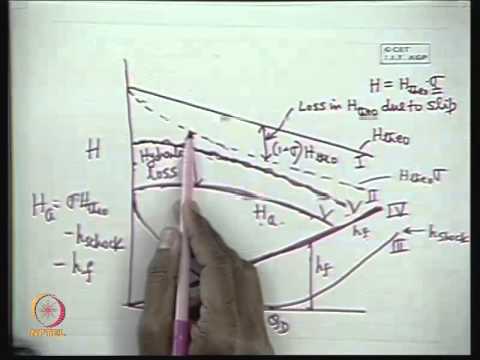
Total dynamic head combines the elevation difference from source water surface to the delivery point, pressure required at the irrigation device, suction and discharge friction, and losses through filters, valves, bends, and other components. For an open canal feeding a pressurized sprinkler system, the controlling source level may be the lowest seasonal canal level. Calculate losses at design flow, because pipe friction rises with flow. A nominal pump head quoted without flow is not a usable selection point.
The University of Florida IFAS pump guide for irrigation and drainage explains the importance of head and suction conditions. North Dakota State University’s Irrigation Water Pumps guide emphasizes inventorying the actual flow and head requirements before selection. Use the selected model’s curve at the combined duty point and check its efficiency and motor or engine load there.
For an illustrative calculation, suppose an irrigation zone needs 20 m³/h, source-to-field elevation adds 12 m, the device needs 25 m of pressure head, and calculated pipe, filter and valve losses add 8 m at that flow. The initial design point is about 20 m³/h at 45 m total head. These figures are hypothetical; the actual project must account for seasonal source level, filter fouling, and pressure variation. Do not choose a pump simply rated for 45 m shutoff head, because shutoff is at nearly zero flow.
Check suction lift and priming capability separately
Measure vertical lift from the lowest source water surface to the relevant pump inlet elevation. Add suction line loss, check water temperature and site altitude, and compare available suction conditions with the maker’s requirements. The pump’s advertised self-priming lift may be based on a short, airtight test line and a filled casing. A long hose, high point, blocked strainer, or air leak can make the installed unit prime slowly or fail. The self-priming suction-lift guide explains the hydraulic limit; the priming-time guide covers time and retained liquid.
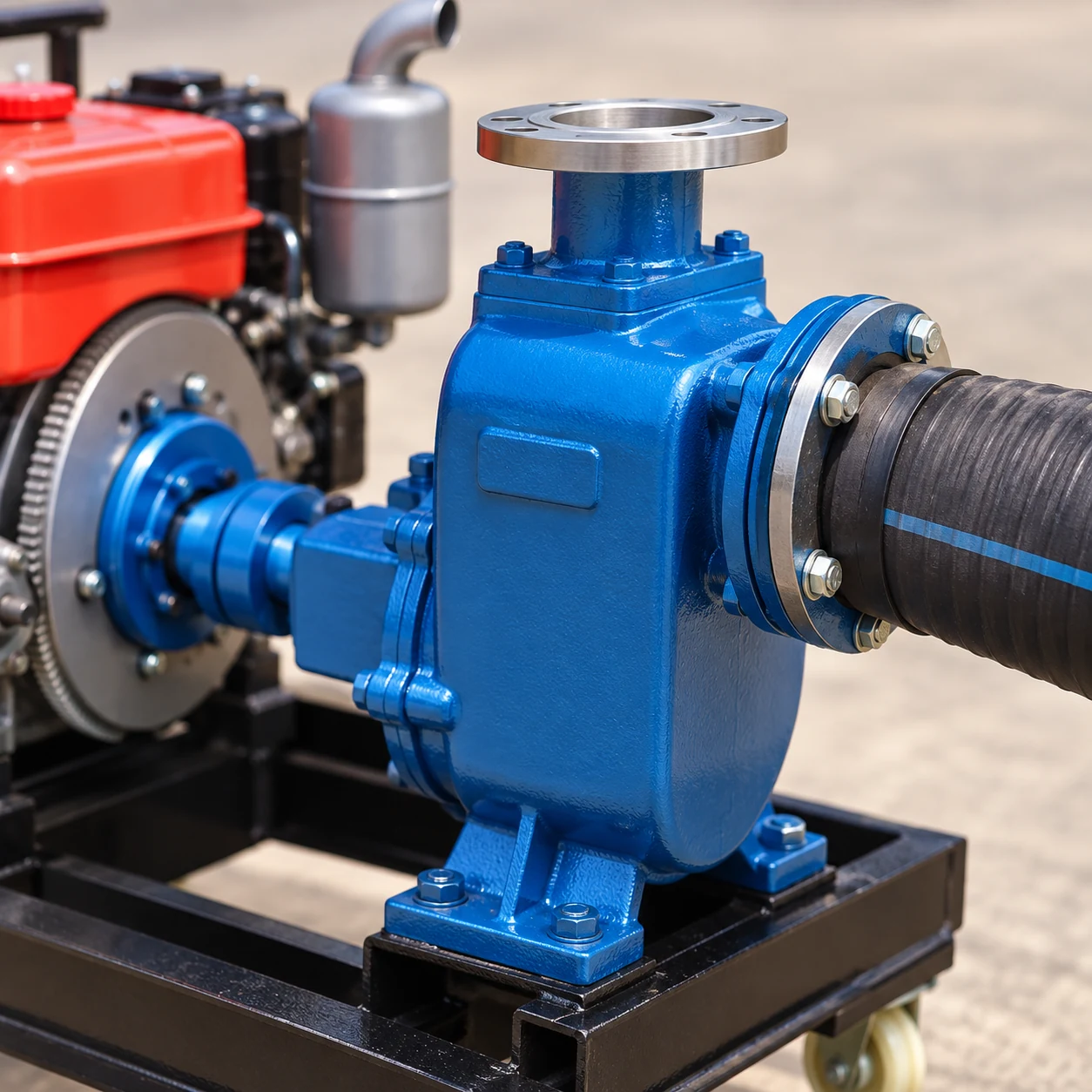
Place the pump as close and low as practicable without exposing it to flooding. Support the hose and protect it from collapse under vacuum. Keep the intake submerged at the lowest operating water level, but above heavy sediment when possible. If the source is muddy, verify the exact pump’s solids capacity; do not assume an irrigation water pump is a dirt pump. The BorraPumps ZX electric self-priming irrigation pump is another site product for comparing drive arrangements, subject to its own documented limits.
| Đầu vào lựa chọn | What to measure | Consequence of guessing |
|---|---|---|
| Zone flow | Simultaneous emitters at design pressure | Underwatered area or oversized pump |
| Total head | Elevation, device pressure, pipe and filter loss | Điểm làm việc không đúng |
| Lowest source level | Seasonal or pumping water surface | Loss of prime or cavitation |
| Đường hút | Hose ID, length, fittings, strainer | Priming delay and inlet loss |
| Liquid quality | Sand, silt, debris, temperature | Blockage, wear or seal damage |
| Power availability | Engine or electric supply at site | Incomplete installation or outage |
| Run hours | Daily and seasonal duty | Misjudged fuel and maintenance cost |
These are measured inputs, not fixed values for the BorraPumps model. Request the maker’s curve and limits for the exact quotation.
Match the engine to the pump duty
For a diesel-driven unit, the engine must provide sufficient continuous shaft power at the selected speed and site conditions. Hydraulic power is Pₕ = ρgQH, where ρ is liquid density in kg/m³, g is gravitational acceleration in m/s², Q is flow in m³/s, and H is head in meters; this gives watts. Required shaft power is higher because the pump is not perfectly efficient. The engine must also cover coupling and accessory losses and remain within its continuous rating. Do not select an engine from peak nameplate horsepower alone.
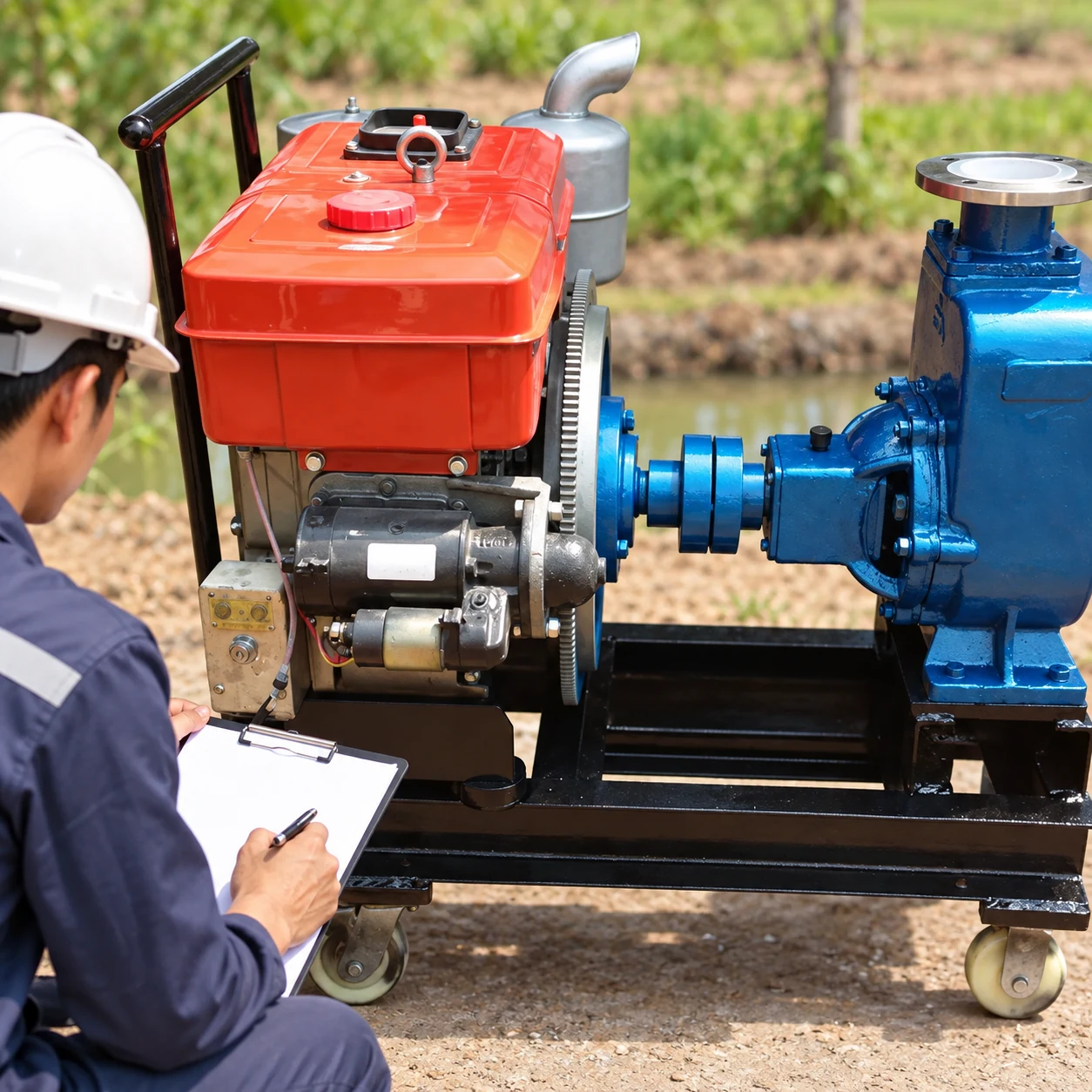
For the hypothetical 20 m³/h at 45 m duty, Q is 0.00556 m³/s and water hydraulic power is about 2.45 kW using ρ≈1000 kg/m³ and g≈9.81 m/s². This is not the required engine rating. Divide by the exact pump efficiency at the operating point, then account for drive and site derating using the engine maker’s data. A high-altitude or hot site can reduce available engine power. The University of Georgia Extension’s irrigation pumping plants guide discusses matching pump selection and energy use to duty.
Check speed compatibility. A pump curve at one rpm cannot be assumed valid at another without a proper speed correction and maker approval. Confirm the coupling, guard, cooling, exhaust route, fuel system, and vibration mounting. A mobile skid must be stable and safely anchored while operating. Record engine fuel consumption at the expected load points and the service interval for filters, oil, and belts or coupling components.
Compare engine and electric options at the site
An electric motor may be attractive where reliable power is already at the pump, but a long temporary cable or inadequate service can dominate installation cost. A diesel unit can operate away from the grid, yet it needs fuel delivery, exhaust management, noise control, spill prevention, and more routine engine maintenance. The driver choice does not change the required flow and head. Compare pump and drive packages that both meet the same hydraulic duty, rather than comparing two unrelated catalogue units.
Consider what happens on a failed engine or power outage during a long irrigation cycle. A standby pump or alternative water source may be needed for high-value crops, but redundancy must be sized to the service requirement. Fuel storage and emissions rules vary by location. Do not promise an engine will run unattended for a set number of hours without the fuel tank, load, monitoring and maintenance details.
Check the water distribution after the pump
Pipe diameter, filter loss, elevation changes, and valve sequencing determine the pressure seen at the field. Verify at the farthest or highest sprinkler, not only at the pump discharge. If different zones have very different duties, one fixed-speed pump may operate poorly in some zones. Split zones, use a suitable control strategy, or select a different pump arrangement. A pressure gauge before and after filters can reveal fouling that otherwise looks like a pump fault.
During commissioning, record source level, suction and discharge pressure, field pressure, flow, speed, power or fuel use, and priming time. Repeat when filters are dirty enough to represent a realistic maintenance threshold. These measurements show whether the installed package meets the calculated duty rather than merely the catalogue point.
Send suppliers a complete duty statement
Provide source type and water-level range, liquid quality, zone flow schedule, total head calculation, suction pipe route, discharge pipe and filter details, run hours, site altitude and temperature, fuel or electrical availability, noise and emissions limits, mobility requirements, and desired backup service. Request pump curves at each zone duty, NPSH and priming data, engine continuous rating at site conditions, fuel consumption, dimensions, and maintenance plan. Ask the supplier to identify any application limits not visible in the product image.
Các câu hỏi thường gặp
Does self-priming mean the pump can start with an empty casing?
Usually not. Many self-priming centrifugal pumps require an initial fill or retained liquid. Follow the exact manual.
Can I select the pump from engine horsepower alone?
No. Flow, head, pump efficiency, speed, suction condition, and continuous engine capability determine suitability.
Which water level should be used for suction calculations?
Use the lowest credible operating source level, including seasonal or pumping drawdown, and check the worst site temperature and altitude.
Is a diesel pump always better for remote irrigation?
No. It is useful without grid power, but fuel, exhaust, noise, maintenance, and operating cost may outweigh mobility where reliable electric power is available.
Further learning
The NPTEL IIT Kharagpur centrifugal-pump characteristics lecture shows why a pump must be selected at the required flow and head, which comes before choosing an engine or motor. Use the actual model curve for procurement.