
Pump motor starting current is the temporary current drawn while a motor accelerates from rest. It can be substantially higher than normal running current, but the correct value depends on the actual motor, supply and starting method. Direct-on-line, star-delta and soft starting produce different current and torque profiles. Select a method that accelerates the pump reliably while keeping the supply disturbance within the project’s limits. Do not estimate an installation from a universal current multiplier or assume that the smallest starting current always gives the best result.
Separate the running duty from the acceleration duty
A motor nameplate describes rated operation; it does not describe every instant of a start. During acceleration, the motor must develop enough torque to overcome the pump’s resisting torque and accelerate the rotating assembly. The available torque changes with motor speed and applied voltage. A starting study therefore needs a current-versus-time profile and a torque assessment, rather than a single number copied from a calculator.
Record the exact motor model, rated voltage, phase, frequency, rated current, connection arrangement and approved starting options. Obtain its locked-rotor or starting-current data from the manufacturer. Also record the pump model and the intended hydraulic starting condition. A centrifugal water pump and a positive-displacement unit need different operating instructions; do not transfer a valve position or starting procedure between them.
Natural Resources Canada’s electric motor reference guide discusses motor selection and starting controls. Use it for the general principles, then obtain the selected equipment’s current, torque and thermal limits. This article concerns conventional induction-motor planning, not an installation instruction for every motor technology.
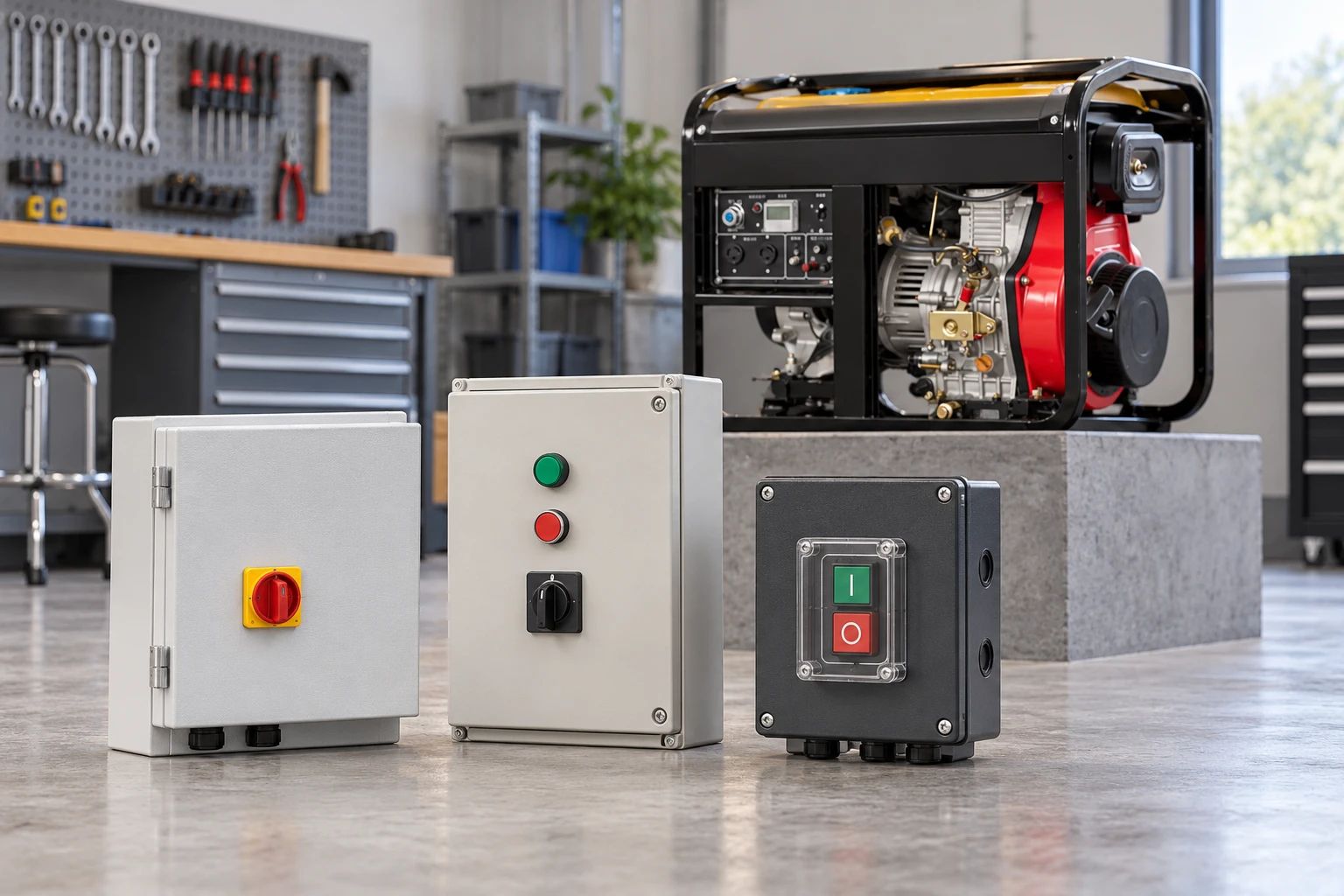
Direct-on-line starting: simple switching, full supply exposure
A direct-on-line starter applies the supply voltage to the motor through the approved switching and protection arrangement. It avoids an intentional reduced-voltage acceleration stage, but the supply must support the corresponding starting demand. A motor that starts well on a strong utility connection may behave differently on a generator or at the end of a long feeder.
Assess whether the motor accelerates within its permitted time, whether other loads remain within their voltage requirements, and whether the approved protective devices ride through the normal start while still protecting the circuit. The starter’s contactor rating and the motor’s full-load current are not interchangeable with the generator’s transient starting capability.
Do not solve a nuisance trip by casually increasing a breaker setting. Check the event record, actual current, acceleration time, mechanical condition and protection coordination. A pump that fails to accelerate can remain at a damaging current even when its initial peak resembles a normal start. Stop repeated attempts and investigate within the manufacturer’s allowed restart limits.
Star-delta starting: verify the connection and available torque
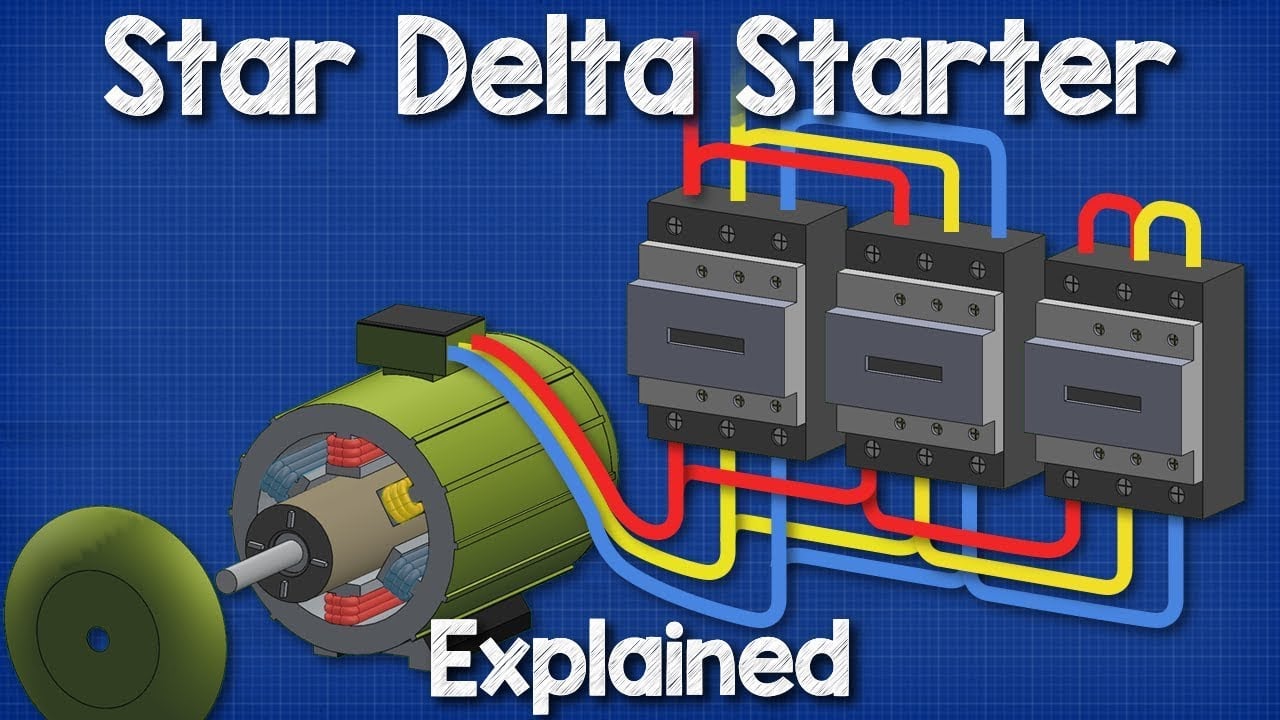
Star-delta starting initially connects suitable motor windings in star and subsequently transfers them to delta for normal operation. The motor must be designed and accessible for that arrangement at the actual supply voltage. A six-terminal appearance alone does not establish compatibility. Confirm the winding ratings and terminal diagram with the motor supplier before specifying the starter.
For an ideal comparison at the same line voltage, star connection gives lower winding voltage than delta, reducing both line starting current and starting torque. This relationship describes a connection principle, not a promise that any pump can accelerate successfully. If the load needs more torque than the motor can deliver during the star stage, the apparent current reduction can become an unsuccessful or excessively long start.
The transition creates its own event. Review the approved transition method, timing and interlocking, and ask how the motor’s speed at transfer affects current and mechanical response. Specify acceptance criteria for the full sequence, not just the first current peak. Avoid a fixed timer copied from another installation whose motor, inertia and hydraulic conditions differ.
Soft starting: limit current without overlooking acceleration
A soft starter controls the voltage applied during starting according to its design and settings. It can provide a controlled acceleration sequence, but reducing applied voltage also reduces the torque available from a conventional induction motor. A current limit that is too restrictive can prevent acceleration, extend heating time or trigger protective trips.
Choose the starter for the actual motor current, load duty, starts per hour, ambient conditions and approved installation arrangement. Ask for the starting profile, permitted start duration, bypass arrangement and protection functions. Document which functions are supplied by the soft starter and which remain necessary elsewhere in the circuit. A product label saying “soft start” is not a complete motor-protection specification.
A soft starter is also different from a variable-frequency drive. A drive controls frequency as well as voltage and may support speed control during operation. That extra capability needs its own compatibility review, including the motor, cable, cooling and generator requirements. Do not buy a drive solely to reduce one starting peak without evaluating the complete system.
| طريقة | What must be established | Evidence required before acceptance |
|---|---|---|
| Direct-on-line | Supply can support acceleration and other loads tolerate the disturbance | Motor starting data, supply study and measured acceleration record |
| Star-delta | Correct winding connection and sufficient torque during star operation | Motor terminal documentation and full transition test record |
| Soft starter | Current control still permits acceleration within thermal limits | Approved settings, duty rating, start duration and protective-function schedule |
| Variable-frequency drive | Drive, motor, cable and supply are compatible throughout the operating range | Supplier compatibility documents and commissioned speed and protection checks |
The table is a project-review checklist, not a ranking of universally better starters. For electrical work, the HSE safe working practices guide provides a framework for controlling electrical hazards. Apply local requirements and use qualified personnel; this comparison does not provide a wiring procedure.
Calculate starting apparent power only with documented inputs
For a balanced three-phase screening calculation, apparent power in kVA equals √3 × line voltage in volts × line current in amperes ÷ 1,000. Use the current relevant to the starting stage being assessed. Do not substitute rated running current and call the result starting kVA. The calculation expresses electrical demand; it does not predict generator voltage recovery or certify a starter.
For example, an explicitly hypothetical 400 V motor with a documented 180 A starting-stage line current gives approximately 125 kVA by that equation. If its running current were 30 A, the corresponding running apparent power would be approximately 20.8 kVA. These invented inputs demonstrate the calculation only. They are not BorraPumps specifications, and neither result alone selects a generator rating.
A generator assessment additionally needs the motor’s starting power factor, the existing connected loads, the load sequence and the permitted disturbance. Send these inputs to the generator supplier. Our generator selection input guide explains the wider procurement question. Keep this starting-current calculation separate from the complete generator-selection decision.
Measure the whole starting event safely
Define a test plan before energizing the installation. Qualified personnel should use suitable instruments and an approved safe measurement method to capture the motor current, voltage at the relevant measurement points and acceleration duration. Note which other loads were operating. An ordinary display showing a stable value after the pump reaches speed can miss the event being investigated.
Compare the record against the actual motor, starter and supply acceptance limits. A lower initial peak accompanied by a much longer start deserves investigation. So does a successful motor start that drops other controls out of service. Keep the evidence together so the designer can distinguish insufficient source capability, excessive feeder loss, incorrect settings and an abnormal driven load.
For submerged installations, also review the submersible motor cable and voltage-drop inputs. The feeder contributes to the voltage reaching the motor; improving a source rating does not automatically remove a cable problem. For site planning, review the hydraulic requirements in our deep-well duty-head calculation guide.
Prepare a starter and supply quotation package
Provide the suppliers with the pump and motor documents, actual supply conditions, cable information, starting frequency, operating sequence and limits for sensitive loads. State whether the site uses utility power, a generator or an approved transfer arrangement. List who is responsible for motor protection, starter settings and commissioning. Request written confirmation of the selected method’s compatibility.
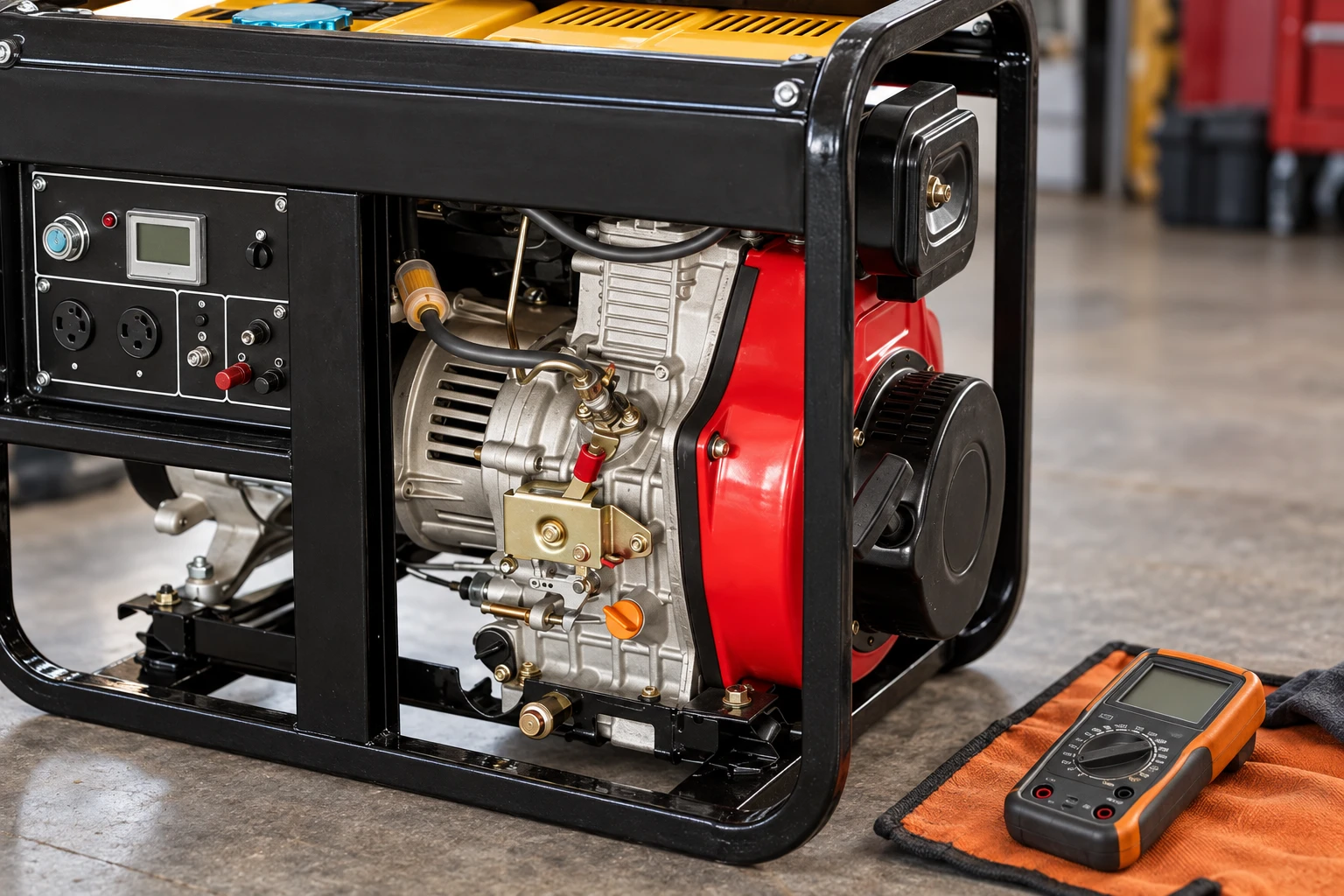
ال BorraPumps generator product reference can support an equipment inquiry, but the pictured unit does not establish phase, rating, motor-starting capability or compatibility with a particular pump. Keep the order conditional on the exact model’s documents. Agree what will be recorded during acceptance and who approves the result before dispatch or connection.
Learning resource
The Engineering Mindset’s Star Delta Starter Explained video illustrates the connection principle. It complements the comparison above; it does not replace the selected motor’s instructions or an approved installation design.
الأسئلة الشائعة
Can I use one starting-current multiplier for every pump motor?
No. Obtain starting data for the actual motor, connection and starting method. A generic multiplier is only a preliminary assumption that must be replaced before final equipment selection.
Does lower starting current always mean a better start?
No. The motor must still produce enough accelerating torque and finish within its thermal limits. Excessive current restriction can prolong or prevent acceleration.
Can any three-phase motor use star-delta starting?
No. The winding ratings, supply voltage, accessible terminals and approved connection must support it. Confirm compatibility with the motor manufacturer.
Is a soft starter the same as a variable-frequency drive?
No. A soft starter primarily controls the starting voltage sequence. A variable-frequency drive also controls frequency and can provide operating speed control, subject to compatibility.
What evidence should a successful commissioning test retain?
Retain current and voltage records, acceleration time, connected-load conditions, approved settings, protective-function checks and the responsible designer’s acceptance decision.