
Sewage lift station odor control and ventilation should be designed around the station’s atmospheric hazards, occupied areas and operating requirements. Odor control is a related but different task: it manages emissions that can affect neighbors and equipment, while ventilation and entry procedures address conditions where people may work. A fan, an open hatch or a lack of smell does not establish that a wet well is safe to enter. For a new or existing station, document the air spaces, assess the hazards and obtain a design and operating procedure appropriate to the site.
Separate three objectives before specifying equipment
The first objective is to control conditions in spaces where equipment or people are present. The second is to reduce unwanted odor leaving the station. The third is to provide the arrangements required for any authorized entry into a confined space. These objectives may interact, but satisfying one does not automatically satisfy the others. An odor-treatment vessel can reduce an emission without establishing a safe atmosphere inside a wet well.
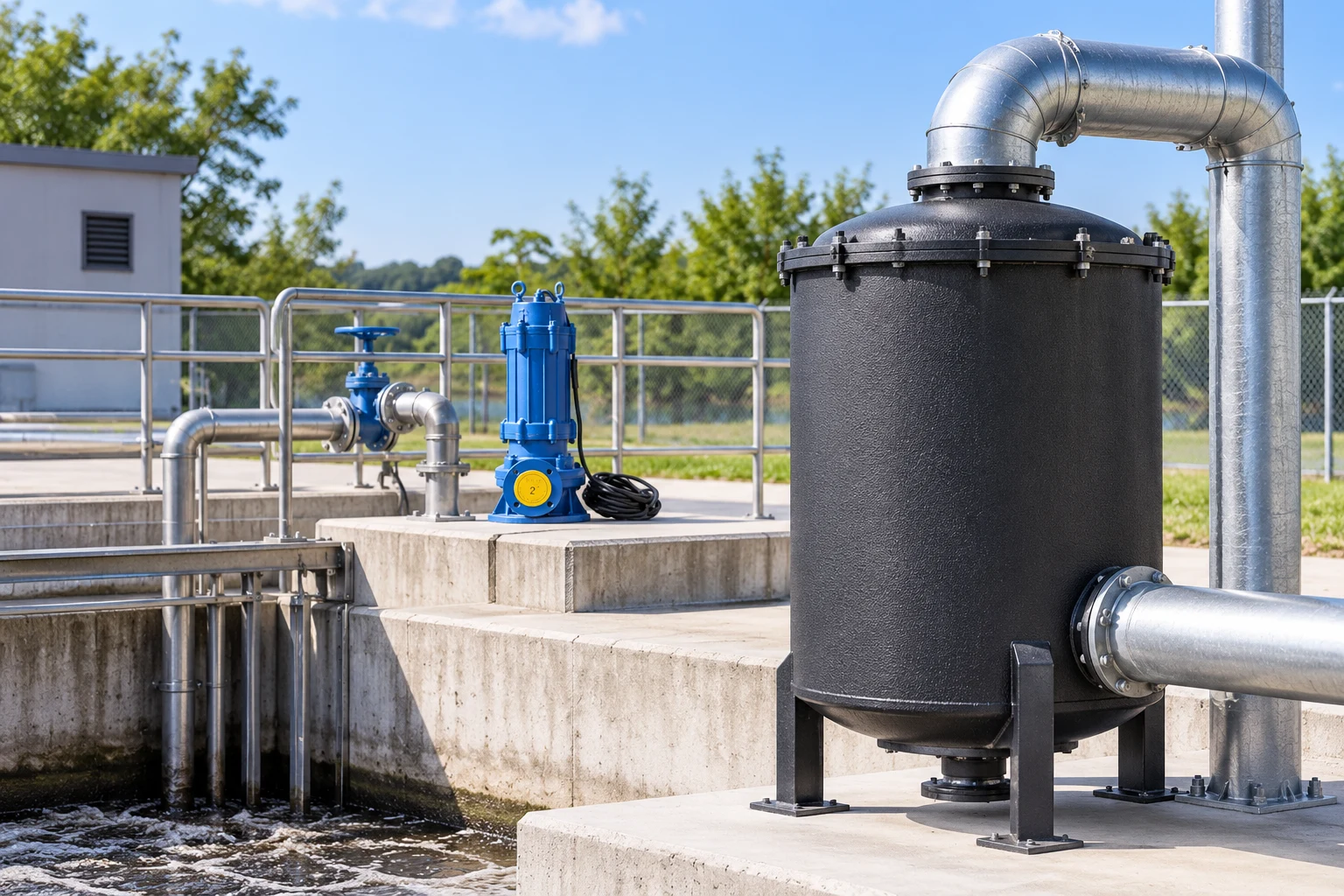
ال Borra WQ sewage pump is the product reference for this guide’s exterior pump illustrations. The pump photograph provides no information about ventilation performance, gas detection or hazardous-area approval. Ventilation, odor treatment and electrical selection must be assessed as part of the station design; do not attribute those capabilities to the pictured pump.
Map the air spaces and possible sources
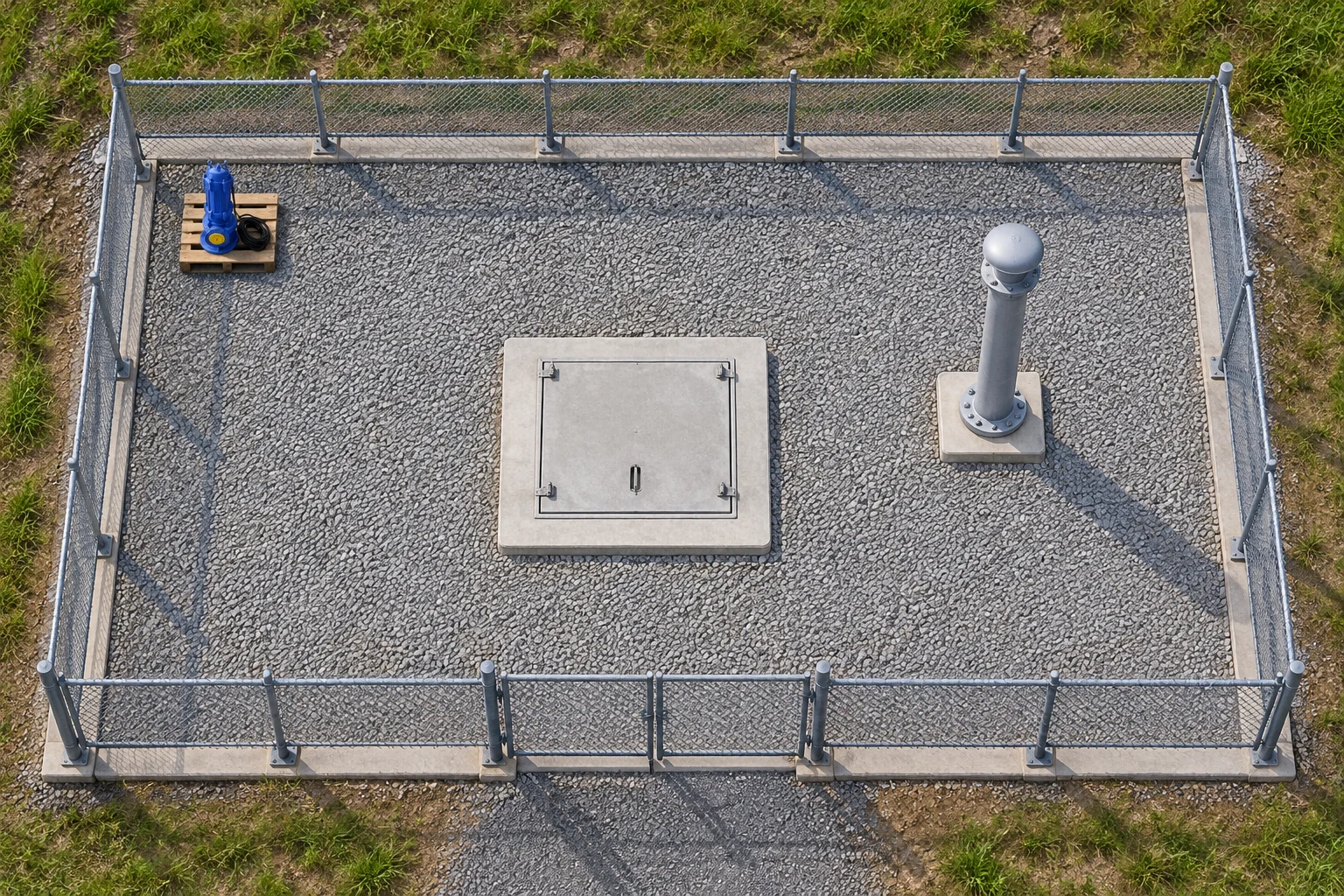
Identify the wet well, valve chamber, dry equipment room, access openings, connected sewers and any enclosed building. Note which spaces communicate through ducts, drains, penetrations or open access points. A gas source in one space can affect another if the separation is poorly understood. Include normal operation, maintenance, cleaning and unusual discharge conditions in the assessment.
List the wastewater sources and any relevant industrial contribution. Temperature, residence time and upstream conditions can affect odor and gas generation, but they should be investigated rather than guessed. Ask the responsible designer to identify the credible hazards and the information needed to assess them. A generalized station drawing cannot establish the actual atmospheric conditions at a particular site.
Use a design-input checklist
| مدخل | لماذا يهم الأمر | Required action |
|---|---|---|
| Space layout | Air may move between connected areas | Identify boundaries, openings and intended airflow paths |
| Wastewater and gas assessment | Hazards differ by site and operating condition | Obtain the responsible specialist’s assessment |
| Occupancy and entry tasks | Routine access and confined-space entry have different requirements | Define who enters, for what purpose and under which procedure |
| Odor receptors | Discharge location may affect nearby occupants | Review boundaries, prevailing conditions and applicable requirements |
| Electrical and material selection | Corrosion and hazardous-area requirements can affect equipment | Confirm classification and suitable components |
| Failure response | Loss of extraction or treatment changes conditions | Specify monitoring, alarms and operating restrictions |
ال EPA lift-station fact sheet identifies ventilation and odor control as station considerations. It is background guidance, not a numerical ventilation design for this pump family.
Do not rely on smell as a safety instrument
A person noticing an odor has identified a concern, not measured its concentration or proved which gas is present. Likewise, no noticeable odor does not prove a safe atmosphere. Hydrogen sulfide and other atmospheric hazards require appropriate assessment and monitoring under the site’s procedure. People should not approach an open chamber to perform an informal smell test.
ال NIOSH information on hydrogen sulfide provides hazard information. Use it within a professional assessment rather than turning a general reference into a site entry threshold. Appropriate instruments, trained personnel and the required entry controls must determine whether work can proceed.
Have airflow and discharge designed together
A ventilation design needs an intended route for supply and extracted air, with openings and equipment positioned accordingly. Consider how closed doors, access covers, fouled filters and changing operating conditions affect that route. A fan’s catalogue airflow at one pressure does not prove the installed system delivers the required airflow through the actual ductwork and treatment equipment.
Locate discharge with regard to occupied areas, air intakes and the applicable site requirements. Avoid transferring an odor or atmospheric problem from the station to another work area. Have the designer assess the arrangement and provide commissioning measurements. Do not choose a universal number of air changes from an unrelated building or assume more fan power always creates a satisfactory outcome.
Choose odor treatment for a defined duty
Where treatment is required, define the air volume, expected contaminants, operating pattern and desired outcome before choosing equipment. Treatment systems have media, maintenance and monitoring requirements that differ by method. Their performance depends on the conditions for which they were selected. A vessel that appears adequately sized in a photograph is not evidence of adequate treatment.
Ask how the treatment system will be inspected and maintained, what indicates media exhaustion or loss of performance and how waste materials are handled. Include the pressure loss through the system in the extraction design. If a maintenance task takes treatment out of service, document the permissible station operating arrangement and any restrictions during that period.
Review wastewater retention and deposits
Odor management may also require investigation of station operation and the upstream collection system. Review inflow, pumping cycles, storage and deposits with the wastewater designer. Avoid arbitrary level changes or chemical addition as a quick response to complaints. Such changes can affect cycling, useful storage, corrosion, treatment downstream and regulatory requirements.
Use the float-switch and level-setting guide when collecting operating information. For material accumulation, consult the station clogging prevention guide. These checks help distinguish a ventilation problem from operating conditions that also need correction.
Design maintenance access and safe isolation
Equipment should be accessible for inspection and service through an agreed safe work arrangement. Consider filter or media replacement, fan maintenance, duct inspection and instrumentation checks. Avoid a layout in which an ordinary maintenance task requires unnecessary access to an unassessed hazardous space. Identify the lifting and waste-handling provisions before procurement.
For work that does involve a confined space, the US permit-required confined-space requirements explain the formal approach in their jurisdiction. The local rules and site procedure remain controlling. A portable fan alone is not an entry permit, a rescue plan or proof that the atmosphere will remain acceptable throughout the task.
Commission the monitoring and failure response
Confirm the measured airflow and the control sequence under the agreed operating conditions. Check how fan status, treatment condition and relevant atmospheric instruments are indicated. Where alarms or interlocks are part of the approved design, test their actual response rather than only checking that an indicator lights. Record the baseline and the instruments used.
The station response to a fault should be explicit: who receives the alarm, which work is restricted and how service is restored safely. Distinguish wastewater pumping availability from permission for personnel to access affected spaces. The duplex control guide covers pumping alarms; ventilation faults need their own defined treatment.
Use complaints and measurements as different evidence
Record odor complaints with time, location, weather and station operating conditions. Compare them with measured treatment and extraction status. A complaint can guide investigation even when no instrument fault is recorded, but it does not alone quantify an exposure or identify the cause. Equally, a working fan signal does not prove odor treatment is effective.
When changes are made, retain the earlier baseline and record the actual adjustment. Review performance over the relevant operating and weather conditions. Keep maintenance, airflow measurement and complaint records together so the designer can assess whether the change solved the problem or merely moved it to a different location.
Prepare a ventilation enquiry
Provide the station plan, connected air spaces, wastewater sources, anticipated work tasks, relevant hazard assessment and any available measurements. Include access constraints, electrical classification information, neighbors or building intakes and the required operating availability. Clearly mark any information that has not yet been assessed. A supplier should not be expected to infer a safe station design from a pump model number.
Ask for a proposal that explains airflow duty, treatment scope, commissioning checks, maintenance requirements and failure behavior. Review the proposal with the responsible designer and operator before installation. This turns a vague request for “odor-free ventilation” into a defined system whose performance and maintenance can be checked.
Learning resource
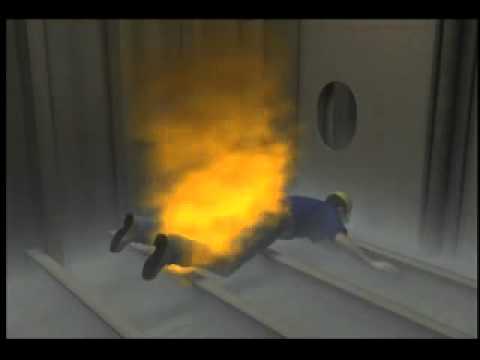
OSHA’s video on improper ventilation causing a confined-space fire illustrates why ventilation arrangements need a hazard assessment. Its shipyard example is background safety education; it does not set a sewage station’s design rate or entry procedure.
الأسئلة الشائعة
Does no odor mean a wet well is safe?
No. Safety depends on an appropriate atmospheric assessment and the required work controls.
Is odor treatment the same as ventilation?
No. Treatment addresses extracted emissions; ventilation and access arrangements address conditions within the station.
Can one air-change rate be used for every station?
No. Have the actual layout, hazards, occupancy and local requirements assessed by the responsible designer.
What should be tested at commissioning?
Test the specified airflow, controls, monitoring and fault response under the agreed operating conditions, and retain a baseline.