
fire pump inspection testing — NFPA 25 inspection and testing keeps fire pumps ready after acceptance—schedules, no-flow runs, annual flow tests, and owner records differ from one-time NFPA 20 commissioning. This guide focuses on practical evaluation steps for U.S. industrial and commercial buyers—hydraulic duty, documentation, and lifecycle support—not generic marketing claims. Where equipment selection is involved, cross-check public specifications on borrapumps.com and confirm project-specific limits with your consulting engineer or AHJ. Section checklists can be reused as RFQ attachments and commissioning handover outlines.
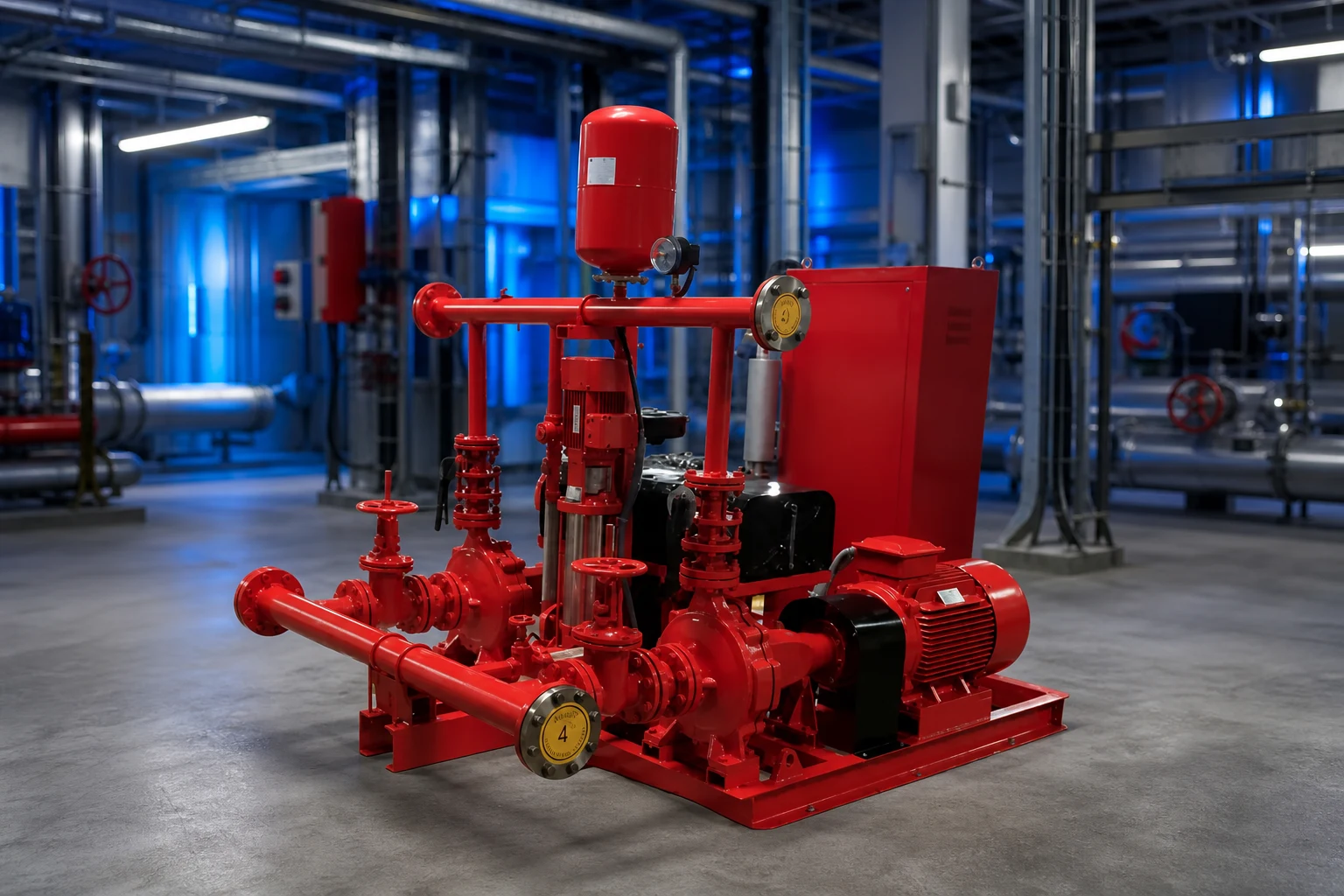
Part 1. NFPA 25 ITM Scope for Fire Pumps
Once a fire pump is in service, NFPA 25 defines the inspection, testing, and maintenance (ITM) program owners must follow as adopted by the AHJ.
Export skids may be shop-tested before shipment, but site ITM still begins when the system is placed in service locally.
Distinguish NFPA 20 acceptance (initial proof of performance) from NFPA 25 recurring tests that prove readiness over the building lifecycle.
Fire pump selection starts with the approved hydraulic calculation and the governing code edition referenced in project specifications.
End-suction and split-case designs trade footprint, efficiency, and maintenance access—confirm AHJ and insurer expectations before finalizing.
Cross-check fire pump packages ratings against the duty point on the pump curve, not catalog headline flow alone.
Capture rated flow, total dynamic head, fluid properties, and suction conditions in the RFQ package to reduce back-and-forth during technical review.
If the site mixes intermittent peaks and sustained duty, size the driver for the governing thermal condition—not catalog nameplate alone.
Define acceptance criteria before shipment—flow, head, efficiency, or NFPA witness points—so commissioning disputes are less likely.
Part 2. Weekly, Monthly, and Annual Test Types
Weekly churn tests verify auto-start and basic controller response without requiring full flow to discharge.
No-flow tests exercise the pump and alarms while minimizing water discharge—document run time and alarm points each cycle.
Annual flow tests demonstrate rated performance at agreed points on the certified pump curve with witnessed records.
Driver selection (electric vs diesel) must match site utility rules, backup power strategy, and witnessed test requirements.
Jockey or booster stages maintain system pressure between main pump runs—size them to avoid excessive cycling.
Review application and solution pages for packaged skid options when field assembly time is constrained.
Capture rated flow, total dynamic head, fluid properties, and suction conditions in the RFQ package to reduce back-and-forth during technical review.
If the site mixes intermittent peaks and sustained duty, size the driver for the governing thermal condition—not catalog nameplate alone.
Define acceptance criteria before shipment—flow, head, efficiency, or NFPA witness points—so commissioning disputes are less likely.
Related guides in our blog cluster include Inspection overview, System context, and Package components.
| Test type | Typical frequency | What to verify |
|---|---|---|
| Churn / no-flow | Weekly per NFPA 25 schedule | Auto-start, alarms, run time |
| Monthly inspection | Visual + controller checks | Valves, gauges, power, leaks |
| Annual flow | Performance at flow points | Curve duty, driver, relief devices |
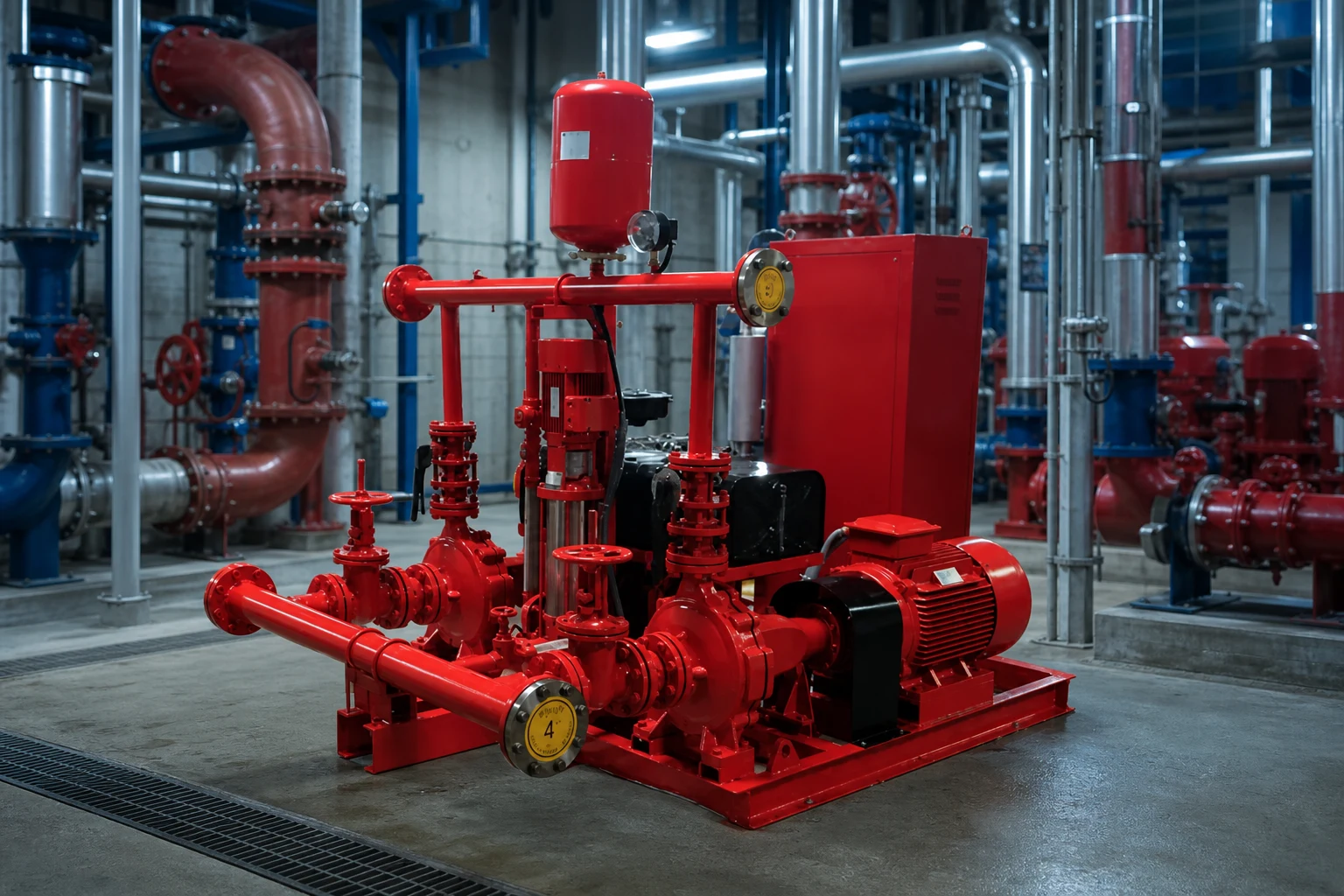
Part 3. Records, Deficiencies, and Owner Responsibilities
Owners must retain test sheets, corrective actions, and pump run hours tied to asset tags and serial numbers.
Deficiencies found during ITM should be classified by severity and tracked to closure before the next scheduled test.
Contractors and facility staff should share a single record set so export handover and local O&M stay aligned.
Acceptance testing should document flow, pressure, and driver performance at agreed load points.
Keep as-built drawings, valve settings, and controller programming with the O&M manual.
Submit NFPA or owner witness parameters via BORRA engineering contact when duty falls outside standard tables.
Capture rated flow, total dynamic head, fluid properties, and suction conditions in the RFQ package to reduce back-and-forth during technical review.
If the site mixes intermittent peaks and sustained duty, size the driver for the governing thermal condition—not catalog nameplate alone.
Define acceptance criteria before shipment—flow, head, efficiency, or NFPA witness points—so commissioning disputes are less likely.
Part 4. Documentation and Handover Checklist
Industrial acceptance should not rely on energization alone—documentation proves ratings, safety, and maintainability for the next maintenance cycle.
Use the tables below as a starting RFQ checklist; your AHJ, insurer, or EPC contract may require additional items.
For product-specific datasheets, cross-check fire pump packages and request any missing factory test excerpts.
Align factory acceptance tests with items your insurer or owner witness agreement may require.
When comparing quotations, normalize currency, Incoterms, and included commissioning services before ranking suppliers.
| Document / item | Purpose | When to request |
|---|---|---|
| Factory pump performance curve | Verify flow, head, efficiency, and NPSHr at rated speed | Before purchase order |
| Driver nameplate and coupling data | Electrical service and alignment | Design phase |
| Installation and O&M manual | Commissioning and maintenance planning | Before FAT/SAT |
| Spare parts list (5+ year) | Seal kits, impellers, bearings lifecycle | Contract negotiation |
| Commissioning / acceptance checklist | NFPA or owner witness tests | Before energization |
| Application | Duty profile | Typical pump approach |
|---|---|---|
| Municipal fire protection | Sustained rated flow + overload | End-suction or split-case with listed driver |
| Industrial hazard | Variable demand + jockey | Main fire pump + jockey/booster package |
| High-rise booster | Steady pressure maintenance | Vertical multistage or inline booster |
| Skid package export | Fixed layout, witnessed test | Factory-assembled skid with documented FAT |
Part 5. Commissioning, Monitoring, and Long-Term Operations
Commissioning should verify flow, head, and driver performance at the agreed duty points—not only at no-load or nameplate conditions.
Functional tests typically include vibration, seal leakage, control response, and documented comparison to the factory pump curve.
Monitoring after startup helps catch cavitation, hunting, or seal wear before they affect production or fire protection readiness.
Train maintenance staff on lockout/tagout, priming procedures, and which alarms require immediate shutdown versus scheduled service.
Schedule a post-warranty review to reassess duty changes—plant expansions often change flow profiles within three to five years.
Keep a spare-parts criticality list (seals, impellers, bearings, filters) based on lead time and production impact, not catalog defaults alone.
Recommended BORRA Products
For project support, explore our fire pump packages, application and solution pages, and OEM and manufacturing capabilities on borrapumps.com.
FAQ
What does NFPA 25 require for fire pump testing?
Owners must follow the ITM schedule in NFPA 25 for churn, no-flow, and annual flow tests as adopted by the local AHJ.
How is NFPA 25 different from NFPA 20 acceptance testing?
NFPA 20 covers installation and initial acceptance; NFPA 25 governs ongoing inspection and testing after the system is in service.
What is a no-flow test?
A test that exercises the pump and controls without flowing water to discharge, verifying auto-start and alarm response.
Who can witness annual flow tests?
Qualified personnel per local code—often the owner, fire protection contractor, or AHJ representative.
What records should be kept?
Test dates, results, deficiencies, corrective actions, and pump run hours tied to asset tags.
Can export sites defer ITM until commissioning?
Initial acceptance still applies; ongoing NFPA 25 ITM begins once the system is placed in service at the final site.
References
Ready to discuss your project? Contact BORRA engineering support with your project parameters and technical requirements.