
Altitude reduces the atmospheric pressure pushing water into an open-source pump suction. As site elevation rises, a self-priming pump has less pressure available to lift water and overcome vapor pressure and suction-pipe friction. The result can be slower priming, lower flow, cavitation, or failure to prime at a lift that worked near sea level. A manufacturer’s maximum priming lift is not a promise for every altitude, temperature, hose length, or water level. Measure or obtain the site barometric pressure, calculate net positive suction head available at the lowest source level and design flow, and compare it with the exact pump’s required NPSH and priming data. Lowering the pump or shortening the suction route may be more effective than installing a larger engine.
Understand what atmospheric pressure does
A surface-mounted centrifugal pump does not pull water upward by creating unlimited suction. The pump lowers pressure inside the inlet; atmospheric pressure on the open source surface helps move water into the line. Higher altitude generally means lower atmospheric pressure, leaving less pressure head to overcome vertical lift and losses. This is separate from the pump’s discharge head, which must still meet the irrigation or transfer duty. The BorraPumps single-cylinder diesel self-priming pump for agriculture is the product reference here, within the water-supply booster range. Its image identifies the orange engine, blue pump and wheeled skid; it does not establish a high-altitude suction rating.
The University of Florida IFAS irrigation and drainage pump guide describes atmospheric pressure, suction lift, friction and water vapor pressure as parts of the available inlet condition. The Hydraulic Institute’s pump FAQs likewise identify barometric pressure, elevation difference, piping loss and vapor pressure as NPSH inputs. The actual maker’s curve and site measurements govern the selection.
Calculate available NPSH for an open source
For a simplified open reservoir with the pump above the water surface, write NPSH available = atmospheric pressure head − vapor-pressure head − static suction lift − suction-pipe loss. Use one unit system. Atmospheric and vapor pressure must be absolute pressure converted to meters or feet of the pumped liquid; static lift is the vertical distance from the relevant water level to the pump datum; pipe loss is evaluated at the operating flow. If the source is pressurized or above the pump, the signs and boundary conditions change. Add any velocity or datum corrections required by the detailed design method.
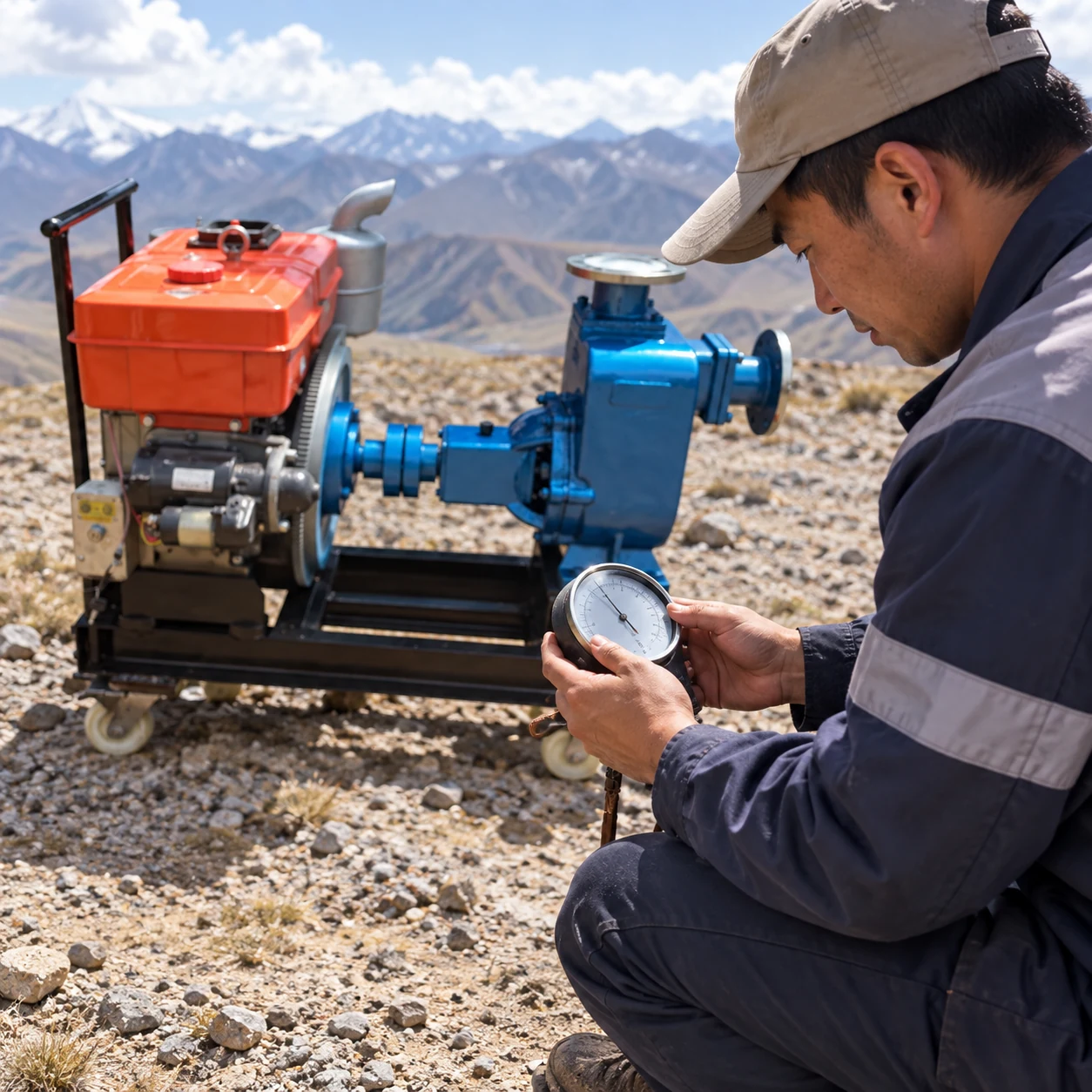
Suppose a hypothetical site measurement gives 82 kPa absolute barometric pressure. For water near room temperature, assume a vapor-pressure head of 0.24 m for this illustration; let static lift be 3 m and suction loss at design flow be 1 m. Using approximately 9.81 kPa per meter of water, atmospheric head is 8.36 m, giving NPSH available ≈ 8.36 − 0.24 − 3 − 1 = 4.12 m. If the same geometry had 101 kPa absolute pressure, the result would be about 6.06 m. These are illustrative inputs, not BorraPumps performance data or a guaranteed altitude correction. Temperature, liquid density and local weather must be checked.
Compare the result with the selected model’s NPSH-required curve at the actual flow and speed, including the recommended margin. A pump may be able to establish prime yet fail to run without cavitation at design flow. The US Department of Energy Handbuch für Pumpensysteme distinguishes available system pressure from required pump pressure and explains why the operating point matters.
Priming lift and operating NPSH are not identical
Priming is the start-up process of evacuating air from a suction line and raising liquid to the casing. Once the line is full, normal operation must satisfy flow, head and NPSH conditions. A priming-lift figure may be measured with a short, airtight line and a specific retained casing fill. It does not describe how a long irrigation hose, high water temperature, debris screen or changing source level will behave at a mountain site. The self-priming pump priming-time guide addresses air volume and timing separately.
Do not use a theoretical atmospheric water-column height as a practical self-priming limit. Real pumps cannot make a perfect vacuum; water vaporizes as pressure falls, and friction consumes additional head. The existing self-priming suction-lift guide explains the general limit. This article focuses on how a change in barometric pressure shifts the inlet margin for the same pump and pipe route.
Use the lowest source level and the warmest liquid case
An open pond can fall during irrigation or dry seasons. The static suction lift must use the lowest credible operating water surface, not the high level seen on a survey day. Warmer water has higher vapor pressure, subtracting more from NPSH available. A site may therefore be most vulnerable during a hot, low-water period even if the barometric pressure changes only modestly. Record source levels and temperature over the expected duty cycle.
The inlet must also remain submerged enough to avoid drawing an air-core vortex. A pump at high altitude with a shallow intake can ingest air and show symptoms that resemble an NPSH problem. Inspect the source geometry, screen, silt buildup and hose position. The Hydraulic Institute’s NPSH and operating-region explanation notes that atmospheric pressure varies with elevation and that NPSH margin affects the operating range.
| Input or observation | Effect at a higher site | Measurement or response |
|---|---|---|
| Barometric pressure | Usually lower pressure head at an open source | Measure or obtain site absolute pressure |
| Source water level | Lower water level raises static lift | Use lowest credible operating level |
| Liquid temperature | Warmer water raises vapor pressure | Check peak operating temperature |
| Suction pipe length and fittings | Loss consumes available inlet head | Calculate loss at design flow |
| Empty suction-line volume | Longer prime may expose seal to dry operation | Verify retained liquid and maker priming limit |
| Engine power | Engine output may also change with altitude | Check continuous derated engine rating separately |
The table separates hydraulic suction limits from driver power. Both may need correction, but one cannot substitute for the other.
Avoid common calculation mistakes
Use absolute barometric pressure, not gauge pressure, for the open-source boundary. Do not subtract altitude twice by applying an assumed “altitude factor” after already using measured local pressure. Do not use source-to-field elevation as suction lift; only the source-to-pump inlet difference belongs in the suction calculation. Do not mix suction loss at one flow with NPSH required at another. Pipe losses rise with flow, so check normal and maximum operating points.
The engine also has a high-altitude question, but it is separate. A diesel engine may have less continuous power available at higher elevation and temperature. Even if the pump primes, it may not sustain the required flow and head if the driver is undersized. Request the engine maker’s derating data and the pump curve at the installed speed. The irrigation pump selection article covers the complete hydraulic and driver selection sequence.
Improve an installation with inadequate margin
Move the pump closer to the source and lower its elevation when safe from flooding. Shorten and straighten the suction route, repair air leaks, clean the intake, and use a hose with adequate internal diameter and vacuum resistance. A larger pipe reduces running friction but increases the air volume to evacuate if empty; evaluate both phases. If a flooded suction can be created, it may remove the need for a difficult lift. If the duty truly exceeds the pump’s priming capability, consider a different pump type or a properly engineered priming-assist system.
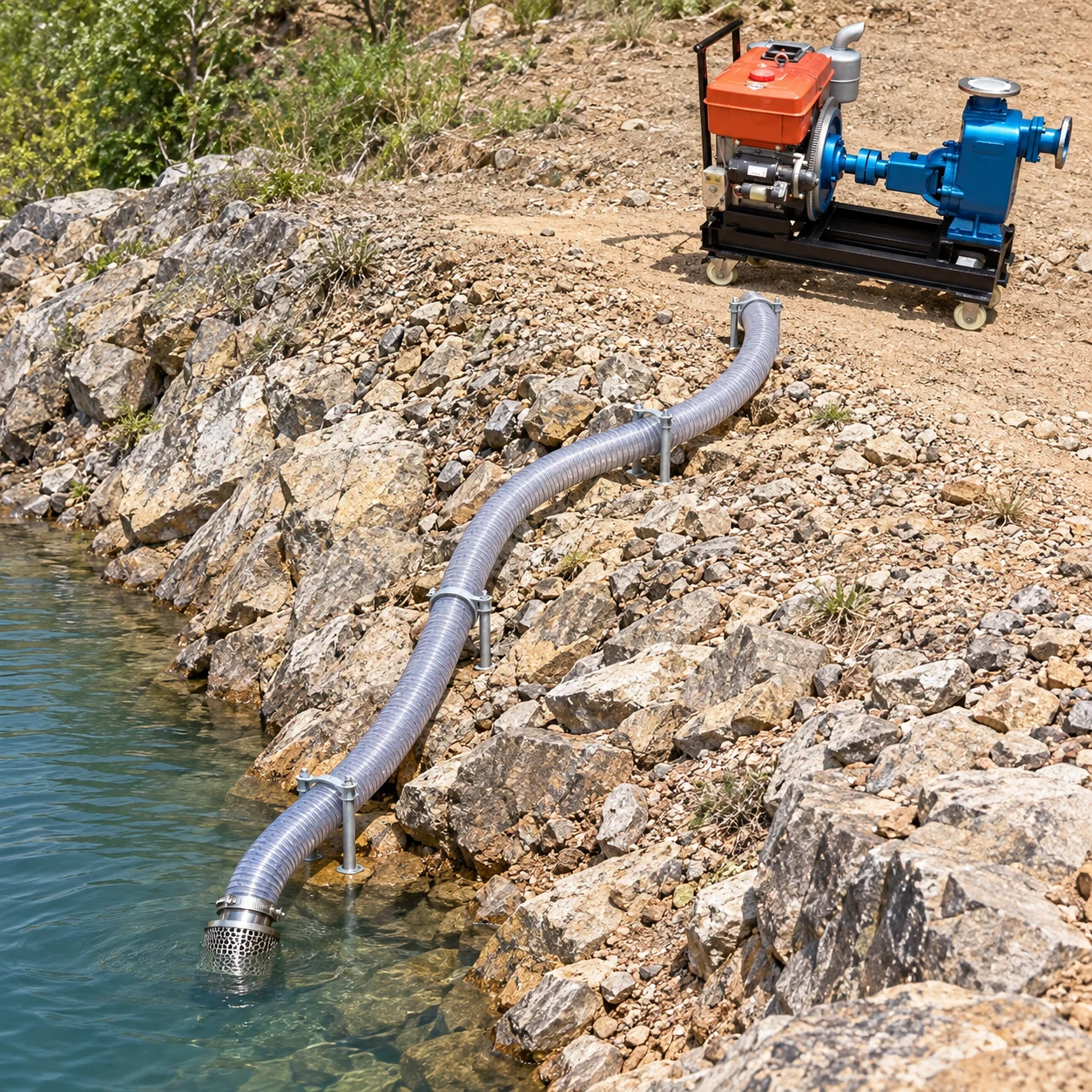
Do not simply speed up the pump to overcome poor inlet conditions. Higher speed can increase NPSH required and make cavitation worse. A larger engine cannot create atmospheric pressure. Recalculate the system curve and reselect equipment if the source and piping cannot be changed. Ask the supplier to identify the site pressure, temperature, source level, pipe assumptions, and margin used in the quotation.
Commission under the worst credible condition
At commissioning, record barometric pressure or site elevation basis, source water level, liquid temperature, suction and discharge pressure, flow, speed, motor or engine load, and priming time. Measure at more than one flow if the pump serves variable demand. Observe for bubbles, vibration, gravel-like noise, loss of head and seal leakage. A successful cold morning start does not prove the pump will work during a hot, low-level afternoon. Repeat or model the worst case that cannot safely be tested directly.
Provide operators with a low-source-level stop point and a plan for what to do when atmospheric conditions or water level change. Preserve the measurement baseline so later deterioration can be distinguished from the original site constraint. If the pump is moved between elevations, redo the suction and driver checks rather than transferring the previous site’s settings.
Häufig gestellte Fragen
Does altitude reduce a self-priming pump’s suction lift?
Usually yes for an open source, because atmospheric pressure at higher elevation is lower. The actual effect depends on site pressure, temperature, piping and pump design.
Is an altitude correction to engine horsepower enough?
No. Engine power and pump suction margin are separate. Check both the engine’s continuous rating and NPSH available at the pump.
Can a pump prime successfully but still cavitate?
Yes. Priming clears air; sustained flow must still have enough NPSH available relative to the pump’s requirement at that flow.
What is the most useful field measurement?
Measure source level, liquid temperature, local barometric pressure, suction pressure and flow together at the operating point. One reading alone is not enough.
Weiterbildungen
Cal Poly Pomona’s Lehre über die Eigenschaften einer Zentrifugalpumpe includes NPSH and pump-system interaction. It provides educational background for the altitude calculation; verify the selected pump against its own curve.