
Well pump sand protection starts by finding why sediment is entering the well and matching pumping operation to the well’s condition. A filter installed after the pump can protect downstream equipment, but the pump has already handled the water before it reaches that filter. Persistent sand therefore calls for a well and pump investigation, not simply a finer cartridge. Document the sediment, flow and pumping water level, then ask a qualified well contractor to review the screen, well development, intake position and operating rate before selecting a remedy.
This guide addresses deep well irrigation and water-supply installations. It does not turn a clean-water pump into an abrasive-slurry pump, prescribe a universal allowable sand concentration or provide a do-it-yourself well rehabilitation procedure. Product suitability must come from the selected model’s operating documents and a representative description of the water.
Identify the sediment before choosing equipment
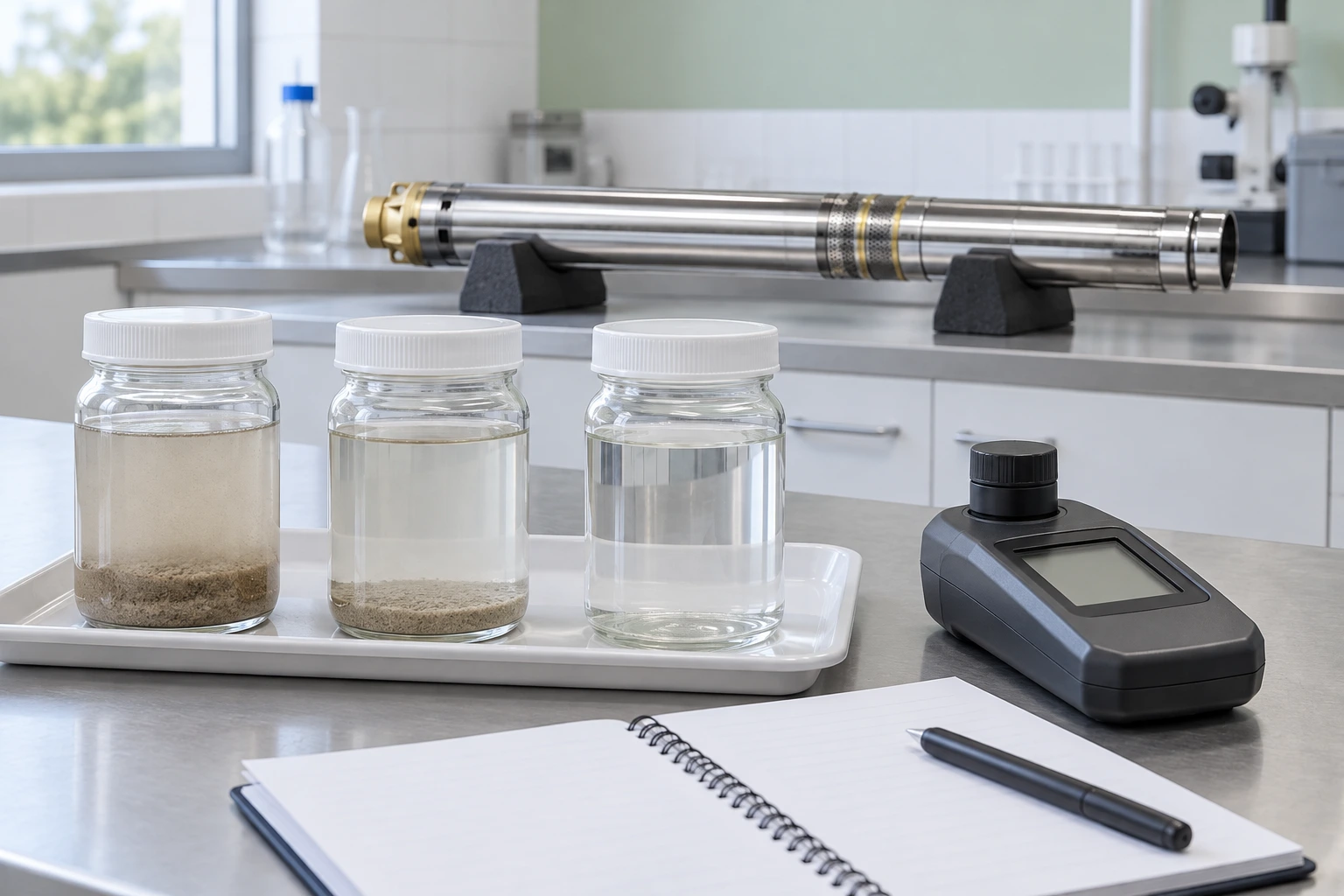
The word sand is often used for several different observations: gritty particles, suspended fines, cloudy water, mineral fragments or deposits flushed from downstream plumbing. Describe what was seen and where the sample was collected. A photograph of a settled jar can help communicate the issue, but visual appearance alone cannot establish particle composition, concentration or whether water is safe to drink.
Collect observations under a contractor-approved procedure. Label the sampling point, date, pump operating condition and whether the system had just started. Keep samples from the well discharge distinct from samples after filters or storage. A downstream sample may reflect retained sediment or a treatment problem rather than the water entering the pump.
For a purchasing enquiry, request the test method and reporting units alongside any concentration figure. Ask for a representative assessment rather than a single convenient clear sample. Changes across a pumping period matter, especially if sediment is intermittent. Do not interpret a clear-looking sample as proof that the pump has never encountered abrasive particles.
Separate the well condition from the pump symptom
Penn State Extension’s well maintenance and rehabilitation guidance identifies inadequate development, screen or casing problems and excessive pumping among possible contributors to sediment entry. It also explains that abrasive sand can damage pump components. Those possibilities require investigation; they do not identify the cause in a particular well from a photograph.
A pump may show reduced delivery, changed electrical load, noise or repeated intervention while the underlying problem remains in the well. Conversely, sediment in a filter does not by itself prove that the pump is damaged. Keep the well assessment, pump condition and downstream treatment review as related but separate tasks.
Start from the well log and the original pumping test. Compare current observations with the documented construction and operating history. If records are missing, state the uncertainty rather than replacing them with an assumed screen design. A contractor can decide what inspection or testing is appropriate for the well’s actual construction.
Record changes in flow and water level
Write down when sediment appears: immediately after startup, after a long operating period, during increased demand or following maintenance. Record the operating rate and pumping water level at corresponding times where measurements can be made safely. Keep the measurement point and units consistent so later observations can be compared.
A proposed change in pumping rate should be evaluated against sustainable well yield, irrigation demand and the selected pump’s permitted operating range. Avoid treating slower operation as an automatic cure. It may change several conditions at once and can create a different equipment problem if the motor, controls or hydraulic unit is unsuitable for that operating point.
Das irrigation well sizing guide helps organize demand and yield information. Our deep well selection guide covers the wider enquiry. Use these inputs to frame a contractor’s review rather than choosing a larger or smaller pump solely because sediment was observed.
For the distinction between pump setting depth and delivery duty, use the deep well pump head calculation guide. Keep the pumping-level record with the sediment investigation so an operating change can be assessed against the complete installation.
Distinguish downstream filtration from pump protection
Sketch the actual sequence: aquifer and well opening, pump intake, hydraulic stages, riser, discharge and any downstream filter. Mark the point at which each device acts. If a separator is installed above ground after the pump, it may remove some sediment from delivered water under its specified conditions. It does not prevent that sediment from passing through the pump first.
A proposed downhole protection device introduces different questions. Will it fit the well? What operating conditions does it need? How does it affect intake access, cooling, pressure loss and future removal? Obtain those answers from its actual documentation. Do not improvise a fine mesh wrapping around a pump intake or assume that any screen advertised for a well is compatible with the selected equipment.
Check a downstream device’s duty, maintenance needs and discharge arrangement with the treatment supplier. Record the application it is intended to protect. A clogged treatment device, a sand-producing well and an unsuitable pump are different problems; a single accessory should not be described as solving all three without evidence.
| Observation or proposal | Question to resolve | Useful evidence |
|---|---|---|
| Sand increases at higher demand | How does sediment vary with the operating rate and pumping level? | Time-matched flow, water-level and sample records |
| Persistent gritty discharge | Is the source related to construction, screen condition or another identified mechanism? | Well log and contractor’s inspection findings |
| New filter after the pump | Which downstream equipment will it protect? | Flow path and treatment device’s documented duty |
| Proposed intake accessory | Will it alter fit, intake conditions or cooling? | Approved assembly drawing and operating instructions |
| Repeated pump wear | Has the sediment source been corrected and water suitability verified? | Repair findings and representative water assessment |
| Return to normal operation | Which acceptance observations will show improvement? | Agreed baseline and repeat monitoring procedure |
This qualitative investigation table organizes evidence; it is not a diagnosis, a sand-limit specification or a guarantee of a remedy.
Inspect the equipment without inventing a failure
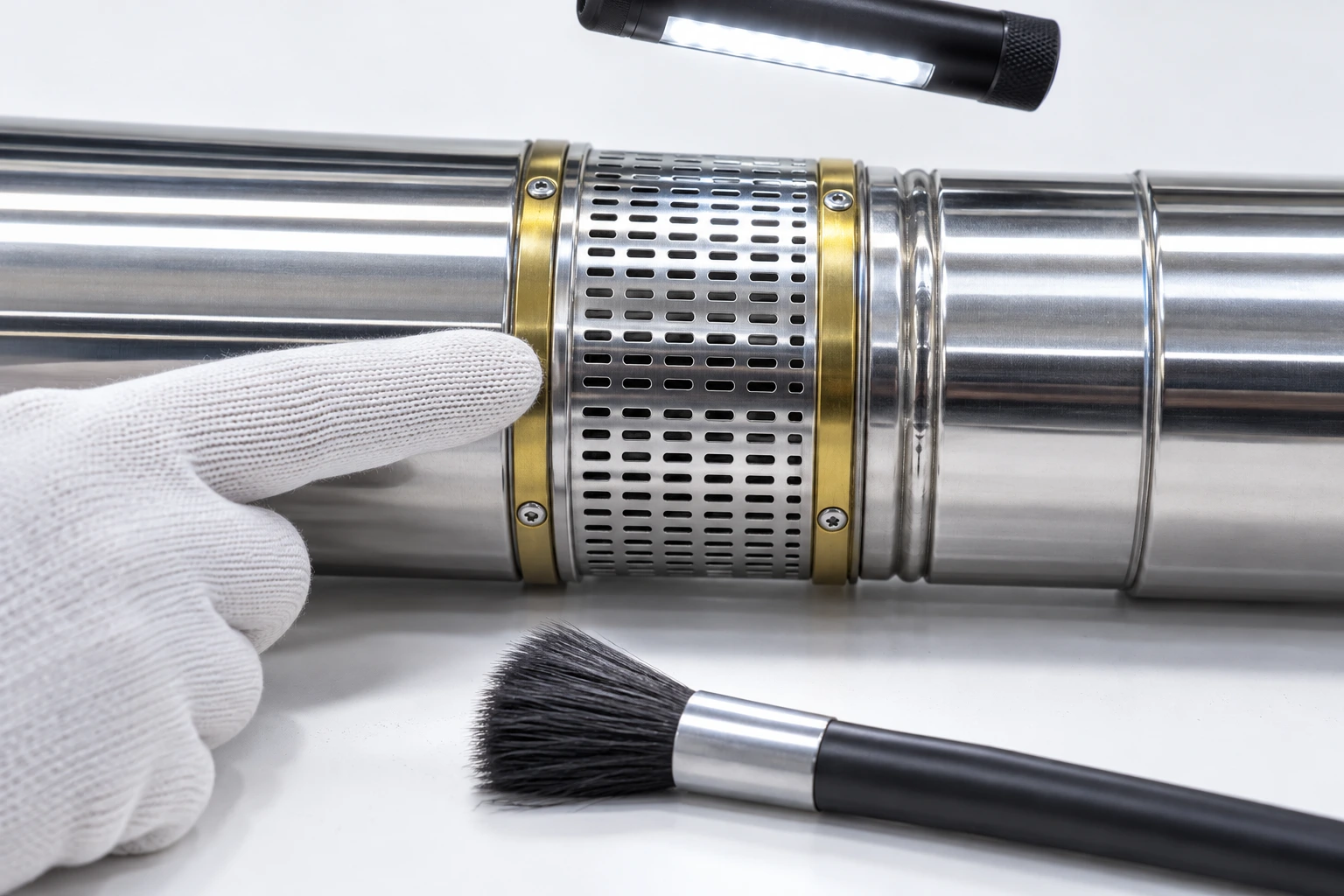
Where the pump is retrieved under the approved service procedure, ask the technician to record the external condition before cleaning or dismantling. Keep photographs, model identification and repair observations together. A marked exterior or a dirty intake does not establish the condition of internal stages, bearings or motor seals.
Das BorraPumps QJ deep well pump is the product reference for this article’s exterior illustrations. The photographs do not represent a tested sediment-tolerance rating, a wear-resistant modification or proof that the family is suitable for a particular sandy well. Ask for the selected configuration’s permitted water conditions and inspection instructions.
Keep the handling and isolation procedure with the service work. Do not use the electrical cable as the lifting support or attempt a live inspection to obtain a photograph. A technician should distinguish confirmed component damage from a proposed explanation and record what evidence supports each conclusion.
Let the well assessment determine the remedy
The response may involve correcting operation, inspecting or repairing well components, professional development or rehabilitation, selecting different equipment, or reconsidering the water source. The appropriate sequence depends on the established cause and the condition of the installation. Replacing the pump while leaving the sediment source unexplained can repeat the same expensive uncertainty.
Ask for a written scope describing the problem being addressed, the method, its limitations and the acceptance checks. Keep well work and pump work distinct in the quotation. Where the proposed intervention changes a liner, screen, accessory or pump setting, review the physical fit, cooling and hydraulic duty again before return to service.
USGS’s groundwater technical procedure collection includes a monitoring-well redevelopment demonstration. It shows that well intervention is a documented technical process. A method demonstrated for a monitoring well is not automatically suitable for an irrigation production well; the construction, purpose and contractor’s approved procedure govern the choice.
Set acceptance checks before restarting normal duty
Agree which conditions will be compared before and after the intervention. These might include sediment observations at defined sampling points, delivered flow at a stated operating condition, pumping level and documented pump condition. Use the same procedure and units where possible. An improvement cannot be assessed reliably if the sampling point or operating duty changes without being recorded.
Keep the initial return to service under the responsible contractor’s plan. Establish who can stop operation, what observations require investigation and when the next check takes place. An absence of visible sand during a short visit should not be presented as a permanent solution to an intermittent problem.
Maintain a single record joining the well inspection, equipment configuration, remedy and subsequent monitoring. That record makes later troubleshooting more useful and helps suppliers answer a water-condition enquiry with actual evidence. It also prevents a downstream treatment improvement from being mistaken for proof of reduced abrasive exposure inside the pump.
Further learning: professional well redevelopment
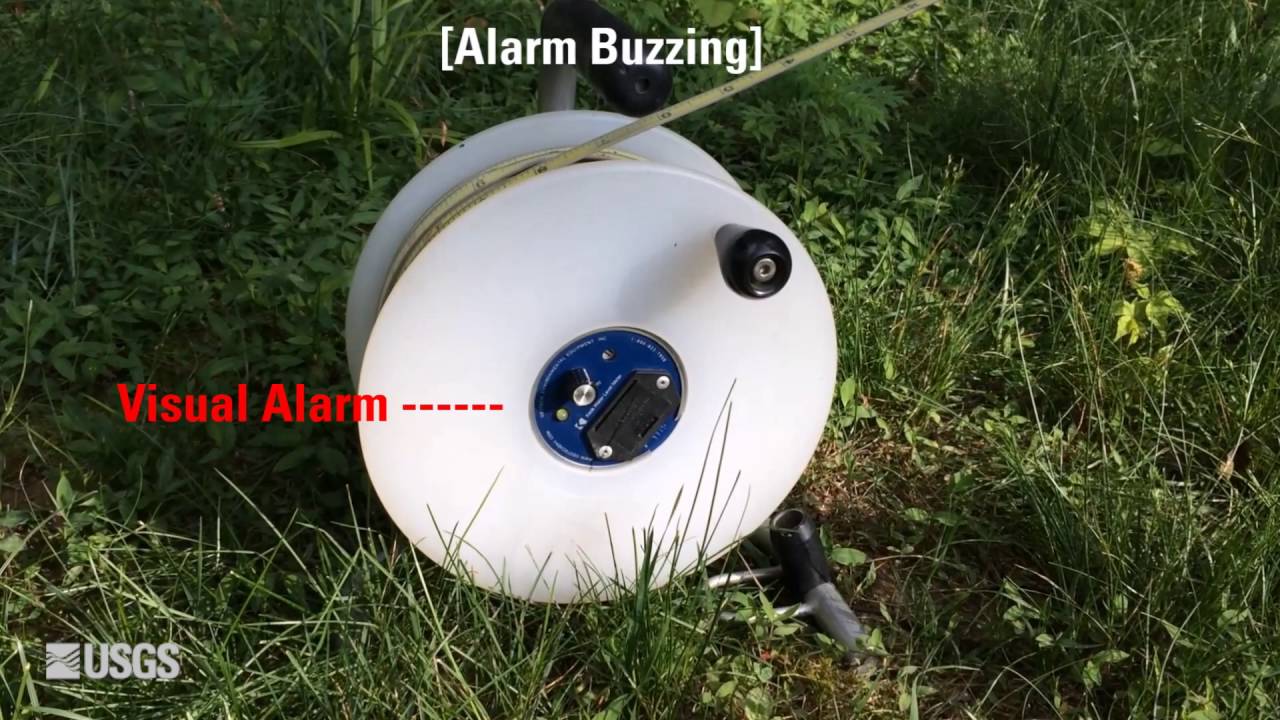
The USGS training video below demonstrates air-lift redevelopment of a groundwater monitoring well. It is included to explain the professional nature of well work, not to prescribe that method for your irrigation well. Assessment and authorization by the responsible well professional remain necessary.
Watch the USGS monitoring-well redevelopment training video.
Häufig gestellte Fragen
Will an above-ground sediment filter protect the pump from sand?
A filter after the pump acts on water that has already passed through the pump. It can serve a downstream treatment purpose, but its location does not prevent that earlier exposure.
Does sand mean that my deep well pump has failed?
No. Sediment requires investigation of the well, operation and equipment. Pump damage should be established from appropriate service findings rather than assumed from a water sample.
Can I wrap a fine screen around the pump intake?
Do not improvise an intake modification. Any accessory needs documented compatibility covering intake conditions, cooling, physical fit, maintenance and removal.
What sand concentration can a QJ pump tolerate?
Request the limit and its applicable particle and operating conditions for the exact selected model. This article does not assert a family-wide numerical tolerance.
Which records should I send with a sandy-well enquiry?
Provide the well log, pump model and setting, operating flow and water levels, representative water assessment, sediment timing and relevant inspection or repair history.