A trailer-mounted dewatering pump on soft ground needs a prepared working platform, verified support arrangements and an access route that remains usable when conditions deteriorate. Parking close to the water does not establish that the soil can support the machine. Before deployment, confirm the trailer operating weight, support reactions, ground condition, excavation restrictions and hose route with the equipment supplier and the site team. This guide explains the placement decisions for a temporary construction installation; it does not specify a foundation design or a universal spreader-pad size.
Separate equipment selection from ground acceptance
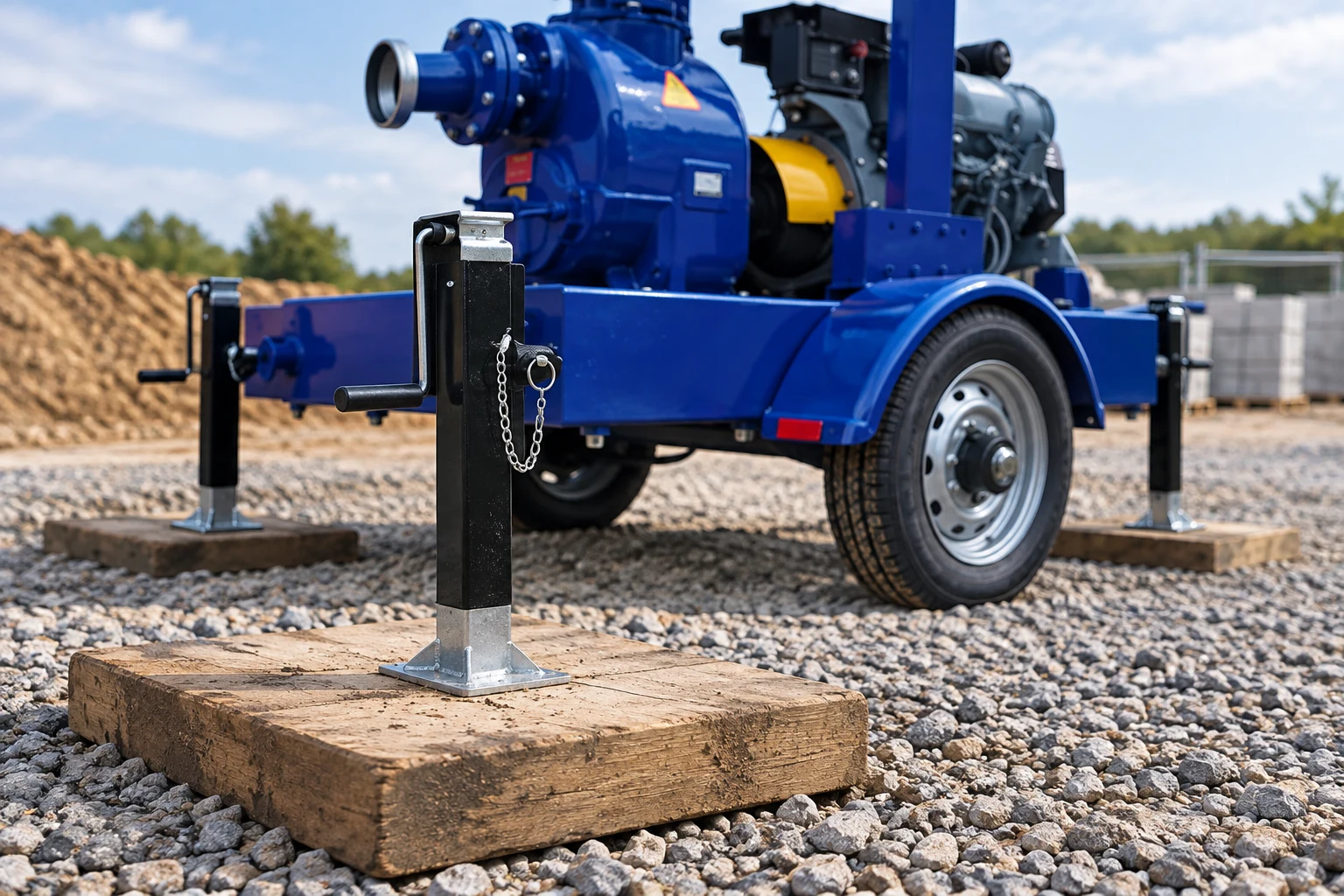
Start with the actual machine, not a photograph of a similar trailer. The working weight may include fuel, water in the casing, installed accessories and loads transferred by connections. Ask which wheels and stabilizers carry load during operation, whether the machine must remain on its axle, how it is leveled, and which restraints the supplier requires. A support leg intended to stabilize a parked trailer is not automatically approved to lift the whole assembly clear of its wheels.
Das Borra SCPY trailer pump product page identifies the equipment family used in this article’s illustrations. Those illustrations show layout concepts based on the real exterior product. They are not an approved installation drawing, a pad specification or a statement of a particular model’s operating mass. Obtain the supplied model’s drawing and operating instructions before assigning any load to its support points.
Walk the site before unloading
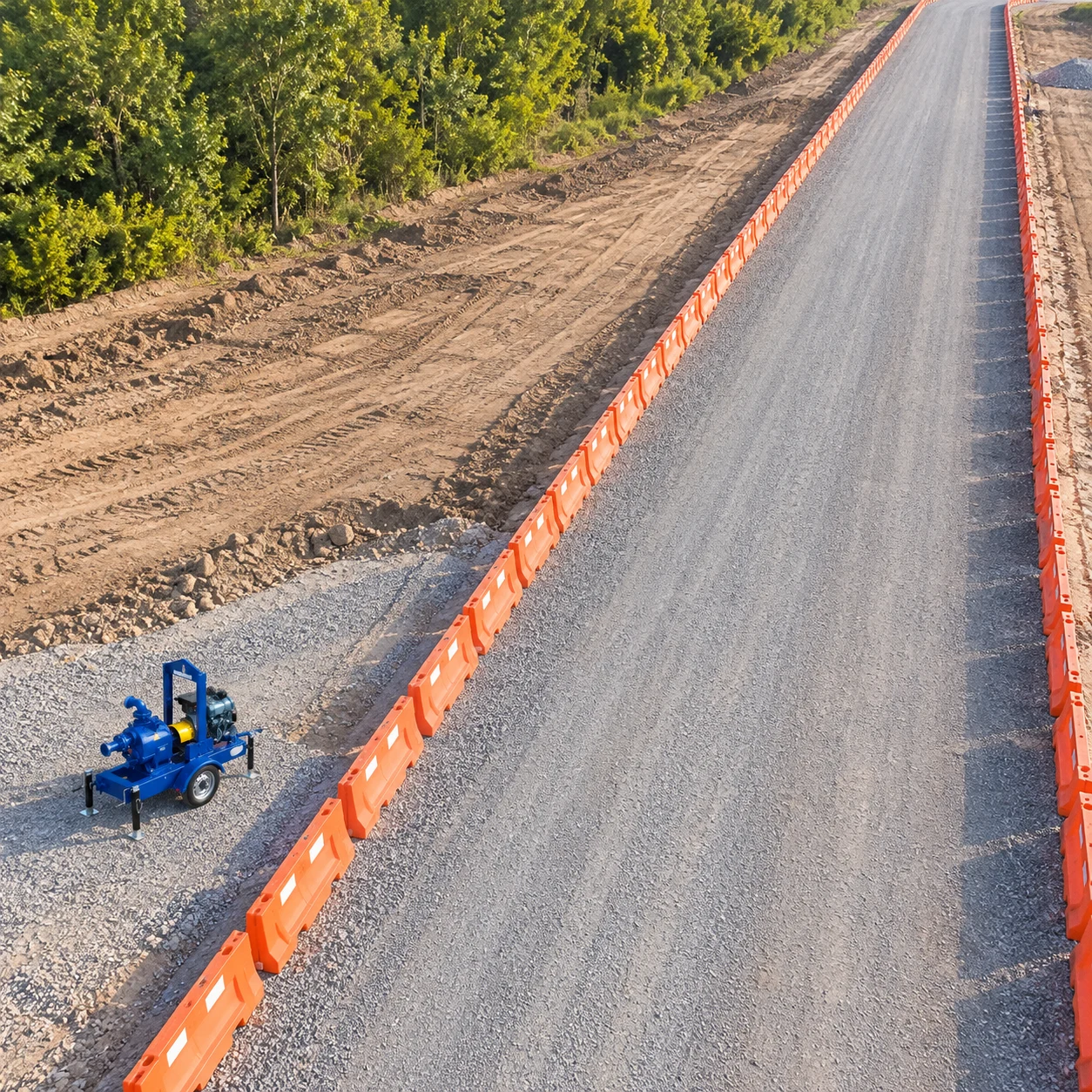
Inspect the proposed platform and the route leading to it. Look for standing water, rutting, freshly placed fill, buried services, drainage outlets, changes in ground level and signs of previous settlement. Identify whether the proposed location is beside an excavation or above a buried structure. A firm surface crust can cover weaker material, while a gravel dressing can conceal saturated soil. Visual appearance alone cannot establish allowable bearing resistance.
Record the water source’s present and expected lowest operating levels. Note where vehicles turn, where the operator stands and where refueling can occur without obstructing the route. If the site team cannot establish whether the platform is suitable, relocate or request a competent assessment. Do not resolve uncertainty by progressively extending the stabilizers until the trailer appears level.
Agree who accepts the working platform
Ground acceptance should have a named owner. Give that person the equipment loads, support arrangement, intended duration and the expected changes in water and weather. Depending on site conditions, an assessment may need to consider bearing, settlement, sliding, erosion and the effect of loads near an excavation. Do not substitute a pump operator’s judgment for a site engineering decision about unstable ground.
The US excavation requirements in 29 CFR 1926.651 address water accumulation, inspections and associated excavation hazards. They are relevant when a temporary pump is serving an excavation, but they do not provide a trailer-pump foundation calculation. Local rules and the project’s excavation design determine the applicable placement restrictions.
Use support pads as part of an agreed arrangement
A pad distributes a support reaction over an area; it does not turn unsuitable soil into a safe foundation. The reaction at each support can differ from the total weight divided by the number of legs. Trailer geometry, wheel loading, slope and attached equipment affect that distribution. Request the relevant reactions rather than guessing equal shares.
An initial bearing check can be expressed as pressure equals support reaction divided by effective contact area, using consistent units. That expression is only one part of the assessment. Pad stiffness, local bending, contact with the ground, settlement and edge effects also matter. Stacking loose boards or placing a leg partly over the edge of a pad produces an uncertain load path. Use the platform and support materials approved for the actual installation.
{{BODY1}}
Review the location with a practical checklist
| Entscheidung | Information needed | Reason to stop and reassess |
|---|---|---|
| Platform acceptance | Ground assessment and expected wet-weather changes | Unexplained settlement, rutting or water softening |
| Support arrangement | Supplier instructions and support reactions | Unknown leg rating or improvised load distribution |
| Excavation separation | Site excavation design and restrictions | Placement inside an unapproved influence zone |
| Zugang | Vehicle, pedestrian and emergency routes | Refueling or retrieval requires entering unsafe ground |
| Hydraulikplan | Lowest water level, hose route and pump curve | New elevation or hose length changes the selected duty |
This is a decision checklist, not a table of certified loads or mandatory distances. Its excavation considerations follow the water and inspection issues identified in the regulation linked above. The support decisions still require the machine supplier and the site’s ground assessment.
Preserve the hydraulic duty when relocating
A better platform may be farther from the source or higher above it. Recheck the suction conditions and the complete discharge route before accepting the new position. Longer suction pipework adds losses; a higher pump position increases static suction lift. Bends, restrictions and poorly supported hoses can create further operating problems even when the platform itself is sound.
Use the trailer pump hose-sizing guide to separate suction and discharge decisions, and the construction dewatering head calculation to describe the revised duty. Do not compensate for a poor suction layout simply by selecting more engine power. Verify the intended operating point and the manufacturer’s suction limitations.
Keep hose forces off the machine supports
Support hoses and pipework independently where the installation requires it. A stiff hose hanging from a flange can apply a load that was absent from the initial trailer assessment. Leave adequate flexibility for movement without allowing the hose to kink, rub against a sharp edge or become a vehicle crossing. The supplier should define acceptable connection loading and restraint arrangements.
Plan the route before positioning the trailer. Keep the suction route as practical and direct as the site allows, and protect the intake from debris without creating an unassessed restriction. Arrange the discharge so that it does not erode the platform or return water toward the source. A layout that drains the work area while undermining its own equipment platform is not a stable operating arrangement.
Leave access for inspection and recovery
Provide a place for the operator to inspect gauges, controls, fuel and connections without stepping onto unstable ground. Keep hot surfaces and exhaust away from combustible materials and occupied spaces according to the engine instructions. Decide how the trailer will be recovered if rain closes the original access route. A machine that can be delivered today may be difficult to retrieve after several days of saturated ground.
Separate pedestrian access from turning and reversing vehicles. Do not route a hose through the only safe walkway or place service equipment where it blocks an emergency approach. The amount of clearance depends on the real machine, maintenance activities and site rules; this guide does not assign an arbitrary universal distance.
{{BODY2}}
Control runoff around the platform
Identify where rainfall will go before installing the pump. Prevent uncontrolled runoff from washing fines out of the platform or carrying contaminated water beyond the permitted discharge route. The EPA construction stormwater planning guide provides a framework for considering site runoff and pollution controls. It does not certify the ground beneath pumping equipment.
Record the discharge destination and any treatment requirements. Soil stabilization and water treatment serve different purposes: a gravel platform can help equipment access while still allowing muddy water to require settlement or another approved control. Check both decisions rather than assuming that a dry-looking platform means discharge compliance has been achieved.
Inspect after conditions change
Establish a documented check before operation and after relevant changes such as rain, relocation, hose alterations or visible settlement. Watch for uneven pad contact, tilted support legs, trailer movement, ponding and erosion. Compare observations with the accepted arrangement. If a support moves, stop safely and have the cause assessed; repeated adjustment can hide progressive ground failure.
Record operating readings as well as ground condition. The Department of Energy pumping-system sourcebook supports evaluating a pump together with its system. A change in water level or hose route can alter operation even when the equipment has not visibly moved. Keep those observations in the same handover record.
Prepare a deployment request that can be answered
Send the supplier the required flow, calculated head, lowest source level, water and debris description, hose sizes and lengths, proposed platform and anticipated duration. Request the pump curve, operating mass, support instructions, lifting points, service access and permitted connection loads. Ask the site team separately to accept the ground and excavation relationship. These requests prevent a pump selection conversation from silently becoming a foundation approval.
For broader deployment decisions, use the trailer-mounted dewatering pump selection guide. The final location should satisfy both the hydraulic duty and the accepted working-platform arrangement. If those requirements conflict, change the layout or equipment with the responsible parties before operation begins.
Häufig gestellte Fragen
Can gravel alone make soft ground suitable for a trailer pump?
No. Gravel may improve surface access, but the underlying soil, placed material and support loads still need assessment. A surface dressing is not evidence of bearing capacity or acceptable settlement.
Should every stabilizer carry an equal share of the weight?
Do not assume that. Obtain the intended wheel and support arrangement and relevant reactions from the supplier. Geometry and operating configuration can produce unequal loading.
Can I move the pump farther away without changing the selection?
Recheck it. Changes in elevation, suction length and discharge route can alter lift, losses and the operating point. A stronger platform does not remove hydraulic constraints.
What should happen when a support pad starts sinking?
Stop safely, protect the area and reassess the ground and load path. Do not continue operation while repeatedly extending the leg to disguise movement.
Learning resource
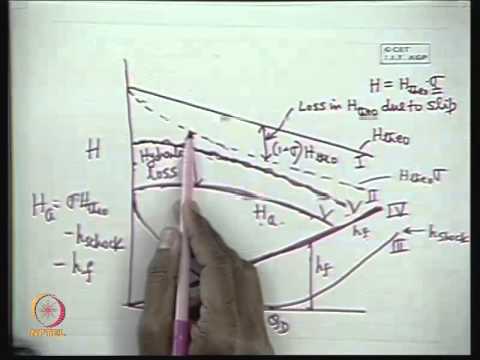
NPTEL’s lecture on centrifugal pump characteristics explains how flow and head interact. Use it as background for assessing the required duty after a site or hose arrangement changes; it does not specify a construction working platform or a stormwater permit.