
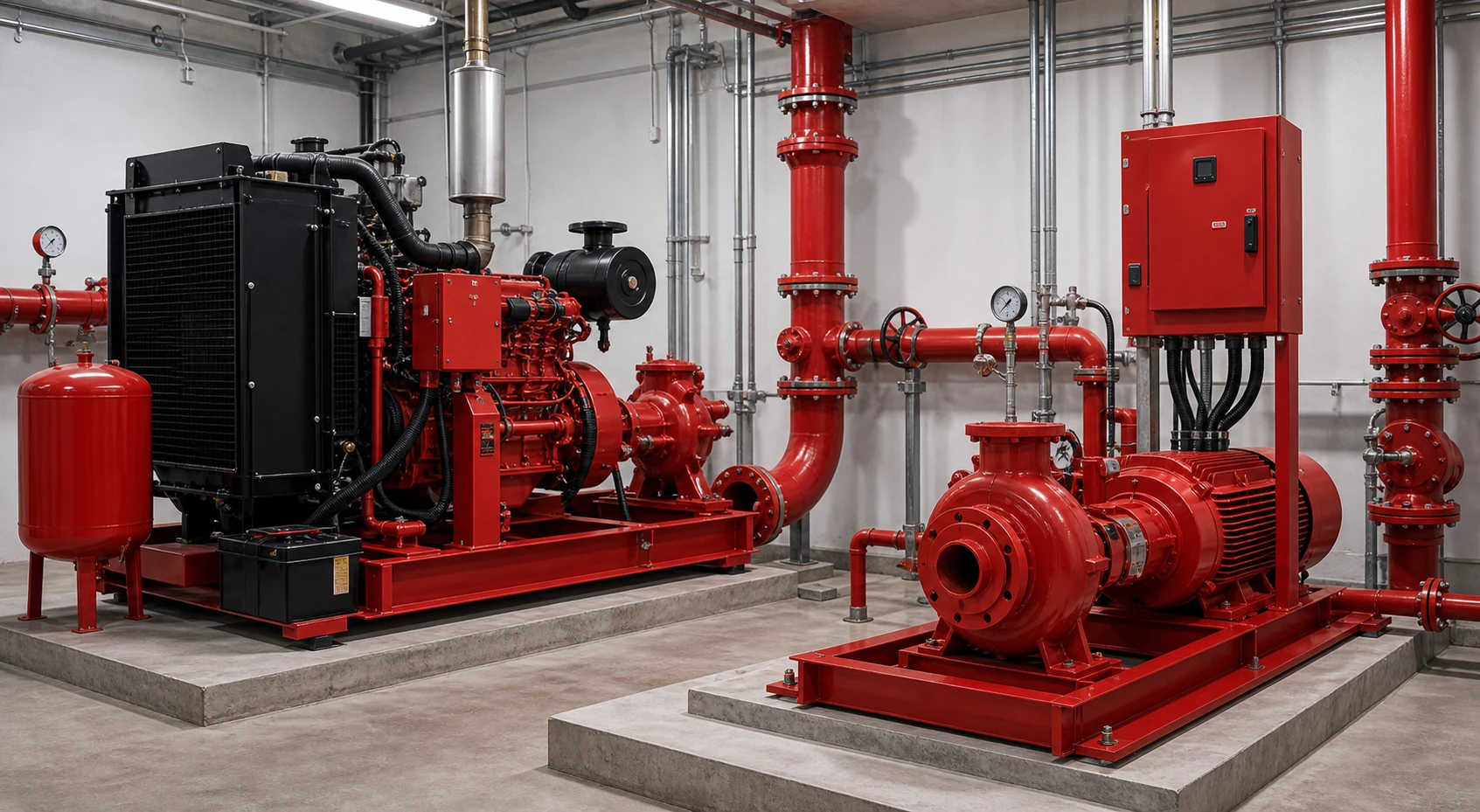
Diesel fire pump vs electric fire pump is mainly a driver and site-condition decision. Both pump water for fire protection, but the power source, room requirements, testing routine, controller scope and maintenance burden are different.
The right choice should follow the fire protection design, the authority having jurisdiction, the available power reliability and the documentation required for the project. Do not claim approval from a generic comparison table.
Respuesta rápida: Utilice la palabra clave del artículo para describir el problema, pero dimensione la bomba a partir del caudal, la presión/carga, las condiciones de entrada, el medio, la fuente de alimentación y el modo de control. Para sistemas de incendios o presión regulados, la aceptación final debe provenir de documentos específicos del proyecto.
Índice
- Part 1. The core difference
- Part 2. Power reliability and project acceptance
- Part 3. Room layout and maintenance differences
- Part 4. Cost should include the whole package
- Part 5. Borra options
- Preguntas frecuentes
Part 1. The core difference
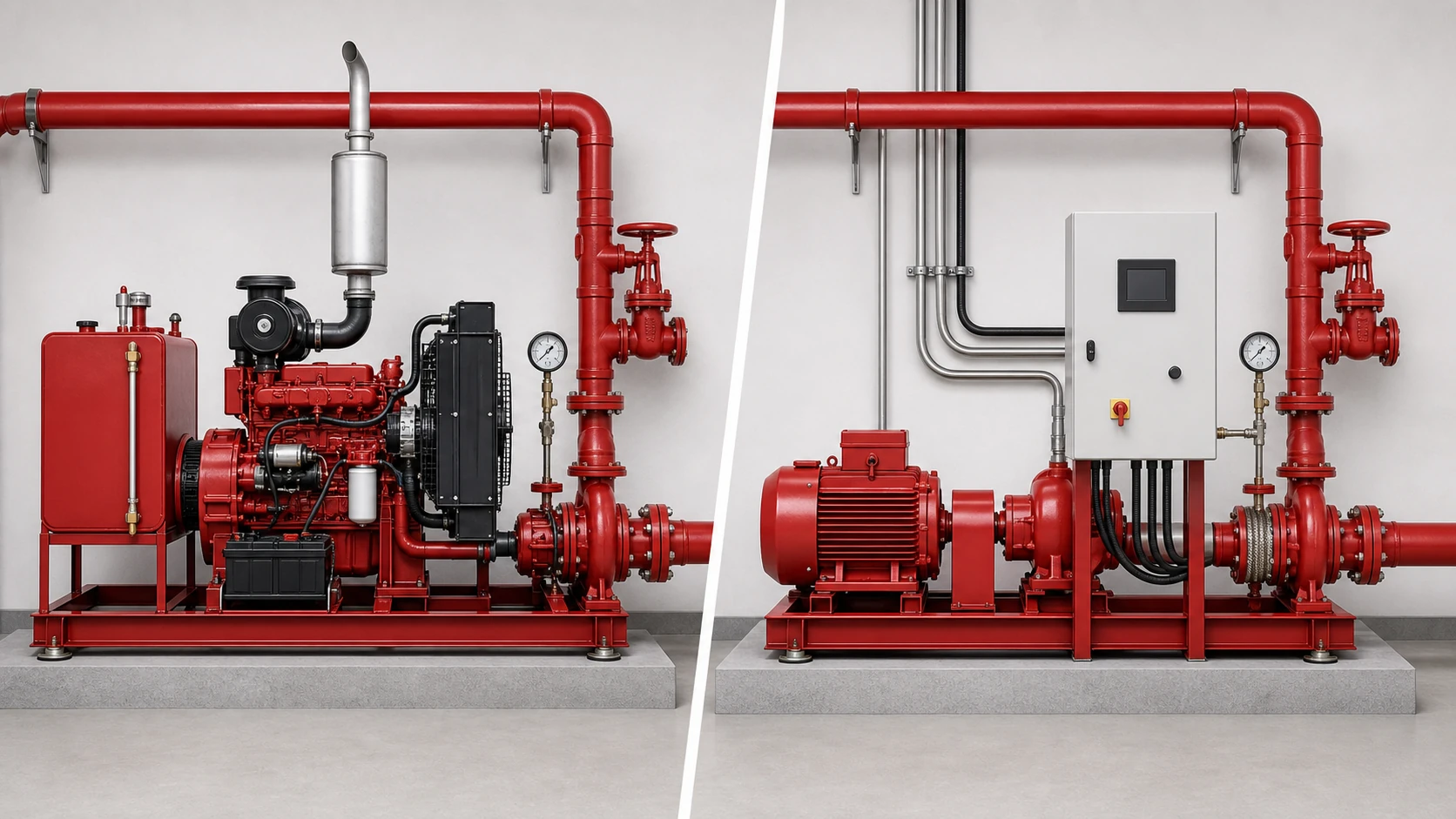
An electric fire pump uses an electric motor and depends on the project's electrical service and controller arrangement. It is often simpler in footprint, exhaust and fuel planning, but it needs reliable power and proper electrical infrastructure.
A diesel fire pump uses a diesel engine as the driver. It can be preferred where independent on-site power is required or where electrical service is not suitable. The tradeoff is more room planning: fuel, batteries, cooling air, exhaust, engine maintenance and test operation.
Diesel vs electric comparison
| Factorizar | Diesel fire pump | Electric fire pump |
|---|---|---|
| Power source | On-site diesel engine | Electrical service and motor |
| Room planning | Fuel, exhaust, radiator, batteries | Electrical room and controller access |
| Mantenimiento | Engine, fuel, battery, coolant | Motor, controller and electrical checks |
| Best fit | Independent driver need or limited power | Reliable power and simpler room layout |
Part 2. Power reliability and project acceptance
Fire pump selection is not just a supplier preference. The engineer and AHJ may require specific driver arrangements based on building risk, power reliability and local fire code interpretation. NFPA 20 is a key reference in many fire pump discussions, but the applicable edition and acceptance path must be confirmed by the project team.
For export quotations, ask early whether the buyer needs only a pump package offer or a documentation package that includes curves, drawings, controller data, test reports and certificate scope. The wording should remain conservative until the certificate and project requirement match.
Consejo: Compare total installed scope, not just pump package price.
Part 3. Room layout and maintenance differences
Electric systems usually need motor, controller, wiring access and ventilation for normal heat rejection. Diesel systems add radiator airflow, combustion air, exhaust routing, fuel storage, battery maintenance and engine service clearance. These items can change the pump room layout more than the pump casing itself.
Maintenance also differs. Electric motors may require electrical checks, alignment and bearing attention. Diesel engines require fuel quality, oil, coolant, batteries, starter system, exhaust and test-run management. A facility team that lacks diesel maintenance capability should not ignore this factor.
Selection questions
| Pregunta | Por qué importa |
|---|---|
| Is reliable power available? | Can favor electric if infrastructure is sufficient. |
| Is independent driving power required? | Can favor diesel depending on project rules. |
| Is fuel storage practical? | Diesel requires fuel planning and maintenance. |
| What documentation is required? | Controls quotation, testing and approval language. |
Consejo: Ask the project engineer or AHJ which driver arrangement is acceptable before ordering.
Part 4. Cost should include the whole package
Initial pump price is only one line item. Compare controller, driver, base frame, cooling, exhaust, fuel tank, room ventilation, installation labor, electrical work, periodic testing and spare parts. A diesel package can be more complex to install; an electric package can be constrained by electrical infrastructure upgrades.
When comparing suppliers, make the scope list explicit. Ask whether couplings, guards, gauges, valves, controller, batteries, fuel day tank, exhaust silencer, test documentation and packing are included or quoted separately.
Quotation scope check
| Item | Confirm |
|---|---|
| Pump and driver | Model, duty point and curve. |
| Controlador | Driver-specific controller scope. |
| Fuel or electrical accessories | Included or by others. |
| Testing documents | Factory test, curve and datasheet availability. |
| Certificate language | Exact scope verified before claims. |
Importante: Fire pump articles must use conservative compliance language. NFPA or AHJ acceptance depends on project-specific requirements, selected equipment and verified documentation.
Part 5. Borra options
Borra fire pump starting points include diesel engine fire pump models, automatic diesel fire water pump options and fire fighting pump packages. For comparison projects, send required flow, pressure, suction source, site voltage, expected driver type, documentation needs and applicable project standard.
Borra can discuss product selection and quotation scope, but final fire-system acceptance belongs to the project engineer, AHJ and verified documentation. Avoid formal acceptance wording unless the exact document scope is confirmed.
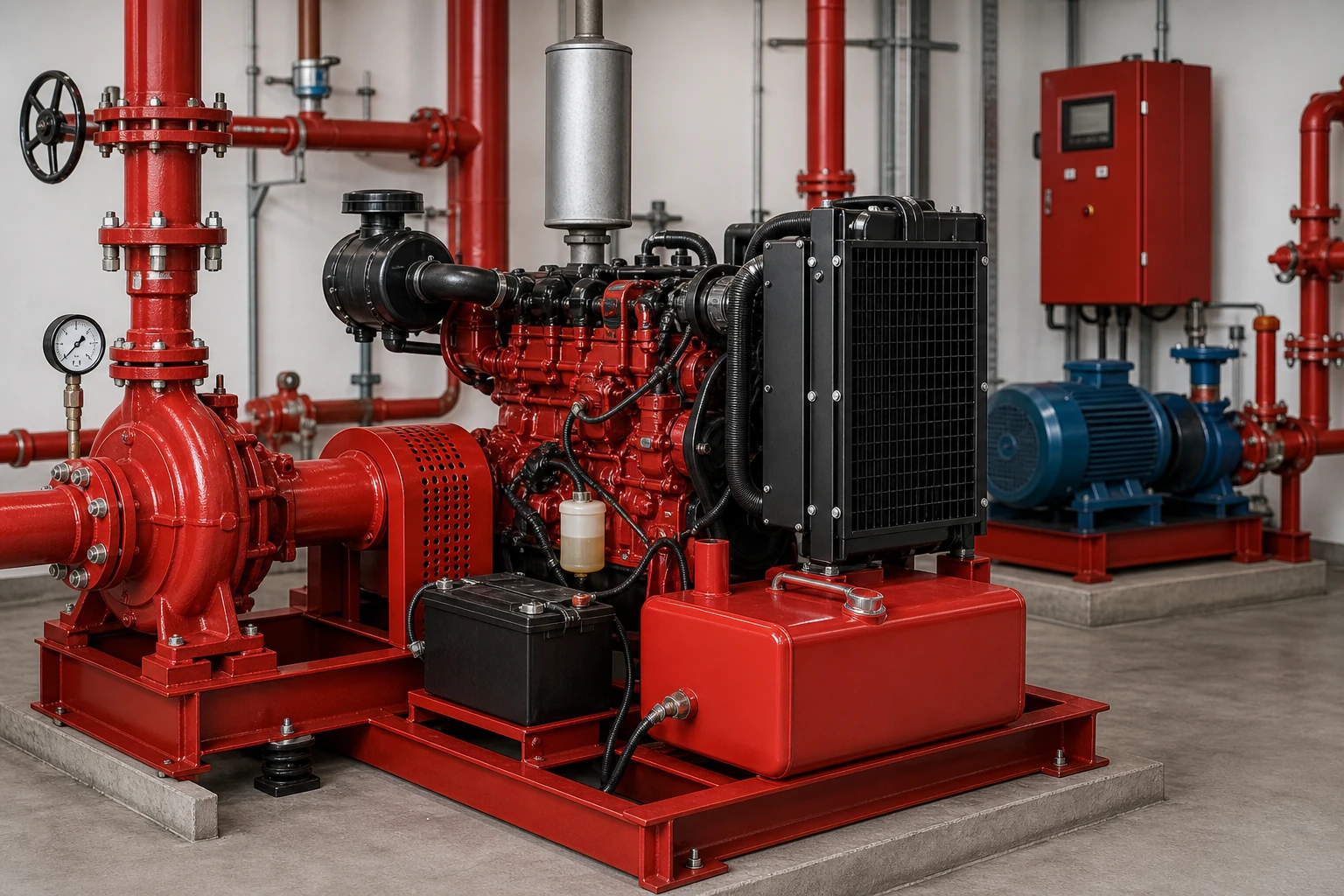
Consejo: For diesel systems, confirm ventilation and exhaust routing before approving the pump room layout.
Puntos de partida relevantes de Borra
- Bomba contra incendios con motor diésel XBC
- Bomba de agua contra incendios diésel automática
- Fire Fighting Pump Package
Para solicitar una cotización, comparta el punto de trabajo, la condición de la fuente, la fuente de alimentación, la preferencia de control, el entorno de instalación y cualquier requisito de documentación. Esto le permite al proveedor discutir un paquete sin inventar afirmaciones no verificadas.
Parte 6. Qué confirmar antes de la confirmación del pedido
Before ordering equipment for diesel fire pump vs electric fire pump, separate the engineering requirement from the commercial request. The engineering requirement is the actual duty point, source condition, liquid type, control method and installation environment. The commercial request is the expected supply scope, packing, lead time, documentation language and after-sales communication path. Keeping these two lists separate helps prevent a low-price quotation from hiding missing accessories or missing documents.
Solicite al proveedor que indique el modelo de bomba seleccionado, la disposición del motor o accionamiento, el alcance del controlador, los accesorios principales, el tamaño de las conexiones, las hipótesis de materiales, los documentos de prueba y los elementos excluidos del suministro. Si se proporciona un plano, compruebe si se trata únicamente de un esquema conceptual, un plano de disposición general o un documento específico del proyecto. Esta distinción es importante porque los compradores a menudo confunden una simple imagen de distribución con un plano de instalación definitivo.
Para proyectos de sustitución o modernización, incluya fotos de la bomba existente, la placa de características, los manómetros, la dirección de las tuberías, el depósito, el controlador y el espacio disponible en el suelo. Para nuevos proyectos, incluya el servicio de diseño, el patrón de funcionamiento previsto y cualquier limitación del sitio, como la altitud, la temperatura ambiente, la disponibilidad de energía, el drenaje, la ruta de acceso y los límites de ruido. Estos detalles reducen los ciclos de revisión y ayudan a que el proveedor recomiende un paquete práctico en lugar de una bomba genérica.
Consejo: Si el comprador no puede proporcionar una obligación de diseño completa, marque la oferta como preliminar y enumere claramente los datos faltantes en las notas de la cotización.
Preguntas frecuentes
Which is better, diesel or electric fire pump?
Neither is universally better. The choice depends on power reliability, project rules, room layout, maintenance capability and documentation requirements.
Is a diesel fire pump used when power is unreliable?
Often it is considered when independent driving power is needed, but the final decision belongs to the fire protection design and AHJ requirements.
Is an electric fire pump easier to maintain?
It can have fewer engine-related tasks, but electrical infrastructure, controller checks and motor maintenance still matter.
Does a diesel fire pump need a fuel tank?
Diesel packages normally require fuel planning. The tank type, capacity and location depend on the project and local rules.
Do both types need controllers?
Yes. Controller type and scope differ by driver and project requirement.
Can Borra quote both diesel and electric options?
Borra can discuss fire pump package options when the buyer provides flow, pressure, site conditions and documentation needs.
Can this article confirm code compliance?
No. Compliance and acceptance require project-specific review by the engineer, AHJ and applicable documents.
Referencias
Lista de verificación de cotización de proyectos
- Caudal requerido y presión o altura objetivo.
- Presión de entrada, fuente de agua y condición de succión.
- Medio, temperatura y calidad del agua o contenido de sólidos.
- Fuente de alimentación, preferencia de controlador y ciclo de trabajo.
- Espacio de instalación, acceso para mantenimiento y requisitos de documentación.
Contactar a Borra con los datos del proyecto si necesita una discusión sobre la selección de bombas o una cotización de exportación.