
Pump diffuser vane inspection examines stationary hydraulic passages for deposits, erosion, corrosion, contact marks and other damage during an authorized overhaul. Identify the actual diffuser, preserve its assembly position, clean it without altering the profile, map defects and compare critical dimensions with the supplied drawing. Link the physical findings to recorded pump performance, but do not diagnose the cause from a photograph alone. A repair needs defined geometry and acceptance checks; uncontrolled grinding is not an inspection method.
This guide concerns internal diffuser or guide-vane components where they are fitted. It does not describe an external suction diffuser or strainer, and it does not assume every centrifugal pump contains the same stationary vane arrangement. Confirm the configuration before applying the checklist.
Identify the component and its hydraulic role
The impeller rotates; the diffuser is stationary. Its passages guide liquid leaving the rotating stage and participate in the pump’s pressure-recovery process. Shape and position therefore matter. A part that looks smoother after repair may still have an altered passage or incorrect relationship to the impeller.
Use the assembly drawing to distinguish diffuser vanes, volute features, interstage parts and inlet accessories. For multistage equipment, identify stage numbers and orientation before dismantling. Avoid calling every stationary fin a diffuser or assuming that apparently similar stages are interchangeable.
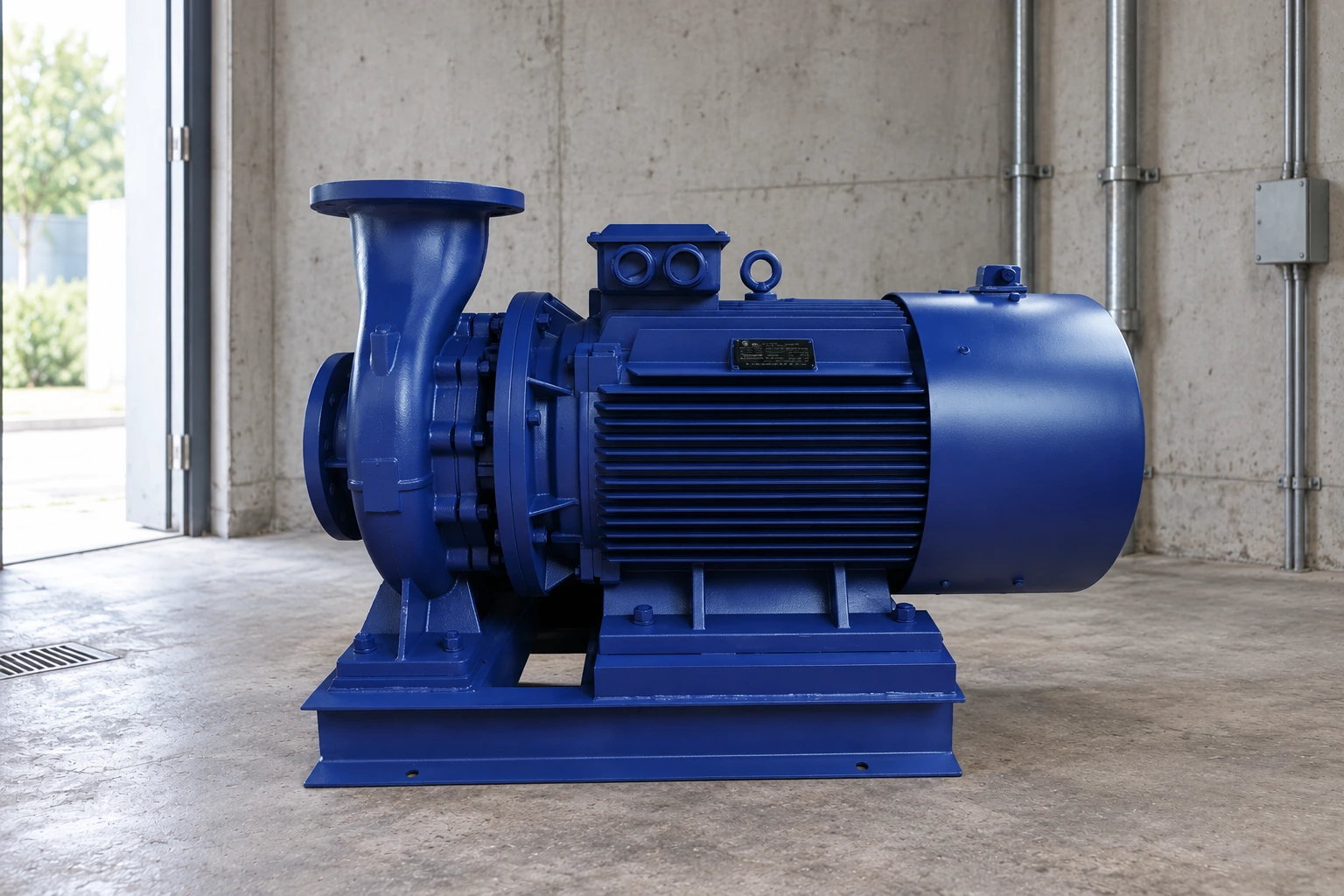
Untuk Borra QJ deep-well pump, request the supplied sectional drawing and component information before specifying inspection or replacement work. A product photograph shows an external assembly, not the exact internal guide-vane profile. The article’s illustrations identify real product families and are not evidence that a particular internal part has been inspected.
Bring operating evidence into the overhaul plan
Record the reason for opening the pump and the available operating history. Flow, pressure, speed, liquid condition and vibration observations can help frame the investigation. Compare like operating conditions where possible. A changed valve setting or system condition can change performance without proving an internal vane defect.
Itu EPRI large-horizontal-pump life assessment discusses degradation of stationary hydraulic components and the use of inspection alongside operating trends. That supports combining evidence; it does not establish a unique cause for every eroded surface or a universal repair allowance.
Preserve earlier performance records, previous repair reports and available dimensional results. A recurring damaged location may deserve more investigation than an isolated first observation. Do not convert a suspected relationship into a firm diagnosis until the physical and operating evidence have been assessed together.
Establish safe access and preserve assembly identity
Use the site energy-control and process-isolation procedures before dismantling. Account for automatic starts, pressure, temperature, trapped liquid, chemicals and the weight of removed assemblies. Prepare approved lifting and support arrangements. Internal inspection should be performed by personnel equipped and authorized for the overhaul.
Mark orientation using an approved method and create a component sequence record. Photograph the assembly before removing identifying features or separating stages. Keep fasteners and locating components traceable to their positions where the procedure requires it. Do not mark a precision seating face merely because it is convenient.
Protect exposed fits, edges and sealing surfaces during handling. A fresh tool mark introduced during dismantling can complicate the original condition assessment. Record any handling damage separately so the inspection report does not confuse an overhaul event with service deterioration.
Inspect before and after cleaning
Photograph deposits and blocked passages before removal. Identify their location and whether they affect access to the underlying surface. Deposits may require an assessment of liquid quality or operating conditions, but their appearance alone does not identify chemistry or prove the cause of a performance change.
Choose a cleaning method compatible with the component material and any coating. Avoid methods that round edges, remove parent metal or obscure fine cracking. Clean enough to expose the inspection surface and account for removed material. Do not describe uncontrolled polishing as harmless preparation.
After cleaning, repeat the visual survey systematically. Follow each accessible passage from inlet to outlet and include vane edges, side surfaces, mating areas and locating features within the inspection scope. EPRI’s pump repair specification illustrates how a model-specific scope addresses diffuser profiles, contact damage and dimensional checks. Its numerical limits belong to that equipment and must not be transferred to other pumps. The detailed acceptance basis still comes from the actual equipment documentation.
Map damage rather than guessing its cause
Use a consistent component orientation and vane numbering convention. Photograph the overall part, the affected passage and a close view with a scale. Record whether the feature is localized or widespread and whether similar features appear in neighboring passages. Another inspector should be able to locate it from the report.
Describe thinning, pits, grooves, missing material, contact marks or a crack-like indication in neutral terms. Several mechanisms can produce superficially similar patterns. Do not label every pitted area as cavitation or every polished mark as harmless contact without appropriate assessment.
When a crack-like feature or significant loss of material is found, refer it for the approved examination and disposition. The relevant method depends on the material, geometry and suspected defect. A visual checklist should not prescribe a single nondestructive test for every pump or treat a photograph as sufficient evidence to release a questionable part.
Check geometry with a defined measurement plan
Identify the critical dimensions and reference surfaces from the drawing. The inspection may need passage geometry, locating fits, mating-face condition or the relationship between stationary and rotating parts. Do not measure a convenient external diameter and claim that the complete hydraulic profile is correct.
Select suitable instruments and document their identification, method and measurement locations. Retain actual values and compare them with an identified drawing revision or approved repair standard. If access prevents a valid measurement, record the limitation and arrange another method rather than estimating a value from a photograph.
For multistage assemblies, stage identity and stack relationships can be important to reassembly. Keep component dimensions and assembly checks separate but linked. An individually acceptable part may still be installed in an incorrect position. Do not copy clearances or axial settings from a different model or infer them from a broad product-family name.
Use findings to define the repair scope
The table is an inspection organizer, not a source of dimensional limits. Each repair requires the appropriate technical review and final acceptance checks for the supplied component.
| Temuan | Evidence to preserve | Repair question to resolve |
|---|---|---|
| Deposits restrict a passage | Location, as-found images and cleaned condition | Can approved cleaning restore the passage without altering parent geometry? |
| Vane edge shows material loss | Mapped location, dimensions where measurable and comparison information | cURL Too many subrequests by single Worker invocation. To configure this limit, refer to https://developers.cloudflare.com/workers/wrangler/configuration/#limits |
| cURL Too many subrequests by single Worker invocation. To configure this limit, refer to https://developers.cloudflare.com/workers/wrangler/configuration/#limits | cURL Too many subrequests by single Worker invocation. To configure this limit, refer to https://developers.cloudflare.com/workers/wrangler/configuration/#limits | cURL Too many subrequests by single Worker invocation. To configure this limit, refer to https://developers.cloudflare.com/workers/wrangler/configuration/#limits |
| cURL Too many subrequests by single Worker invocation. To configure this limit, refer to https://developers.cloudflare.com/workers/wrangler/configuration/#limits | cURL Too many subrequests by single Worker invocation. To configure this limit, refer to https://developers.cloudflare.com/workers/wrangler/configuration/#limits | cURL Too many subrequests by single Worker invocation. To configure this limit, refer to https://developers.cloudflare.com/workers/wrangler/configuration/#limits |
| cURL Too many subrequests by single Worker invocation. To configure this limit, refer to https://developers.cloudflare.com/workers/wrangler/configuration/#limits | cURL Too many subrequests by single Worker invocation. To configure this limit, refer to https://developers.cloudflare.com/workers/wrangler/configuration/#limits | Can an approved repair preserve both the joint and assembly dimensions? |
Do not blend away a vane edge until it “looks right.” Weld repair, coating or machining may affect material properties, passage shape and assembly dimensions. The repair scope should state the process, final geometry, inspection requirements and responsible approval. If that basis cannot be established, replacement may need assessment instead of repeated cosmetic work.
Inspect the rotating partner separately
A diffuser finding should trigger an appropriate review of the related impeller and assembly, but it does not replace their inspections. Compare the locations of marks where useful and document each component independently. The impeller vane crack inspection guide addresses the rotating vanes and their distinct condition record.
Review the overall maintenance file through the centrifugal pump inspection report guide. That record should connect findings, measurements, repair decisions and final verification. Keep speculation separate from verified observations so a later repair specialist can assess the evidence without inheriting an unsupported diagnosis.
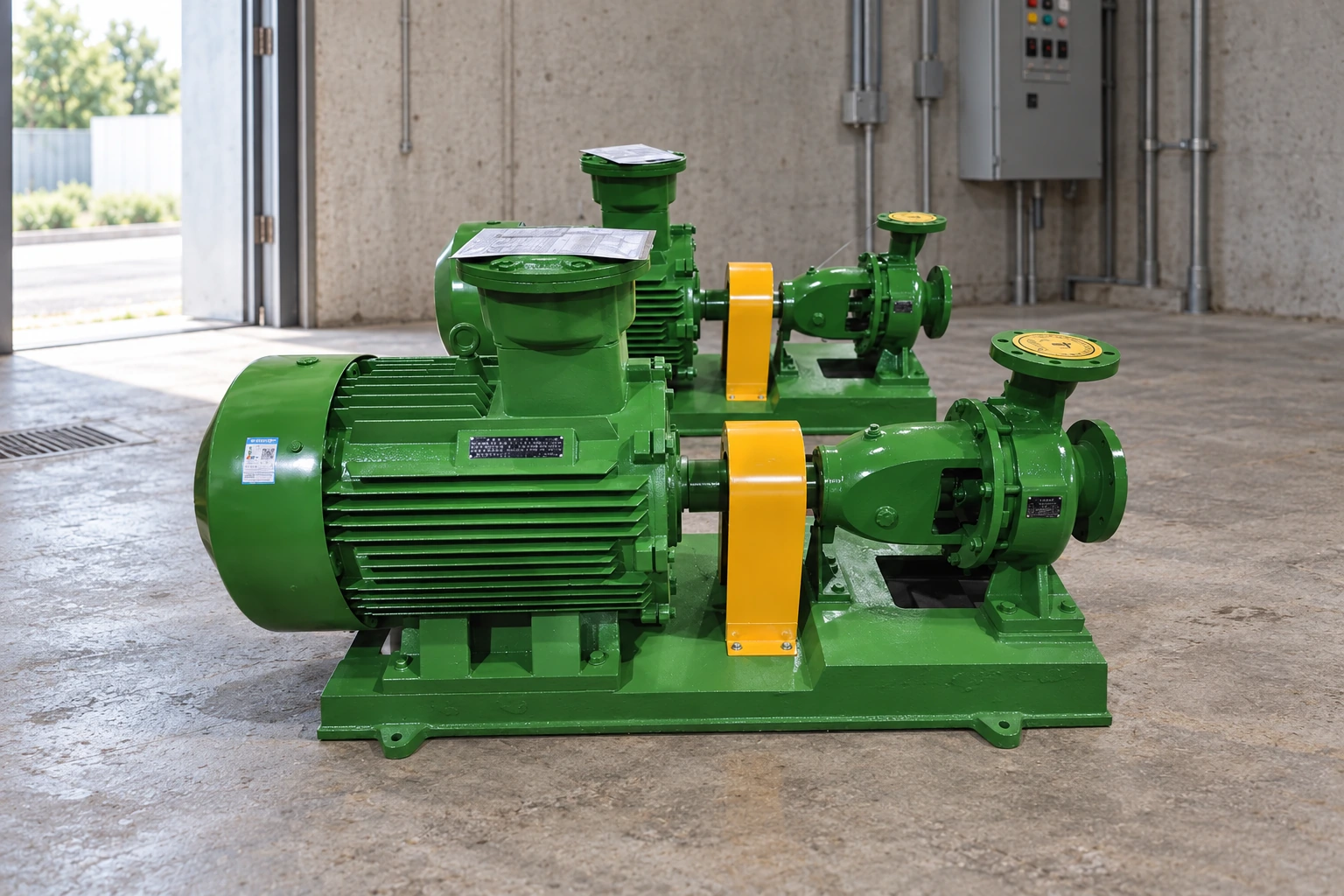
For a horizontal installation, confirm whether the actual pump uses a volute, diffuser or other arrangement. A Borra IS centrifugal pump family is a related product reference, not proof that its internal geometry matches a QJ stage or a photographed component from another installation.
Reassemble and compare performance under controlled conditions
Confirm that accepted parts, component order and locating features match the approved assembly procedure. Account for cleaning materials and temporary protection. Complete required clearances and rotation checks before restoring the pump. Guarding, priming and startup requirements remain specific to the installed system.
After restart, record the test conditions and compare results with a relevant baseline. Use comparable speed, liquid condition and system configuration where possible. An apparent improvement measured under different conditions is not a clean measure of the repair’s effect. Investigate unexplained vibration, leakage or performance concerns through the appropriate procedure.
Close the report with the repaired or replaced component identity, inspection results, assembly checks and operating observations. State any follow-up monitoring that remains necessary. A clean-looking diffuser photograph is useful documentation, but it cannot replace a traceable geometry decision and an appropriate operating check.
Further learning: flow and pressure
The Practical Engineering video below introduces the relationship between pumps, flow and pressure. It provides useful system context when interpreting a performance complaint. It does not demonstrate diffuser overhaul or authorize any specific repair, so use it alongside the written inspection process and supplied equipment instructions.
Pertanyaan yang sering diajukan
Is a suction diffuser the same as an internal pump diffuser?
No. An inlet accessory and an internal stationary hydraulic component have different purposes and inspection requirements. Identify the component on the supplied drawing before using a checklist or ordering a replacement.
Does every centrifugal pump have diffuser vanes?
No. Internal arrangements vary. Confirm whether the supplied pump has diffuser stages, a volute or another arrangement; do not infer internal construction from a product-family photograph.
Can eroded vanes simply be ground smooth?
Only an approved repair can establish what material may be removed and what geometry must remain. Uncontrolled grinding can alter the hydraulic profile and hide evidence without resolving the underlying issue.
Does pitting prove cavitation damage?
Not by itself. Record the surface condition and assess it with operating history, liquid conditions and suitable examination. Similar-looking features can have different causes, so avoid a diagnosis based only on appearance.
What proves the repair is complete?
Documented component acceptance, required dimensional and assembly checks, and an appropriate operating verification close the repair. Retain the conditions of the performance check so future comparisons have a meaningful baseline.