
To choose a bomba de incêndio a gasóleo, start with the required rated flow and pressure from the fire protection design, then confirm water source, suction condition, diesel engine package, controller, fuel, ventilation, documentation and project acceptance requirements.
A diesel fire pump is not selected by engine horsepower alone. The pump curve, system duty point, driver rating and site constraints must work together.
Resposta rápida: Utilize a palavra-chave do artigo para descrever o problema, mas dimensione a bomba com base no caudal, pressão/altura manométrica, condição de admissão, fluido, alimentação elétrica e modo de controlo. Para sistemas de incêndio ou de pressão regulados, a aceitação final deve constar em documentos específicos do projeto.
Índice
- Part 1. Start with rated flow and pressure
- Part 2. Confirm the water source and suction condition
- Part 3. Review the diesel engine package
- Part 4. Documentation and acceptance scope
- Part 5. Borra quotation path
- FAQ
Part 1. Start with rated flow and pressure
The fire protection design should define the required flow and pressure. Those values drive pump selection, not the physical size of the pump room or the buyer's preferred engine brand. Ask for the duty point, expected suction condition and any required test point information before quoting.
If the buyer only sends a building type and pipe size, the supplier can give only a preliminary discussion. A serious quotation needs flow, head or pressure, water source, elevation, pipe losses, driver preference and documentation expectations.
Diesel fire pump selection packet
| Entrada | What to provide |
|---|---|
| serviço hidráulico | Rated flow, pressure/head and test point if required. |
| Fonte de água | Tank, reservoir, municipal supply or other source. |
| Suction condition | Flooded suction, lift, inlet pressure and pipe layout. |
| Site condition | Altitude, ambient temperature, pump room and ventilation. |
| Documentação | Curve, drawing, test report and certificate scope needed. |
Part 2. Confirm the water source and suction condition
Diesel fire pumps still need a reliable water source. Suction pressure, water tank level, flooded suction or lift condition, pipe diameter, friction loss and inlet arrangement all affect performance. Poor suction conditions can cause cavitation, noise and failure to meet the expected duty.
For export projects, ask whether the pump is fed from a tank, reservoir, municipal line or another system. Include suction pipe layout and water temperature if available. The supplier should not be forced to guess the conditions that control pump performance.

Dica: Ask for the pump curve and diesel engine data together so the duty point and driver rating can be reviewed as one package.
Part 3. Review the diesel engine package
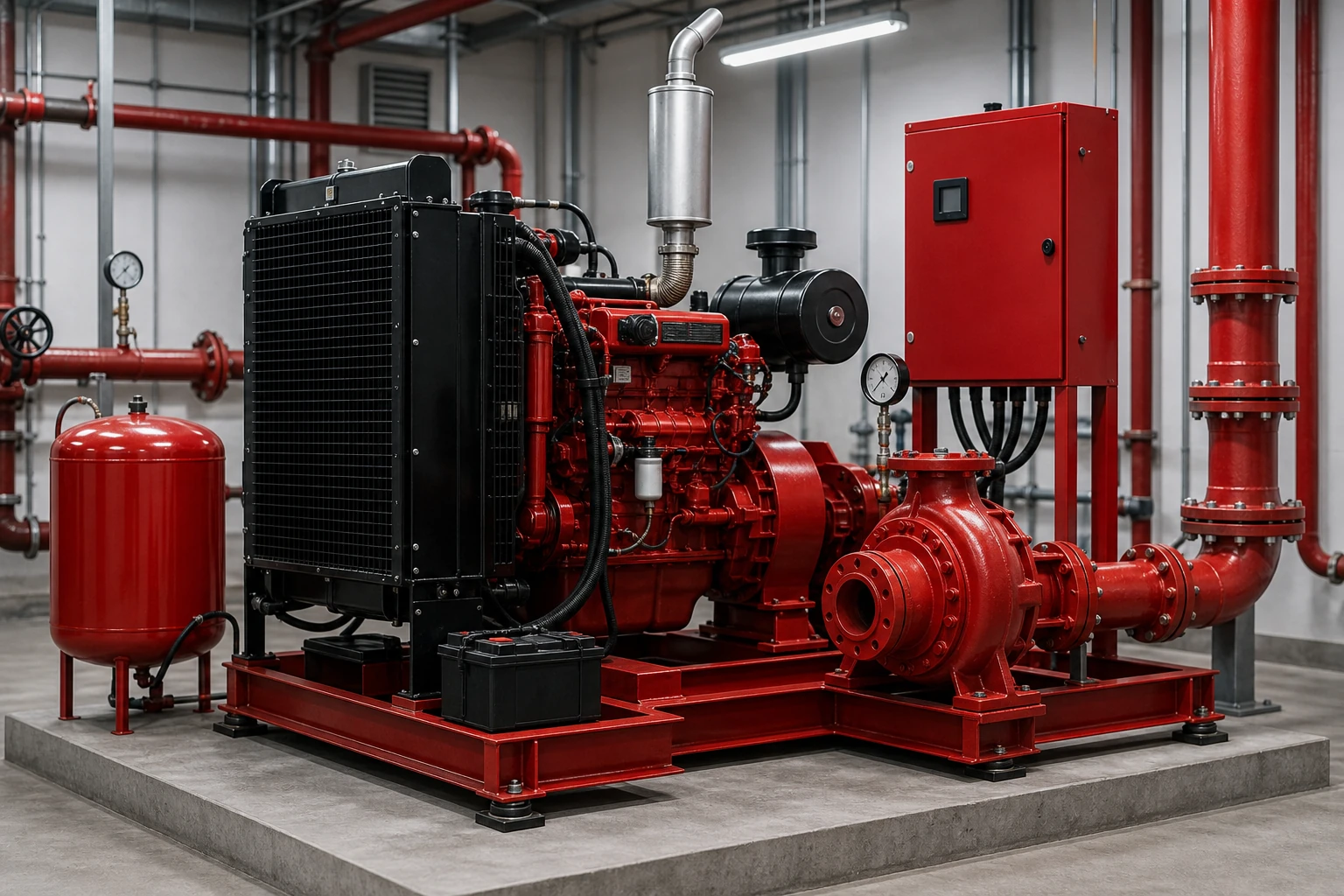
A diesel fire pump package includes more than a pump and engine. Review radiator or heat exchanger cooling, exhaust silencer, batteries, starter, fuel line, fuel day tank, base frame, coupling guard, controller and instrumentation. Missing one accessory can delay installation even when the pump itself is correct.
Site altitude and ambient temperature can affect engine performance and cooling. Pump room ventilation and exhaust routing must be planned before the package is finalized. These are engineering inputs, not afterthoughts for the installer.
Package components to confirm
| Componente | Porque é que isso importa |
|---|---|
| Motor a gasóleo | Must match pump duty and site conditions. |
| Cooling system | Controls room ventilation and heat rejection. |
| Fuel system | Affects storage, access and maintenance. |
| Batteries and starter | Needed for reliable engine starting. |
| Controlador | Defines monitoring, start logic and alarms. |
Dica: Include site altitude, ambient temperature and pump room ventilation in the first quotation request.
Part 4. Documentation and acceptance scope
Ask what drawings, curves, datasheets, test reports, packing information and certificate documents the project requires. If formal acceptance language is requested, match it to the exact model, document scope and project requirement. Do not use broad certificate wording without verification.
Many disputes happen because the buyer expected a complete fire pump package while the supplier quoted only a pump set. The quotation should list what is included, what is optional and what must be supplied by the site contractor.
Mistakes to avoid
| Erro | Risk |
|---|---|
| Selecting by horsepower only | Pump may miss duty point. |
| Ignoring suction condition | Cavitation or unstable operation. |
| Forgetting exhaust and ventilation | Pump room layout may fail. |
| Assuming approval language | Documentation may not match project requirement. |
Importante: Fire pump selection must follow the project design and applicable authority review. Do not treat a supplier guide as approval for a fire protection installation.
Part 5. Borra quotation path
Borra diesel fire pump options can be discussed for projects that provide a complete selection packet. Send flow, pressure/head, water source, suction condition, site altitude, ambient temperature, fuel arrangement, controller requirements, voltage if relevant, room constraints and required documents.
Relevant starting points include XBC diesel engine fire pump, automatic diesel fire water pump and fire fighting pump package pages. The correct route depends on the project duty and scope, not only the article keyword.

Dica: Separate required documents from nice-to-have documents so the supplier can quote the correct scope.
Pontos de partida relevantes de Borra
- Bombas de incêndio com motor a gasóleo XBC
- Bomba de incêndio a gasóleo automática
- Fire Fighting Pump Package
Para uma cotação, partilhe o ponto de funcionamento, as condições de origem, a alimentação elétrica, a preferência de controlo, o ambiente de instalação e qualquer requisito de documentação. Isto permite ao fornecedor discutir um pacote sem inventar afirmações não verificadas.
Parte 6. O que confirmar antes da confirmação da encomenda
Antes de encomendar equipamentos para instalação de bombas de impulso, é preciso separar o requisito técnico da solicitação comercial. O requisito técnico é o ponto de trabalho real, a condição da fonte, o tipo de líquido, o método de controle e o ambiente de instalação. A solicitação comercial é o volume de fornecimento esperado, a embalagem, o prazo de entrega, o idioma da documentação e o caminho de comunicação pós-venda. Mantendo essas duas listas separadas ajuda a evitar que uma cotação de baixo preço esconda acessórios ou documentos que não estejam incluídos.
Peça ao fornecedor para indicar o modelo de bomba selecionado, o arranjo do acionamento ou motor, o âmbito do controlador, os principais acessórios, o tamanho das ligações, os pressupostos de materiais, os documentos de teste e os itens excluídos do fornecimento. Se for fornecido um desenho, verifique se se trata apenas de um esquema conceptual, de um desenho de disposição geral ou de um documento específico do projeto. Esta distinção é importante porque os compradores confundem frequentemente uma imagem de disposição simples com um desenho de instalação final.
Para projetos de substituição ou de modernização, inclua fotografias da bomba existente, da chapa de características, dos manómetros, da direção da tubagem, do reservatório, do controlador e do espaço disponível no chão. Para projetos novos, inclua o caudal/altura manométrica de projeto, o padrão de funcionamento previsto e quaisquer limitações do local, tais como altitude, temperatura ambiente, disponibilidade de energia, drenagem, via de acesso e limites de ruído. Estes pormenores reduzem os ciclos de revisão e ajudam o fornecedor a recomendar um conjunto prático em vez de uma bomba genérica.
Dica: Se o comprador não puder fornecer um caderno de encargos completo, marque a proposta como preliminar e liste os dados em falta de forma clara nas notas da cotação.
FAQ
What is the first step in choosing a diesel fire pump?
Confirm the rated flow, pressure and water source from the fire protection design.
Does engine horsepower determine diesel fire pump size?
No. Horsepower follows the hydraulic duty, pump efficiency and engine rating. The duty point comes first.
What site information affects diesel pump selection?
Altitude, ambient temperature, pump room size, ventilation, exhaust route, fuel storage and maintenance access affect selection.
What documents should I request?
Request pump curve, general arrangement drawing, datasheet, test report, controller information and certificate scope if required.
Can one package include pump, diesel engine and controller?
Yes, many projects use an integrated package, but the quotation must list exactly what is included.
Is a diesel fire pump always better than electric?
No. Diesel is useful in certain power and project conditions, but electric may fit when reliable power and approval path are available.
Why is suction condition important?
The pump cannot perform correctly if the inlet water condition is poor or the suction pipe causes excessive loss.
Can Borra help with selection?
Borra can discuss a suitable package after receiving flow, pressure, water source, site conditions and documentation requirements.
Referências
Lista de verificação de orçamento de projeto
- Caudal necessário e pressão ou altura manométrica de referência.
- Pressão de entrada, origem da água e condição de aspiração.
- Meio, temperatura e qualidade da água ou teor de sólidos.
- Fonte de alimentação, preferência de controlador e ciclo de trabalho.
- Espaço de instalação, acesso para assistência técnica e requisitos de documentação.
Contactar Borra com os dados do projeto, caso necessite de uma discussão sobre a seleção da bomba ou de uma cotação para exportação.