
Irrigation pump discharge filter selection starts with the contaminants in the water and the protection required by the emitters. Choose the filtration method, effective filtration rating, operating flow and cleaning arrangement together. A filter that fits the pipe can still clog too quickly, use too much pressure, or fail to protect a drip system. Include both normal filtration losses and the water and pressure needed for cleaning in the pump-system review.
This guide covers downstream filtration for irrigation delivery. It does not replace pump-intake screening, water analysis, emitter specifications or chemical-treatment design. Its purpose is to help irrigation buyers prepare a defensible filter and pump inquiry rather than choose a universal mesh number.
Separate pump protection from emitter protection
A coarse intake screen helps keep large debris away from the pump. A downstream filter protects distribution components and small emitter passages. These tasks have different particle-size requirements and pressure conditions. Adding a fine filter to an unsuitable suction arrangement can create a new pump problem rather than solve emitter clogging.
Place filtration equipment according to the engineered system arrangement. Do not move a pressure-rated discharge filter onto the suction line without checking its suitability and the effect on available inlet pressure. For the inlet side, consult the separate suction-strainer pressure-drop guide.
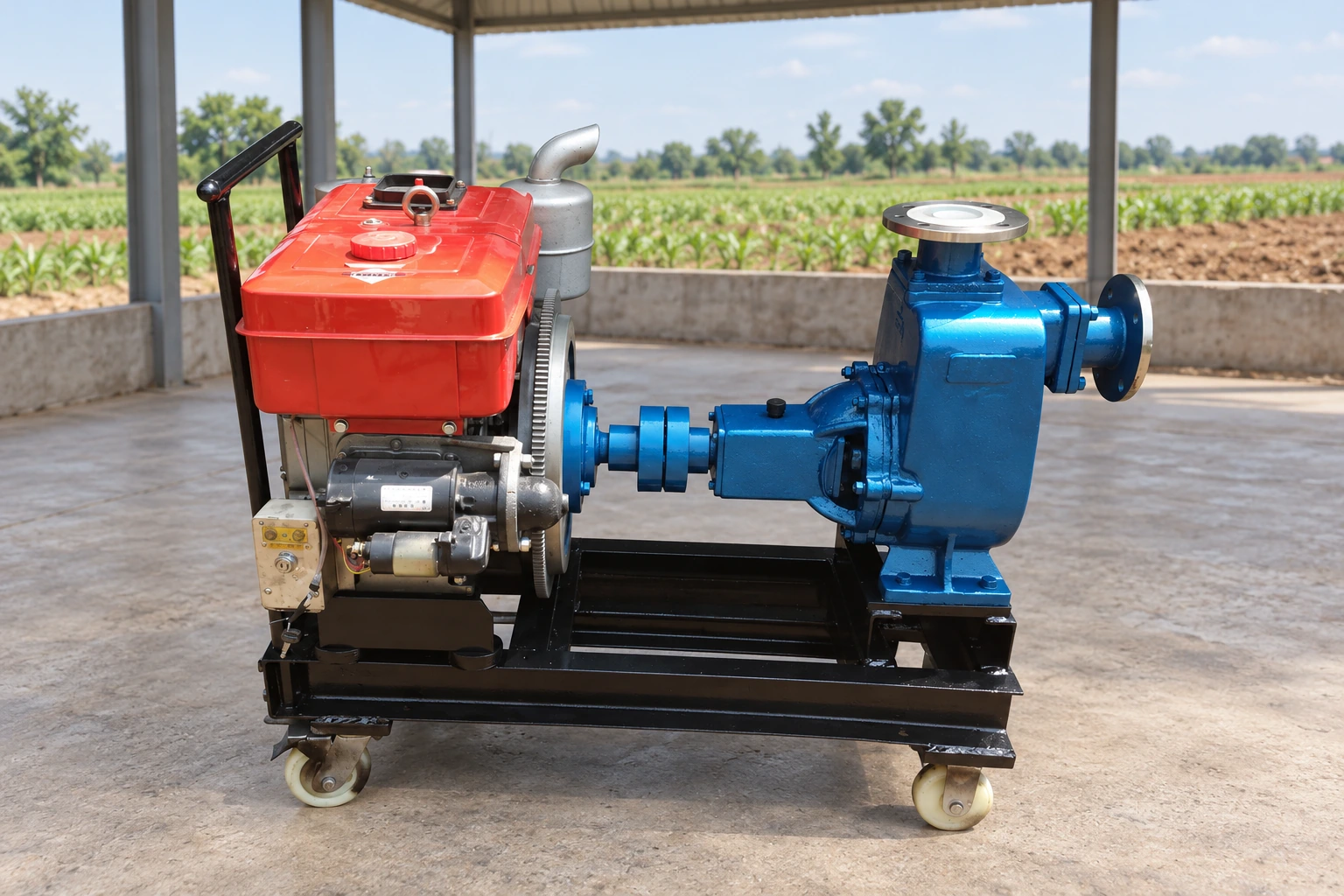
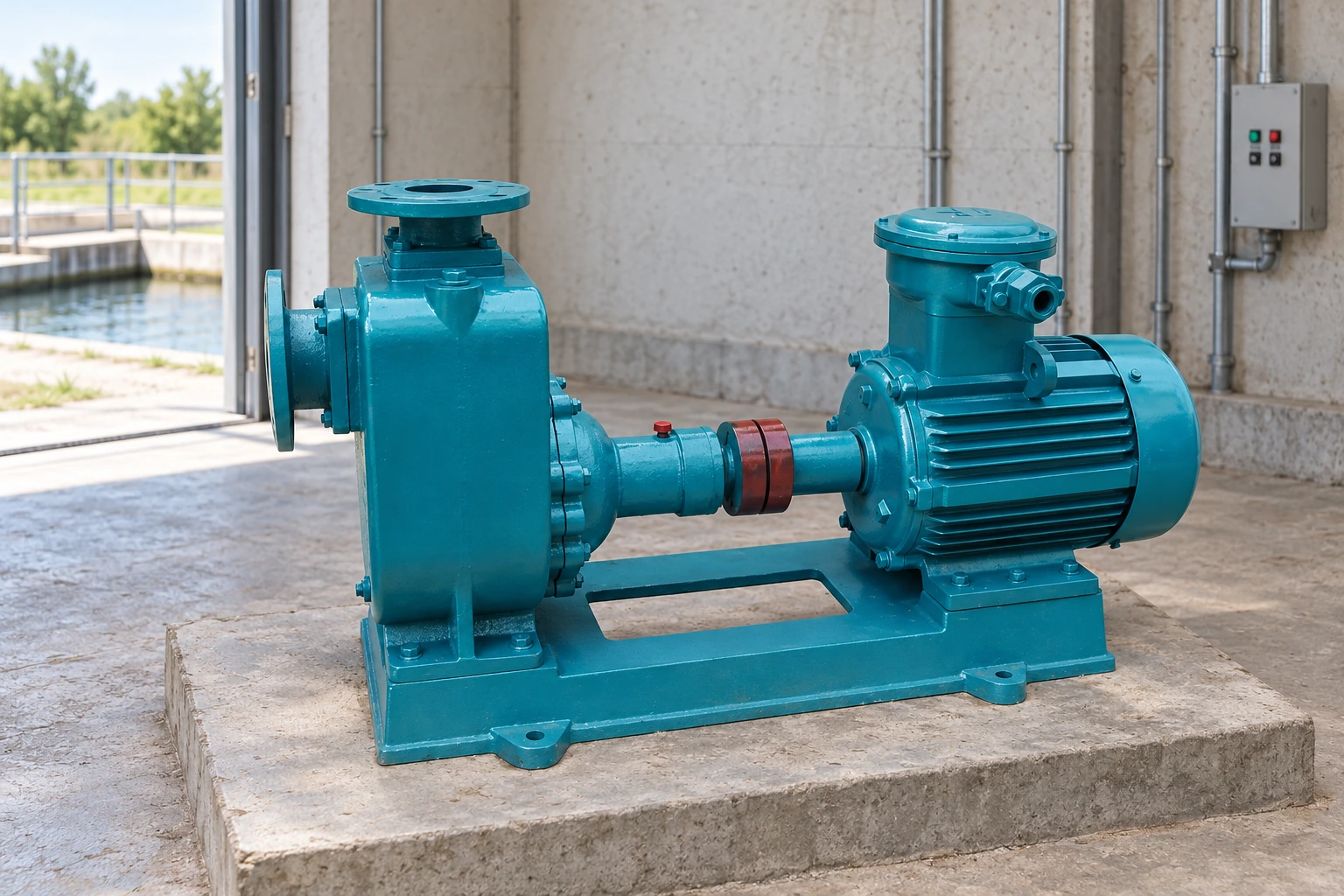
Borra’s Bomba de irrigação auto-aspirante ZX is a relevant water-transfer product reference. Its product image does not establish that a particular filter package, backwash system or water-quality treatment is included. Specify those items separately and confirm compatibility with the selected model.
Characterize the water before comparing filter types
Identify whether the water comes from a well, reservoir, river, canal or storage pond. Record visible solids, seasonal algae, sand carryover, organic debris and any chemical analysis relevant to deposits. Water that appears clear can still cause biological or chemical clogging that a simple screen will not prevent.
Sample under representative operating conditions. A quiet pond sample from winter may not represent summer algae or storm runoff. If the water source changes during the season, include that variation in the design information. The filter supplier needs the expected contaminant loading, not just a single photograph of a clear jar.
Ask the emitter manufacturer for the required filtration specification. Confirm whether the stated value refers to a particle dimension, mesh description or another test basis. Mesh alone is not a universal conversion to microns because screen construction and wire diameter vary. Use the supplier’s documented rating for the actual element.
Understand the useful role of each technology
Screen filters provide a physical barrier and can suit relatively clean water with appropriate maintenance. They often have limited storage for bulky organic matter, so frequent cleaning can become the controlling issue. Do not select the smallest body that can pass clean-water flow while ignoring the expected dirt loading.
Disc filters use stacked grooved elements. Their performance depends on the actual design, compression, filtration rating and cleaning method. Confirm the manufacturer’s water-quality limits and required cleaning conditions. A disc unit is not automatically superior to every screen under every contaminant mixture.
Media filters pass water through a granular bed and can be useful where organic loading makes simple screening difficult. They need a correctly designed backwash process and may require a downstream safety screen. Specify the media, vessel arrangement and cleaning controls together rather than comparing only inlet connection sizes.
O Virginia Tech micro-irrigation guide explains why source water and emitter plugging determine filtration needs. The University of California disc-filter guidance provides further selection context. These are general references; the final assembly needs supplier verification.
Use a comparison table to organize the inquiry
| Water or operating issue | Questão de seleção | Evidência a solicitar |
|---|---|---|
| Predominantly inorganic particles | Can a screen or disc handle the loading? | Element rating, clean-flow curve and dirt-loading guidance |
| Algae and organic debris | Is media filtration or pretreatment needed? | Water-quality review and recommended process arrangement |
| Sand from a well | Is separation required before fine filtration? | Particle analysis and separator performance basis |
| Limited cleaning water | Can the system support the intended cleaning method? | Backwash flow, duration and discharge requirements |
| Variable irrigation zones | Does filtration remain stable across the flow range? | Minimum and maximum operating conditions |
| Unattended operation | How are cleaning failure and high differential pressure detected? | Control sequence, alarm outputs and maintenance access |
The table identifies decisions rather than prescribing equipment. Two farms using the same pump flow can need different filtration because one source carries fine mineral particles and the other carries seasonal organic material. The cost comparison should include cleaning labor, water loss and downtime as well as the purchase price.
Check pressure loss at clean and dirty conditions
Every pressure loss upstream of the irrigation zone consumes part of the available head. Obtain the selected filter’s clean pressure-loss curve at the actual flow. Then identify the permitted differential pressure before cleaning and the minimum downstream pressure needed by the emitters and regulators.
Use consistent measurement locations. A gauge before the filter and another after it provide a useful differential only when elevation and instrument condition are considered. A pressure drop across an entire assembly may include valves, fittings and a separator in addition to the filter element. Label the boundaries before comparing readings with a catalogue curve.
Review the pump duty at the expected operating condition, not just at the clean-filter starting point. A system that barely meets emitter pressure when clean may lose uniformity as solids accumulate. However, simply increasing pump head can create excessive pressure elsewhere. Coordinate the whole Ponto de trabalho da bomba with the irrigation designer.
Include cleaning demand in pump selection
Automatic cleaning may need a specified flow and pressure for a defined period. Ask whether irrigation continues during cleaning and how many vessels or elements clean at once. The hydraulic demand differs between a unit that isolates a bank and one that uses filtered water from other operating banks.
If normal irrigation and cleaning occur simultaneously, determine the combined demand at the relevant pressure. If irrigation pauses, confirm that the controls and crop-management plan allow the interruption. Do not assume that a pump selected only for field demand has enough reserve for backwashing.
Assess the cleaning discharge route. Dirty water must leave the site arrangement safely and comply with applicable local requirements. Avoid routing it back to the intake in a way that immediately recirculates concentrated debris. A good filter selection can fail in service if the waste line is restricted or incorrectly elevated.
Coordinate filtration with zone operation
Document the smallest and largest irrigation-zone flows. A filter bank and its cleaning controls must work over that operating range. Confirm whether a minimum flow, minimum pressure or a particular vessel sequence is required. A design based only on the largest zone can overlook problems during smaller-zone operation.
Relate the filter arrangement to drip-irrigation pump sizing. The pump, filter, pressure regulators and emitters form one hydraulic system. A change to any part can shift the operating point, so purchasing them as isolated items without shared design conditions invites inconsistent assumptions.
Where several water sources are used, define which filter settings and maintenance steps apply to each. Clear operating instructions are more useful than expecting an operator to infer the right cleaning schedule from the appearance of the water. Record seasonal changes and unusual plugging events for the next design review.
Plan instruments and maintenance access
Provide readable pressure measurements before and after the filtration assembly, appropriate isolation, safe pressure release and room to remove elements. Locate gauges where operators can compare them under the same running condition. A differential-pressure switch does not eliminate the need to inspect a damaged or fouled element.
Record the clean baseline after installation or service. Compare subsequent differential pressure at a similar flow. A low differential is not always good news: a missing, torn or incorrectly seated element may pass contaminants while offering little resistance. Pair pressure trends with element inspection and downstream plugging observations.
Keep spare elements and seals identified by exact part number. Avoid substituting a coarser element merely because it reduces cleaning frequency. That change can transfer maintenance problems from the filter to hundreds of emitters. Any revised rating should be approved against the emitter specification and water-quality evidence.
Prepare a complete supplier request
Send source-water information, peak and minimum flows, required emitter filtration, inlet pressure range, allowable losses, power and water availability for cleaning, and the intended operating schedule. Include layout constraints, access, automation requirements and the dirty-water discharge arrangement.
Ask the supplier to return a documented assembly selection with pressure-loss data, filtration rating basis, cleaning demand and maintenance instructions. For the pump inquiry, include both the normal irrigation duty and any cleaning duty. Keep the two conditions clearly labeled so that a quoted capacity is not mistaken for proof of simultaneous performance.
For larger projects, verify the assembled system during commissioning. Record zone pressures, filtration differential, cleaning response and recovery to normal operation. This provides a starting point for recognizing deterioration and makes later pump or filter changes easier to assess.
Further learning: interpreting pump characteristics
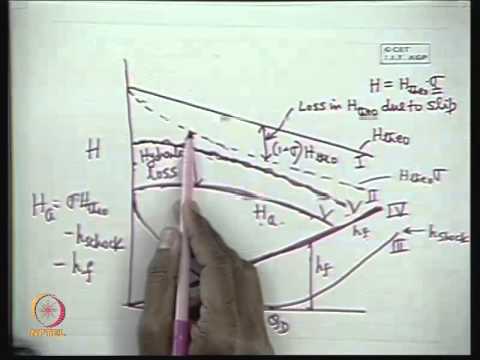
The NPTEL lecture below explains how centrifugal-pump output changes with head. That relationship is useful when assessing the extra resistance introduced by a filter. It does not specify filtration ratings or certify a particular irrigation installation.
Perguntas frequentes
Um filtro mais fino é sempre melhor?
No. The rating must protect the emitters while remaining practical for the water quality, flow and cleaning resources. Unnecessarily fine filtration can increase pressure loss and maintenance without solving biological or chemical plugging mechanisms.
Can a suction strainer replace a discharge filter?
Usually these components serve different purposes. A coarse intake strainer protects the pump from larger debris, while downstream filtration protects small distribution passages. Confirm both requirements and avoid adding excessive suction resistance.
Should filter backwash be included in pump sizing?
Yes. Determine its required flow and pressure and whether irrigation runs simultaneously. The applicable combined or separate duty must be checked against the selected pump and available water supply rather than assumed from nominal pipe size.
Does low differential pressure prove the filter is working?
No. It may indicate a clean element, low flow or an element that is missing, damaged or bypassed. Interpret differential pressure alongside flow, element condition and downstream emitter performance.
What should I send with a filter inquiry?
Provide water source and analysis, contaminant loading, flow range, emitter requirement, available pressure, acceptable loss and cleaning resources. Include seasonal changes, automation needs and waste-water routing so the supplier can review the complete operating arrangement.