
A trailer-mounted dewatering pump is selected as a mobile pumping system, not simply as a pump on wheels. Define the required flow and total dynamic head, water or wastewater condition, maximum solids, suction lift, hose lengths and diameters, discharge route, operating hours, refueling plan, site access, towing rules, noise and emissions limits, weather, controls, and standby requirement. Then check the pump curve, priming system, driver rating, fuel capacity, trailer capacity, hose and fitting pressure, suction tightness, and safe setup. Temporary work changes quickly, so the plan should include the range of water levels and discharge conditions—not only the first day's duty point.
Это руководство представляет собой раннюю редакционную и закупочную основу. Проверяйте каждое рассчитанное значение, рабочий предел, требование безопасности и нормативное обязательство по актуальной проектной документации, утвержденным данным производителя и заключению ответственного инженера перед выбором оборудования или изменением установленной системы.
Define the dewatering objective
Clarify whether the pump must keep an excavation dry, transfer stormwater, bypass a utility, lower a pond, respond to flooding, or handle dirty water with solids. Each duty creates different consequences if flow stops. Estimate inflow from observed conditions, calculations, or a controlled test, then define the required drawdown and acceptable backup time. Water quality affects impeller and seal selection; stringy debris, abrasive grit, and large solids are different challenges. A trash pump label is not a substitute for stating maximum solids and expected concentration. If discharge quality is regulated, pumping capacity must be coordinated with settlement, filtration, treatment, and permitted outfall conditions.
Calculate suction and discharge conditions
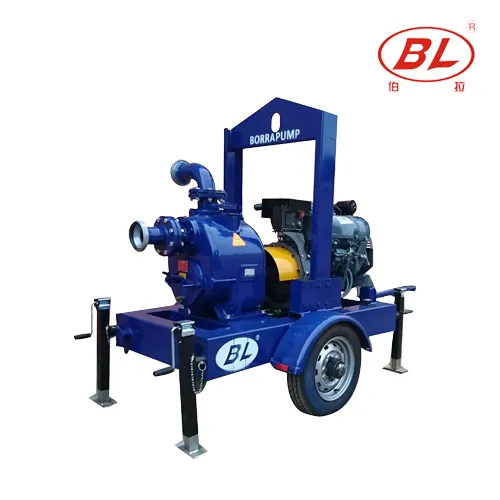
Measure the vertical distance from the lowest expected water surface to pump centerline and add suction-hose losses, strainer losses, and fittings. On discharge, include elevation, hose length, fittings, check valves, manifolds, diffusers, treatment equipment, and outlet pressure. Flexible hose can have substantial friction and can kink or collapse if improperly selected. Calculate several operating cases as water level and hose layout change. A self-priming pump still needs initial casing fill or an approved priming system, a leak-tight suction line, and enough NPSH available. Keep the pump close to the source and the suction route short and direct where site safety and flood risk allow.
Match pump, solids passage, and prime
Plot the required cases on the certified curve and check efficiency, absorbed power, recommended range, shutoff head, and driver margin. Confirm maximum solids passage from the specific model data and compare it with actual debris. Review strainer opening, wear materials, cleanout access, and whether the pump can tolerate abrasive water. Ask for expected priming time at the stated lift and suction configuration, plus maximum permissible dry-run or failed-prime behavior. Automatic vacuum-assisted systems can reduce manual intervention, but their separators, valves, and controls still require inspection. Define shutdowns for loss of prime, high temperature, low oil pressure, overspeed, or abnormal discharge condition as appropriate.
Таблица решений по проекту
| Field input | Selection/setup action | Failure prevented |
|---|---|---|
| Inflow and required drawdown | Set flow and standby need | Excavation flooding |
| Suction lift and hose layout | Check priming and NPSH | Failure to prime |
| Solids and abrasiveness | Select passage and wear design | Blockage or rapid wear |
| Discharge elevation and length | Calculate full system head | Low delivered flow |
| Ground, access, towing | Verify trailer and placement | Instability or transport incident |
| Outfall and water quality | Plan treatment and erosion control | Environmental noncompliance |
Plan safe trailer and hose setup
Choose firm, level ground outside the excavation's collapse zone and expected flood path. Stabilize, chock, and level the trailer according to its instructions; verify towing vehicle, hitch, brakes, lights, tires, axle load, and local road rules before movement. Route hoses to avoid traffic, sharp bends, trip hazards, uncontrolled movement, and excessive nozzle loads. Restrain pressurized hose and fittings using approved methods. Protect suction from blockage without placing workers in an unsafe excavation. Diesel exhaust must be directed away from workers and occupied areas, and refueling requires shutdown, cooling, spill controls, and site procedures. OSHA trenching guidance should be integrated with the competent person's excavation plan.
Control discharge and environmental impact
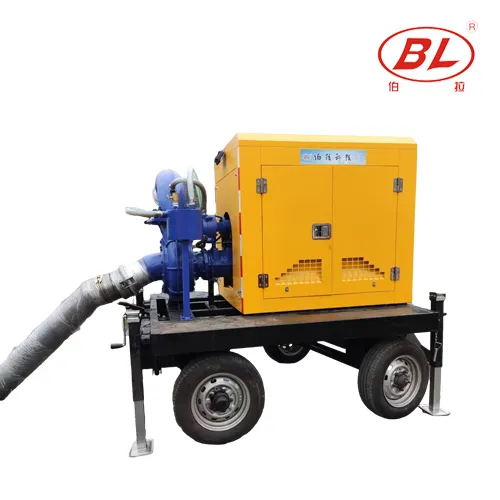
Confirm the legal and physical destination before pumping. Fast discharge can erode soil, flood neighboring property, resuspend sediment, or overload a drain. Use energy dissipation, settlement, filtration, or treatment when the project requires it. Inspect the route after rainfall and whenever hose layout changes. Provide secondary containment for fuel and manage leaks immediately. If pumping contaminated water, involve the responsible environmental professional; a clear-looking discharge is not proof of compliance. In the United States, construction stormwater permits and local requirements may control discharge, inspection, and records. The site owner and contractor should define responsibility rather than relying on the pump supplier to approve the outfall.
Commission, monitor, and demobilize
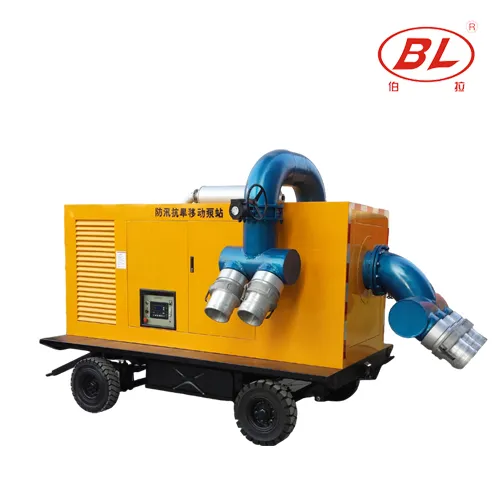
Before start, inspect fuel and fluids, guards, battery, emergency stop, hoses, clamps, strainer, casing fill or priming system, valves, trailer stabilization, discharge route, and exclusion zone. Record suction and discharge pressures where available, flow estimate, engine speed, fuel level, prime time, water level, and abnormal sound or vibration. During operation, inspect for hose movement, leaks, blocked strainers, rising temperature, changing water level, erosion, and refueling needs. Critical bypasses may require automatic level control, remote alarm, standby capacity, and a response plan. At demobilization, drain and clean equipment safely, contain residual liquid, inspect hoses and trailer, document damage, and restore the discharge area.
Как сравнить предложения поставщиков
Compare mobile-pump offers using the complete field package. Check pump curve and solids passage, priming method, engine rating and derating, fuel tank runtime, controls and shutdowns, battery, guards, lifting points, trailer gross rating, axle and tire data, brakes, hitch, stabilizers, lights, and road documentation. Include suction and discharge hose lengths, pressure and vacuum ratings, strainers, fittings, restraints, spare clamps, and repair kits. Ask for priming performance at the proposed lift and hose arrangement, not a best-case laboratory statement. For unattended or critical service, specify level controls, telemetry, alarm destination, standby pump, automatic changeover, and response time. A cheaper pump package can be the higher-risk option if hoses, environmental controls, transport compliance, or emergency response are excluded. Use one field checklist for delivery inspection, first setup, each relocation, and final demobilization. Require operating and towing manuals, maintenance intervals, consumables, recommended spares, noise and emissions data, and a clear boundary for hose, treatment, telemetry, and commissioning support.
Как это руководство связано с оборудованием BORRAPUMP
Эта статья поддерживает раннее проектное рассмотрение для trailer mounted dewatering pump линейка продукции. Она не определяет конкретную модель. Отправьте рабочие параметры, характеристики жидкости, электропитание, установочные чертежи, систему управления, количество и пункт назначения, чтобы конфигурацию изделия можно было проверить на соответствие конкретному проекту.
Связанные технические руководства BORRAPUMP
- construction dewatering pump types
- dewatering discharge hose layout
- тестирование мобильных насосных установок
Authoritative sources and further learning
OSHA Trenching and Excavation U.S. EPA 2022 Construction General Permit OSHA Carbon Monoxide Publications. These sources establish general engineering, safety, or regulatory context; the current adopted rules, equipment manuals, and project approvals remain controlling.
Educational video by Practical Engineering: Do Pumps Create Pressure or Flow?. It explains background principles and does not replace project-specific instructions.
Часто задаваемые вопросы
Is a trailer pump automatically self-priming?
No. Confirm the model's priming system, initial fill, maximum lift, suction tightness, and operating procedure.
Can pump size be chosen from hose diameter?
No. Calculate flow, total dynamic head, suction conditions, solids, and operating range first.
Where should the trailer be placed?
Use stable level ground outside collapse and flood hazards, with safe access, hose routing, exhaust, and refueling controls.
What should operators monitor?
Track prime, water level, pressures or flow, fuel, leaks, hose movement, strainer blockage, discharge erosion, alarms, and changing site conditions.
Final procurement checkpoint
Before order placement, reconcile the approved duty and drawings with the supplier curve, motor or driver, materials, dimensions, weights, connections, controls, accessories, tests, documentation, spare parts, delivery boundary, and destination requirements. Record every assumption that remains open. Installation, electrical work, hazardous-liquid handling, fire-protection work, excavation activity, and energized testing must be performed by qualified personnel under approved procedures and applicable rules.