
The correct centrifugal pump rotation direction is the direction specified for the exact pump assembly, viewed from the reference end stated by its manufacturer. Confirm the casing or assembly arrow and the approved manual; do not assume that every pump turns clockwise. A pump running backwards may still move some water, so discharge flow alone does not prove correct rotation. The verification must follow an approved commissioning procedure that protects people, keeps the pump within its operating requirements, and prevents an automatic or remote start while equipment is being inspected.
Start with the pump arrow and the viewing position
Clockwise and counterclockwise have meaning only when the observer’s position is defined. Looking toward a shaft from the opposite end reverses the apparent direction. Record whether the manufacturer’s instruction is viewed from the motor end, the coupling end, or another stated position. A handwritten “CW” without that information is an incomplete commissioning record.
Locate the actual rotation marking and compare it with the manual for the supplied unit. A separate arrow may indicate liquid flow rather than shaft rotation. Do not confuse a nozzle flow arrow, a casting mark, or a fan-cover feature with the required pump direction. If the marking is missing or contradictory, obtain clarification from the supplier before starting the assembly. Guessing from a photograph of another pump is not an acceptable substitute.
Identify the complete drive arrangement
An electric motor, a diesel engine, and a belt-driven assembly need different checks. A directly coupled motor and pump share a mechanical relationship, but the direction must still suit the pump. A gearbox or belt arrangement can change the relationship between driver and driven shafts. Equipment that appears similar from outside can therefore require different documentation.
For a close-coupled pump, the impeller may be inaccessible without dismantling. For a submersible unit, the rotor cannot normally be watched during operation. Ask for the approved verification method for that particular assembly rather than applying an open-coupling method everywhere. A field procedure should identify the equipment, observation method, permitted operating condition, and responsible people.
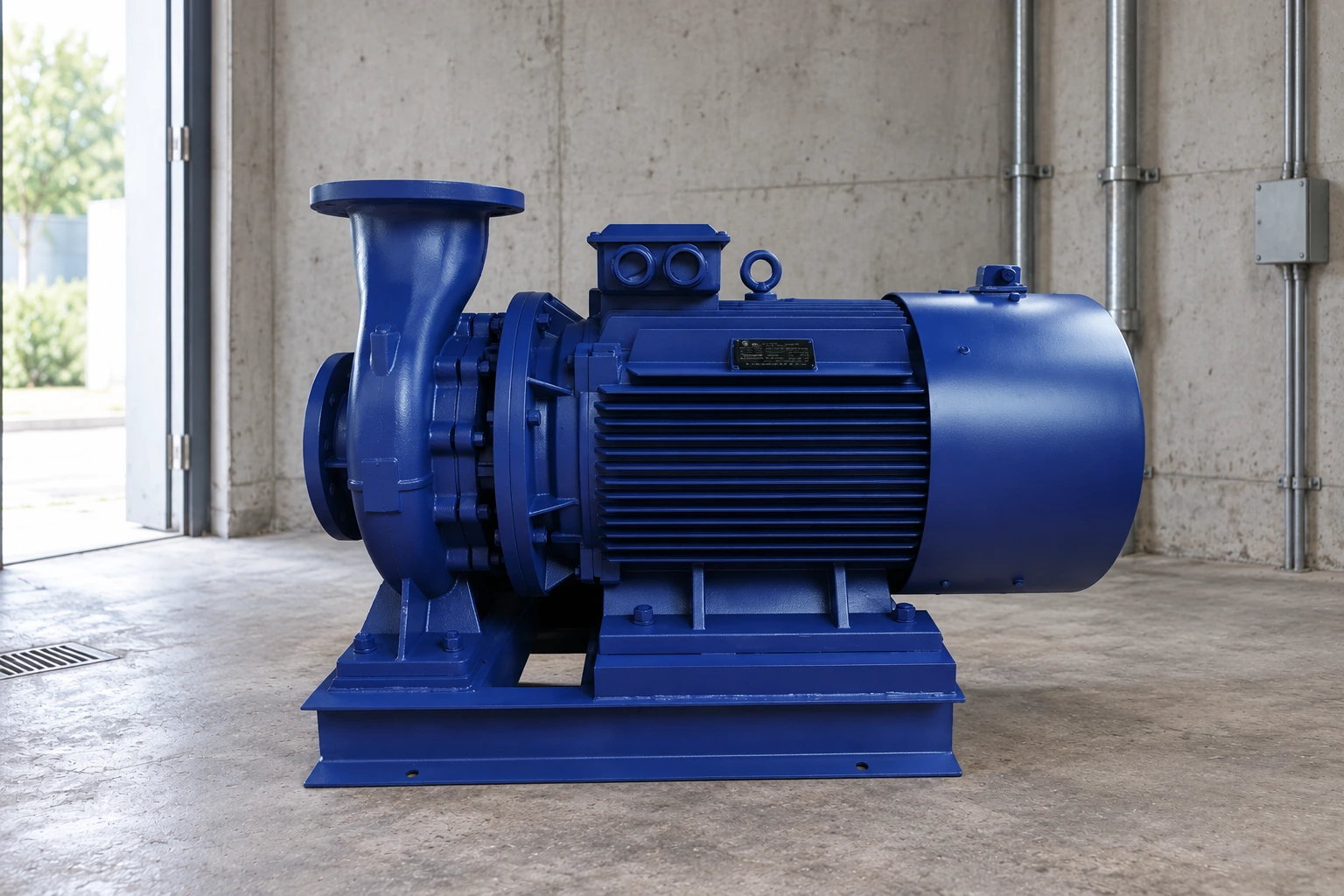
เดอะ ISG vertical inline pump is an example of an inline product family for which the supplied manual and markings should govern. Its shape does not establish the direction for every variant or explain how to check a particular installation safely.
Make the inspection safe before approaching the equipment
Inspecting an arrow, removing a cover, or working around a coupling can expose people to rotating parts or electrical hazards. Follow the site’s isolation procedure, prevent remote and automatic operation, and verify the safe condition before work begins. The UK Health and Safety Executive explains the need to isolate electrical equipment before maintenance. Isolation is a task-specific control, not merely selecting “off” on a screen.
Hydraulic energy also matters. Pressure, stored liquid, a raised water column, or flow from another operating pump can remain after the motor is stopped. Consider whether the shaft could move because of reverse flow through the system. The approved work plan must address the actual energy sources and the condition in which the observation will be made.
Do not remove guards from operating equipment to obtain a better view. Any temporary test arrangement, coupling work, or restoration of a guard belongs to a controlled procedure performed by competent personnel. This article identifies the checks to request; it does not authorise improvised access to a rotating shaft.
Use the manufacturer’s commissioning method
Some assemblies allow driver direction to be checked while uncoupled, under a defined procedure. Others require a different method or specific preparation before any rotation. A “quick bump” is not universally harmless: a pump may require liquid, lubrication, a completed seal system, or a particular mechanical condition before it turns. Obtain the applicable instructions and observe their restrictions.
Before an authorised test, confirm the intended start command, stopping method, observation location, and exclusion zone. Check that the equipment cannot restart unexpectedly after the test. If a drive can start from multiple control points, the procedure must address all of them. Record the observed direction using the same viewing position as the manufacturer’s reference.
After the test, restore the safe condition before making any adjustment. Do not make repeated starts merely to resolve an ambiguous observation. The correct response to uncertainty is to improve the verification method and documentation, not to increase exposure or repeatedly operate an unconfirmed assembly.
Do not diagnose direction from pressure alone
A centrifugal impeller rotating in reverse can sometimes develop reduced flow and pressure. The amount depends on the impeller and casing geometry, speed, and system. Consequently, seeing water at a discharge is insufficient evidence. Equally, low pressure has many other causes, including an incorrect duty, air ingress, suction restrictions, low speed, worn components, or an inaccurate gauge.
Compare observations with the approved curve after rotation has been independently confirmed. The pump curve guide helps distinguish the required flow and head from a vague expectation of “strong pressure.” The water-transfer troubleshooting guide covers a wider diagnostic path when the measured duty remains incorrect.
The Engineering Mindset’s centrifugal pump basics explains how the rotating impeller transfers energy to liquid. That hydraulic background supports the importance of direction; it does not replace the manufacturer’s instructions for a specific motor, impeller attachment, or commissioning test.
Treat a phase-sequence indication as part of the evidence
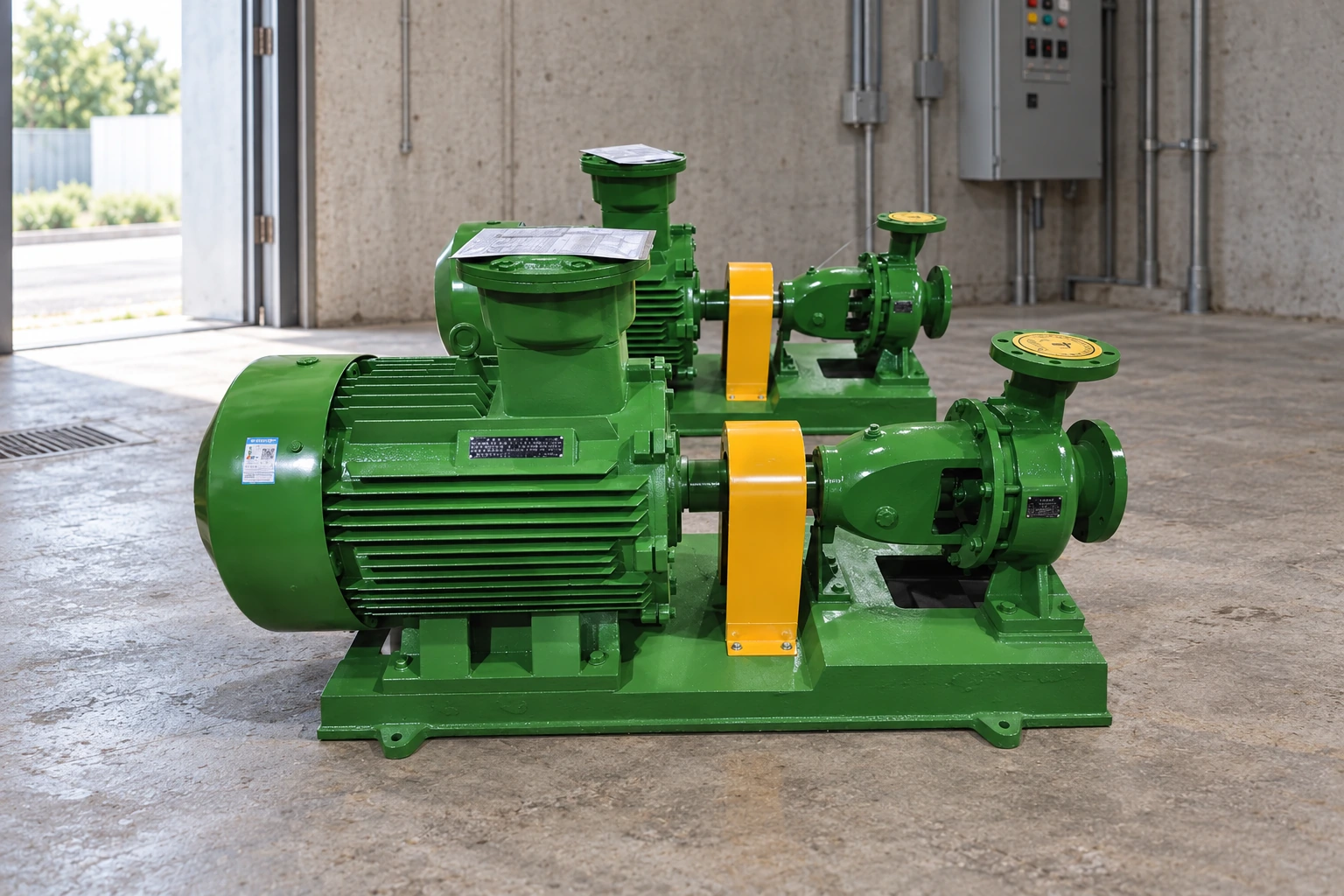
For a three-phase installation, the supply and connections affect motor direction, but the complete assembly still needs an approved verification. A phase-sequence instrument indicates the sequence at its measurement point. It does not, by itself, prove that the pump turns correctly after every internal connection, drive, and mechanical element is considered.
Any electrical correction must be performed by qualified personnel under isolation and in accordance with the equipment documents. Do not interchange conductors casually at a live terminal or assume that a change appropriate to a conventional motor is appropriate to every electronic drive. Single-phase motors and engine-driven pumps require their own arrangements; generic three-phase advice cannot be transferred to them.
Following an electrical repair, motor replacement, drive replacement, or cable change, review whether direction must be reconfirmed. Retain the test result with the maintenance record so future technicians know what was checked and from which viewing position. A label from an old configuration is not proof for a newly modified assembly.
Keep commissioning evidence in a simple record
| Record field | สิ่งที่ควรจับภาพ | ทำไมจึงสำคัญ |
|---|---|---|
| Assembly identity | Pump, driver and drive models; document revision | Links the result to the installed equipment |
| Required direction | Manufacturer marking and defined viewing end | Removes clockwise/counterclockwise ambiguity |
| Test preparation | Isolation, hydraulic condition and approved procedure | Shows that the verification method was appropriate |
| Observed result | Direction, observer location and method | Establishes what was actually verified |
| การบูรณะ | Guards, coupling work, controls and final checks | Prevents an incomplete test arrangement entering service |
Use the record to identify missing information before start-up. It is not a substitute for an approved safety procedure or a model-specific acceptance sheet. Where a supplier witnesses commissioning, have both parties identify any unresolved points instead of marking the whole assembly accepted because the motor ran briefly.
Inspect for consequences after incorrect rotation
If the pump has already operated in the wrong direction, stop and assess it according to the manufacturer’s instructions. Do not assume that changing direction immediately restores an undamaged machine. Depending on the design, reverse operation can affect an impeller attachment, seal arrangement, lubrication system, or other components. The extent of inspection should reflect the particular construction and the event history.
Record the duration if known, liquid condition, speed, symptoms, trips, and any abnormal noise or leakage. Ask the supplier which inspections are needed before restarting. Avoid presenting an unverified theory as a confirmed failure: an unusual sound during the event is an observation, while a damaged component requires inspection or other evidence.
Once the assembly is cleared for operation, complete the remaining commissioning checks. Rotation is only one hold point. Prime or fill as required, verify the suction condition, establish the approved valve positions, and confirm the duty, current, leakage condition, and protective functions. The inline installation and alignment guide addresses the installation records that should accompany that process.
การเรียนรู้เพิ่มเติม
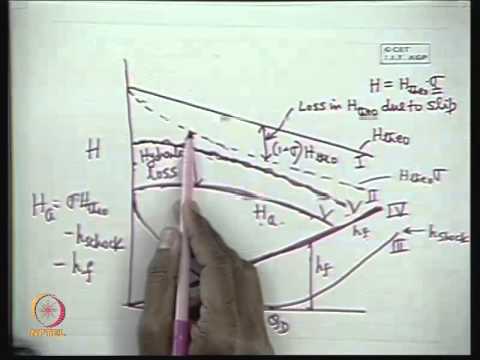
NPTEL’s “Mod-01 Lec-15 Characteristics of a Centrifugal Pump” provides background on centrifugal pump performance. Use it to understand why performance measurements belong to a known operating configuration. It is educational material, not an instruction to expose rotating parts or energise an unfinished installation.
คำถามที่มักถูกถาม
Are all centrifugal pumps clockwise?
No. Use the marking and documentation for the exact assembly, with the viewing end defined. A direction remembered from another machine is not sufficient evidence for a new installation.
Does water flow prove that rotation is correct?
No. Some pumps can still move liquid in reverse rotation. Confirm the direction by the approved method, then compare the measured operating duty with the correct performance curve.
Can I check direction by briefly running an empty pump?
Only follow the manufacturer’s approved procedure. Some equipment can be damaged by dry rotation or by starting before lubrication and seal arrangements are ready. Do not assume that a short duration removes that risk.
Does a phase-sequence meter replace the commissioning check?
No. It gives useful electrical information at the measurement point, but the final direction of the installed assembly still needs verification by a suitable method. Qualified personnel must manage any electrical changes.
What should happen after the motor is replaced?
Review the assembly documents, connection changes, required rotation check, and the rest of the commissioning requirements. Record the new verification against the replacement motor rather than relying on the previous motor’s test result.