
In a centrifugal vs diaphragm pump comparison, centrifugal pumps are generally favored for continuous, relatively smooth high-flow service with low-to-moderate viscosity, while diaphragm pumps are favored for positive-displacement metering, intermittent transfer, self-priming arrangements, higher-viscosity liquids, or duties that benefit from dry-running and solids-handling capabilities available in the specific design. Neither type is universally better. Select from flow, pressure, viscosity, solids, shear sensitivity, suction conditions, leakage tolerance, pulsation, control range, materials, energy, air or electricity, and maintenance evidence for the actual liquid.
Hướng dẫn này là một khung kỹ thuật và mua sắm ban đầu, không phải là sự thay thế cho thiết kế dự án đã được phê duyệt, các quy định hiện hành, hướng dẫn của nhà sản xuất, hoặc sự giám sát có trình độ tại công trường. Công việc điện, kiểm tra khi có điện, cẩu nâng, làm việc trong không gian hạn chế, công việc phòng cháy chữa cháy, đào đất, chất lỏng nguy hiểm, nước thải, và các hệ thống có áp suất đòi hỏi các quy trình cụ thể theo công việc và nhân sự có năng lực. Duy trì bảo vệ tự động và tình trạng sẵn sàng của hệ thống trong khi điều tra sự cố. Nếu chất lỏng thực tế, chế độ vận hành, điều kiện công trường hoặc yêu cầu quản lý khác với các giả định, hãy dừng lại và nhận đánh giá kỹ thuật đã được sửa đổi.
- Compare the operating principles
- Match flow, pressure, and system response
- Evaluate viscosity, solids, gas, and shear
- Compare suction, priming, and dry-run behavior
- Compare power, control, noise, and lifecycle work
- Choose materials and verify the procurement boundary
- Bảng quyết định
- Các câu hỏi thường gặp
Compare the operating principles
A centrifugal pump uses a rotating impeller to add velocity and head. Its flow changes as system resistance changes, and it normally performs best within a defined curve range. A diaphragm pump cyclically changes chamber volume with a flexible diaphragm and check valves, moving a discrete volume each stroke. Many diaphragm designs are positive displacement, so they can build pressure against a restriction until a relief path, drive limit, or component limit is reached. Their flow can be more directly related to stroke rate or cycle rate but is pulsating unless damped. The exact behavior depends on whether the diaphragm pump is air-operated, mechanically driven, hydraulically driven, or metering type. The comparison must name the actual designs; broad type labels do not replace model data.
Match flow, pressure, and system response
Centrifugal pumps commonly provide smooth flow and can be efficient at larger continuous duties when the operating point is near the intended region. Throttling or speed changes shift their operating point. Diaphragm pumps can maintain displacement over changing pressure within slip, compressibility, check-valve, and drive limits, which suits dosing or transfer with variable resistance. Their pulsation can affect piping, instruments, hoses, and process control; dampeners and proper pipe sizing may be required. Never close the discharge of a positive-displacement pump without an approved relief or pressure-control path. Build normal, minimum, maximum, startup, blocked-line, and cleaning cases. Compare required flow range and discharge pressure with each manufacturer's curves, capacity data, and permitted operating envelope.
Evaluate viscosity, solids, gas, and shear
Centrifugal pump performance can change materially as viscosity rises because friction and hydraulic losses increase. Standard designs may lose prime or performance when gas enters the suction, although specialized centrifugal configurations exist. Diaphragm pumps can handle many viscous, gas-containing, shear-sensitive, or solids-bearing liquids, subject to valve, passage, diaphragm, speed, and material limits. Solids can hold a diaphragm pump check valve open, while fibrous material can obstruct either type. Large particles, abrasiveness, settling behavior, and solids concentration should be stated, not summarized as dirty water. For sensitive emulsions, polymers, foods, slurries, or chemicals, ask for shear, contamination, and cleaning requirements. Test data on the actual liquid is more useful than a generic application list.
Bảng quyết định dự án
| Decision factor | Centrifugal pump tendency | Diaphragm pump tendency |
|---|---|---|
| Flow character | Smooth, system-curve dependent | Pulsating positive displacement |
| Typical strength | Continuous medium/high flow near design point | Metering, variable pressure, difficult liquids |
| Viscosity sensitivity | Performance often declines as viscosity rises | Can suit higher viscosity within valve/drive limits |
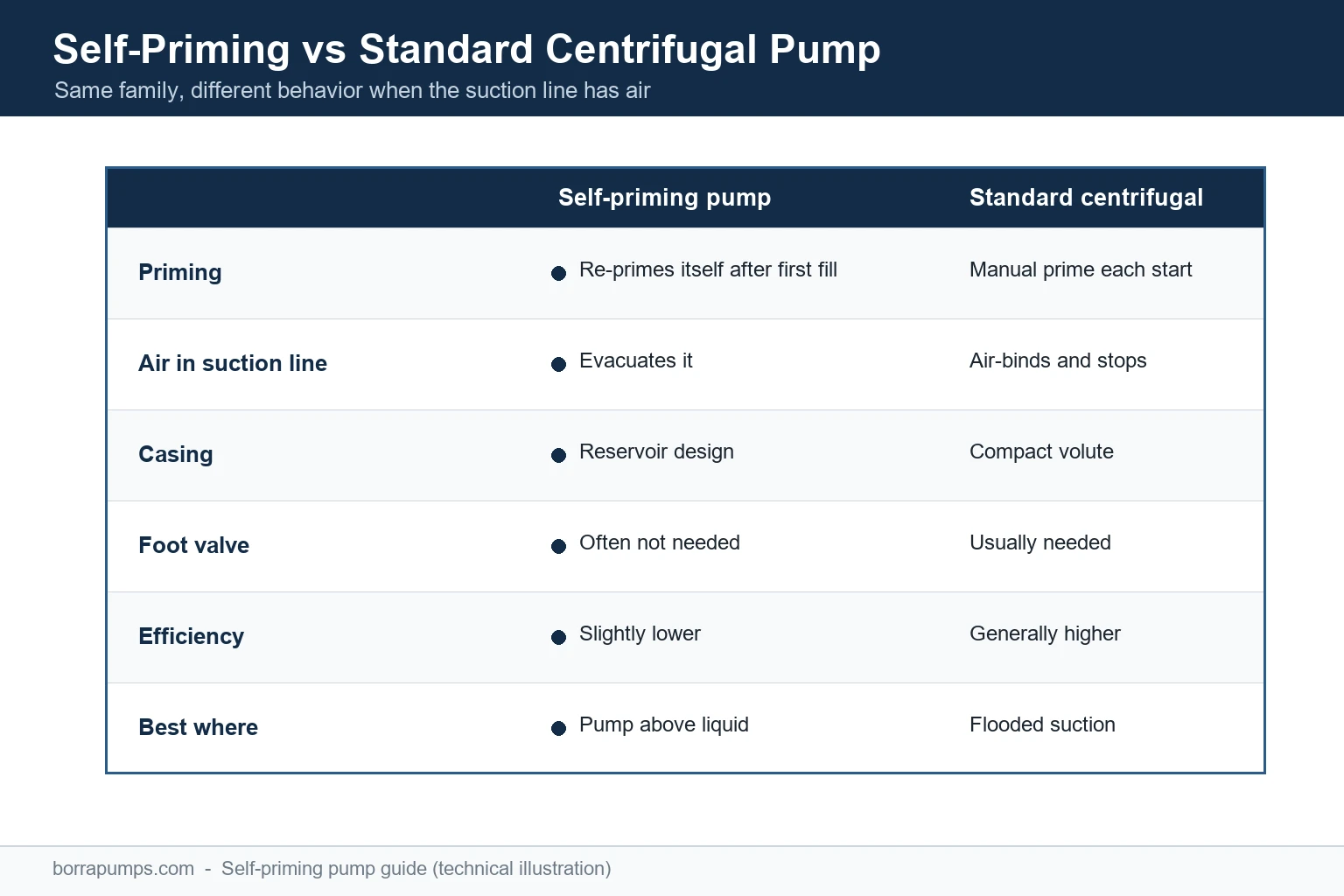
| Priming | Often flooded or separately primed | Many designs self-prime; verify actual lift |
| Blocked discharge | Moves toward shutoff; heat/minimum-flow limits matter | Requires approved pressure relief path |
| Trọng tâm bảo trì | Seal, bearings, impeller, alignment | Diaphragm, checks, air valve or drive |
Compare suction, priming, and dry-run behavior
Many centrifugal pumps need flooded suction or a separate priming arrangement; ordinary end suction pumps are not self-priming. Net positive suction head available must exceed the required margin under the project criteria. Some diaphragm pumps can self-prime and tolerate dry operation, but lift, cycle rate, valve condition, elastomer temperature, and liquid vapor characteristics still limit performance. Air-operated diaphragm pumps also depend on clean, adequately sized compressed air and can ice or lose efficiency under some conditions. Suction hose collapse, air leaks, undersized piping, and high viscosity affect both types. Request priming performance at the real lift and liquid, not a water test at ideal conditions.
Compare power, control, noise, and lifecycle work
An efficient electric centrifugal pump can offer low energy cost for a stable continuous duty, especially under suitable variable-speed control. An air-operated diaphragm pump converts compressed air that may be expensive to generate and can be noisy, while offering simple stall behavior and hazardous-area advantages in some approved systems. Electrically or mechanically driven diaphragm pumps have different efficiency and control characteristics. Compare total utilities, motor or air system, controls, pulsation equipment, valves, relief protection, foundations, hoses, spares, and labor. Centrifugal maintenance often centers on seals, bearings, wear rings, and alignment; diaphragm maintenance centers on diaphragms, check balls or valves, seats, air valves, and fasteners. Use expected cycles and liquid compatibility to estimate service needs.
Choose materials and verify the procurement boundary
List every wetted material: casing or body, impeller, diaphragm, balls, seats, shaft, seal faces, gaskets, elastomers, fasteners, and coatings. Chemical names, concentration, temperature, cleaning fluids, solids, and upset conditions are required for compatibility review. A metal name alone does not establish seal or diaphragm suitability. Define connections, pressure ratings, relief, drain and vent, containment, leakage detection, grounding, guards, base or trolley, instruments, air treatment, motor, drive, controls, test liquid, and documentation. If the application includes hazardous or sanitary requirements, involve the responsible specialists and current approvals. The safest choice is the model supported by complete liquid and operating data, not the type with the longest list of theoretical advantages.
Biên bản mua sắm và nghiệm thu
Một bảng so sánh nhà cung cấp hoàn chỉnh nên sử dụng một bảng dữ liệu chung. Hãy đặt các điểm làm việc thiết kế và thay thế, chất lỏng, nhiệt độ, hàm lượng chất rắn, độ cao địa điểm, công suất, hệ thống điều khiển, lắp đặt, số giờ vận hành, số lượng, điểm đến và các tài liệu bắt buộc ở phần đầu. Chuẩn hóa các khác biệt về phạm vi trước khi so sánh giá cả hoặc hiệu suất. Yêu cầu đường cong đặc tính được chứng nhận hoặc dữ liệu năng suất, công suất tiêu thụ, giới hạn vận hành, vật liệu, kích thước, trọng lượng, các kết nối, động cơ hoặc thiết bị truyền động, bộ điều khiển, phụ kiện, các bài kiểm tra, phương pháp bảo quản, phụ tùng thay thế, hướng dẫn lắp đặt và ranh giới bảo hành. Ghi lại mọi sai lệch và giả định chưa được giải quyết. Trong quá trình đánh giá kỹ thuật, hãy truy xuất nguồn gốc của từng tính năng được chào giá về một đầu vào của dự án thay vì cộng điểm cho các tính năng mà điều kiện làm việc không cần đến. Trong quá trình chạy thử, hãy đo đạc các biến số giống như đã dùng cho việc lựa chọn thiết bị để kết quả lắp đặt thực tế có thể so sánh được với cơ sở ban đầu. Nếu các điều kiện hiện trường khác nhau, hãy cập nhật tính toán và nhận được sự phê duyệt có thẩm quyền trước khi thay đổi thiết bị hoặc các cài đặt bảo vệ.
Chủ đề này liên quan đến thiết bị BORRAPUMP như thế nào
Hướng dẫn này hỗ trợ việc đánh giá sớm bơm ly tâm và bơm màng tuyến ứng dụng. Nó không gán một mô hình cuối cùng hay khẳng định rằng một cấu hình chuẩn phù hợp cho mọi dự án. Hãy gửi các điểm công tác, dữ liệu chất lỏng, bản vẽ mặt bằng, nguồn điện, hệ thống điều khiển, số lượng, điểm đến, các phê duyệt cần thiết và phạm vi kiểm tra để sản phẩm đề xuất có thể được kiểm tra đối với dịch vụ thực tế.
Các hướng dẫn kỹ thuật liên quan đến BORRAPUMP
- máy bơm tăng áp so với máy bơm ly tâm
- hướng dẫn bơm ly tâm trục ngang đầu hút đơn
- self-priming pump vs non-self-priming pump
Các nguồn uy tín và tài liệu học tập nâng cao
Hệ thống bơm của Bộ Năng lượng Hoa Kỳ; Tài liệu của Viện Thủy lực; OSHA process safety management. Các nguồn này cung cấp bối cảnh chung về an toàn, môi trường hoặc kỹ thuật. Các quy tắc hiện được thông qua, phê duyệt dự án và hướng dẫn thiết bị vẫn giữ nguyên giá trị quyết định.
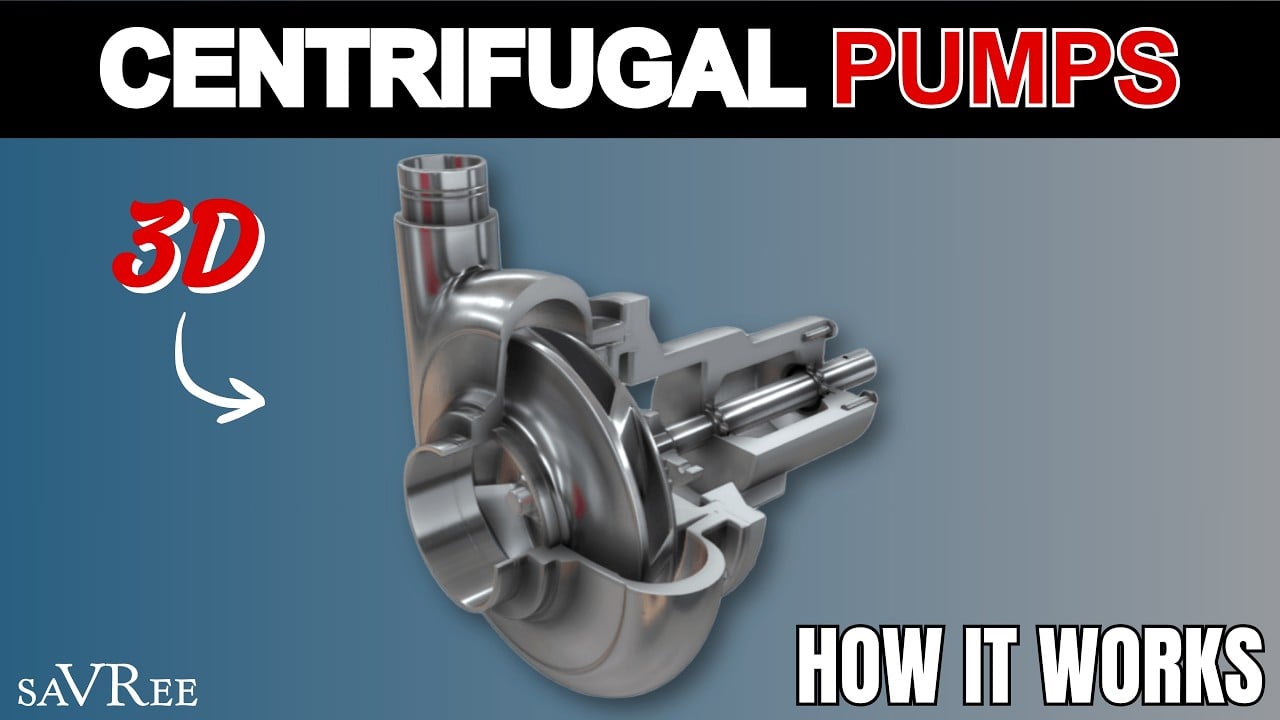
Video giáo dục bởi saVRee: Cách hoạt động của bơm ly tâm. Nó giải thích các nguyên tắc nền tảng và không thay thế các hướng dẫn dành riêng cho dự án.
Các câu hỏi thường gặp
Máy bơm nào tốt hơn cho lưu lượng cao?
Máy bơm ly tâm thường phù hợp cho dịch vụ lưu lượng cao liên tục, nhưng phải kiểm tra cột áp, hiệu suất, dải vận hành, chất lỏng và chế độ làm việc thực tế.
Máy bơm màng có thể chạy khi van bị đóng không?
Máy bơm thể tích có thể tạo ra áp suất gây hư hỏng. Cung cấp đường xả hoặc đường điều khiển áp suất đã được phê duyệt và không bao giờ cho rằng việc dừng hoạt động là đủ.
Loại nào xử lý chất lỏng đặc tốt hơn?
Bơm màng thường phù hợp với độ nhớt cao hơn, nhưng các giới hạn về đường đi của van, tốc độ, độ hút, nhiệt độ và vật liệu vẫn được áp dụng.
Không phải tất cả máy bơm màng đều chạy bằng khí nén.
No. Designs include air-operated, mechanical, hydraulic, and metering arrangements with different performance and controls.
Mốc kiểm tra dự án cuối khóa
Trước khi đặt hàng hoặc thay đổi hiện trường, hãy đối chiếu các thông số kỹ thuật và bản vẽ đã được phê duyệt với dữ liệu của nhà供应商, vật liệu, kích thước, trọng lượng, kết nối, bộ điều khiển, thiết bị điều khiển, phụ kiện, bảo vệ, phạm vi kiểm tra, tài liệu, phụ tùng thay thế, phương pháp lắp đặt, khả năng tiếp cận để bảo trì và các yêu cầu về điểm đến. Ghi lại các giả định còn lại và phân công trách nhiệm để giải quyết chúng. Thông tin được chấp nhận cuối cùng phải là cơ sở được sử dụng cho việc lắp đặt, chạy thử và bảo trì trong tương lai.