
A pump factory acceptance test checklist should identify the exact equipment, the agreed test conditions, the measurements required, the acceptance basis, and the records the supplier must deliver before shipment. A witnessed run alone does not establish that every contractual requirement has been met. Separate hydraulic performance, mechanical condition, controls, documentation, and outstanding actions, and define which checks belong at the factory and which require the actual site. This guide concerns ordinary industrial water-pump procurement. Fire-protection packages require their own applicable standards, approvals, and project-specific acceptance procedures.
Start with the purchase requirement and approved documents
Gather the purchase specification, approved data sheet, pump curve, general arrangement, motor information, materials schedule, and agreed inspection and test plan. Check document revisions before preparing the checklist. A test against an obsolete curve can produce a convincing report that answers the wrong procurement question. Identify the document that governs where approved records disagree, and resolve the conflict before testing.
Record the pump model, serial number, impeller configuration, speed, driver, and any supplied control equipment. For a package, list the boundaries of supply and the accessories included. A successful test of the bare pump does not necessarily verify the wiring, instruments, controls, or pipework supplied as part of the complete package. The checklist should make that distinction visible rather than hiding it in a general “equipment passed” box.
For an enquiry involving an IS clean-water centrifugal pump, ask for the proposed assembly’s documents rather than relying on a family catalog. The same approach applies to other pump types: identify what is actually being offered and what evidence is included in the order.
Agree the standard, grade, and contractual acceptance basis
Identify the test standard and edition where one applies, together with the agreed acceptance grade, duty points, and contractual exceptions. Do not assume that a standard’s title establishes a particular tolerance or that a supplier’s routine test is identical to the purchaser’s required test. Obtain the applicable requirements and record the agreement before the equipment reaches the test bench.
Viện Thủy lực standards information is an authoritative starting point for identifying pump-related standards. It does not replace the actual standard or the contract. Use the relevant documents to establish the test procedure, measurement requirements, interpretation of results, and reporting obligations for the exact purchase.
Keep routine production checks, type testing, and the contractual acceptance test distinct. Evidence from another pump or a prototype may help explain a product family, but it is not automatically evidence for the serial-numbered unit being shipped. If a test is based on a representative assembly, the purchaser must explicitly understand and accept the basis.
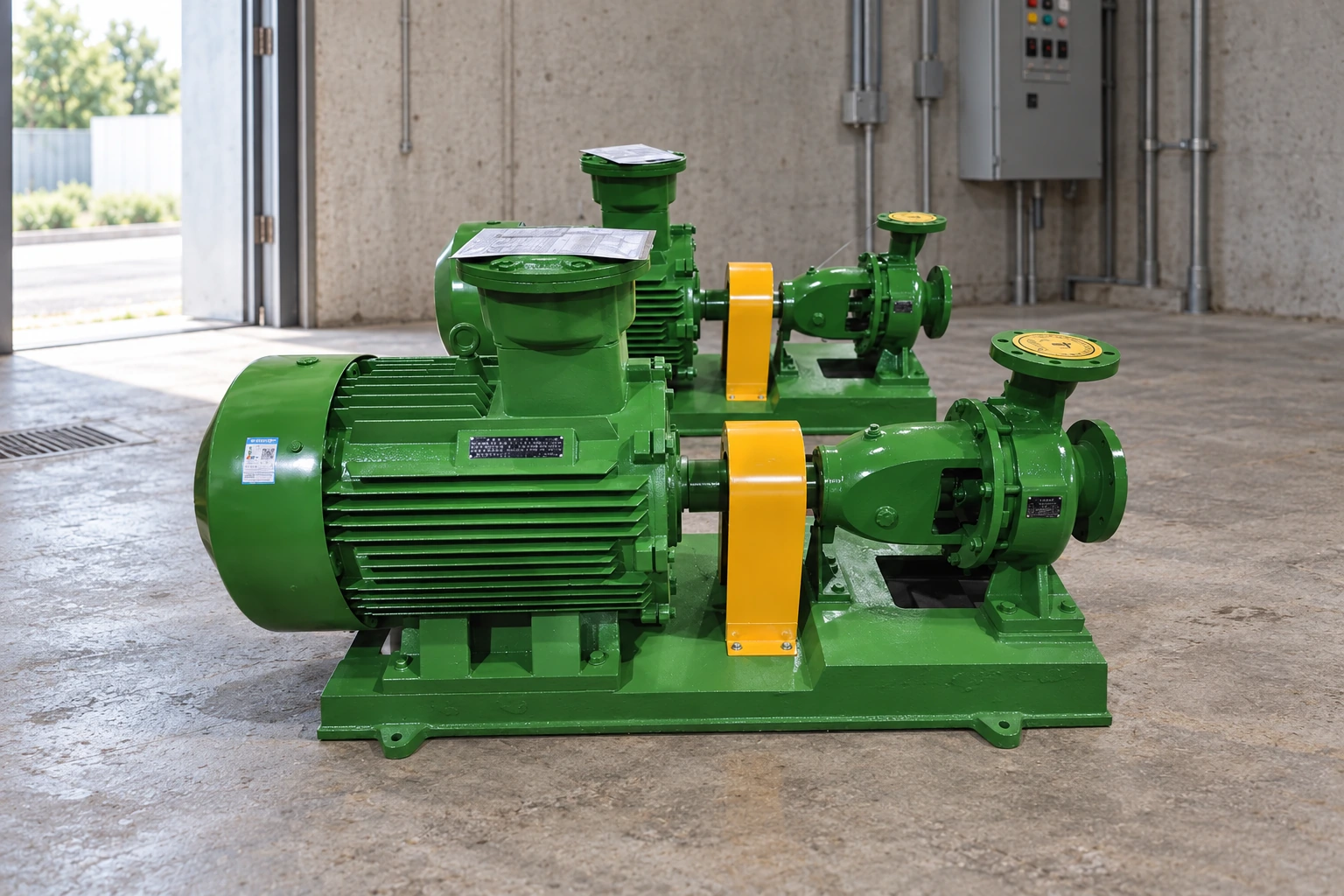
Define test conditions before comparing curves
Record the test liquid, temperature, density assumptions, speed, impeller configuration, and the measurement arrangement. Identify the suction and discharge measurement locations and the method used to determine head. Conditions that differ from the specified service require an agreed interpretation or correction method. Do not apply an informal correction and present the result as a direct measurement at the service condition.
A hydraulic performance test normally concerns a set of measured operating points rather than a single photograph of a gauge. The centrifugal pump curve-reading guide explains why flow, head, power, and configuration need to remain connected. Ask for the measured points and the information needed to reproduce the plotted result.
The factory arrangement may not reproduce the site’s suction source, pipe lengths, tank levels, electrical supply, or control interactions. Those differences define the boundary between factory evidence and commissioning evidence. A factory performance result can be valuable without proving that the installed system will meet every operating case.
Check instruments and measurement records
List the instruments used for flow, pressure, speed, temperature, and power as applicable. Request their identification and the relevant calibration information, including range and validity. The instrument range, resolution, installation, and measurement uncertainty should suit the test requirement. A certificate number alone does not demonstrate that an instrument was appropriate for the quantity or conditions measured.
Record readings under stable, defined conditions and retain the raw results alongside calculated values. Identify any averaging period, zero correction, or conversion used. If an observation is unstable, investigate it instead of selecting one convenient value from a fluctuating display. The acceptance report should explain how the final result was derived.
For power measurements, state the boundary: pump shaft power, motor electrical input, or input to a drive and motor combination. These quantities are related but different. A motor nameplate rating cannot replace a measurement of the power absorbed during the test, and it should not be placed in a measured-power column without explanation.
Use a checklist with evidence fields
| Check area | Tài liệu cần yêu cầu | Hold point before acceptance |
|---|---|---|
| Identity and configuration | Serial numbers, approved documents and installed components | Confirm that the tested assembly matches the order |
| Hydraulic performance | Flow, differential head, speed and the plotted test points | Compare using the agreed acceptance basis |
| Instruments | Instrument IDs, ranges and calibration records | Confirm suitability and traceability for the test |
| Mechanical observations | Defined vibration, leakage and running observations where required | Investigate deviations using the agreed limits |
| Controls and documentation | Agreed functional checks, drawings, manuals and open-item list | Record completed and deferred work separately |
The table deliberately does not invent numerical acceptance limits. Those belong to the applicable standard, the supplier’s approved requirements, and the contract. Each row should lead to an actual record or a clearly stated outstanding action. Avoid a checklist that asks only for a signature and leaves the underlying evidence unavailable.
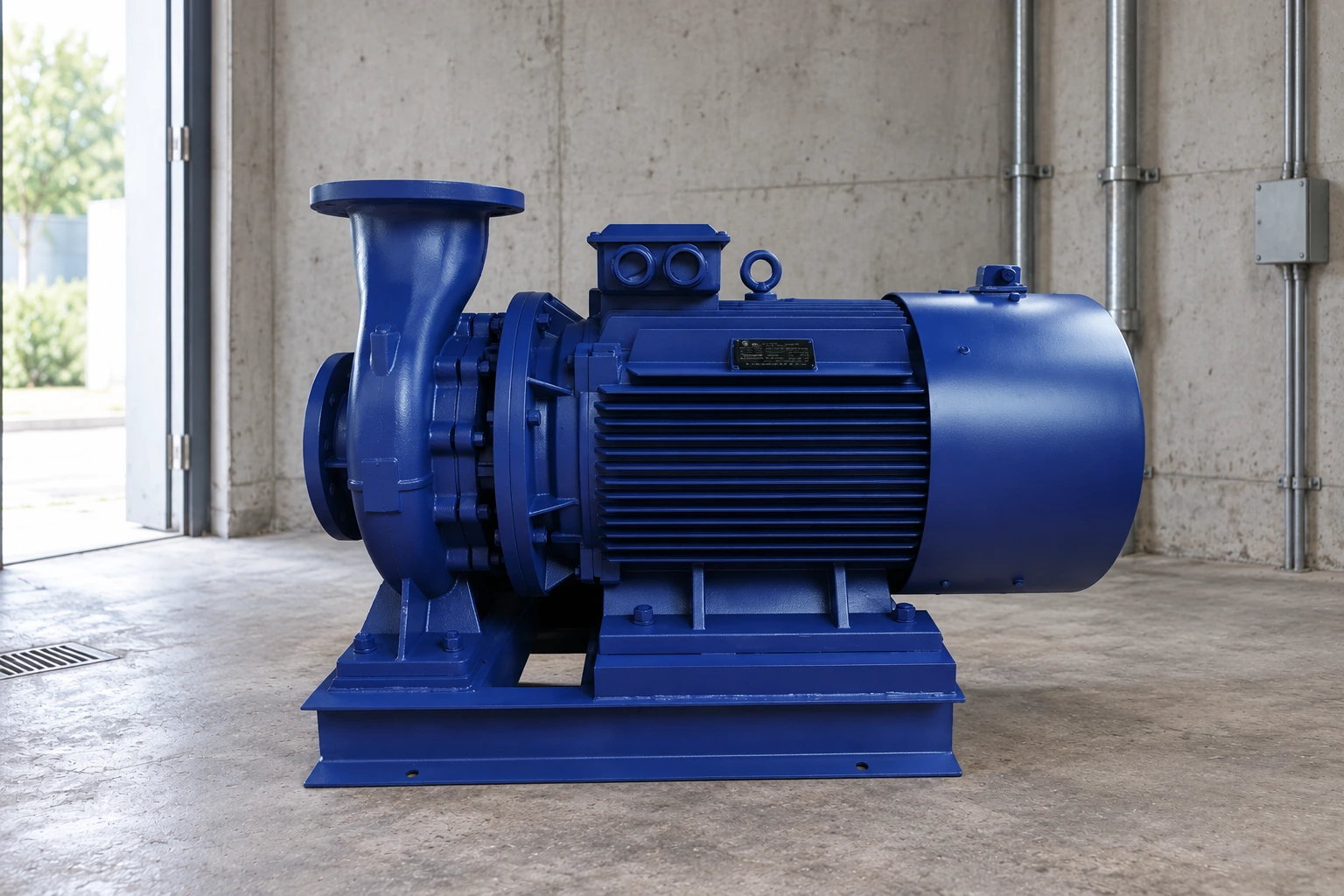
Separate mechanical checks from hydraulic results
A pump can meet a hydraulic duty while still having an unresolved mechanical observation. Define which checks are required for leakage, vibration, bearing condition, noise, alignment, guards, and the supplied accessories. State the method and acceptance basis where a quantitative limit applies. Do not turn an undefined description such as “normal sound” into a certified measurement.
Check which observations are made on the factory assembly and which depend on the final installation. Pipe strain, foundation condition, site alignment, and environmental effects can change after shipment. The inline-pump installation guide covers some of the records needed when equipment is installed. Factory acceptance and installation acceptance should therefore complement each other.
Where equipment is disassembled or altered after testing, record what changed and whether additional checks are required. For example, a documented curve should remain tied to the tested impeller configuration. A later component change needs controlled documentation rather than an assumption that the previous result remains valid without review.
Define package and control tests explicitly
For a supplied package, agree the functions to be demonstrated and the limitations of any simulation. A simulated level or pressure signal can verify an aspect of control logic without proving the actual field sensor, cable, or process connection. Identify which components are present and which are represented by a temporary signal or test device.
Review the intended operating modes, local and remote commands, changeover logic, alarms, protective functions, and restoration after a test as applicable to the order. Do not infer that all functions have been checked because a motor started once. A clear test sheet records the command, expected response, observed response, and any remaining action.
The duty/standby configuration guide helps distinguish availability requirements from capacity staging. For a multi-pump package, specify which combinations must be demonstrated. Testing one pump alone does not necessarily verify the approved operation of the entire set.
Resolve deviations without losing the original evidence
Give each deviation a specific description, responsible owner, agreed action, and closure evidence. Distinguish an accepted contractual concession from a repair that still requires verification. Preserve the original result and the subsequent retest rather than replacing a failed record with an unexplained final “pass.” The purchaser should be able to follow what changed and why it was accepted.
If a required check cannot be completed at the factory, record the reason and its agreed destination. Some items genuinely belong at site, while others require a factory retest before shipment. The decision should be explicit. An outstanding item should not disappear merely because the shipping date is close.
Bộ Năng lượng Hoa Kỳ pump systems resources reinforce the value of assessing complete-system performance. Use the factory evidence as one part of that assessment, and retain the site checks needed to establish the actual installation’s duty and energy performance.
Assemble a usable shipment and commissioning package
Collect the signed test report, measured data, curve, instrument records, approved drawings, manuals, component identification, and the closed or agreed outstanding-item list. Include the final configuration and any changes made during testing. Documents should be tied to the serial-numbered equipment so later maintenance teams can find the correct information.
Prepare a commissioning plan that checks the actual site conditions, suction supply, connections, rotation where applicable, controls, and duty. Keep the pump duty-point calculation with the installation record. A well-organised handover reduces the chance that a correct factory result is used to dismiss a genuine site problem.
Học tập nâng cao
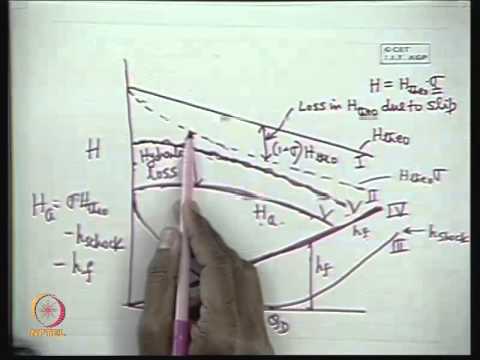
NPTEL’s lecture “Mod-01 Lec-15 Characteristics of a Centrifugal Pump” explains the performance-curve background needed to interpret hydraulic test points. It is educational context and does not replace the contractual procedure or certify an individual pump.
Các câu hỏi thường gặp
Does a witnessed factory run prove every requirement is met?
No. Witnessing establishes what was observed under the recorded conditions. The report must still address the equipment identity, agreed checks, acceptance criteria, and outstanding items.
Can a catalog curve replace an acceptance test report?
Not where the contract requires a test of the supplied equipment. A catalog curve describes performance information, while a test report should identify the actual unit, conditions, measurements, and acceptance basis.
Should a checklist contain standard numerical tolerances?
Only when they are taken from the applicable agreed documents and correctly applied. Do not copy limits from another project or invent a universal tolerance for every pump and test method.
Is factory acceptance the same as site commissioning?
No. Factory testing and site commissioning establish different parts of the evidence. The installed system introduces suction, pipework, supply, control, and operating conditions that may not exist on the factory test bench.
What is the most useful final document?
A complete, serial-numbered test and handover package with measured data, the approved configuration, acceptance decisions, and traceable closure of deviations. A one-page signature without supporting evidence is less useful for procurement and future service.