
Booster pump cavitation damages impellers and destabilizes pressure when net positive suction head available (NPSHa) falls below the pump’s NPSHr at the operating flow. This guide focuses on practical evaluation steps for U.S. industrial and commercial buyers—hydraulic duty, documentation, and lifecycle support—not generic marketing claims. Where equipment selection is involved, cross-check public specifications on borrapumps.com and confirm project-specific limits with your consulting engineer or AHJ. Section checklists can be reused as RFQ attachments and commissioning handover outlines.
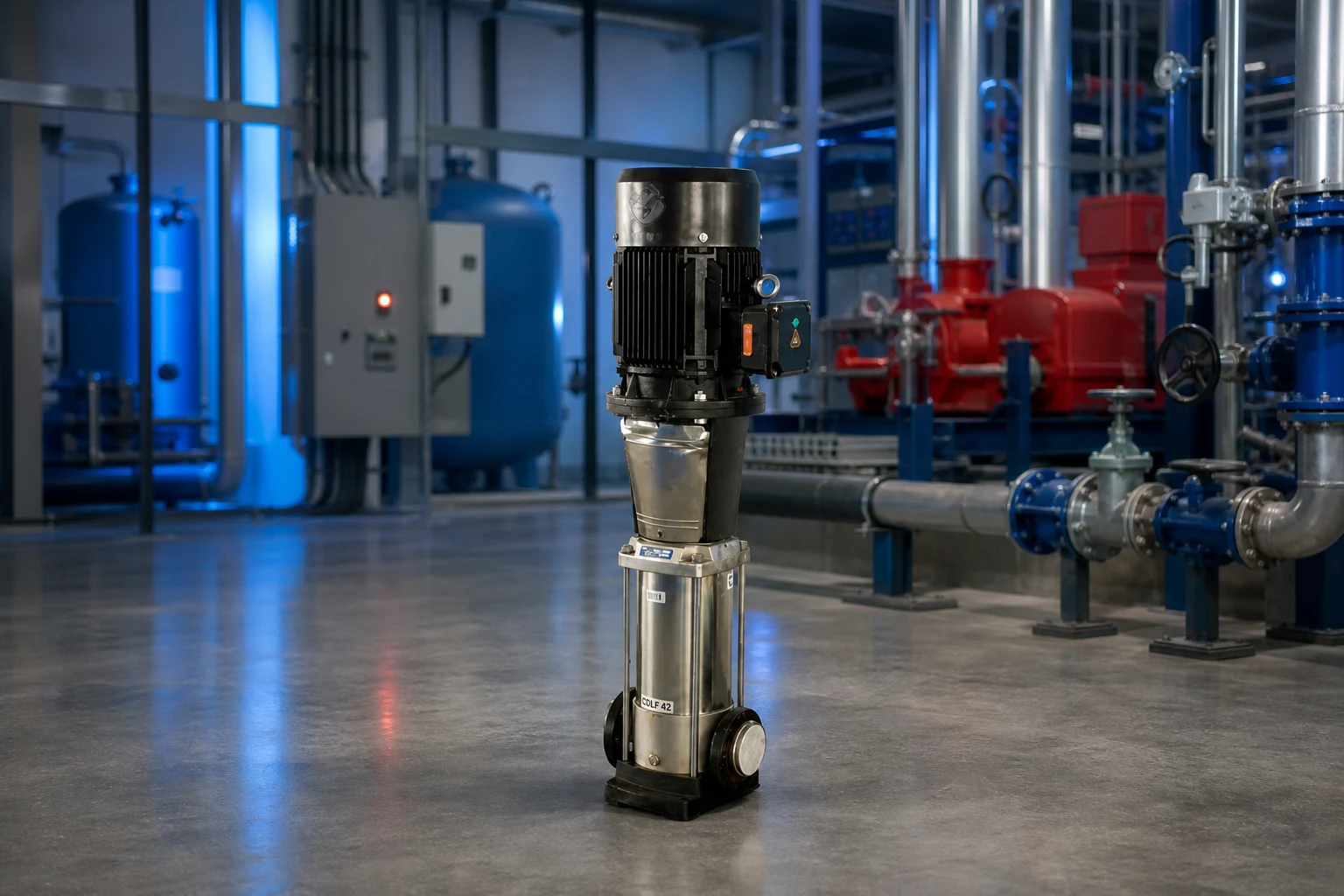
Part 1. How Cavitation Shows Up in Booster Systems
Operators often hear gravel-like noise or see vibration when the impeller eye sees partial vacuum bubbles collapsing.
Discharge pressure may hunt or drop at night when tank level falls and suction margin shrinks.
Pitting on impellers and housings appears after sustained cavitation—replacement cost exceeds prevention.
Booster pumps add head to overcome elevation, friction, and fixture pressure requirements in distribution systems.
Fixed-speed and VFD-controlled units differ in hunting behavior, energy use, and minimum flow requirements.
Compare booster and jockey pumps curves at both design flow and minimum night-time demand.
Capture rated flow, total dynamic head, fluid properties, and suction conditions in the RFQ package to reduce back-and-forth during technical review.
If the site mixes intermittent peaks and sustained duty, size the driver for the governing thermal condition—not catalog nameplate alone.
Define acceptance criteria before shipment—flow, head, efficiency, or NFPA witness points—so commissioning disputes are less likely.
Part 2. Root Causes: NPSHa, Suction Piping, and Operating Point
Low suction tank level, long suction runs, clogged strainers, and elevated fluid temperature all reduce NPSHa.
Oversized pumps running far right on the curve can increase NPSHr while suction conditions stay unchanged.
VFD minimum speed settings must be checked—some speeds move the operating point into a cavitating region.
Suction tank level and NPSHa often govern reliability more than discharge pressure setpoints.
Inline and vertical multistage layouts trade floor space against maintenance access.
See application and solution pages for building and municipal pressure-boosting contexts.
Capture rated flow, total dynamic head, fluid properties, and suction conditions in the RFQ package to reduce back-and-forth during technical review.
If the site mixes intermittent peaks and sustained duty, size the driver for the governing thermal condition—not catalog nameplate alone.
Define acceptance criteria before shipment—flow, head, efficiency, or NFPA witness points—so commissioning disputes are less likely.
Related guides in our blog cluster include Booster basics, Sizing context, and Vertical booster.
| Cause | Field signal | First check |
|---|---|---|
| Low tank level | Noise at night | Level switches and makeup |
| Clogged strainer | Rising suction vacuum | Differential across strainer |
| High fluid temperature | Seasonal cavitation | Temperature vs curve NPSHr |
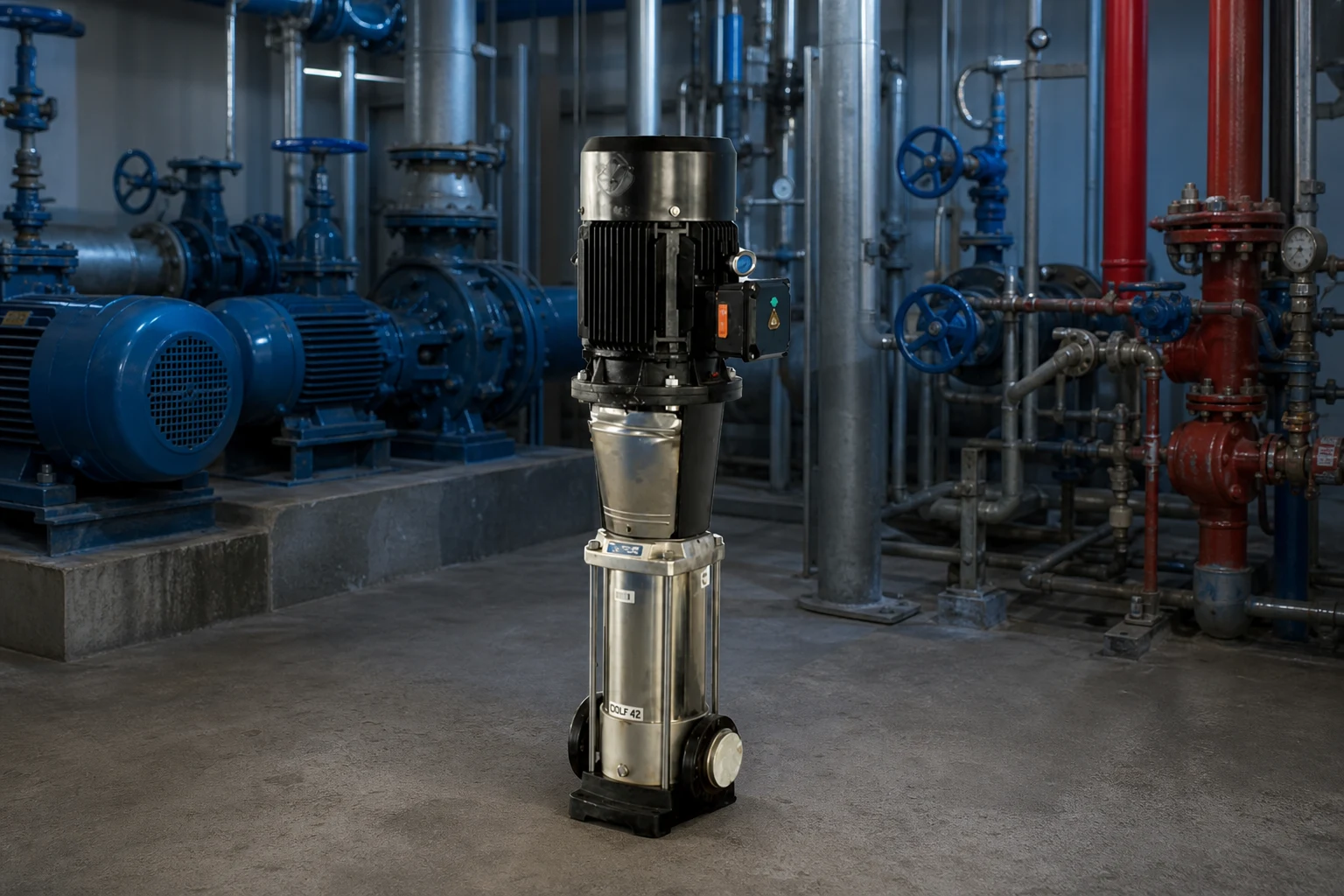
Part 3. Corrective Actions and When to Resize
Restore suction margin by raising tank level, shortening suction piping, cleaning strainers, or lowering fluid temperature.
If margin cannot be achieved after hydraulic corrections, consider a lower-speed impeller trim or a pump sized for the true duty point.
Document before-and-after vibration and pressure logs to prove the fix during warranty reviews.
Commissioning should verify stable pressure without surge when large valves open or close.
Log baseline pressure and power draw after startup for future troubleshooting.
Request application review through BORRA engineering contact when PRV or tank geometry is nonstandard.
Capture rated flow, total dynamic head, fluid properties, and suction conditions in the RFQ package to reduce back-and-forth during technical review.
If the site mixes intermittent peaks and sustained duty, size the driver for the governing thermal condition—not catalog nameplate alone.
Define acceptance criteria before shipment—flow, head, efficiency, or NFPA witness points—so commissioning disputes are less likely.
Part 4. Documentation and Handover Checklist
Industrial acceptance should not rely on energization alone—documentation proves ratings, safety, and maintainability for the next maintenance cycle.
Use the tables below as a starting RFQ checklist; your AHJ, insurer, or EPC contract may require additional items.
For product-specific datasheets, cross-check booster and jockey pumps and request any missing factory test excerpts.
Align factory acceptance tests with items your insurer or owner witness agreement may require.
When comparing quotations, normalize currency, Incoterms, and included commissioning services before ranking suppliers.
| Document / item | Purpose | When to request |
|---|---|---|
| Factory pump performance curve | Verify flow, head, efficiency, and NPSHr at rated speed | Before purchase order |
| Driver nameplate and coupling data | Electrical service and alignment | Design phase |
| Installation and O&M manual | Commissioning and maintenance planning | Before FAT/SAT |
| Spare parts list (5+ year) | Seal kits, impellers, bearings lifecycle | Contract negotiation |
| Commissioning / acceptance checklist | NFPA or owner witness tests | Before energization |
| Building type | Pressure need | Sizing note |
|---|---|---|
| Mid-rise commercial | Steady boost to upper floors | Match shutoff to PRV settings |
| Municipal zone | Variable demand | VFD may reduce hunting vs fixed speed |
| Irrigation header | Seasonal peaks | Confirm suction tank level and NPSHa |
| Process makeup | Continuous low flow | Avoid oversizing that drives minimum flow recirculation |
Part 5. Commissioning, Monitoring, and Long-Term Operations
Commissioning should verify flow, head, and driver performance at the agreed duty points—not only at no-load or nameplate conditions.
Functional tests typically include vibration, seal leakage, control response, and documented comparison to the factory pump curve.
Monitoring after startup helps catch cavitation, hunting, or seal wear before they affect production or fire protection readiness.
Train maintenance staff on lockout/tagout, priming procedures, and which alarms require immediate shutdown versus scheduled service.
Schedule a post-warranty review to reassess duty changes—plant expansions often change flow profiles within three to five years.
Keep a spare-parts criticality list (seals, impellers, bearings, filters) based on lead time and production impact, not catalog defaults alone.
Recommended BORRA Products
For project support, explore our booster and jockey pumps, application and solution pages, and OEM and manufacturing capabilities on borrapumps.com.
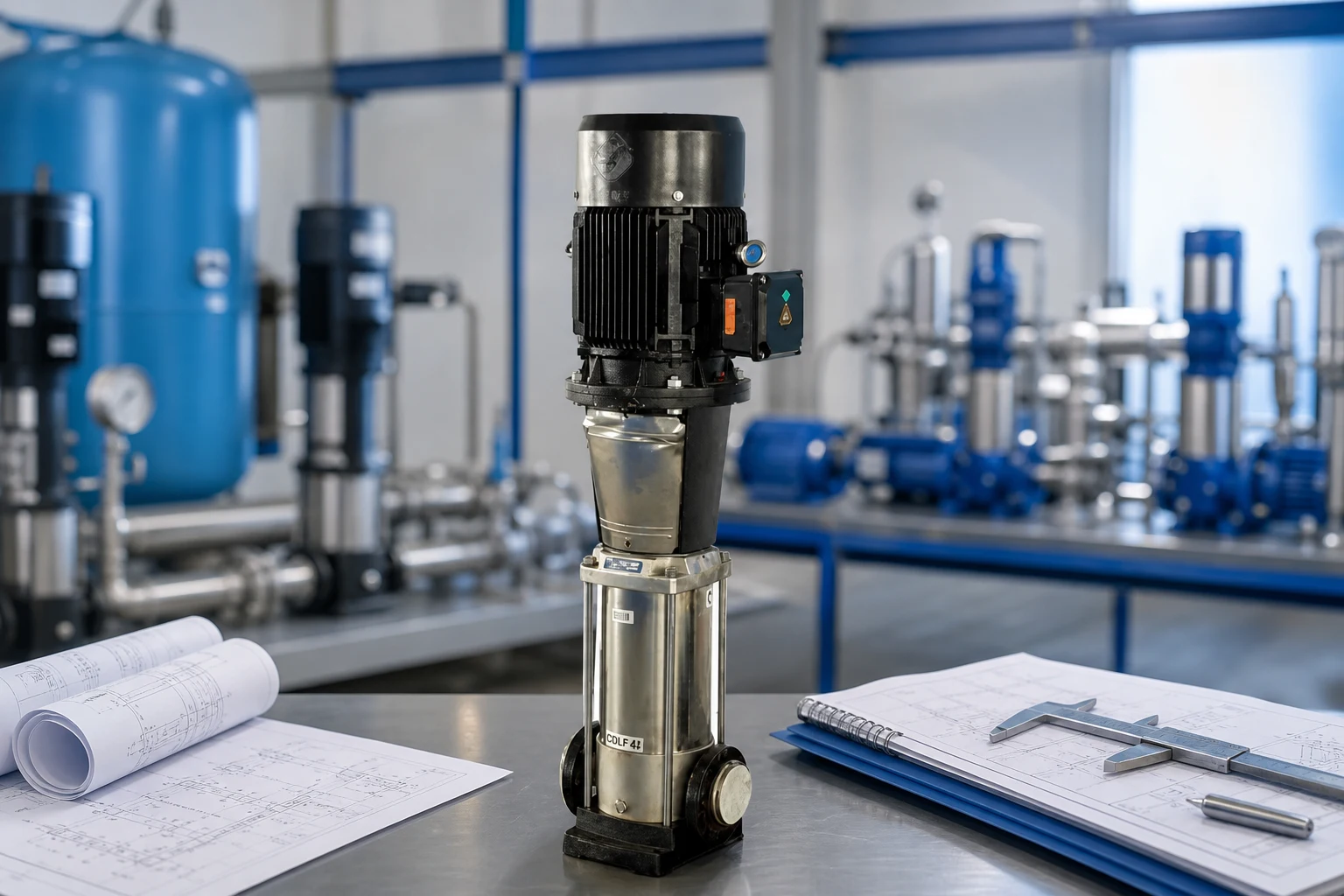
FAQ
What causes cavitation in booster pumps?
Insufficient NPSHa at the impeller eye—often from low tank level, clogged suction strainers, high fluid temperature, or excessive suction lift.
How do you detect cavitation?
Gravel-like noise, vibration, fluctuating discharge pressure, and impeller pitting over time.
Can a pressure tank fix cavitation?
Tanks stabilize discharge pressure but do not increase NPSHa; suction conditions must be corrected separately.
Does running at minimum speed on a VFD reduce risk?
Lower speed can move the operating point, but suction margin must still be verified at all expected duty points.
What is the first field check?
Verify suction tank level, strainer differential, fluid temperature, and compare NPSHa to manufacturer NPSHr at actual flow.
When is pump replacement required?
When corrected suction still cannot meet NPSHr at design flow—impeller or pump type may be undersized for the site.
References
- Hydraulic Institute
- Engineering Toolbox — NPSH
- Grundfos — Cavitation in pumps
- CDLF Vertical Multistage Jockey Pump
Ready to discuss your project? Contact BORRA engineering support with your project parameters and technical requirements.