
Pump constant level oiler inspection should confirm the oil level inside the bearing housing, the correct oiler setting and mounting, a clear connection, and sound seals and reservoir components. A bottle containing oil does not prove that the bearing receives the correct supply. Compare the actual housing indication with the equipment manual under the specified operating or stopped condition. Investigate unexpected consumption or a changing level before repeatedly topping up the reservoir.
This guide covers pumps fitted with an oil-lubricated housing and an external constant-level oiler. It does not apply to every centrifugal pump, grease-lubricated bearing, oil-mist system or sealed bearing assembly. Confirm the installed arrangement from the supplied documents first.
Identify the lubrication system and its reference level
A constant-level oiler replenishes a connected oil space as the level falls according to its design. The visible reservoir stores make-up oil; it is not automatically a direct measurement of the oil surrounding the bearing. Different units use different adjustment, filling and venting arrangements, so an instruction for one style may be wrong for another.
Obtain the pump manual, bearing-housing drawing, oiler instructions and lubricant specification. Identify the housing’s level mark or approved independent indication. Record whether the instruction refers to a stationary, settled machine or another stated condition. A comparison between a running indication and an unrelated shutdown photograph can lead to an unnecessary adjustment.
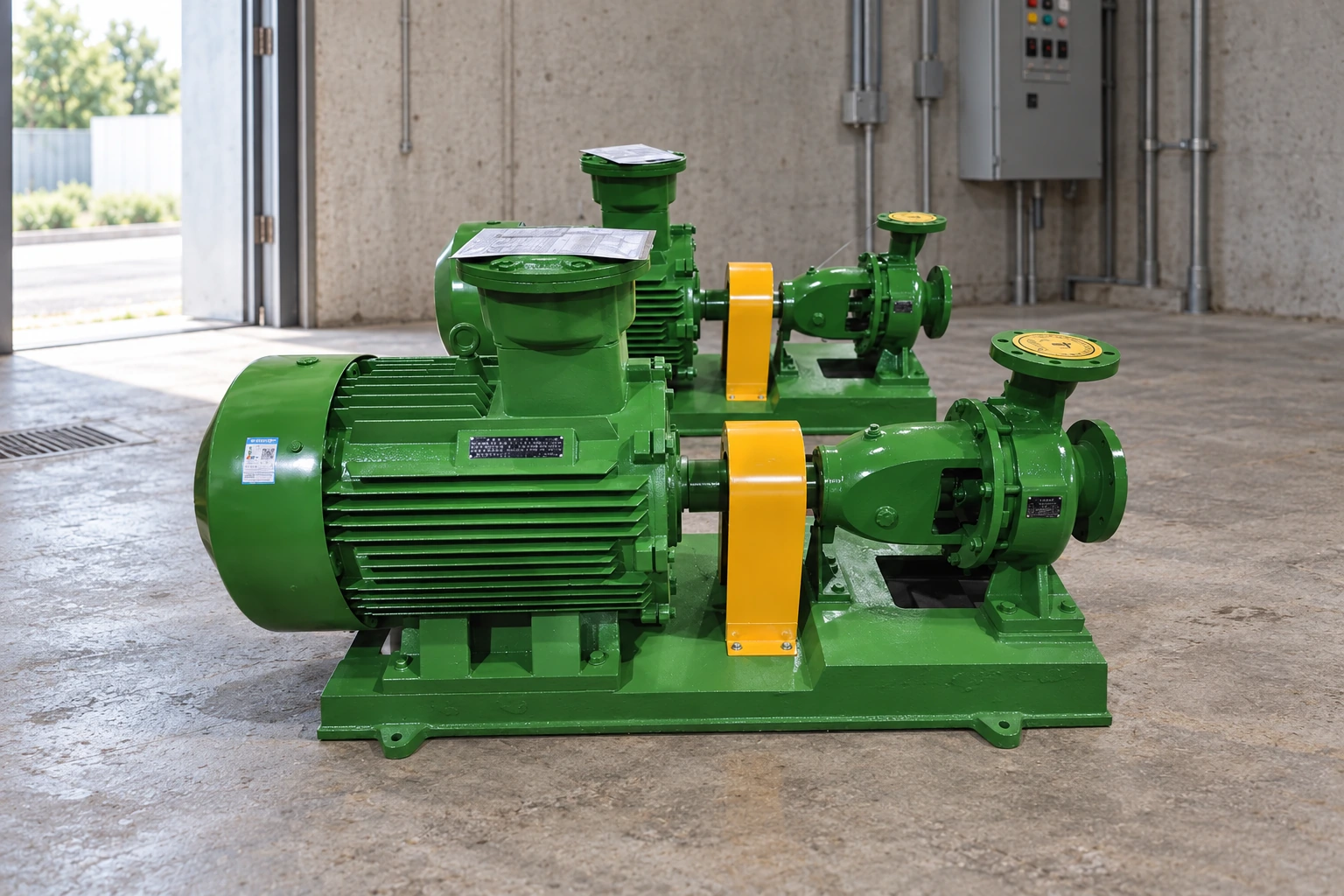
The IS clean-water centrifugal pump range is a relevant product starting point for industrial pump inquiries. Its external photograph does not establish an oil-lubricated bearing or an oiler on every supplied version. Request the actual assembly details rather than transferring the arrangement from another model.
Inspect safely before disturbing a setting
Observe accessible indications from the approved operator position. Do not reach past a coupling guard, touch a hot housing or remove protective equipment to improve a photograph. Work that opens connections, removes an oiler or changes its mounting should follow the site’s isolation, pressure-release and contamination-control procedures.
Before loosening anything, photograph the whole housing, its level indication and the oiler from a repeatable view. Mark the equipment identity in the record. Note the oil grade, time, machine condition and recent additions. This preserves the original installation if a later investigation finds that the apparent fault began after maintenance.
Keep the pump and motor lubrication records distinct. ABB’s MN420 motor manual includes constant-level-oiler and oil-lubrication instructions for its specified motors. It is useful evidence that these devices require equipment-specific installation and filling guidance, but its motor oil grades, levels and intervals must not be copied into a pump work order.
Compare the reservoir with the bearing-housing indication
Start by recording what the independent housing indication shows. If a sight glass is fitted, establish that it is clean, readable and connected as designed. A stained window, trapped material or an uncertain reference mark makes the reading unreliable. Do not compensate for an unreadable indication by assuming that a full bottle means the level is correct.
Record reservoir level and housing level together at the same observation time. A reservoir that remains full while the housing appears low points to a different investigation from one that empties rapidly while the housing level rises. Note changes after the machine has been stopped and allowed to settle as required by its instructions.
Avoid adopting a generic bearing-centerline rule without checking the design. Bearing type, lubrication method and housing arrangement affect the specified oil level. The correct target is the approved level for the supplied assembly. If that reference is missing, obtain it before changing the oiler height or internal adjustment.
Check mounting, connections and vent arrangements
Look for loose supports, damaged fittings, distorted connections and changes from the approved installation. Record the oiler’s position relative to the housing and the direction of rotation when that relationship is specified. A replacement unit fitted at the same threaded port can still have a different operating geometry.
Inspect accessible seals and the reservoir for cracking, leakage and contamination. Trace oil on the outside to its actual source where this can be done safely. A wet surface underneath the bottle may have resulted from filling, a leaking connection or a separate housing leak. Cleaned-and-rechecked observations are more useful than assuming the first visible wet point is the source.
Check vents or pressure-equalizing connections against the correct instructions. Do not block a vent to prevent contamination or add an open vent to a closed arrangement without approval. In its Pump Troubleshooting guide, EPRI identifies oiler setting and physical location as checks associated with bearing-temperature problems. That is diagnostic guidance, not permission to alter every installation in the same way.
Turn observations into a troubleshooting decision
Use the following table to organize evidence. It deliberately avoids a universal oil quantity, oiler height or refill interval. Those values must come from the equipment documents. EPRI provides the pump troubleshooting basis; the actual oiler instructions govern functional tests and adjustments.
| Observation | Checks that distinguish possible causes | Action before normal service |
|---|---|---|
| Bottle contains oil but housing indication is low | Reading validity, connection path, oiler configuration and approved set level | Resolve supply or indication uncertainty before assuming lubrication is adequate |
| Reservoir empties unusually quickly | External leakage, additions log, housing level and operating changes | Find where the oil goes and assess the machine condition |
| Housing level appears excessive | Specified observation condition, recent filling and setting changes | Compare with the manual before removing oil or changing the oiler |
| Oil appears cloudy or contaminated | Clean sample, water-entry paths and recent maintenance | Investigate contamination and follow the lubricant disposition procedure |
| Level differs after shutdown | Settling time, operating condition and previous stable records | Compare readings taken under equivalent conditions |
| Oiler or connection is damaged | Part identity, mounting and leak location | Repair or replace to an approved specification and verify function |
A single visual observation may justify further inspection without establishing the root cause. Escalate according to the site’s operating limits when lubrication adequacy is uncertain or bearing behavior is abnormal.
Refill using the correct method and oil
Check the lubricant identity before opening a container. Viscosity grade alone may not establish compatibility between products. Use the approved lubricant and clean dispensing equipment, and protect the filling point from dust and water. Mixing oil to avoid a short interruption can create a second problem that is difficult to separate from the original fault.
Follow the specific oiler’s filling sequence. Some designs require a particular cap position or reservoir handling method to control flow. Do not assume that pouring oil through any available opening establishes the correct housing level. After refilling, verify the housing indication and record the quantity and product added.
Repeated additions deserve a consumption record. Include operating hours, duty changes and visible leakage, rather than logging only the calendar date. A pattern of increasing make-up demand can be more informative than one low reservoir. For wider lubricant checks, see the centrifugal-pump bearing lubrication guide, keeping its general advice subordinate to the supplied manual.
Separate oiler faults from oil condition and bearing faults
An oiler cannot make an unsuitable or contaminated lubricant acceptable. If a sample is needed, use the established sampling point and method so the result represents the oil in service. Sediment in an old bottle is not necessarily representative of the bearing housing. Document where and how the sample was obtained.
The pump bearing oil-analysis sampling guide supports this separate task. Do not use a laboratory result to dismiss an obvious supply-path problem, or use a corrected oiler setting as proof that the oil itself is fit for continued use. These questions require different evidence.
Likewise, a hot bearing needs more than an oiler inspection. Consider the operating duty, bearing fit, alignment, mechanical condition and cooling arrangement under the troubleshooting procedure. Record the oiler findings alongside other observations. The pump bearing-housing water-ingress guide is relevant when water contamination is suspected, without assuming that the oiler is the only entry route.
Verify a repair or replacement before release
Match a replacement to the correct oiler specification, connection, operating principle and environmental requirements. Reservoir capacity alone is not enough. Keep the part identification and installation instructions with the work order. An apparently interchangeable bottle can behave differently if its sealing or level-setting arrangement differs.
Functional testing should follow the oiler manufacturer’s procedure, with the machine isolated when required. Do not improvise a test by forcing air or solvent through a connected housing. Record what was tested, the observation time and the acceptance criterion. If a component cannot be reliably checked, replace or refer it through the approved maintenance process.
Before restart, confirm the specified housing oil level, clean closures, restored connections and safe access. After restart, observe from the normal operating position and compare oil level, reservoir behavior and bearing trends with equivalent previous conditions. Any remaining uncertainty should stay visible in the release record.
Make the next inspection easier
Create a short equipment-specific record containing the reference level, observation condition, lubricant identity, oiler part number and accessible photographs. Add a place for refill quantity, leakage observations and corrective action. This avoids repeated guesswork when a different operator performs the next round.
Set inspection frequency using the supplied maintenance instructions and the site’s risk and operating experience. Frequent changes in consumption or contamination justify investigation rather than simply shortening the refill interval. The educational video below introduces oil-analysis concepts. It supports understanding lubricant condition; it is not a filling demonstration for the installed oiler.
Frequently asked questions
Does a full oiler bottle prove that the bearing housing is full?
No. Verify the housing’s approved level indication. The bottle stores make-up oil, while a blocked connection, incorrect setting or unsuitable installation can prevent the intended housing level from being maintained.
Can I raise the oiler to cool a hot bearing?
Do not change the set level solely because the bearing is hot. Excess oil can also be undesirable. Check the specified level and use the equipment troubleshooting procedure to investigate lubrication, duty and mechanical causes.
Should the pump use the same oil as its motor?
Only when both equipment specifications approve that product. The driver and pump can have different bearings and lubricant requirements. Keep their filling instructions and maintenance records separate.
What does rapid reservoir consumption mean?
It means the oil movement needs investigation. Check leakage, housing level, the filling history and operating conditions. Consumption alone does not identify a failed bearing or establish that the oiler itself is defective.
What information is needed to replace a constant-level oiler?
Provide equipment identification, the current oiler part number, connection and mounting details, lubricant, reference level, operating conditions and photographs. Confirm the replacement’s operating principle and installation procedure before service.