
You will find that a self priming pump is an ideal pump for multiple applications when it comes time to select a pump that is going to work well for your fluid transfer needs. In this article you will learn what a self priming pump is, how it works and what uses, benefits, and practical applications the self priming pump provides; as well as provide answers to some frequently asked questions regarding self priming pumps.
What is a Self Priming Pump?
An appropriately self priming pump is able to pull liquids by creating a vacuum and automatically removing any air that may be trapped inside the pump itself before pumping liquid into it. Self-priming capabilities will generally make these types of pumps more effective when they are placed at elevation relative to the source of the liquid being pumped, minimizing the necessity for using manual priming methods. For a plain-language primer on the pump type, see what a self-priming pump is.
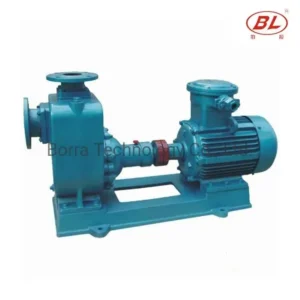
How Does It Work?
Self priming pumps work by generating a vacuum effect created by the rotation of their impellers. Under normal operational conditions, liquid will enter the pump through the inlet, and then when the impeller rotates it generates a centrifugal force which displaces the liquid inside the pump case, resulting in a lower pressure on the liquid that is displaced. The result of this process will be to generate an air-free liquid that is used to provide a sufficient vapor pressure within the pump casing, enabling it to continue to pump an air-free liquid. Therefore, it is a self priming pump because there will no longer be any remaining air inside the pump casing.
Advantages of Self-Priming Pumps
Opting for a self priming pump brings numerous advantages:
1. Simple usability: With the auto priming feature of the pumps, operators are able to use less time in preparing the pump before use thereby helping to simplify workflow and thereby improving overall productivity. Correct initial priming and startup checks keep that time saving from turning into a dry-run or air-lock problem on the first run.
2. Capability to Pump Different Types of Fluids: Pumps can move a variety of fluids, including viscous or viscous fluids (i.e., fluids with particle size > 0.5mm). Because of this characteristic, pumps can be used in many industries, including construction, agriculture, municipal water supply, etc.
3. Reliability: Because the pump has self Priming abilities; when used in low suction applications, you can be assured that your pump is always operational, thus reducing the time it takes to maintain, etc.
4. Economically sound: Although the capital required to purchase a pump system may be larger than for standard pumps, its reduced number of required employees coupled with lower maintenance costs will allow for significant cost savings in the long run.
Types of Self Priming Pumps
Several types of self priming pumps are available, including:
– Centrifugal self-priming pumps: Ideal for water and low-viscosity fluids.
– Diaphragm self-priming pumps: Perfect for handling corrosive or abrasive liquids.
– Gear self-priming pumps: Best for high-viscosity liquids and not susceptible to cavitation.
Common Uses of Self Priming Pumps
Self priming pumps are commonly utilized in:
– Water supply systems in residential and commercial buildings.
– Irrigation applications in agriculture.
– Wastewater treatment facilities for effective fluid transfer.
– Mining and dewatering processes where efficiency is crucial.
Frequently Asked Questions
What is the difference between a self-priming pump and a regular pump?
A traditional pumping system must be primed manually each time it runs, whereas a self priming unit will automatically purge any air from the system and thereby increase operating convenience and reduce labor costs.
What maintenance does a self-priming pump require?
Regular maintenance isn’t required; however, a periodic inspection of all seals and impellers will help keep them performing economically and have an extended service life.
Are self priming pumps suitable for waste fluids?
The majority of self priming pumps are intended for use with wastewater and can process any solid waste or sediment found in the wastewater supply.
Conclusion
An investment in efficiency, reliability, and versatility can be made by selecting a self priming pump. These pumps possess unique qualities that enhance their performance, particularly when there are variable fluid levels or rugged conditions. Self priming pumps are consistently a suitable option to fulfill today’s ever-increasing demands for the transfer of liquids, given the large number of different types available and their low maintenance needs.