
Set jockey pump pressure controls as a coordinated sequence derived from the approved system pressure and main fire pump start requirement. The jockey pump normally starts before the main fire pump as pressure falls and stops after restoring normal pressure. The main fire pump start point must remain low enough to avoid nuisance starts yet high enough to meet hydraulic and response requirements. There is no universal set of numbers: suction pressure, elevation, churn pressure, pressure regulation, sensing-line location, and device ratings all matter.
Sicherheit und Geltungsbereich: Feuerlöschpumpen und deren Antriebe sind lebensrettende Einrichtungen. Arbeiten an Hydraulik, Elektrik, Diesel, Kraftstoff, Batterie, Druck, rotierenden Geräten, Prüfungen und Betriebsstörungen müssen dem aktuellen genehmigten Entwurf, den Herstelleranweisungen, den geltenden Normen und der zuständigen Behörde entsprechen. Dieser Leitfaden erläutert den ingenieurtechnischen Entscheidungsweg; er berechtigt nicht zu Änderungen vor Ort, Umgehungen oder zum Betrieb durch unqualifiziertes Personal.
Establish the pressure basis
Use the normal static pressure, source variation, pump curves, elevation, system ratings, and approved hydraulic minimums. Confirm which gauge location defines each setting. Treat this as a system condition rather than an isolated component choice. Identify the source of every input, the unit used, the operating condition it represents, and the person responsible for approval. If information is preliminary, mark the assumption and test how the decision changes at a conservative boundary. This prevents a neat calculation from hiding an uncertain water level, pressure, valve position, driver condition, or simultaneous demand.
For jockey pump pressure settings, verify this section against the selected pump curve, the actual site arrangement, manufacturer instructions, and the current requirements accepted by the authority having jurisdiction. Check the installed condition as well as the drawing because pipe routes, elevations, supports, controls, and access often change during construction. Record the result in a form that can be repeated during commissioning and later inspection. Do not change a safety-critical setting or isolate fire protection without the approved impairment and restoration process.
Arrange the start sequence
As pressure falls, the jockey pump should receive the first maintenance call. Continued pressure loss from a real demand must then initiate the main fire pump. The most useful evidence is measured or approved project data, not a copied rule of thumb. Identify the source of every input, the unit used, the operating condition it represents, and the person responsible for approval. If information is preliminary, mark the assumption and test how the decision changes at a conservative boundary. This prevents a neat calculation from hiding an uncertain water level, pressure, valve position, driver condition, or simultaneous demand.
For jockey pump pressure settings, verify this section against the selected pump curve, the actual site arrangement, manufacturer instructions, and the current requirements accepted by the authority having jurisdiction. Check the installed condition as well as the drawing because pipe routes, elevations, supports, controls, and access often change during construction. Record the result in a form that can be repeated during commissioning and later inspection. Do not change a safety-critical setting or isolate fire protection without the approved impairment and restoration process.
Set jockey stop pressure
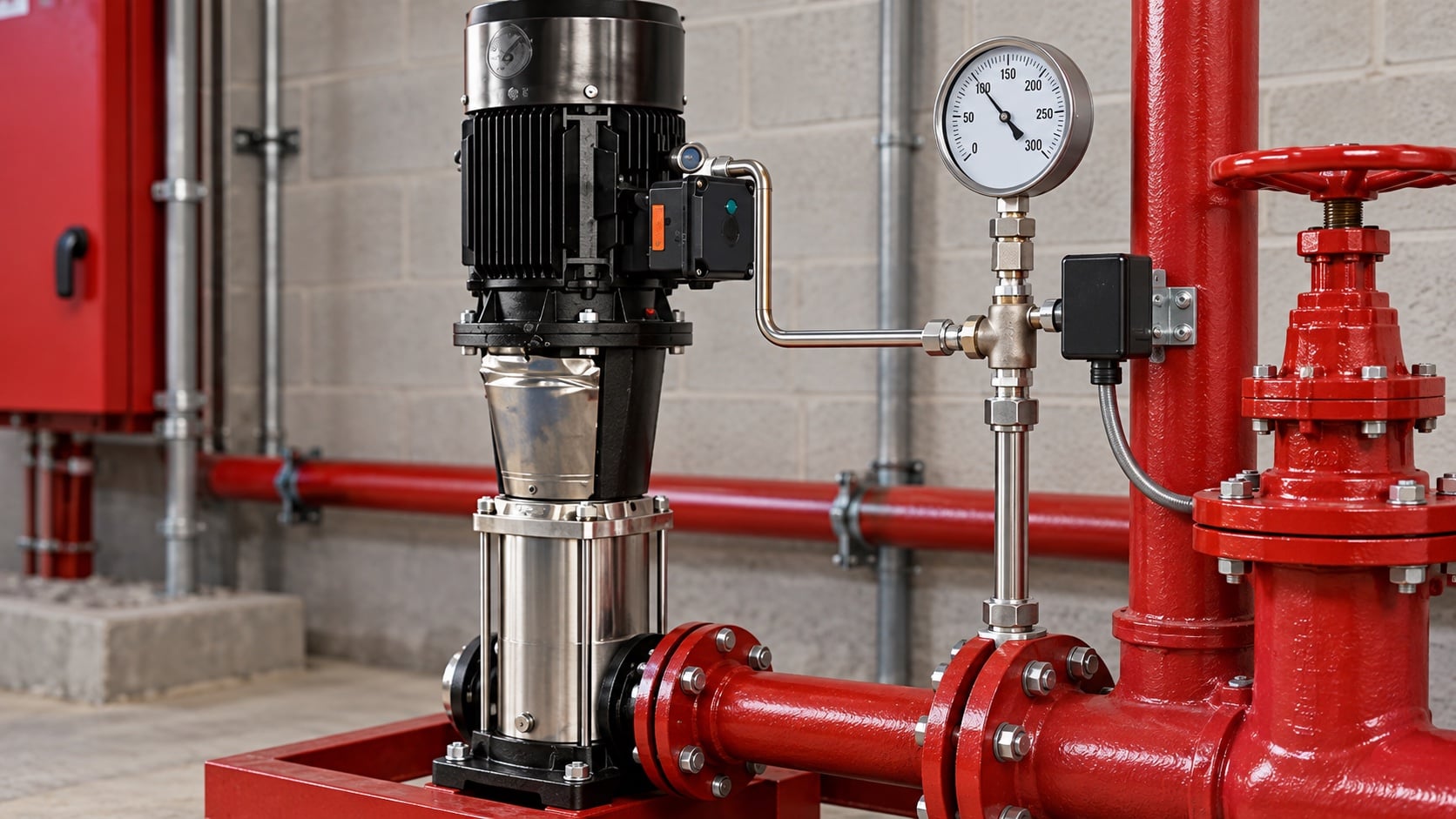
Choose a stop point the jockey pump can reliably reach without excessive deadheading or exceeding system ratings. Check its shutoff head. Review this condition at normal, test, and credible abnormal states before procurement. Identify the source of every input, the unit used, the operating condition it represents, and the person responsible for approval. If information is preliminary, mark the assumption and test how the decision changes at a conservative boundary. This prevents a neat calculation from hiding an uncertain water level, pressure, valve position, driver condition, or simultaneous demand.
For jockey pump pressure settings, verify this section against the selected pump curve, the actual site arrangement, manufacturer instructions, and the current requirements accepted by the authority having jurisdiction. Check the installed condition as well as the drawing because pipe routes, elevations, supports, controls, and access often change during construction. Record the result in a form that can be repeated during commissioning and later inspection. Do not change a safety-critical setting or isolate fire protection without the approved impairment and restoration process.
Protect the main pump start point
Do not set it so low that required residual pressure is lost before starting, or so high that normal pressure variation starts the main pump. The design team should turn this point into a traceable calculation or drawing note. Identify the source of every input, the unit used, the operating condition it represents, and the person responsible for approval. If information is preliminary, mark the assumption and test how the decision changes at a conservative boundary. This prevents a neat calculation from hiding an uncertain water level, pressure, valve position, driver condition, or simultaneous demand.
For jockey pump pressure settings, verify this section against the selected pump curve, the actual site arrangement, manufacturer instructions, and the current requirements accepted by the authority having jurisdiction. Check the installed condition as well as the drawing because pipe routes, elevations, supports, controls, and access often change during construction. Record the result in a form that can be repeated during commissioning and later inspection. Do not change a safety-critical setting or isolate fire protection without the approved impairment and restoration process.
Praktische Entscheidungstabelle
| Pressure event | Expected response | If incorrect, check |
|---|---|---|
| Small normal pressure loss | Jockey pump starts | Sensing line, controller, start setting |
| Pressure restored | Jockey pump stops | Stop setting, curve, leakage |
| Demand exceeds jockey capacity | Pressure continues to fall | Jockey size and test demand |
| Main start threshold reached | Main fire pump starts | Controller and sensing path |
| Main pump running | System follows approved stop logic | Controller mode and procedure |
| Frequent jockey cycles | Investigate leakage or control issue | Check valves, system volume, settings |
Use a reliable sensing line
Verify connection location, valve position, drainage, blockage risk, trapped air, and independence from pressure surges or an unrepresentative local point. Treat this as a system condition rather than an isolated component choice. Identify the source of every input, the unit used, the operating condition it represents, and the person responsible for approval. If information is preliminary, mark the assumption and test how the decision changes at a conservative boundary. This prevents a neat calculation from hiding an uncertain water level, pressure, valve position, driver condition, or simultaneous demand.
For jockey pump pressure settings, verify this section against the selected pump curve, the actual site arrangement, manufacturer instructions, and the current requirements accepted by the authority having jurisdiction. Check the installed condition as well as the drawing because pipe routes, elevations, supports, controls, and access often change during construction. Record the result in a form that can be repeated during commissioning and later inspection. Do not change a safety-critical setting or isolate fire protection without the approved impairment and restoration process.
Understand controller behavior
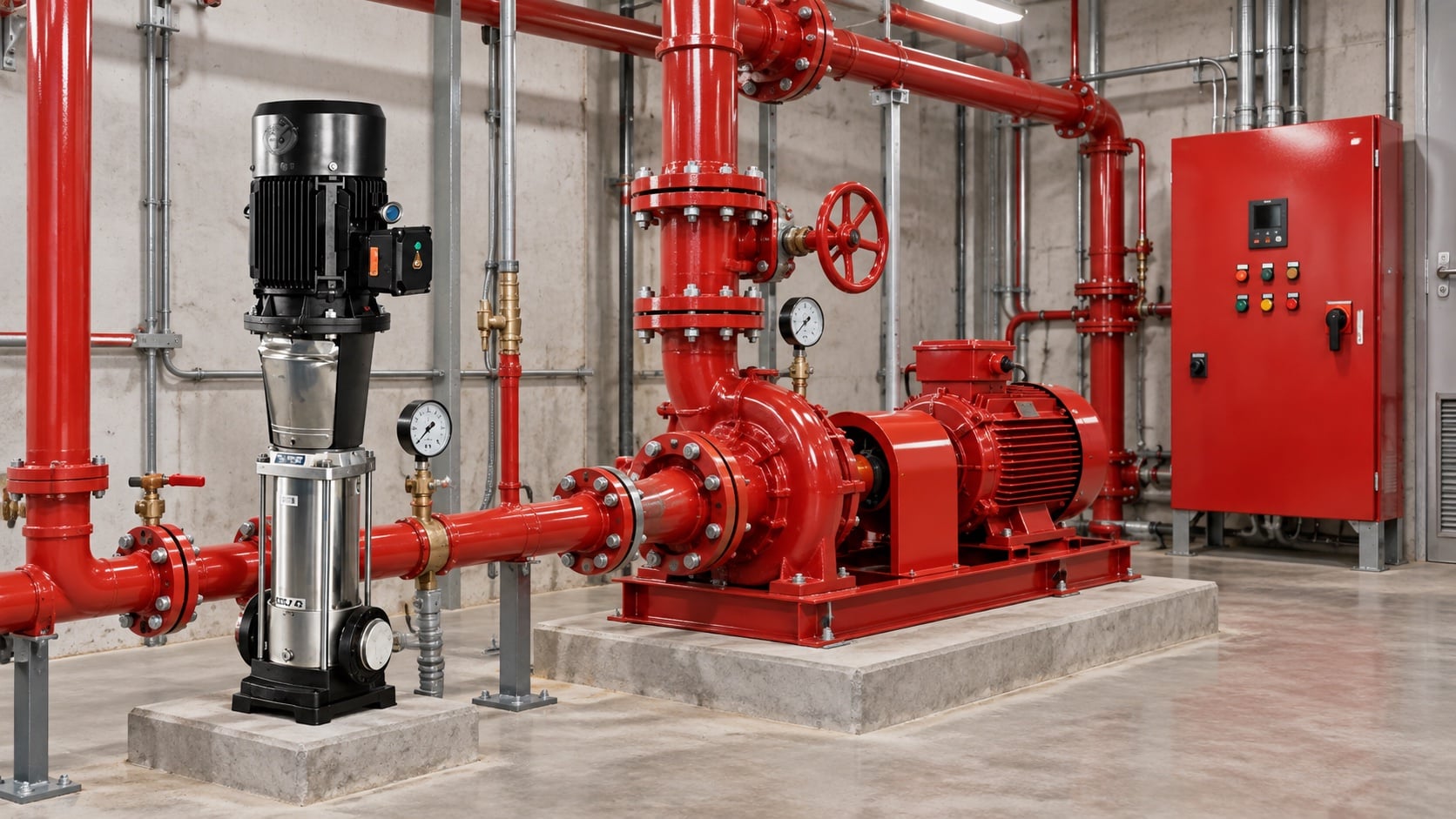
Review automatic start, manual stop or automatic-stop provisions as applicable, timer functions, alarms, and what happens after power restoration. The most useful evidence is measured or approved project data, not a copied rule of thumb. Identify the source of every input, the unit used, the operating condition it represents, and the person responsible for approval. If information is preliminary, mark the assumption and test how the decision changes at a conservative boundary. This prevents a neat calculation from hiding an uncertain water level, pressure, valve position, driver condition, or simultaneous demand.
For jockey pump pressure settings, verify this section against the selected pump curve, the actual site arrangement, manufacturer instructions, and the current requirements accepted by the authority having jurisdiction. Check the installed condition as well as the drawing because pipe routes, elevations, supports, controls, and access often change during construction. Record the result in a form that can be repeated during commissioning and later inspection. Do not change a safety-critical setting or isolate fire protection without the approved impairment and restoration process.
Diagnose cycling
Trend start and stop pressure, run time, leakage, check-valve condition, pressure tank where used, and gauge calibration before changing settings. Review this condition at normal, test, and credible abnormal states before procurement. Identify the source of every input, the unit used, the operating condition it represents, and the person responsible for approval. If information is preliminary, mark the assumption and test how the decision changes at a conservative boundary. This prevents a neat calculation from hiding an uncertain water level, pressure, valve position, driver condition, or simultaneous demand.
For jockey pump pressure settings, verify this section against the selected pump curve, the actual site arrangement, manufacturer instructions, and the current requirements accepted by the authority having jurisdiction. Check the installed condition as well as the drawing because pipe routes, elevations, supports, controls, and access often change during construction. Record the result in a form that can be repeated during commissioning and later inspection. Do not change a safety-critical setting or isolate fire protection without the approved impairment and restoration process.
Commission with controlled tests
Lower pressure slowly, record the jockey and main pump actions, verify stop behavior and alarms, then restore the system and secure settings. The design team should turn this point into a traceable calculation or drawing note. Identify the source of every input, the unit used, the operating condition it represents, and the person responsible for approval. If information is preliminary, mark the assumption and test how the decision changes at a conservative boundary. This prevents a neat calculation from hiding an uncertain water level, pressure, valve position, driver condition, or simultaneous demand.
For jockey pump pressure settings, verify this section against the selected pump curve, the actual site arrangement, manufacturer instructions, and the current requirements accepted by the authority having jurisdiction. Check the installed condition as well as the drawing because pipe routes, elevations, supports, controls, and access often change during construction. Record the result in a form that can be repeated during commissioning and later inspection. Do not change a safety-critical setting or isolate fire protection without the approved impairment and restoration process.
Wie dies sich auf BORRAPUMP-Ausrüstung bezieht
BORRAPUMP liefert technische Pumpenausrüstung für Wasser- und Brandschutzprojekte. Überprüfen Sie die relevanten BORRAPUMP-Produktkonfiguration als Ausgangspunkt, reichen Sie dann den erforderlichen Volumenstrom, die Förderhöhe, die Wasserquelle, den Antrieb, die Leistung, die Steuerungen, die Baustellenbedingungen, die geltenden Anforderungen, die Stückzahl und den Bestimmungsort ein. Die endgültige Auswahl muss auf der hydraulischen Projektbasis und der genehmigten Einreichung basieren; dieser Leitfaden erhebt keinen Anspruch darauf, dass eine Kataloganordnung für jede Jurisdiktion oder jedes Risiko passt.
Ähnliche BORRAPUMP-Anleitungen
- Auswahl der Feuerlöschpumpen-Einheit
- NFPA 20 Abnahmeprüfungs-Leitfaden
- Leitfaden für Inspektion und Prüfung nach NFPA 25
Maßgebliche Referenzen
Die folgenden Quellen legen den Normenbereich, den Brandschutzkontext und die Pumpensystemprinzipien fest, die in diesem Leitfaden verwendet werden. Wenden Sie stets die für das Projekt akzeptierte Ausgabe und lokale Einführung an.
- Entwicklungsseite der NFPA 25 Norm
- NFPA 20 Normenentwicklungsseite
- Ressourcen für Pumpensysteme des US-Energieministeriums
Lernvideo
Bildungshintergrund von Practical Engineering: Erzeugen Pumpen Druck oder Fluss?. Das Video unterstützt das zugrundeliegende ingenieurtechnische Konzept und ersetzt nicht die projektspezifischen Brandschutzanforderungen.
Häufig gestellte Fragen
What is the correct jockey pump pressure setting?
Use the project-specific approved sequence; no universal pressure value fits every system.
Should the jockey pump stop automatically?
Follow the listed controller and applicable project requirements. Main and jockey pump stop logic may differ.
Why does the main fire pump start before the jockey pump?
Check sensing lines, controller settings, source pressure changes, and whether the devices measure the same representative system point.
Can I widen the pressure gap to stop cycling?
Only after diagnosing leakage, check valves, system volume, pump curve, and applicable setting limits.
Abschließende Prüfliste
Vor der Freigabe sind die hydraulischen Grundlagen, die Wasserquellenbedingungen, die ausgewählte Pumpenkennlinie, die Daten von Antrieb und Steuerung, die Nenndrücke der Komponenten, die Ventilanordnung, das Prüfverfahren, die Zugänglichkeit, die Entwässerung, die Alarme und das Wiederherstellungsverfahren zu bestätigen. Differenzen zwischen den Zeichnungen und dem installierten System sind zu berechnen. Während der Inbetriebnahme sind kalibrierte Instrumente zu verwenden und Saugdruck, Förderdruck, Durchfluss, Drehzahl, Antriebszustand, Alarme und abweichende Beobachtungen an jedem geforderten Punkt aufzuzeichnen. Die akzeptierten Ergebnisse sind bei den Pumpenraumprotokollen aufzubewahren, damit spätere Inspektionen vergleichbare Werte liefern.