
Choosing a solar vs diesel well pump for irrigation starts with the same question: can the complete system deliver the required daily water volume at the actual pumping head when the crop needs it? Solar power can reduce dependence on fuel deliveries, while diesel can provide scheduled operation when sunlight is unavailable. Neither option is automatically cheaper or more reliable for every farm. Compare water demand, seasonal sunlight, storage, well yield, equipment compatibility, service access and the full ownership cost. This guide provides a practical comparison framework without claiming that a particular BorraPumps pump can be converted to solar power or promising a universal payback period.
Compare complete systems at the same water duty
A solar pumping system includes the array, suitable power conditioning and controls, compatible motor and pump, mounting and protection, and the delivery infrastructure. A diesel alternative may use a directly driven pump or a generator supplying an electric motor. Those arrangements have different interfaces. For a deep well electric submersible pump, a diesel engine on the surface does not mechanically drive the submerged motor; the generator and electrical system need separate sizing and approval.
Keep the comparison consistent. Specify daily delivered volume, delivery pressure, elevation and the expected pumping water level. Include losses through the rising main, filters and distribution network. Comparing one quotation at an open tank with another at a pressurized irrigation manifold can produce a misleading result because the duties are different.
El BorraPumps QJ deep well pump page identifies a relevant pump family for agricultural inquiries. It does not establish solar-controller compatibility or a particular diesel-generator requirement. Obtain written confirmation for the exact motor, supply and control arrangement before purchase. Begin the hydraulic specification with the deep well irrigation sizing guide, then compare energy systems against that specification.
Build a seasonal water-demand record
Record the irrigation volume needed on the busiest days and how that demand changes across the growing season. Identify which zones can operate together, which must run at specific times, and whether irrigation may be postponed. Separate the volume required by the crop from pumping-system capacity. A high maximum flow is not useful if the farm cannot distribute or store the water at that rate.
For planning, divide the required daily volume by the usable pumping window to estimate an average flow. This is only a first check, not a solar-array sizing method. Solar output changes throughout the day, and the pump’s delivered flow changes with available power and head. The design must evaluate expected daily delivery under the relevant seasonal conditions rather than multiplying the pump’s advertised maximum flow by daylight hours.
For example, a hypothetical irrigation demand of 120 cubic meters per day spread over six effective operating hours implies an average delivery requirement of 20 cubic meters per hour. If only four hours are usable, the average becomes 30 cubic meters per hour. These are arithmetic planning examples, not performance claims for any product. Neither calculation accounts for variable sunlight, pump curves or well recovery.
Assess the water source before choosing power
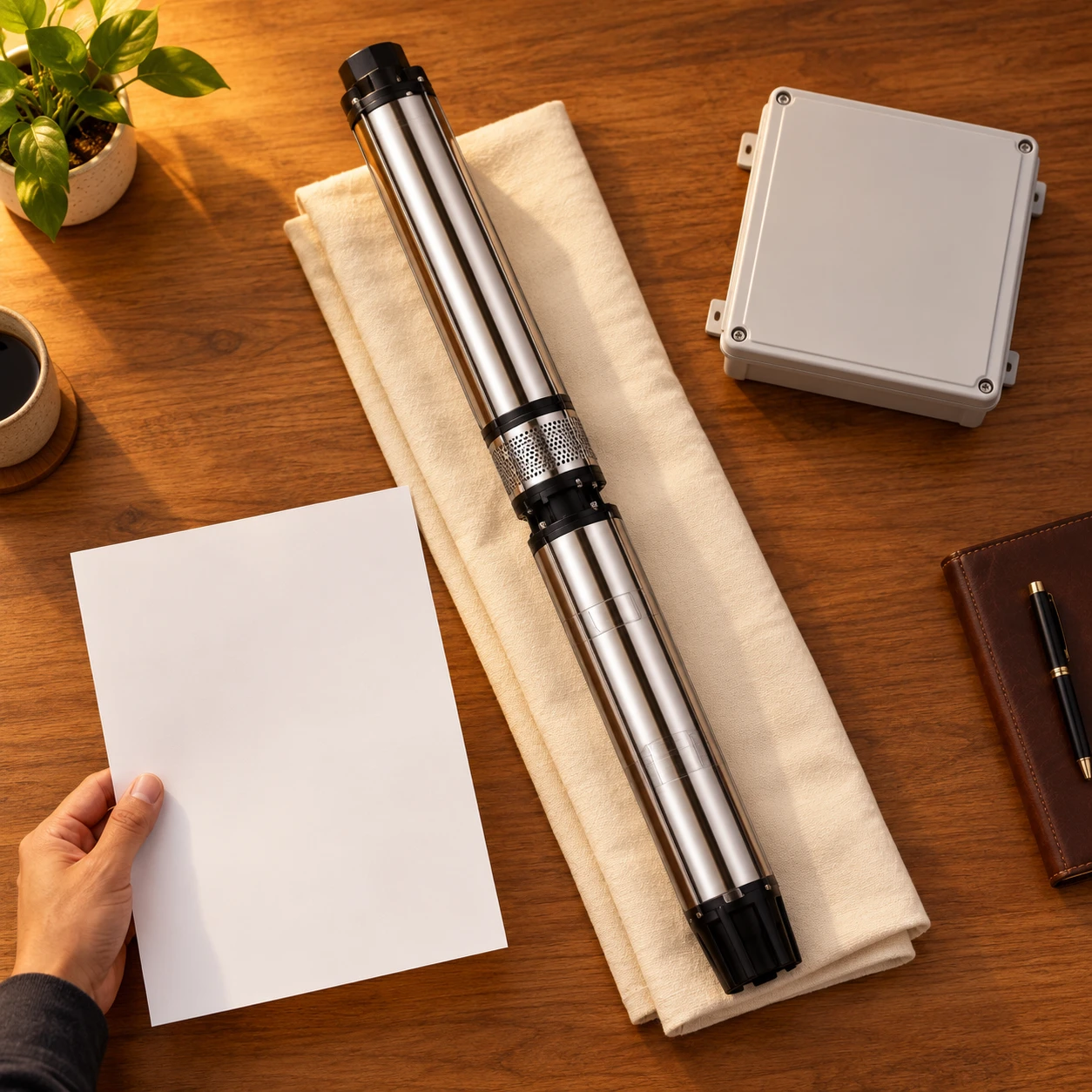
A larger energy supply cannot make an inadequate well sustainably produce more water. Review tested yield, pumping water levels, recovery and seasonal changes. If the well cannot support the proposed operating flow, the design may need a different pumping schedule, storage arrangement or water-demand plan. Include the operating abstraction limits and any permit conditions in the review.
Solar pumping can make the energy cost of an additional operating hour less visible to the operator. That does not make additional abstraction harmless. Use a water meter, operating records and an approved irrigation schedule to keep delivery within the agreed demand and sustainable source limits. Water management should be part of either energy option, not an afterthought once the equipment is installed.
Prepare the expected duty with the static and dynamic water-level head guide. Compare quotations using the same pumping-level assumptions. A solar offer based on a shallow static level and a diesel offer based on a lower operating level are not directly comparable.
Solar and diesel decision table
| Project condition | Solar review | Diesel review |
|---|---|---|
| Daily delivery requirement | Verify seasonal daily water production with the proposed array and controls | Verify delivered flow and permissible runtime at the same hydraulic duty |
| Night irrigation | Evaluate usable water storage, approved backup or a different schedule | Confirm fuel, operating supervision and local noise constraints |
| Remote service access | Confirm controller, electrical and pump support and replacement lead times | Confirm engine or generator service, consumables and fuel delivery |
| Existing electric well pump | Obtain written motor and controller compatibility confirmation | Obtain generator starting and running compatibility confirmation |
| Seasonal use | Compare the value of the installed system over its actual annual use | Include storage, maintenance and the fuel cost of those operating hours |
| Water-source limits | Specify abstraction controls and dry-run protection | Specify the same source-protection requirements |
The table describes questions to resolve; it does not assign a winner without site data. Obtain comparable quotations for the same delivery service and list any exclusions. If one proposal omits storage, civil work or backup, price those separately before deciding.
Use water storage as a design option
Storage can separate the time when water is pumped from the time when it is used. A farm may pump during favorable sunlight and irrigate later. However, the storage must be usable, protected and sized for the actual operating plan. Its outlet may still need a distribution pump if gravity cannot provide the required delivery pressure. Include that second pumping duty in the comparison.
Distinguish gross tank volume from available operating volume. Minimum water level, freeboard, sediment management and control settings affect usable storage. Review the receiving tank elevation because pumping into a high tank changes the well-pump head. Storage also requires civil work, overflow arrangements and appropriate water-quality protection.
The World Bank’s Solar Pumping: The Basics handbook provides background on the solar pumping system and water storage concept. Treat the handbook as introductory guidance. Have the project designer verify the location, seasonal solar resource, complete duty and appropriate protection for the proposed installation.
Compare ownership cost without inventing savings
Ask for an itemized installed cost for each option. Include equipment, delivery, mounting, electrical work, civil work, commissioning and any storage or backup. Existing infrastructure may reduce one option’s cost, but only count it if its condition and suitability are confirmed. An old generator that cannot start the selected motor should not be treated as free usable equipment.
For annual operating cost, document expected runtime and actual local prices. Diesel estimates should use relevant consumption data at the expected load, not a maximum-load figure applied to every hour. Include servicing and consumables. Solar estimates should include inspection, cleaning where needed, maintenance, component replacement assumptions and any backup energy use. Solar does not mean every ownership expense disappears.
A simple undiscounted comparison can add installed cost to the estimated operating and replacement costs over the same stated period. Label the result as a scenario, then vary fuel price, annual use, replacement assumptions and delivered volume. For a major investment, obtain a financial review that addresses financing, discounting and uncertainty. Do not present one assumed scenario as a guaranteed payback or a verified BorraPumps customer result.
Check reliability and compatibility
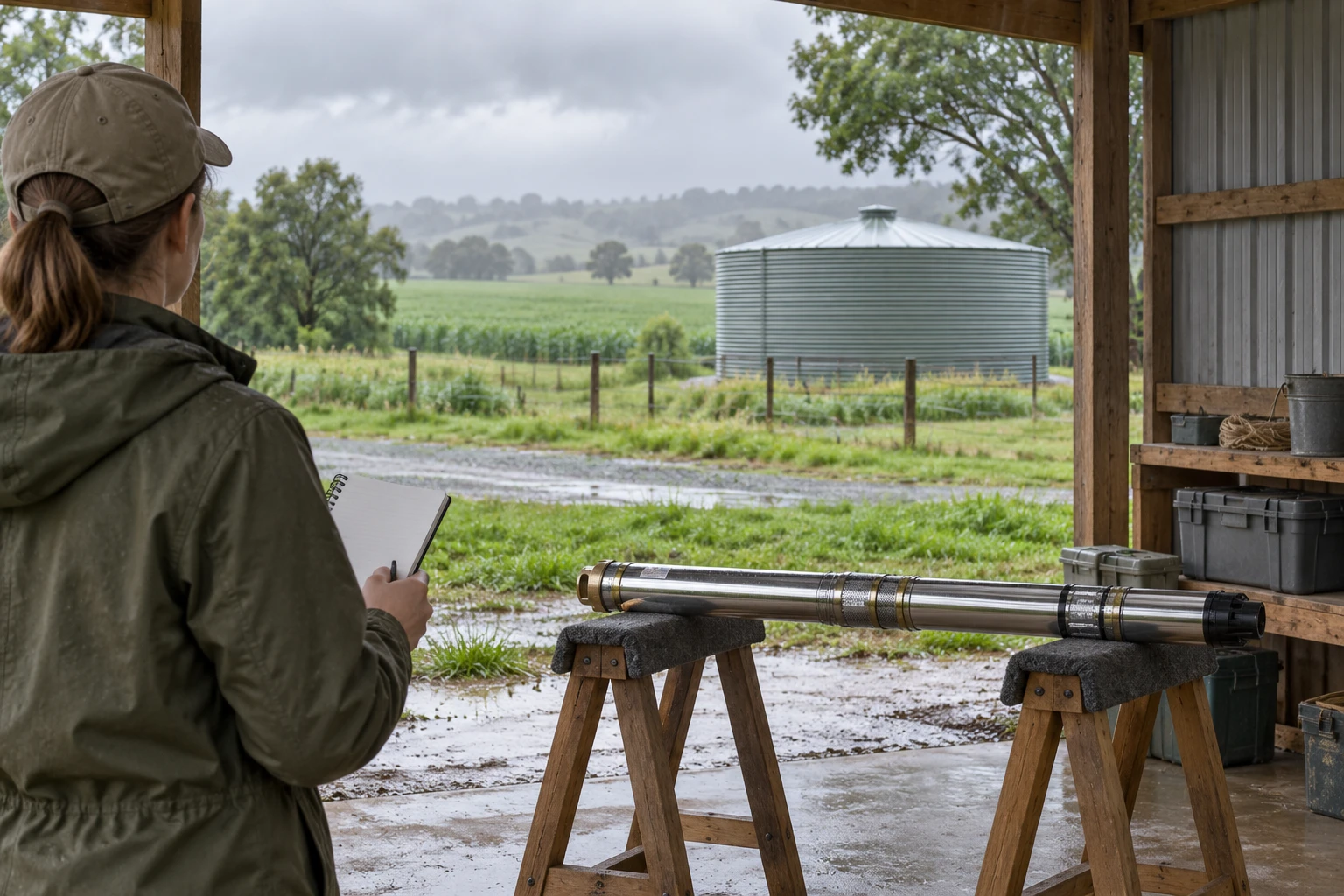
Define the consequence of missed irrigation before discussing backup. A short interruption may be manageable where storage is ample, but damaging during a narrow critical crop window. Record how much interruption the farm can tolerate and what response is practical. A nominal backup arrangement is of limited value if its fuel is unavailable or no trained operator can use it.
For solar, confirm the motor type, voltage, controller operating range and protective functions together. Do not connect an ordinary pump motor directly to panels or assume any variable-speed drive accepts the proposed photovoltaic supply. For a diesel generator, confirm both starting and sustained operation with the motor and control supplier. These are electrical design tasks for qualified personnel.
Inspect service access and spare-parts support for both proposals. A controller replacement that takes weeks can be as consequential as an engine breakdown. Include the means of lifting and servicing the well pump. The pump diameter and retrieval-access guide helps separate physical serviceability from the energy-source choice.
Learn the benefits and risks of solar irrigation
The following FAO overview introduces solar irrigation and the need for water-management safeguards. It is educational context, not an endorsement of a pump model or a promise of farm income. The World Bank’s solar water pumping knowledge base provides further resources for developing a project-specific brief.

Watch FAO’s solar irrigation overview.
Preguntas frecuentes
Is solar always cheaper than diesel for a well pump?
No. Compare installed and operating costs over the same period using local prices, actual annual use, equivalent delivered water and realistic maintenance assumptions.
Can an existing electric well pump run from solar panels?
Only after the exact motor, controller, supply range and protection have been confirmed as compatible. The pump category or photograph does not establish compatibility.
Does solar pumping require batteries?
Not every design uses batteries. Water storage, an adjusted operating schedule or approved backup can be alternatives, subject to the farm’s pressure and reliability needs.
What should be compared instead of maximum flow?
Compare the required daily volume delivered at the actual head under relevant seasonal conditions, together with irrigation timing and the water source’s sustainable operating limits.
What information should I send for an inquiry?
Provide daily volume, operating head, water-level records, zone schedule, electrical information, available storage, site conditions and the proposed power arrangement.