
Dewatering pump noise control should begin with a quieter suitable pumping arrangement, sound equipment condition and a practical site layout. Add engineered barriers or enclosures only after checking cooling, exhaust, access and the required hydraulic duty. Then verify the result at the affected worker locations and, where required, the project boundary or nearby properties. A lower reading beside the pump does not prove compliance everywhere. Continuous dewatering also means that simply switching the equipment off may create excavation or flooding risks. Plan noise reduction and water control together, using the site’s actual limits, operating hours and responsible engineering review.
Define who and what needs protection
List the people and locations affected by the installation. Workers inspecting the pump may have a different exposure pattern from residents beside a continuously operating site. Include nearby occupied buildings, access routes, temporary offices and night-time operations. The assessment should reflect when people are present and how long the pump runs.
Separate workplace hearing protection from community-noise obligations. Their measurement methods, assessment periods and legal requirements may differ. A hearing protector does not reduce noise received at a neighbouring property, and a boundary measurement does not establish a worker’s daily exposure.
Les construction noise guidance supports assessing exposure and controlling noise through equipment selection, layout and work practices. It describes UK workplace duties. For a US or other international project, obtain the locally applicable workplace and environmental requirements rather than treating that guidance as the governing law.
Establish a repeatable baseline
Record the pump identification, driver type, operating condition, speed where applicable, water level and approximate duty when measuring. Note other operating equipment, weather, receiver location, measurement duration and instrument details. A baseline taken during light operation cannot fairly represent a later high-duty period.
Use a competent assessor and a method suited to the requirement being evaluated. Instrument setup, calibration checks, measurement position and background noise can materially affect the interpretation. A mobile-phone reading may help locate a change, but should not automatically be presented as compliance evidence.
If the complaint concerns a particular tone, rattle or night-time event, retain a description and timeline rather than only one overall number. Compare like operating conditions before and after an intervention. Where background noise prevents a reliable comparison, report that limitation and arrange a better test window.
Distinguish abnormal machine noise from normal emission
Inspect the equipment’s condition before building a barrier around it. Loose covers, damaged exhaust components, worn mountings or an emerging mechanical fault can create noise that needs repair. A sudden change from the established operating sound deserves investigation, especially when accompanied by vibration, leakage or reduced performance.
Hydraulic noise also requires attention. Air entry, unsuitable inlet conditions, debris or operation outside the approved range may need a hydraulic correction rather than acoustic treatment. Use the de la pompe de déshydratation to organize the condition review, while following the actual model’s maintenance instructions.
Do not remove guards or approach moving parts to identify a sound. Any repair inspection requiring access or dismantling needs safe isolation and the appropriate competent personnel. Acoustic treatment should not conceal a continuing fault or prevent operators from seeing warnings and routine condition indicators.
Compare quieter arrangements at the required duty
Consider whether a different driver, pump position or pumping method can deliver the required flow and head with less noise at the affected receivers. Compare documented performance under comparable conditions. A quoted sound level without distance, load, configuration and measurement basis is not enough for a purchasing decision.
An electrically driven or submersible arrangement may change the noise sources, but it also introduces different power, cable, lifting, maintenance and suitability requirements. If a generator is needed, include it in the assessment. Moving the pump noise away while adding a noisy generator near a receiver may achieve little overall improvement.
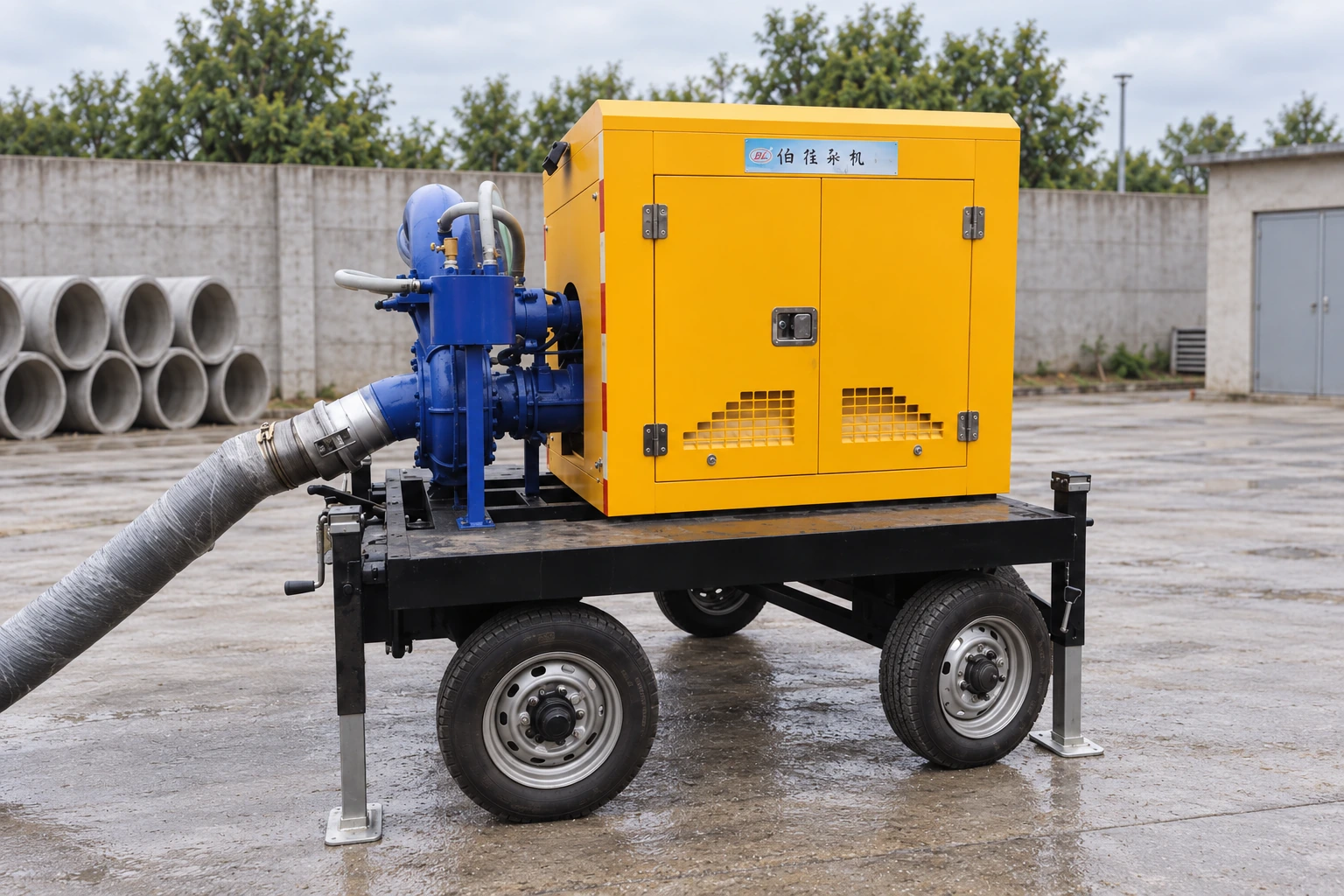
For a mobile diesel arrangement, request the complete package’s acoustic information, not only an engine brochure. Confirm which doors, panels, exhaust system and operating conditions were included. Do not describe an open package as sound-attenuated unless the supplied design and documented performance support that claim.
Place equipment without sacrificing hydraulic performance
Increase separation from occupied areas where the site allows it, and use the existing layout intelligently. A solid intervening structure can influence sound transmission, while hard surfaces may create reflections. Check the actual receiver positions rather than assuming that a longer map distance always solves the complaint.
Moving a surface pump farther from the water can increase suction losses or lift. A longer discharge route also changes friction and duty. Review the dewatering hose layout guide before accepting a relocation intended only to improve acoustics. The revised arrangement must still meet the required water-control duty.
Keep safe service access, vehicle protection, drainage and stable support. Do not place equipment in an unsafe recess or beside an excavation edge merely because a wall blocks sound. Verify the site plan with the responsible civil, pumping and safety personnel before moving an operating installation.
Select barriers and enclosures deliberately
A barrier interrupts a sound path; an enclosure surrounds a source more completely. Their performance depends on geometry, openings, material and sound frequency. The Federal Highway Administration’s construction noise mitigation handbook discusses source controls, shielding and enclosure approaches. It is construction-noise guidance, not a pump-package acoustic guarantee.
| Control option | Planning check | Evidence of effectiveness | Important limitation |
|---|---|---|---|
| Repair and maintenance | Inspect abnormal rattles, loose parts and exhaust condition | Comparable before and after observations | Does not remove normal emission from the selected package |
| Quieter equipment selection | Compare complete packages at the required duty | Documented acoustic basis and field verification | Driver-only data may omit other sources |
| Increased separation | Check receiver position and revised pipe losses | Measurements at the affected locations | Relocation can reduce hydraulic performance |
| Temporary barrier | Review height, gaps, reflections and safe support | Receiver measurements under comparable operation | Sound can pass around edges and openings |
| Engineered enclosure | Verify airflow, exhaust, heat and maintenance access | Acoustic and operational checks together | A poorly designed cover can create operating hazards |
This table identifies design questions, not guaranteed attenuation values. The project’s assessor should select and verify the arrangement. Avoid promising a fixed reduction from a photograph or a generic material description.
Preserve cooling, exhaust and emergency access
A diesel-driven package needs its documented cooling and combustion-air arrangements and a safe exhaust route. Do not drape blankets or seal improvised panels around it. An acoustic enclosure must be designed with suitable ventilation and heat management rather than judged solely by how quiet it sounds outside.
Consider hot surfaces, fire precautions, fuel access, exhaust discharge and any nearby air intakes. Access openings and ventilation paths can transmit noise, but closing them without engineering review can create a more serious problem. Use an appropriately designed package or obtain a competent enclosure design for the actual equipment.
Keep emergency stopping arrangements, alarms and inspection points accessible. Operators must be able to detect leakage, overheating and other abnormal conditions. A control that requires panels to be removed for every routine visit may be poorly suited to continuous operation, even if an initial acoustic test looks favourable.
Verify controls throughout changing site conditions
Repeat the relevant measurements after installing controls, using comparable operating conditions and receiver positions. Check the pump’s temperatures, alarms, water-control performance and service access at the same time. Acoustic improvement is incomplete if the revised setup cannot maintain the excavation’s required conditions.
Reassess when water levels, duty, equipment, site hoardings or nearby occupancy change. A barrier that worked beside a low receiver may be less effective for a higher window. A new reflective surface or another running machine may alter the result. Retain the site sketch and measurement locations so later comparisons remain meaningful.
For continuous operations, define responsibility for inspecting damaged barriers, loose panels and open enclosure doors. Record complaints and correlate them with the operating log. Investigate the relevant condition rather than treating a daytime reading as proof of acceptable performance during every night-time operating state.
Include practical requirements in the enquiry
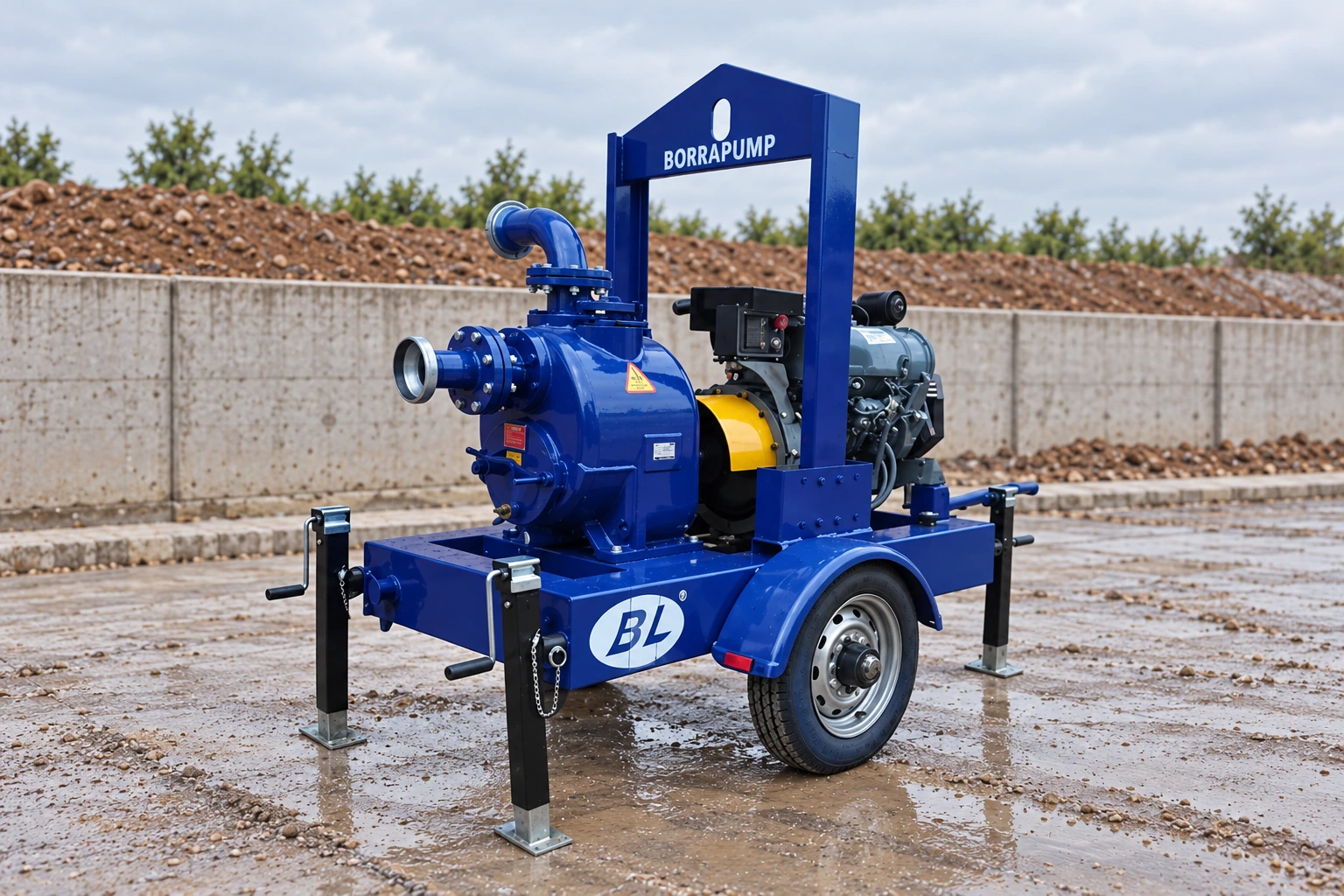
Le CHWY mobile diesel engine drain pump is a real BorraPumps product reference for discussing mobile drainage needs. Its image does not prove a particular acoustic enclosure, sound rating or permitted installation. Request the selected configuration’s documents and confirm its suitability for the site.
Send the required flow and head, expected operating hours, driver and power constraints, site plan, receiver locations and applicable assessment method. State whether the enquiry needs a documented package sound level, field acceptance test or engineered noise-control arrangement. Include water characteristics and maintenance access requirements so noise is evaluated alongside pumping suitability.
Le guide de sélection de la pompe de déshydratation montée sur remorque covers wider equipment considerations. For this enquiry, ask suppliers to identify the assumptions behind every acoustic statement, including load, distance and supplied panels. Do not convert a different manufacturer’s advertised rating into a BorraPumps performance claim.
Train operators and retain the operating record
Explain why controls are fitted, which doors or panels must remain in their approved condition and when inspection is required. Where hearing protection remains necessary, select and use it through the site’s hearing-conservation arrangements. It supplements source and path controls; it does not justify ignoring feasible engineering improvements.
Retain the baseline, chosen controls, photographs, equipment documents, final measurements and any unresolved limitations. Assign follow-up responsibility and a review trigger. The CDC educational video below addresses construction noise and hearing-loss prevention. It supports worker awareness, but does not certify the acoustic performance of a pump or replace the project’s environmental assessment.

Foire aux questions
Can a temporary sound barrier make any pump compliant?
No. Performance depends on the source, barrier geometry, openings, receivers and assessment requirement. Select a suitable design and measure the actual result. Some situations require a quieter package or a purpose-designed enclosure rather than another temporary panel.
Is an electric pump always the quietest complete solution?
Not necessarily. Assess the complete installation, including generators, auxiliary equipment and operating duty. Electrical suitability, water characteristics, lifting and maintenance also matter. Compare documented configurations and verify the outcome at the affected locations.
Can a diesel pump be covered with an acoustic blanket?
Do not apply an improvised cover that interferes with cooling, combustion air, exhaust, hot surfaces or service access. Use a design approved for the actual package and conditions. A lower external sound reading alone does not demonstrate safe operation.
Does a boundary measurement establish worker protection?
No. Boundary impact and worker exposure are different assessments. Workers may spend time much closer to the equipment and encounter other noise sources. Have the responsible assessor evaluate each requirement using the appropriate method and operating period.
When should the noise-control plan be reviewed?
Review it after significant changes in equipment, duty, operating hours, barriers, site layout or affected occupancy, and when complaints or abnormal noise occur. Check both acoustic results and continued pumping performance before accepting the changed arrangement.