
A dewatering pump maintenance schedule should combine the manufacturer’s service intervals with checks at dispatch, during use, after abnormal events and when the unit returns from hire. Running hours alone cannot describe exposure to abrasive water, blocked hoses, transport damage or poor storage. For a rental fleet, the useful result is a reliable machine with a documented condition and a clear next service date. This guide provides a scheduling framework for surface-mounted drainage pumps; engine, electrical and seal work must follow the manuals for the actual equipment.
Build the schedule around the individual asset
Give every pump an asset number and record its exact model, serial number, driver, allowable liquid conditions and service documentation. A bare pump, a diesel package and an electric package need different records. Keep the engine service requirements separate from the pump inspection tasks, even when both are completed during the same workshop visit. The earliest applicable interval governs the relevant task; do not assume an engine oil change also resets pump seal maintenance.
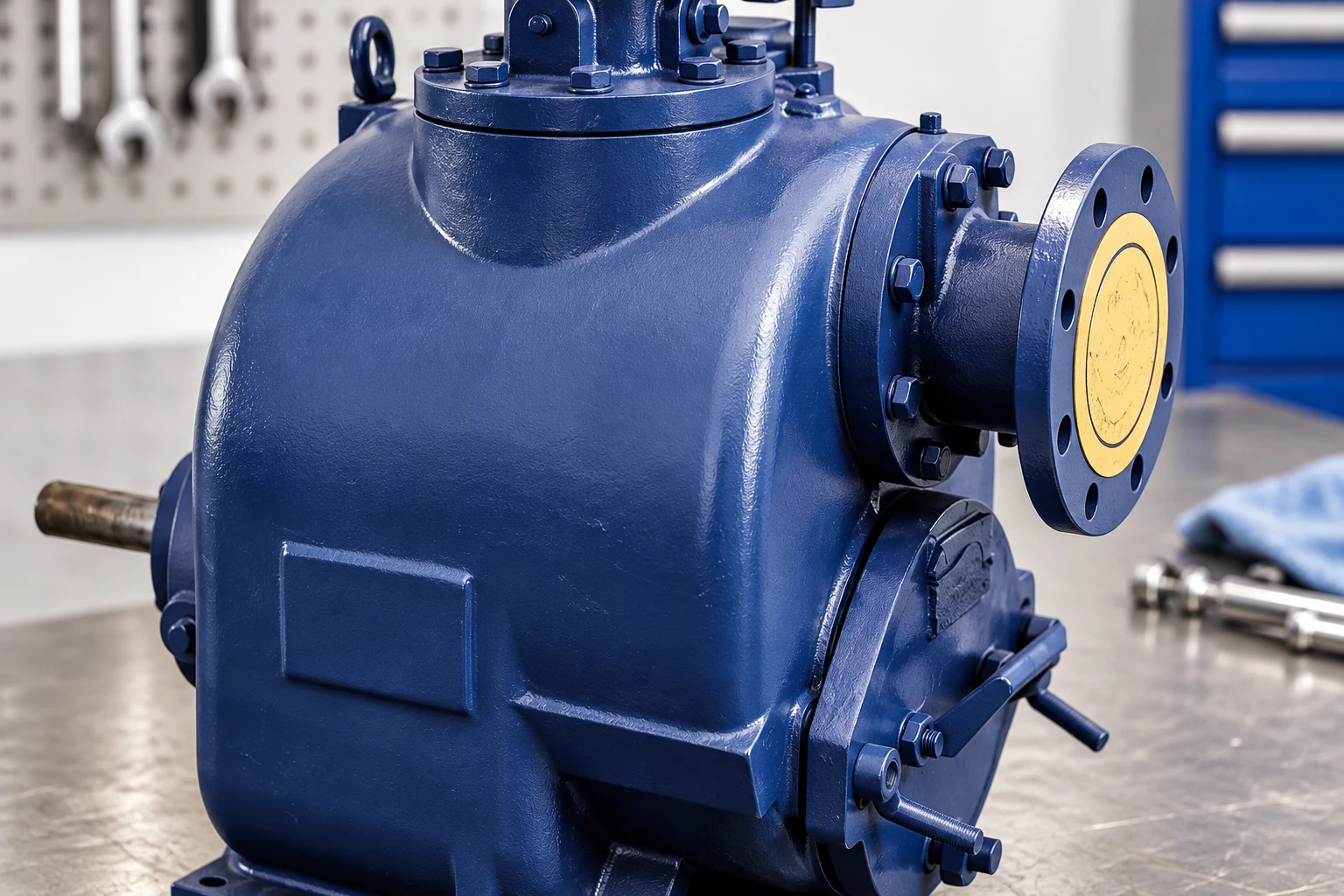
Le Borra SP self-priming dirt pump is the product reference for the exterior illustrations. The photographs do not establish an internal seal arrangement, a supplied driver or a standard service interval. Ask for the operating manual and parts information for the quoted configuration before adding it to a fleet. The service sheet should identify which tasks an operator may perform and which require a qualified technician.
Use triggers as well as calendar reminders
Make a service due when its specified hours or calendar limit arrives, whichever the manual requires first. Add event triggers such as dry running, suspected freezing, overheating, unusual vibration, contaminated lubricant and a blocked intake. These events can require inspection before the next planned service. Recording an event is more useful than simply shortening every interval without knowing which component is exposed.
Compare work orders with hire conditions. A machine repeatedly handling gritty water may need more frequent wear assessment than an identical unit used for relatively clean water. Establish the adjusted inspection frequency from observed condition and the manufacturer’s guidance, not a universal rule copied from another pump. A record of wear, leakage and measured performance lets the fleet manager explain why one asset has a different schedule.
A practical fleet maintenance matrix
| Trigger | Check or task | Release decision |
|---|---|---|
| Before dispatch | Confirm identification, inspection status, hoses, guards and safe lifting points | Hold any unit with missing protection or unresolved defects |
| At installation and routine site checks | Inspect intake, leaks, support, connections and operating readings | Stop when readings or condition exceed the manual’s limits |
| Specified service interval | Complete pump and driver tasks using their separate manuals | Reset only the tasks actually completed |
| Fonctionnement anormal | Investigate overheating, dry running, vibration or loss of performance | Do not release until the cause is corrected |
| Return from hire | Clean safely, inspect wear and damage, test and document results | Record pass, repair required or quarantine |
| Long storage | Apply the specified preservation and recommissioning procedure | Test before the next hire |
This matrix is an administrative framework, not a replacement for the manufacturer’s numerical intervals. The US Department of Energy pumping-system sourcebook explains the value of assessing pumping-system condition and maintenance. Use its system perspective alongside the actual equipment instructions.
Inspect the equipment before dispatch
Start with the previous return report. An unresolved defect should remain attached to the asset rather than disappearing when a new hire order is opened. Check the casing for damage, external leakage, fasteners, guards, lifting arrangements and connection condition. Inspect hoses for cuts, exposed reinforcement, worn couplings and the correct pressure or vacuum rating. A visually sound discharge hose is not automatically suitable for suction service.
Confirm that the accessories match the planned duty. Include the intended strainer, hose lengths, connection sizes and approved driver settings in the dispatch record. Missing or restrictive accessories can create a field complaint that looks like pump wear. Link the assessment to the suction and discharge hose-sizing guide so the hire team considers the entire setup rather than the pump in isolation.
Give operators a short site checklist
Operators should record meaningful observations at the frequency specified for their installation. These may include liquid level, suction conditions, discharge pressure, evidence of air entry, leakage, noise and the driver’s available status readings. The checklist must distinguish a normal reading from a stop condition. A blank tick box marked “checked” cannot show whether a deteriorating condition was noticed.
Make the reporting route explicit. An operator who finds a damaged hose, missing guard or unusual vibration should know whom to contact and how to isolate the unit safely. Do not reach into the intake or loosen a casing while the pump could start. Stored liquid pressure and hot surfaces remain relevant after power is removed. The OSHA guidance on controlling hazardous energy describes the purpose of isolation; the site’s procedure must address the actual sources of energy.
Separate cleaning from mechanical service
Cleaning after hire helps reveal defects, but it is not proof that the equipment is mechanically sound. Choose a method compatible with the materials, electrical protection and liquid previously handled. Collect contaminated wash water according to the site requirements. Do not direct high-pressure water into areas the manufacturer excludes, and do not assume a drainage pump is suitable for hazardous or chemically aggressive liquids.
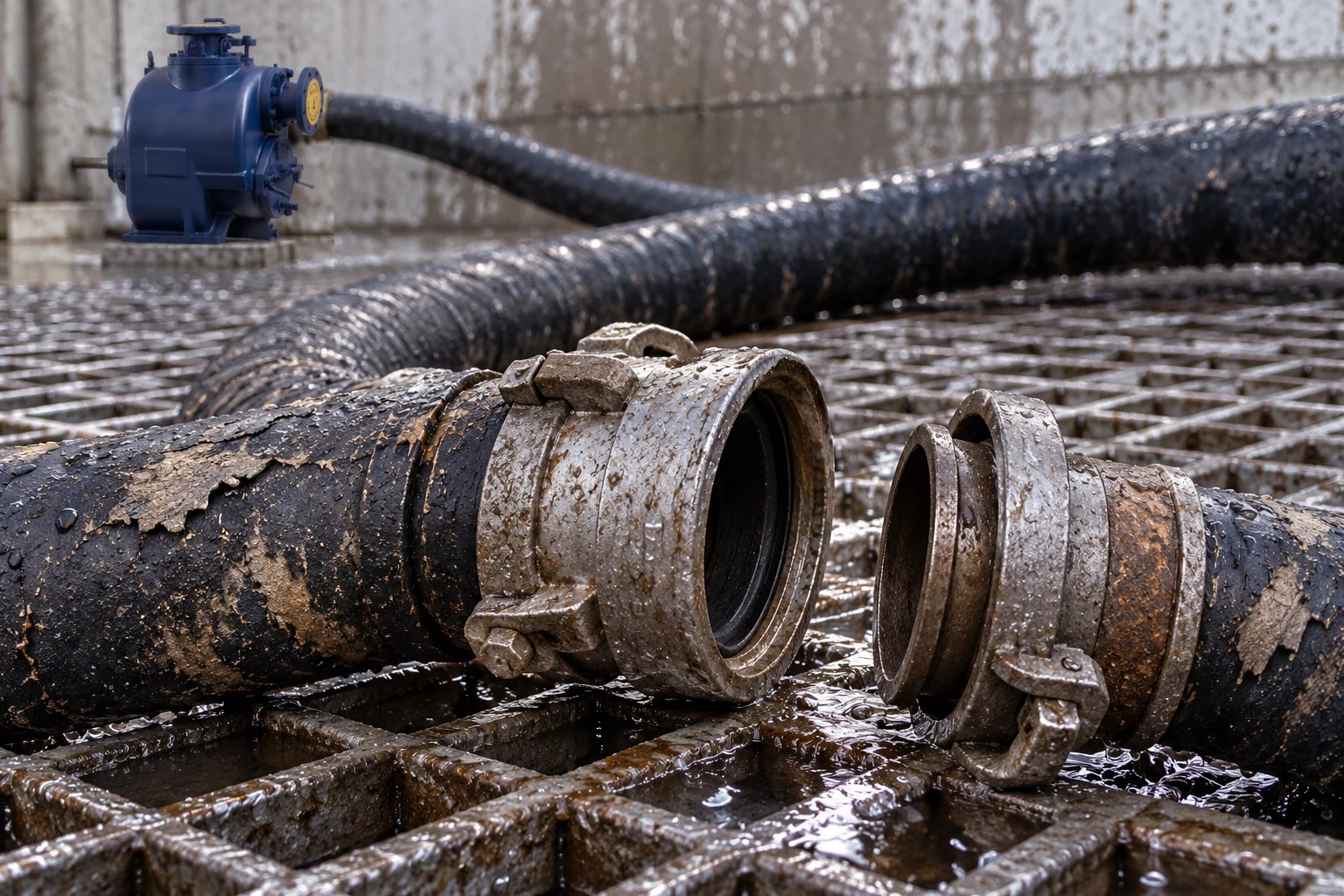
After cleaning, look for damage that mud concealed: casing cracks, bent supports, worn connection surfaces and abrasion around the intake. Where inspection covers may be opened, use the prescribed isolation, draining and reassembly process. A technician should compare wear with the specified allowable condition. Do not infer an acceptable impeller clearance or a seal replacement procedure from an exterior product photograph.
Test against a repeatable baseline
A return test is useful only when the setup is understood. Record the test liquid, hose arrangement, inlet level, flow measurement method, discharge pressure and driver speed or frequency. Compare like conditions. A lower flow measured through a longer hose cannot by itself prove that the pump has deteriorated. A baseline established with a known sound unit is more informative than an undocumented statement that it “pumps strongly.”
Use the pump-curve guide to relate flow and head to the supplied curve. Investigate a change before replacing parts: restrictions, air leakage, speed, measurement error and test-rig changes can all affect the result. Record which instrument was used and whether its accuracy is adequate for the release decision. An uncertain test should trigger verification rather than an invented pass value.
For a related operator-level inspection, see the self-priming pump maintenance checklist; use the fleet schedule to assign responsibility and record release decisions.
Handle storage and recommissioning deliberately
Check the storage instructions for draining, corrosion protection, lubricant condition, permitted shaft movement and protection of openings. Temperature and freezing risks matter when liquid can remain trapped. An apparently empty casing may still contain water in low points. Driver batteries, fuel systems and electrical equipment have their own preservation requirements; keep those tasks in the asset record.
Before recommissioning, remove temporary preservation materials as instructed, check connections and guards, and verify the startup procedure. Self-priming does not mean the machine can always be started with an empty casing. Confirm the priming requirement for the actual model and installation. Recommissioning should conclude with documented operating readings, not merely a short run that proves the driver starts.
Use the record to reduce repeat failures
Track failure modes by asset and by hire application. Repeated casing abrasion suggests a different question from repeated hose damage or repeated overheating. Look for links between failures, liquid composition, operating point, installation practice and transport. A maintenance schedule becomes more effective when it removes the cause of repeat repairs rather than making the workshop perform the same repair more often.
Measure reliability using downtime, recurring defects and successful release tests, with hire hours or duty recorded where available. Keep ordinary inspection work separate from corrective repairs so costs remain understandable. When requesting spares or replacement equipment, send the supplier the operating conditions and defect evidence. This helps distinguish a service problem from a pump that is unsuitable for the hired application.
Make the next service visible at handover
The handover document should show the next due task, the reading used to calculate it and any operating restrictions. If the hire may extend beyond a service limit, agree who performs the work and how the equipment is isolated. Record that arrangement before dispatch so a customer does not continue operating simply because the machine has not failed. Returning an asset early for a planned service is different from recovering it after a defect.
Learning resource
NPTEL’s lecture on centrifugal pump characteristics provides background on interpreting performance. It does not set maintenance intervals for a Borra product. Use it to help explain why repeatable flow and head measurements belong in a release test.

Foire aux questions
Is a daily check the same as a service?
No. A site check identifies changes and defects. A service completes specified maintenance tasks, and both should have their own records.
Can the fleet use one interval for every pump?
Only where the relevant manuals and operating conditions support it. Different drivers, liquid conditions and service exposure may require separate schedules.
Should a pump be released after an overheating trip?
Not simply because it restarts. Investigate the cause, apply the required inspection and confirm acceptable operation before release.
What information should accompany a repair request?
Provide the model, serial number, symptoms, operating readings, liquid conditions, event history and the work already completed.