
Diesel trash pump fuel consumption cannot be reliably predicted from the pump inlet diameter or engine power alone. Start with the selected engine’s fuel data at the expected load, then confirm litres per hour under the actual installed duty. Runtime depends on usable fuel, reserve policy and measured consumption, while flow, head, hose losses and operating hours determine how much useful water-moving work the fuel supports. For a site without reliable power or regular deliveries, measure both fuel use and delivered flow. This guide gives buyers a practical way to estimate shift requirements without inventing a universal consumption figure.
Define what you need the estimate to answer
A fuel estimate may support an equipment comparison, a delivery schedule, an overnight running window or a project cost allowance. Those are different questions. A small hourly consumption figure is not automatically the lowest-cost option if the pump delivers too little water or runs for much longer. Likewise, a large tank does not guarantee unattended operation if the installation needs frequent debris removal, inspections or controlled shutdowns.
Write down the required flow range, installed head, daily operating hours and the consequences of running out of fuel. Record whether the pump works continuously, cycles with water level or waits in standby. Separate fuel used while pumping from fuel used during warm-up, testing and any idle periods. This gives the supplier and site team a common basis for comparing data rather than mixing a full-load engine value with a lightly loaded drainage duty.
Understand the connection between water duty and engine load
The useful hydraulic power delivered to water depends on flow and head. In SI units, hydraulic power in kilowatts is density multiplied by gravitational acceleration, flow in cubic metres per second and head in metres, divided by one thousand. Shaft power is higher because the pump is not perfectly efficient. Engine fuel use then depends on the engine’s behavior at that shaft demand, its speed and the installation. This relationship explains why changing the system can change consumption.
Le US Department of Energy pumping-system sourcebook supports evaluating flow, head and system efficiency together. Do not turn hydraulic power directly into litres per hour using an assumed engine efficiency. Ask for the engine’s appropriate fuel curve or documented consumption data and clarify the operating conditions behind it. Where the proposed mixture differs materially from water, obtain any required hydraulic or power corrections before estimating fuel.
Use a fuel planning table with verified inputs
The following table identifies the information needed for a useful estimate. It deliberately gives no generic fuel-consumption rating for Borra equipment. Fill the inputs from the selected configuration, a supplier document or a measured site trial.
| Entrée | Pourquoi c'est important | How to verify it |
|---|---|---|
| Engine model and speed | Fuel behavior is configuration-specific | Check the quotation, engine identification and applicable fuel curve |
| Delivered flow and head | Establish the actual pumping duty | Use site measurements and a reviewed system calculation |
| Measured fuel use in L/h | Connect the duty to real consumption | Record a representative timed trial with a consistent measurement method |
| Usable fuel volume | Controls the planned operating window | Confirm the selected tank and allowed reserve, rather than nominal capacity alone |
| Operating schedule | Separates continuous work, cycling and standby | Record pump-on hours and any idling or testing separately |
| Refueling and delivery access | Determines whether the operating window is practical | Review safe shutdown, delivery time and the site’s fuel-handling procedure |
Measure litres per hour without creating a fuel hazard
Use the engine and site’s approved measurement method. Depending on the installation, suitable options may include an appropriate fuel meter or a controlled refill record over a known operating period. Never disconnect a running fuel line, defeat protective systems or improvise an unsafe measuring vessel. Diesel return arrangements can also make a simple supply-line reading misleading; the measurement must represent fuel actually consumed.
Record the start and finish times, pump duty, speed, water level and measured quantity. Use a representative period rather than a brief start-up observation. If the duty changes during the trial, record that change instead of presenting one average as a fixed specification. Repeat under the conditions that matter to the project, such as initial drawdown and the later, lower water level. Keep the raw record so that an unexpected increase can be compared against the same basis.
Calculate the operating window from usable fuel
The planning formula is simple: operating time in hours equals usable fuel in litres divided by measured consumption in litres per hour. Usable fuel is the amount the operating plan permits you to consume before the planned stop, after any required reserve or configuration limits have been accounted for. It should not be assumed to equal the nominal tank capacity.
For an illustrative arithmetic example only, suppose a project has 60 litres available for the planned operating window and a representative trial records 3 litres per hour. The calculation gives 20 hours. If another verified duty uses 4 litres per hour, the same available quantity gives 15 hours. These figures are not Borra product ratings. They show why the estimate must use the actual duty and why the delivery plan should allow for changing conditions rather than promising the first result throughout the job.
Compare fuel use per delivered volume
Hourly fuel consumption answers the refueling question. Fuel per delivered volume can help compare useful performance. Divide litres consumed by the measured cubic metres delivered over the same period. Ensure both measurements cover the same operating window. A trial that includes significant idle time should state that fact, and a comparison should not mix a short clean-water test with a long solids-bearing shift.
As another illustrative example, a trial consuming 12 litres while delivering 300 cubic metres gives 0.04 litres per cubic metre. This is an arithmetic demonstration, not a performance claim. Use it only after verifying the delivered volume and comparable duty. For the flow measurement and sizing inputs, see the dewatering flow calculation guide. A pump that saves fuel per hour but misses the required drainage rate may create a larger operating risk than its fuel saving suggests.
Look for system causes before blaming the engine
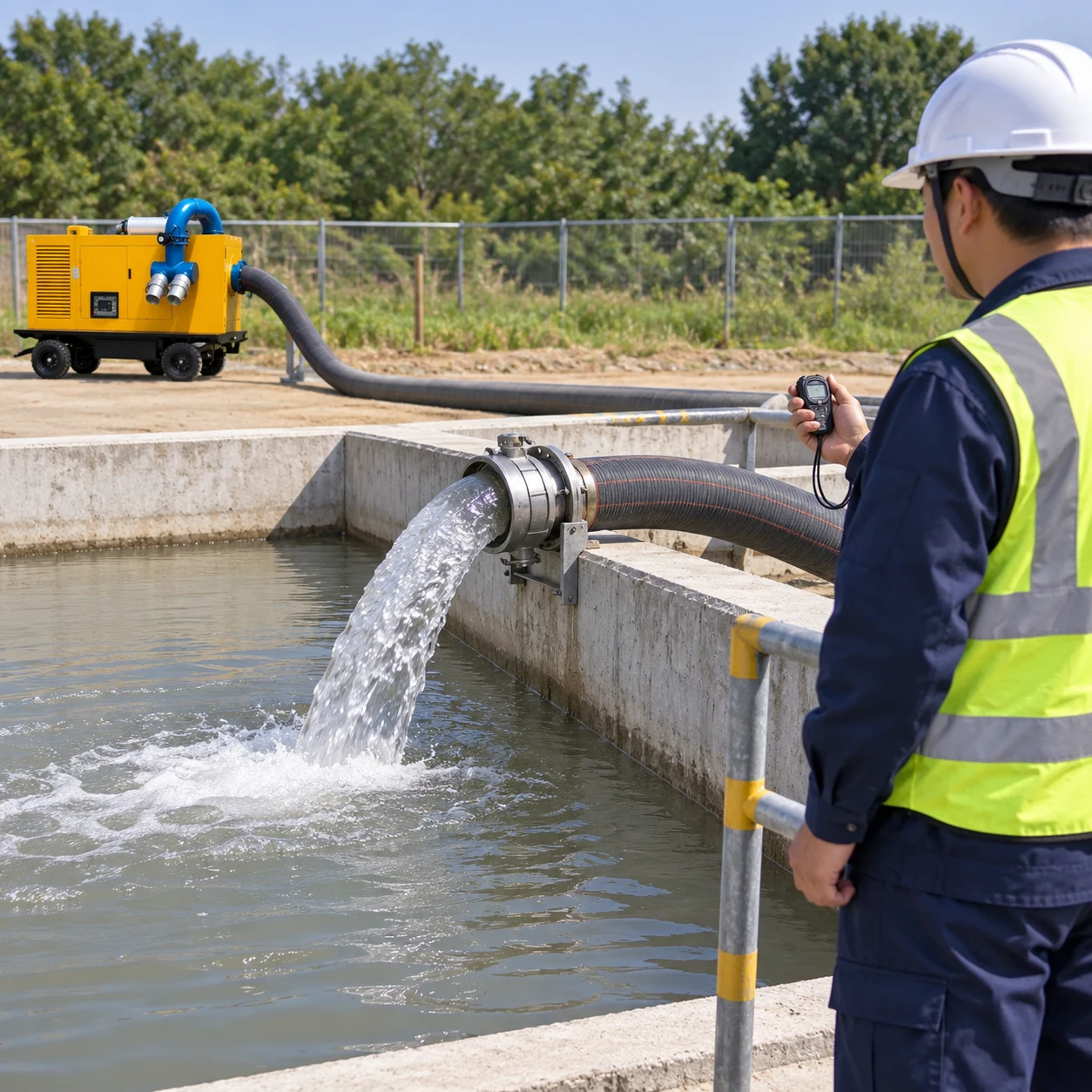
A rising fuel requirement may coincide with a longer discharge route, a higher destination, a changed water level or a new duty point. Hose diameter, fittings and condition affect resistance. An air leak or poor intake arrangement may impair delivery even while the engine continues running. Debris and wear can also change performance. Check the installation and delivered result alongside the engine condition.
Use the dewatering head calculation guide to organize the changed system inputs. The Hydraulic Institute pump fundamentals provide further background on performance and operating points. Do not assume that increasing engine speed will correct a delivery problem. Any change must remain within the documented pump and engine limits and should be reviewed against the actual system.
Check restrictions and maintenance without opening unsafe equipment
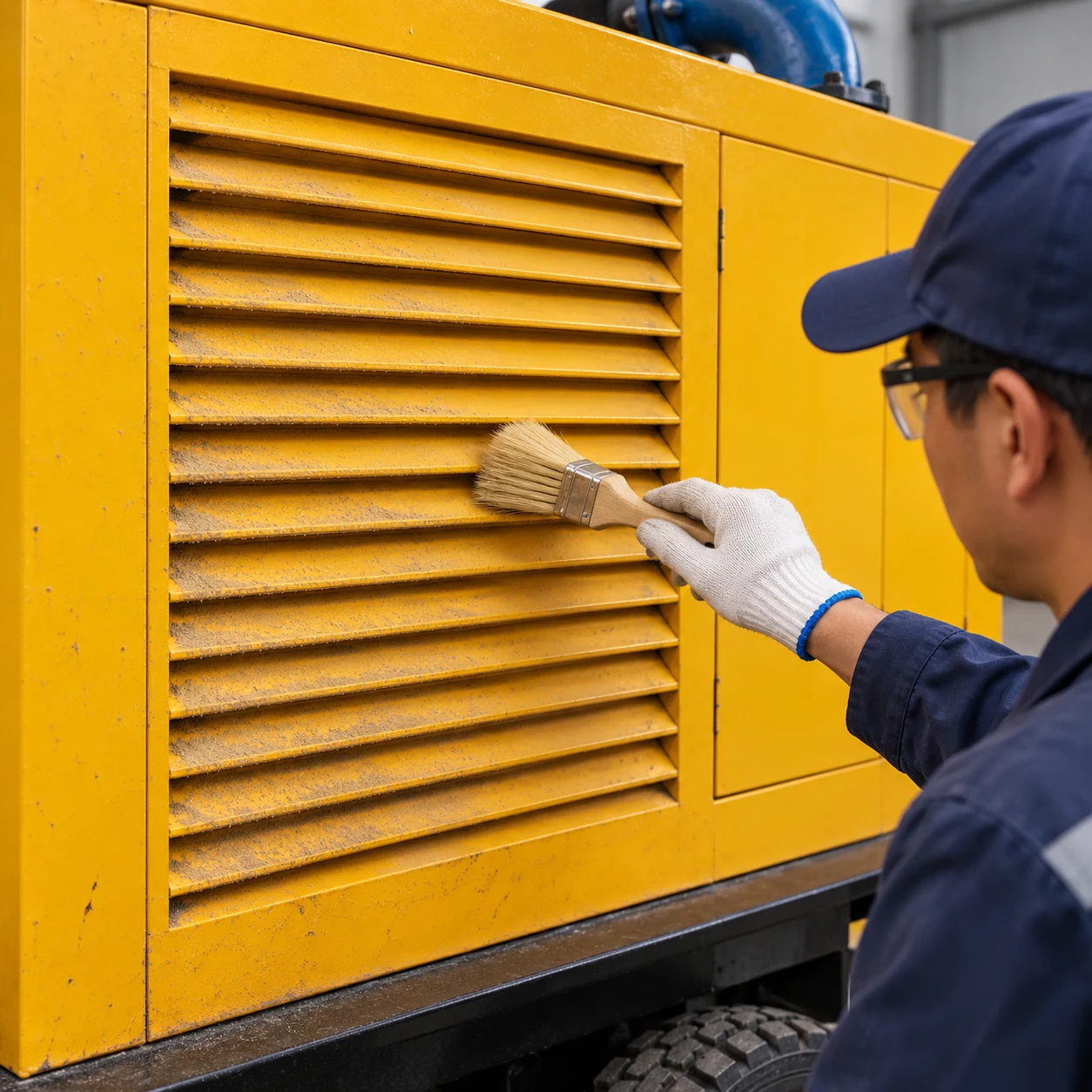
Review the engine’s specified checks for air intake, cooling, filters, lubrication and fuel quality. Inspection intervals and replacement requirements belong to the selected engine manual, not to a generic trash-pump article. Keep guards in place and isolate the equipment before work. A photograph of an enclosure cannot tell a buyer which filter, injector or service part is fitted.
External obstructions, poorly maintained equipment or unsuitable fuel may justify investigation, but do not assign a diagnosis from consumption alone. Record accompanying symptoms, alarms, exhaust behavior and the recent service history, then involve the responsible technician. Avoid claiming that cleaning one visible vent will deliver a specific percentage fuel saving. Its role is to support correct inspection and maintenance, with any performance improvement established by a comparable retest.
Plan fuel deliveries around safe operation
Choose a practical refueling window before the calculated quantity is exhausted. Account for travel time, weather, access restrictions and an approved reserve. Do not make a running pump’s tank the last available fuel source on a remote site. Store and handle fuel under the applicable site procedure, with appropriate containment and separation from ignition sources. Refueling must follow the engine instructions, including any required shutdown and cooling.
Keep an operational handover that states fuel remaining, recent consumption, expected duty and the next planned inspection or stop. A fuel estimate is not permission to leave equipment unattended. Monitoring requirements also depend on water level, intake blockage, discharge conditions and the consequences of pump failure. For a broader power decision, compare these practical issues with the diesel versus electric dewatering discussion.
Request configuration-specific information from Borra
Review the Borra mobile and trailer pump range et le CHWY mobile diesel drainage pump as starting points for an inquiry. The linked product illustrates mobile diesel drainage equipment; it does not establish a universal trash-handling limit or fuel rating. For a solids-bearing duty, ask Borra to confirm the appropriate product and configuration before quoting runtime.
Send the flow and head range, liquid and solids description, suction arrangement, planned hours, site access and destination country. Request the selected engine identification, applicable consumption data, usable fuel basis and maintenance documents. If the supplier proposes a site trial, agree how fuel and delivered volume will be measured. That produces a defensible operating plan and a fairer comparison than an unsupported litres-per-hour number.
Foire aux questions
How much diesel does a trash pump use per hour?
There is no reliable universal figure. Use the selected engine’s documented data at the expected duty and verify consumption under the installed conditions.
Can I estimate runtime from tank capacity alone?
No. Runtime needs usable fuel and consumption at the actual duty. Account for the planned reserve and any configuration limits before dividing litres by litres per hour.
Does a lower hourly consumption mean a cheaper pump?
Not necessarily. Compare delivered volume, required operating hours and whether the equipment meets the drainage duty, as well as the hourly fuel use.
Are the example values in this guide Borra specifications?
No. They are explicitly illustrative arithmetic examples. Obtain configuration-specific values from the quotation, engine documentation or a controlled site trial.
Formation continue
This independent educational lecture provides background for the fluid and pump principles discussed above. It does not verify a Borra product rating or replace the project selection.
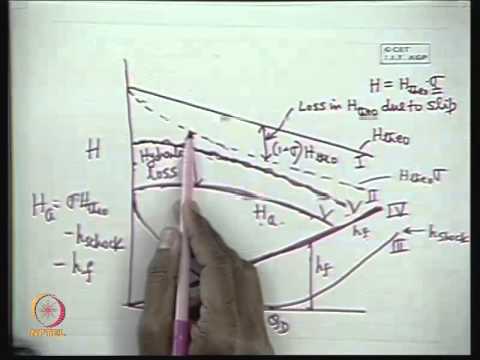
Watch nptelhrd: Mod-01 Lec-15 Characteristics of a Centrifugal Pump