
Pump seal cooling line inspection begins by identifying what each auxiliary connection actually does. Then check the line’s condition, fittings, supports and route, and verify the intended flow through an approved procedure. A nearby water pipe may serve a jacket, an external flush, a quench or another function; those arrangements cannot be treated as interchangeable. This guide addresses the physical integrity and restoration of existing small-bore lines. It does not specify a universal cooling-water flow, authorize a seal-plan conversion, or assume that every centrifugal pump requires external water.
The aim is to return a documented arrangement to service without leaving an obstructed passage, a misconnected line or an unsupported fitting. Include the result in the centrifugal pump maintenance inspection record. Equipment drawings, the seal instructions and the site’s work controls determine the actual acceptance criteria.
Build a connection list before removing anything
Find the pump and seal identification, the auxiliary-system drawing and its current revision. Trace each line from its source to its termination. Record connection labels, direction where specified, valves, instruments, restrictions, drains and returns. A photograph of a crowded seal area is useful, but it should accompany a clear connection list rather than replace one.
Label both ends before disconnection. Note whether the line carries process liquid, utility water, barrier liquid or another medium. A pipe that feels cool is not reliable evidence of its function. Follow the documented circuit and resolve discrepancies with the responsible engineer before changing the installed arrangement.
Use o mechanical-seal flush-water requirements guide for utility conditions and compatibility questions. Keep that specification work separate from this inspection: an intact line can still receive unsuitable water, while suitable water cannot compensate for a damaged or incorrectly routed line.
Distinguish observation from hands-on maintenance
During operation, observe only from an authorized safe position. Record visible leakage, abnormal movement, contact with other equipment and damage that can be seen without reaching into hazardous areas. Do not grasp a vibrating tube to judge its severity, tighten an unknown fitting under pressure or defeat guards to improve access.
Hands-on inspection requires the correct isolation boundaries. Auxiliary services may remain pressurized after the pump stops. Consider the supply, the process connection, trapped sections and any thermal source. Confirm the approved safe condition before loosening a joint; stopping the motor alone does not demonstrate that every auxiliary circuit is depressurized.
O HSE pressure-systems safety guide explains the hazards associated with pressure equipment and the importance of appropriate maintenance and safe work. Its UK regulatory discussion is not a statement of the rules in every country. Apply the site’s local legal and engineering requirements.
Preserve the line’s as-found condition
Before cleaning, photograph deposits, corrosion, wetness and contact marks. Mark where leakage was observed and whether it was active or only staining from an earlier event. Include the line identification and a clear orientation reference. A close-up without location information may become difficult to interpret once several similar lines are on a workbench.
Record recent maintenance and the event that triggered inspection. A line disturbed during a seal change presents different questions from a circuit that has gradually lost flow. This history helps the team select the next verification without treating every inspection as a complete redesign.
Do not discard removed fittings until their condition and identity are recorded. A replacement request should identify the original part, the observed defect and the required specification. “Replace seal water tube” is too vague when the assembly includes different materials, thread forms or sealing technologies.
Inspect tubing and fittings as individual components
Check accessible surfaces for dents, flattening, corrosion, rubbing, damaged threads and evidence of previous unapproved repair. Note the location and extent of each condition. A dent near a support and a crack at a connection should have separate records, because they may require different investigation and replacement boundaries.
Verify component identity against the bill of materials or approved drawings. Avoid assuming interchangeability from appearance. Similar-looking fittings can use different threads, sealing arrangements or assembly instructions. Do not combine parts from unidentified fitting systems to recover a damaged connection quickly.
OISD’s pump-inspection document explicitly includes auxiliary small-bore lines, fitting condition and proper flow among inspection tasks. This supports examining the complete circuit. It does not supply a universal tightening method, tube size, pressure-test value or allowable defect depth for the equipment in front of you.
Check routing, supports and access together
Compare the installed route with the approved drawing and the as-found record. Look for unintended contact with guards, sharp edges or hot surfaces. Identify a missing clamp, loose support or evidence of rubbing. Record whether the route obstructs normal inspection or requires a line to be strained during another maintenance task.
Do not add a rigid support merely because a line moves. The arrangement may need to accommodate equipment movement or thermal change. A support modification can transfer load to a small fitting or seal connection. Escalate a changed route or support location for an engineering review that considers the connected equipment.
Where vibration may be involved, connect the observation to the pump vibration measurement record. This article does not set a vibration limit for small-bore tubing. The relevant line assessment may require different measurements and criteria from those used for a bearing housing.
Turn defects into a controlled work list
The decision table below organizes typical observations. It is a work-planning aid, not a permission to repair a pressurized component or acceptance of a particular test method. Establish the equipment-specific procedure before carrying out the action.
| Observação | Próxima verificação | Required closeout evidence |
|---|---|---|
| Wet joint or dried residue | Medium, actual leak origin and fitting identity | Repair record and approved leak check |
| Dented or flattened tube | Location, section affected and replacement requirement | Traceable replacement and route check |
| Rubbing marks | Contact point, support condition and movement source | cURL Too many subrequests by single Worker invocation. To configure this limit, refer to https://developers.cloudflare.com/workers/wrangler/configuration/#limits |
| cURL Too many subrequests by single Worker invocation. To configure this limit, refer to https://developers.cloudflare.com/workers/wrangler/configuration/#limits | cURL Too many subrequests by single Worker invocation. To configure this limit, refer to https://developers.cloudflare.com/workers/wrangler/configuration/#limits | cURL Too many subrequests by single Worker invocation. To configure this limit, refer to https://developers.cloudflare.com/workers/wrangler/configuration/#limits |
| cURL Too many subrequests by single Worker invocation. To configure this limit, refer to https://developers.cloudflare.com/workers/wrangler/configuration/#limits | cURL Too many subrequests by single Worker invocation. To configure this limit, refer to https://developers.cloudflare.com/workers/wrangler/configuration/#limits | cURL Too many subrequests by single Worker invocation. To configure this limit, refer to https://developers.cloudflare.com/workers/wrangler/configuration/#limits |
| cURL Too many subrequests by single Worker invocation. To configure this limit, refer to https://developers.cloudflare.com/workers/wrangler/configuration/#limits | cURL Too many subrequests by single Worker invocation. To configure this limit, refer to https://developers.cloudflare.com/workers/wrangler/configuration/#limits | Independent connection check before release |
A work list should name who will resolve each uncertainty. Avoid closing a defect simply because the pump can be started. Release must address the affected auxiliary function and the evidence required by the supplied procedure.
Verify flow without confusing it with pressure
Pressure at one point does not, by itself, establish useful flow through the whole circuit. Identify the specified measurement location and test condition. Where instrumentation is fitted, verify its identity and serviceability before using its reading to judge the line. Record units and the normal operating state of the pump and auxiliary system.
Select the approved flow-check or commissioning method for the actual medium and circuit. Do not discharge an unknown fluid into an improvised container, use compressed air indiscriminately or bypass a restriction to obtain an attractive reading. Cleaning, flushing and testing need planned collection, compatibility and pressure controls.
Compare the result with the specified acceptance criteria and retain the actual reading. If the acceptance value is missing, state the missing requirement rather than inventing one. A statement that water was present is weaker than a recorded measurement at a defined point under the conditions the equipment requires.
Restore connections and close the inspection
Before reassembly, reconcile every removed part with the connection list. Maintain cleanliness at open ends and apply the component manufacturer’s assembly instructions. Protect small fittings from loads introduced by forcing a misaligned tube into place. If the route no longer fits without force, investigate why rather than using the connection to pull it into position.
Complete the specified leak and functional checks after restoration. Record final valve positions, instrument availability, guards and support condition. Where the procedure requires a second-person check, have that person trace the physical connections instead of signing from the drawing alone.
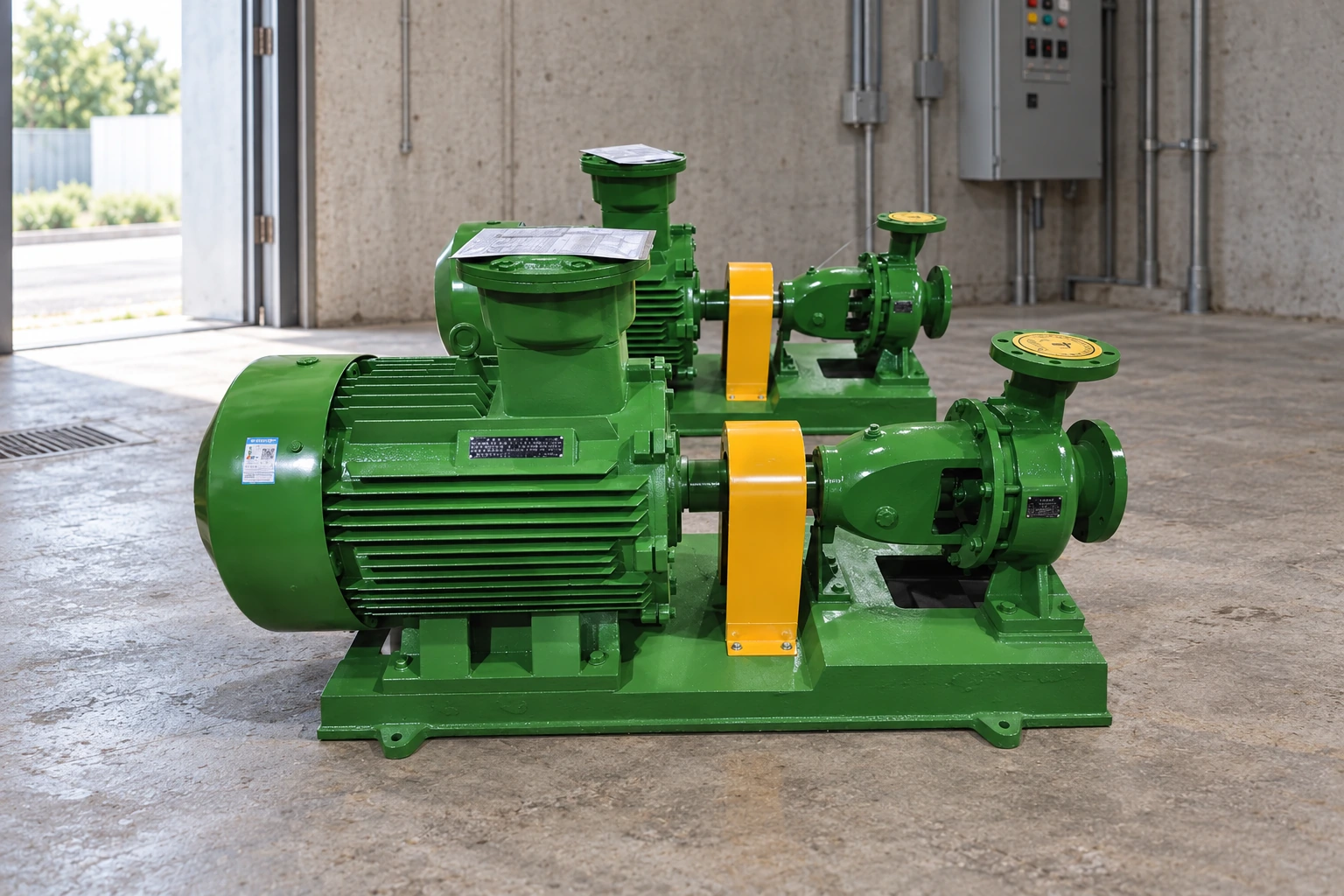
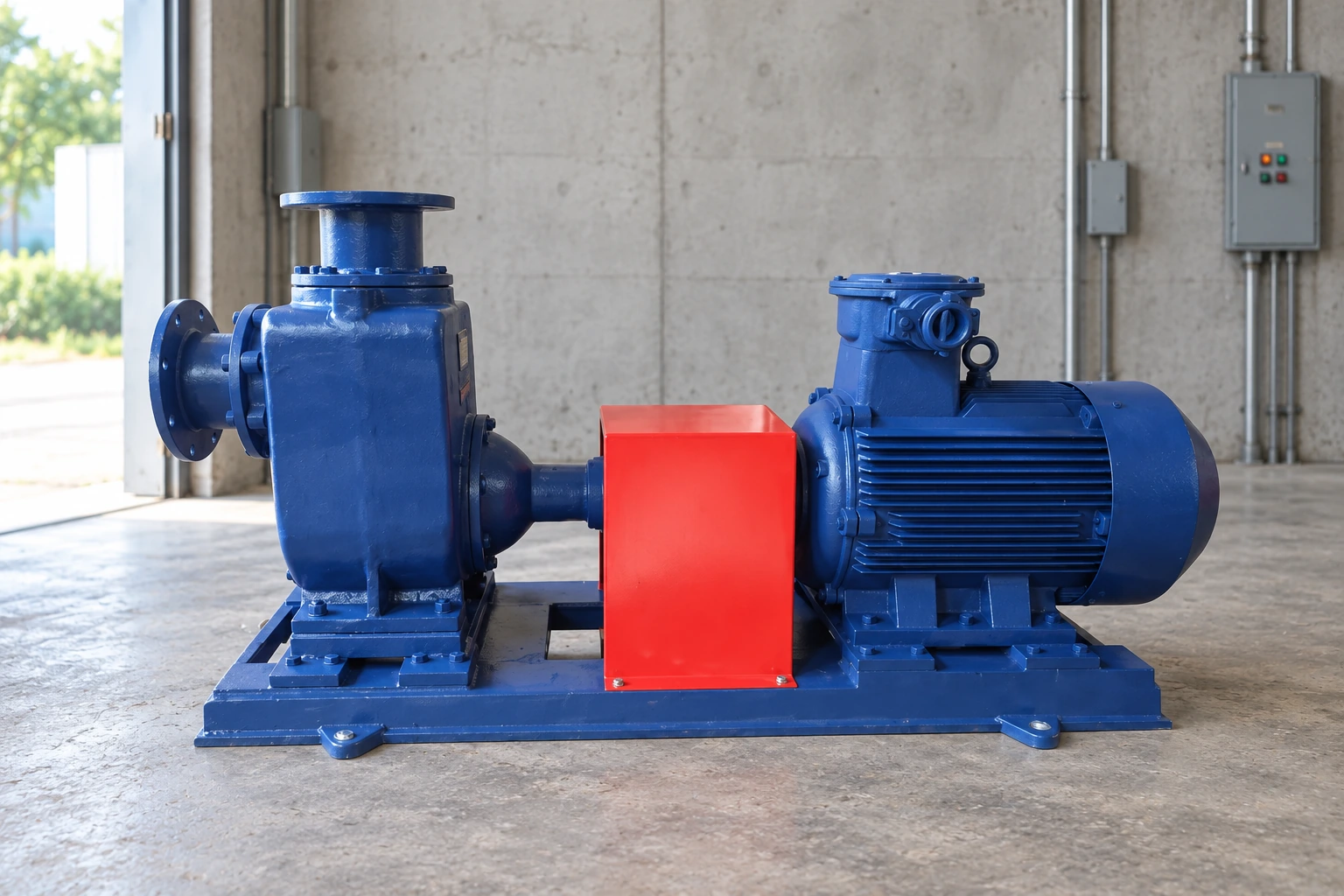
Um ISW horizontal inline pump inquiry should request the exact seal and auxiliary arrangement for the quoted duty. The product image identifies the pump family; it is not proof that a pictured model includes the cooling circuit discussed here. Further learning: Practical Engineering’s lesson on flow and pressure in pipes explains why pressure and flow are different observations. It supports the flow-verification section; it does not specify the cooling rate for this equipment.
Perguntas frequentes
Does every centrifugal pump need a seal cooling line?
No. The need and arrangement depend on the supplied pump, seal, fluid and duty. Identify the actual connections from the documentation. Do not add an external water supply or modify a seal plan because another pump in the plant has a similar-looking tube.
Does good pressure prove that the line is clear?
No. A pressure reading at one location does not establish the required flow through every passage. Use the approved measurement method at the specified location and operating condition. Check the instrument as well as the circuit before interpreting an unexpected reading.
Can a leaking fitting simply be tightened further?
Not without identifying its assembly instructions and making the work safe. Leakage may involve a damaged component, an incompatible fitting or load from misalignment. Further tightening can damage the connection. Record the defect and follow a controlled inspection and repair procedure.
Should a vibrating auxiliary line be clamped rigidly?
A support change needs to account for movement, thermal effects and connected components. Record the existing supports and contact points, then obtain the required engineering assessment. An improvised clamp can relocate the stress rather than resolve the cause.
What information should be sent for replacement tubing?
Provide equipment identity, drawing revision, endpoints, medium, specified operating conditions, tube and fitting specifications, route, support arrangement and photographs of the defect. Ask for traceable components and the applicable assembly and test instructions. Do not order from outside diameter alone.