
The best trash pump for flood control is the pump that meets the required emergency flow and total dynamic head while passing the expected debris, priming reliably, operating safely for the required duration, and discharging to an approved location. Start with flood inflow, water levels, suction lift, discharge elevation and hose length, solids and abrasiveness, fuel or power, access, deployment time, standby capacity, and operator availability. A large outlet or horsepower rating does not prove delivered flow. Use the certified curve and a complete field package, then test the setup before the emergency.
Hướng dẫn này là một khung kỹ thuật và mua sắm ban đầu, không phải là sự thay thế cho thiết kế dự án đã được phê duyệt, các quy định hiện hành, hướng dẫn của nhà sản xuất, hoặc sự giám sát có trình độ tại công trường. Công việc điện, kiểm tra khi có điện, cẩu nâng, làm việc trong không gian hạn chế, công việc phòng cháy chữa cháy, đào đất, chất lỏng nguy hiểm, nước thải, và các hệ thống có áp suất đòi hỏi các quy trình cụ thể theo công việc và nhân sự có năng lực. Duy trì bảo vệ tự động và tình trạng sẵn sàng của hệ thống trong khi điều tra sự cố. Nếu chất lỏng thực tế, chế độ vận hành, điều kiện công trường hoặc yêu cầu quản lý khác với các giả định, hãy dừng lại và nhận đánh giá kỹ thuật đã được sửa đổi.
- Define the flood-control objective and inflow
- Calculate head for the actual hose layout
- Match debris passage, wear, and cleanout access
- Choose priming, driver, controls, and runtime
- Deploy safely and control the discharge
- Exercise, inspect, and document readiness
- Bảng quyết định
- Các câu hỏi thường gặp
Define the flood-control objective and inflow
State what must be protected, the maximum acceptable water level, available storage, expected inflow, deployment time, and consequence of pump failure. Sources can include rainfall runoff, river or tide intrusion, groundwater, drainage-system backup, firefighting water, or a breached barrier. Use the responsible engineer's hydrology and site plan for permanent or high-consequence protection. Temporary response plans should identify trigger levels, pump locations, access routes, fuel, operators, and the receiving outfall before a storm. A pump that begins after the only access road floods is not an effective plan. Divide capacity among lead and standby units when one failure would cause unacceptable damage. Consider whether pumps must operate while debris load, water level, and discharge route change.
Calculate head for the actual hose layout
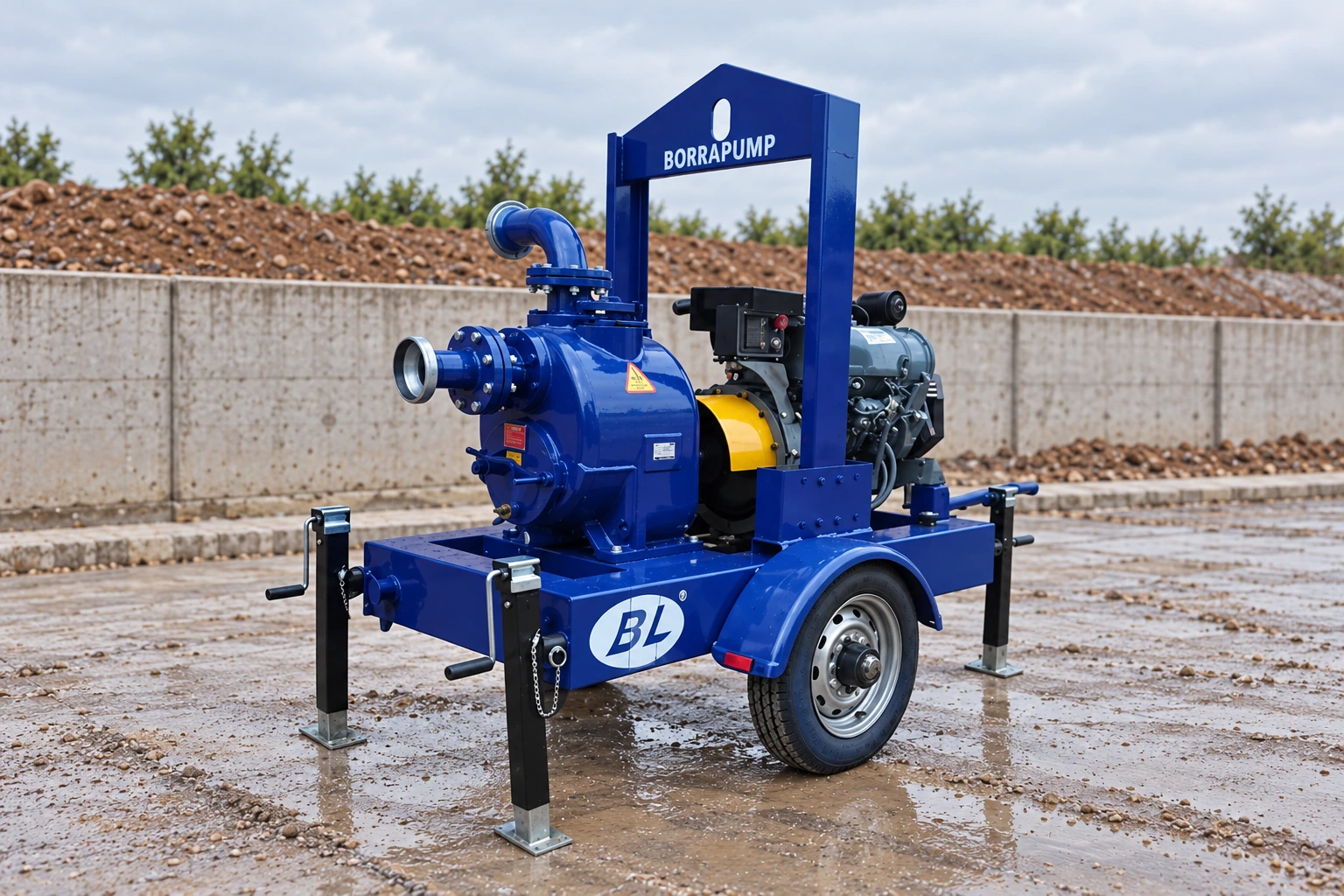
Total dynamic head includes vertical rise from the lowest operating water level to the outlet, pressure at the discharge point, and losses through suction hose, discharge hose, fittings, check valves, manifolds, and treatment equipment. Flexible hose inside diameter, length, bends, roughness, and kinks strongly affect loss. Suction lift also affects priming and net positive suction head available. Keep the pump close to water and the suction route short where safe placement allows. Calculate normal and worst routes, including falling source level and a relocated outlet. If multiple pumps share a header, model their interaction. Confirm hose and fitting pressure ratings at shutoff and transient conditions, not just during the expected flow.
Match debris passage, wear, and cleanout access
Floodwater can contain leaves, plastic, rags, gravel, silt, sewage, and construction debris. Describe the likely solids and compare strainer openings, pump solids passage, impeller arrangement, wear materials, cleanout covers, and access. A trash pump is not immune to blockage or abrasion. The suction strainer should prevent material larger than the pump can pass while providing enough free area to avoid excessive loss. Place it away from loose sediment and floating debris where possible, and inspect it during operation. Highly abrasive or contaminated water may require different equipment, materials, containment, and disposal. Record what the selected model can actually pass from its data sheet rather than using an unverified generic definition of semi-trash or full-trash.
Bảng quyết định dự án
| Flood-control input | Selection check | Field evidence |
|---|---|---|
| Peak inflow and allowed level | Required duty and standby capacity | Hydrology or response plan |
| Suction lift and hose route | Priming and NPSH available | Site elevations and layout |
| Debris and sediment | Passage, strainer and wear design | Floodwater description |
| Discharge destination | Head, erosion and permit controls | Approved outfall plan |
| Required runtime | Fuel, power, staffing and service | Emergency operating plan |
| Failure consequence | Standby, alarms and response | Risk assessment and exercise |
Choose priming, driver, controls, and runtime
Self-priming centrifugal trash pumps require the casing to be filled initially and the suction line to be leak-tight; vacuum-assisted systems add priming equipment that must also be maintained. Ask for expected prime time at the proposed suction lift and hose. For diesel packages, confirm rating and site derating, fuel runtime, refueling method, battery, cooling, exhaust, noise, shutdowns, and weather protection. For electric units, confirm source capacity, motor starting, cable, grounding, water exposure, and generator compatibility. Critical unattended service may need level controls, remote alarms, automatic restart or changeover, and a standby pump. Define what happens after loss of prime, blocked intake, low fuel, high temperature, or power failure.
Deploy safely and control the discharge
Place the pump on stable ground outside the expected flood path and away from unstable banks or excavation collapse zones. Stabilize trailers, chock wheels, protect suction and discharge hoses from traffic, and restrain pressurized connections using approved methods. Direct exhaust away from workers and occupied areas, and control carbon monoxide exposure. Plan lighting, access, communication, refueling, spill control, and lifting. Confirm that the outfall can accept the water without erosion, backflow, downstream flooding, or environmental violation. Use energy dissipation, sediment control, or treatment where required. Never treat visibly clear water as proof that discharge is permitted. Update the route as flood levels and site access change.
Exercise, inspect, and document readiness
Run the complete pump, hose, strainer, driver, controls, and discharge arrangement before the flood season and after major maintenance. Measure prime time, suction and discharge pressures, flow estimate, engine speed or electrical current, fuel consumption, alarms, leaks, vibration, and hose movement. Verify spare hose, clamps, gaskets, fuel, batteries, tools, lighting, and communications. During an event, assign inspection intervals and record water level, runtime, fuel, intake condition, outfall erosion, and changes in sound or performance. After use, clean and dry equipment safely, inspect for abrasion and contamination, service the driver, repair hoses, replenish supplies, and capture lessons. Readiness is a maintained system, not a pump stored in a warehouse.
Biên bản mua sắm và nghiệm thu
Một bảng so sánh nhà cung cấp hoàn chỉnh nên sử dụng một bảng dữ liệu chung. Hãy đặt các điểm làm việc thiết kế và thay thế, chất lỏng, nhiệt độ, hàm lượng chất rắn, độ cao địa điểm, công suất, hệ thống điều khiển, lắp đặt, số giờ vận hành, số lượng, điểm đến và các tài liệu bắt buộc ở phần đầu. Chuẩn hóa các khác biệt về phạm vi trước khi so sánh giá cả hoặc hiệu suất. Yêu cầu đường cong đặc tính được chứng nhận hoặc dữ liệu năng suất, công suất tiêu thụ, giới hạn vận hành, vật liệu, kích thước, trọng lượng, các kết nối, động cơ hoặc thiết bị truyền động, bộ điều khiển, phụ kiện, các bài kiểm tra, phương pháp bảo quản, phụ tùng thay thế, hướng dẫn lắp đặt và ranh giới bảo hành. Ghi lại mọi sai lệch và giả định chưa được giải quyết. Trong quá trình đánh giá kỹ thuật, hãy truy xuất nguồn gốc của từng tính năng được chào giá về một đầu vào của dự án thay vì cộng điểm cho các tính năng mà điều kiện làm việc không cần đến. Trong quá trình chạy thử, hãy đo đạc các biến số giống như đã dùng cho việc lựa chọn thiết bị để kết quả lắp đặt thực tế có thể so sánh được với cơ sở ban đầu. Nếu các điều kiện hiện trường khác nhau, hãy cập nhật tính toán và nhận được sự phê duyệt có thẩm quyền trước khi thay đổi thiết bị hoặc các cài đặt bảo vệ.
Chủ đề này liên quan đến thiết bị BORRAPUMP như thế nào
Hướng dẫn này hỗ trợ việc đánh giá sớm best trash pump for flood control applications tuyến ứng dụng. Nó không gán một mô hình cuối cùng hay khẳng định rằng một cấu hình chuẩn phù hợp cho mọi dự án. Hãy gửi các điểm công tác, dữ liệu chất lỏng, bản vẽ mặt bằng, nguồn điện, hệ thống điều khiển, số lượng, điểm đến, các phê duyệt cần thiết và phạm vi kiểm tra để sản phẩm đề xuất có thể được kiểm tra đối với dịch vụ thực tế.
Các hướng dẫn kỹ thuật liên quan đến BORRAPUMP
- trailer-mounted dewatering pump selection
- trash pump vs drainage pump
- mobile drainage pump for construction sites
Các nguồn uy tín và tài liệu học tập nâng cao
FEMA flood information; Các ấn phẩm về carbon monoxide của OSHA; U.S. EPA stormwater program. Các nguồn này cung cấp bối cảnh chung về an toàn, môi trường hoặc kỹ thuật. Các quy tắc hiện được thông qua, phê duyệt dự án và hướng dẫn thiết bị vẫn giữ nguyên giá trị quyết định.
Video giáo dục của Practical Engineering: Máy bơm tạo ra áp suất hay lưu lượng?. Nó giải thích các nguyên tắc nền tảng và không thay thế các hướng dẫn dành riêng cho dự án.
Các câu hỏi thường gặp
Is a larger outlet always a better flood pump?
No. Delivered flow depends on the pump curve, total dynamic head, suction conditions, speed, hose, debris, and operating limits.
Does a self-priming trash pump need initial water?
Usually the casing must be filled according to the model instructions. The suction line must also be leak-tight.
How much standby capacity is required?
Base it on failure consequence, inflow uncertainty, repair and response time, access, and the responsible engineer or emergency plan.
Can floodwater be discharged to the nearest drain?
Not without checking capacity, backflow, erosion, downstream flooding, contamination, permits, and site approval.
Mốc kiểm tra dự án cuối khóa
Trước khi đặt hàng hoặc thay đổi hiện trường, hãy đối chiếu các thông số kỹ thuật và bản vẽ đã được phê duyệt với dữ liệu của nhà供应商, vật liệu, kích thước, trọng lượng, kết nối, bộ điều khiển, thiết bị điều khiển, phụ kiện, bảo vệ, phạm vi kiểm tra, tài liệu, phụ tùng thay thế, phương pháp lắp đặt, khả năng tiếp cận để bảo trì và các yêu cầu về điểm đến. Ghi lại các giả định còn lại và phân công trách nhiệm để giải quyết chúng. Thông tin được chấp nhận cuối cùng phải là cơ sở được sử dụng cho việc lắp đặt, chạy thử và bảo trì trong tương lai.