
The best trash pump for flood control is the pump that meets the required emergency flow and total dynamic head while passing the expected debris, priming reliably, operating safely for the required duration, and discharging to an approved location. Start with flood inflow, water levels, suction lift, discharge elevation and hose length, solids and abrasiveness, fuel or power, access, deployment time, standby capacity, and operator availability. A large outlet or horsepower rating does not prove delivered flow. Use the certified curve and a complete field package, then test the setup before the emergency.
هذا الدليل هو إطار هندسي ومشتريات مبكر، وليس بديلاً عن تصميم المشروع المعتمد، أو اللوائح الحالية، أو تعليمات الشركة المصنعة، أو إشراف الموقع المؤهل. تتطلب الأعمال الكهربائية، والاختبارات تحت الجهد، والرفع، والعمل في الأماكن المغلقة، وأعمال الحماية من الحريق، والحفر، والسوائل الخطرة، ومياه الصرف الصحي، والأنظمة المضغوطة إجراءات خاصة بالمهمة وأفراداً أثبتا كفاءتهم. حافظ على الحماية التلقائية وتوفر النظام أثناء التحقيق في الأعطال. إذا كان السائل الفعلي، أو الواجب، أو حالة الموقع، أو المتطلبات الحاكمة تختلف عن الافتراضات، فتوقف واحصل على مراجعة فنية معدلة.
Define the flood-control objective and inflow
State what must be protected, the maximum acceptable water level, available storage, expected inflow, deployment time, and consequence of pump failure. Sources can include rainfall runoff, river or tide intrusion, groundwater, drainage-system backup, firefighting water, or a breached barrier. Use the responsible engineer's hydrology and site plan for permanent or high-consequence protection. Temporary response plans should identify trigger levels, pump locations, access routes, fuel, operators, and the receiving outfall before a storm. A pump that begins after the only access road floods is not an effective plan. Divide capacity among lead and standby units when one failure would cause unacceptable damage. Consider whether pumps must operate while debris load, water level, and discharge route change.
Calculate head for the actual hose layout
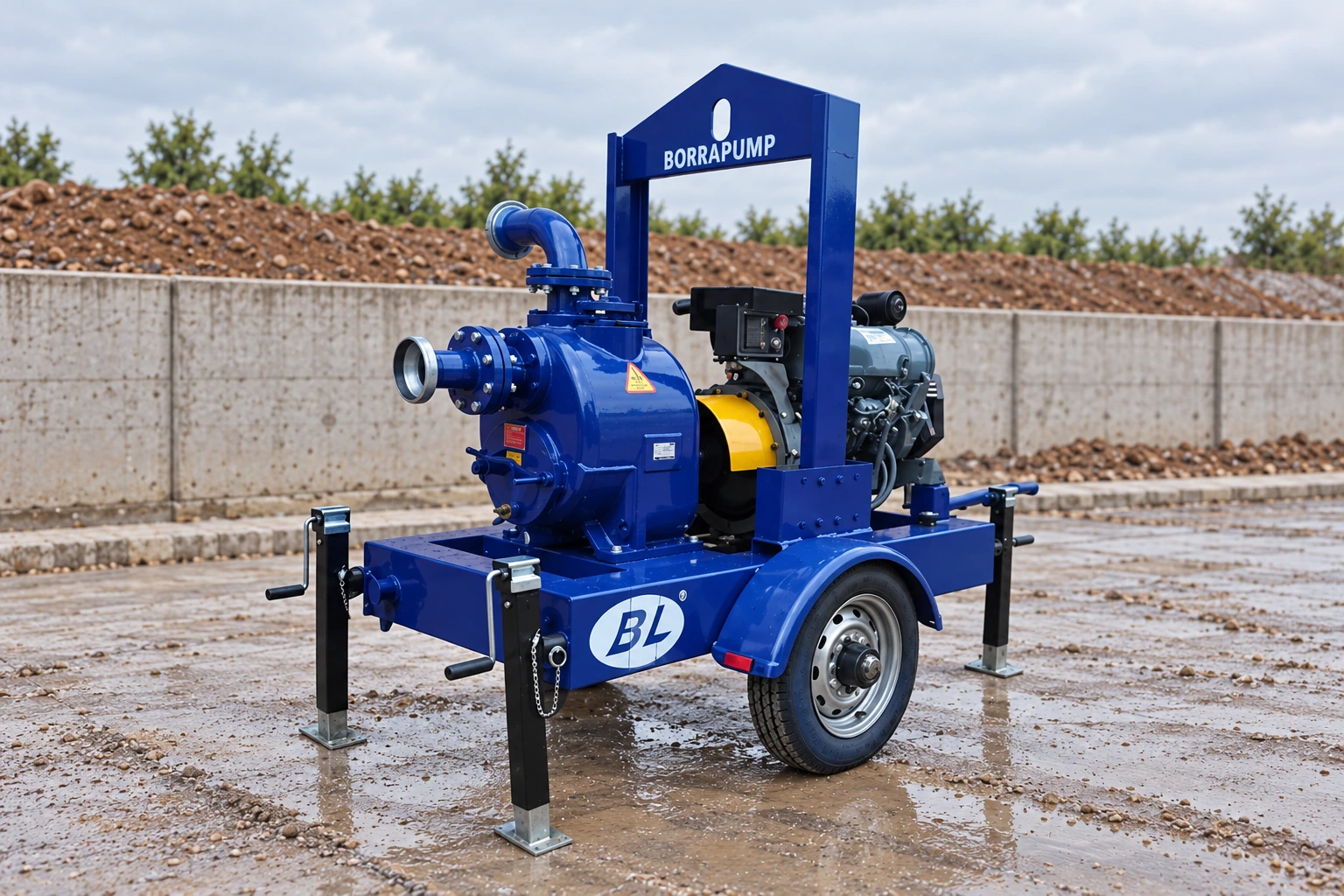
Total dynamic head includes vertical rise from the lowest operating water level to the outlet, pressure at the discharge point, and losses through suction hose, discharge hose, fittings, check valves, manifolds, and treatment equipment. Flexible hose inside diameter, length, bends, roughness, and kinks strongly affect loss. Suction lift also affects priming and net positive suction head available. Keep the pump close to water and the suction route short where safe placement allows. Calculate normal and worst routes, including falling source level and a relocated outlet. If multiple pumps share a header, model their interaction. Confirm hose and fitting pressure ratings at shutoff and transient conditions, not just during the expected flow.
Match debris passage, wear, and cleanout access
Floodwater can contain leaves, plastic, rags, gravel, silt, sewage, and construction debris. Describe the likely solids and compare strainer openings, pump solids passage, impeller arrangement, wear materials, cleanout covers, and access. A trash pump is not immune to blockage or abrasion. The suction strainer should prevent material larger than the pump can pass while providing enough free area to avoid excessive loss. Place it away from loose sediment and floating debris where possible, and inspect it during operation. Highly abrasive or contaminated water may require different equipment, materials, containment, and disposal. Record what the selected model can actually pass from its data sheet rather than using an unverified generic definition of semi-trash or full-trash.
جدول قرار المشروع
| Flood-control input | Selection check | Field evidence |
|---|---|---|
| Peak inflow and allowed level | Required duty and standby capacity | Hydrology or response plan |
| Suction lift and hose route | Priming and NPSH available | Site elevations and layout |
| Debris and sediment | Passage, strainer and wear design | Floodwater description |
| Discharge destination | Head, erosion and permit controls | Approved outfall plan |
| Required runtime | Fuel, power, staffing and service | Emergency operating plan |
| Failure consequence | Standby, alarms and response | Risk assessment and exercise |
Choose priming, driver, controls, and runtime
Self-priming centrifugal trash pumps require the casing to be filled initially and the suction line to be leak-tight; vacuum-assisted systems add priming equipment that must also be maintained. Ask for expected prime time at the proposed suction lift and hose. For diesel packages, confirm rating and site derating, fuel runtime, refueling method, battery, cooling, exhaust, noise, shutdowns, and weather protection. For electric units, confirm source capacity, motor starting, cable, grounding, water exposure, and generator compatibility. Critical unattended service may need level controls, remote alarms, automatic restart or changeover, and a standby pump. Define what happens after loss of prime, blocked intake, low fuel, high temperature, or power failure.
Deploy safely and control the discharge
Place the pump on stable ground outside the expected flood path and away from unstable banks or excavation collapse zones. Stabilize trailers, chock wheels, protect suction and discharge hoses from traffic, and restrain pressurized connections using approved methods. Direct exhaust away from workers and occupied areas, and control carbon monoxide exposure. Plan lighting, access, communication, refueling, spill control, and lifting. Confirm that the outfall can accept the water without erosion, backflow, downstream flooding, or environmental violation. Use energy dissipation, sediment control, or treatment where required. Never treat visibly clear water as proof that discharge is permitted. Update the route as flood levels and site access change.
Exercise, inspect, and document readiness
Run the complete pump, hose, strainer, driver, controls, and discharge arrangement before the flood season and after major maintenance. Measure prime time, suction and discharge pressures, flow estimate, engine speed or electrical current, fuel consumption, alarms, leaks, vibration, and hose movement. Verify spare hose, clamps, gaskets, fuel, batteries, tools, lighting, and communications. During an event, assign inspection intervals and record water level, runtime, fuel, intake condition, outfall erosion, and changes in sound or performance. After use, clean and dry equipment safely, inspect for abrasion and contamination, service the driver, repair hoses, replenish supplies, and capture lessons. Readiness is a maintained system, not a pump stored in a warehouse.
سجل الشراء والقبول
يجب أن تستخدم مقارنة الموردين الكاملة ورقة بيانات عامة واحدة. ضع نقاط التصميم والتشغيل البديلة، السائل، درجة الحرارة، المواد الصلبة، ارتفاع الموقع، الطاقة، أدوات التحكم، التركيب، ساعات التشغيل، الكمية، الوجهة، والمستندات المطلوبة في الأعلى. قم بتوحيد الاختلافات في النطاق قبل مقارنة السعر أو الكفاءة. اطلب منحنى معتمدًا أو بيانات سعة، والطاقة الممتصة، حدود التشغيل، المواد، الأبعاد، الوزن، الوصلات، المحرك أو المشغل، وحدة التحكم، الملحقات، الاختبارات، الحفظ، قطع الغيار، تعليمات التركيب، وحدود الضمان. سجل كل انحراف وافتراض غير محلل. أثناء المراجعة الفنية، تتبع كل ميزة معروضة وصولاً إلى مدخلات المشروع بدلاً من منح نقاط لميزات لا يحتاجها واجب العمل. أثناء التشغيل التجريبي، قس نفس المتغيرات المستخدمة في الاختيار بحيث يمكن مقارنة النتيجة المثبتة مع الأساس الأصلي. إذا كانت ظروف الموقع مختلفة، قم بتحديث الحساب واجصل على موافقة مسؤولة قبل تغيير المعدات أو إعدادات الحماية.
كيف يرتبط هذا الموضوع بمعدات BORRAPUMP
يدعم هذا الدليل المراجعة المبكرة لـ best trash pump for flood control applications مسار التطبيق. إنه لا يعين نموذجاً نهائياً أو يدعي أن تكوينًا قياسيًا واحدًا يناسب كل مشروع. أرسل نقاط التشغيل، والبيانات السائلة، ومخطط الموقع، ومصدر الطاقة، وأدوات التحكم، والكمية، والوجهة، والموافقات المطلوبة، ونطاق الفحص بحيث يمكن التحقق من المنتج المقترح مقابل الخدمة الحقيقية.
أدلة الهندسة الخاصة بـ BORRAPUMP ذات الصلة
- trailer-mounted dewatering pump selection
- trash pump vs drainage pump
- mobile drainage pump for construction sites
مصادر موثوقة ومزيد من التعلم
FEMA flood information; منشورات إدارة السلامة والصحة المهنية (أوشا) بشأن أول أكسيد الكربون; U.S. EPA stormwater program. توفر هذه المصادر سياقاً عاماً للسلامة أو البيئة أو الهندسة. تظل القواعد الحالية المعتمدة، ووافقات المشاريع، وتعليمات المعدات هي التي تحكم.
فيديو تعليمي من إنتاج براكتيكال إنجينيرينغ: هل المضخات تولد ضغطاً أم تدفقاً؟. إنه يوضح المبادئ الأساسية ولا يحل محل التعليمات الخاصة بالمشروع.
الأسئلة الشائعة
Is a larger outlet always a better flood pump?
No. Delivered flow depends on the pump curve, total dynamic head, suction conditions, speed, hose, debris, and operating limits.
Does a self-priming trash pump need initial water?
Usually the casing must be filled according to the model instructions. The suction line must also be leak-tight.
How much standby capacity is required?
Base it on failure consequence, inflow uncertainty, repair and response time, access, and the responsible engineer or emergency plan.
Can floodwater be discharged to the nearest drain?
Not without checking capacity, backflow, erosion, downstream flooding, contamination, permits, and site approval.
نقطة تفتيش المشروع النهائي
قبل تأكيد الطلب أو إجراء أي تغيير ميداني، قم بمطابقة الواجب والمخططات المعتمدة مع بيانات المورد، والمواد، والأبعاد، والأوزان، والوصلات، ومشغل التشغيل، وأدوات التحكم، والملحقات، الحماية، ونطاق الاختبار، والوثائق، وقطع الغيار، وطريقة التركيب، وإمكانية الوصول للصيانة، ومتطلبات وجهة الوصول. قم بتسجيل الافتراضات المتبقية وتحديد المسؤولية عن إغلاقها. يجب أن تكون المعلومات النهائية المقبولة هي الأساس ذاته المستخدم للتركيب، والتشغيل التجريبي، والصيانة المستقبلية.