
Sump drainage selection depends on inflow, total dynamic head, discharge path, and liquid content. A reliable sump pump drainage installation starts with basin duty and an approved discharge route, then matches pump type, head, and solids handling to the actual liquid — not to a generic horsepower label. For the drainage cluster overview, see the drainage pump guide.
Contents
- Part 1. What Should Be Confirmed Before Installation?
- Part 2. How Should the Discharge Line Be Planned?
- Part 3. What Role Do Check Valves and Floats Play?
- Part 4. How Is Pump Size Calculated?
- Part 5. When Are Sewage or Solids Pumps Needed?
- Part 6. Which BORRAPUMP Products Fit Drainage Inquiries?
- Part 7. What Are the Fit Boundaries?
- FAQ
Part 1. What Should Be Confirmed Before Installation?
A sump pump drainage installation fails early when buyers pick a pump before defining the basin and discharge boundary. Confirm these inputs first:
| Input | Why it matters | Common mistake |
|---|---|---|
| Basin or pit volume | Sets allowable cycle time and float range | Pump too large for small pit → short cycling |
| Peak inflow rate | Defines minimum pump flow | Using average flow only |
| Liquid type (clean, gray, sewage, slurry) | Sets impeller and seal family | Clean-water pump in solids service |
| Solids size and concentration | Sets passage requirement | Ignoring rag or debris load |
| Vertical lift to discharge | Part of total dynamic head | Measuring lift only at static condition |
| Horizontal run and fittings | Adds friction head | Undersized discharge pipe |
| Final discharge location | Code, erosion, and nuisance rules | Discharge back toward the same area |
| Power and control access | Serviceability | Float set without maintenance clearance |
EPA stormwater guidance reminds construction and site teams that discharge location is a regulated decision, not only a hydraulic one. Local plumbing or stormwater rules may restrict where sump water may be sent.
Part 2. How Should the Discharge Line Be Planned?
The discharge line must move water away from the basin without creating back-pressure from undersized pipe or sending flow back to the same problem zone.
| Discharge planning item | Review question | Typical field issue |
|---|---|---|
| Pipe diameter | Matches pump outlet and velocity limits | High friction, weak throw |
| Vertical rise | Included in TDH calculation | Pump cavitates or stalls |
| Fittings and valves | Counted in head loss | Hidden friction not in sizing |
| Free discharge vs tied-in line | Back-pressure from shared header | Pump runs but moves little volume |
| Freeze protection | Outdoor lines in cold climates | Seasonal failure |
| Air gap or backflow arrangement | Protects potable systems if applicable | Cross-connection risk |
| Erosion at outlet | Energy dissipation at discharge point | Site damage, rework |
University extension drainage resources commonly advise verifying total dynamic head — static lift plus friction plus discharge condition — before comparing pump curves. A larger motor does not compensate for a kinked hose or a long narrow discharge line.
If the job is open-source transfer rather than a submerged sump, compare what is a self-priming pump before assuming a submersible pit installation.
Part 3. What Role Do Check Valves and Floats Play?
Check valves and float switches protect the basin from backflow and define when the pump runs — but they cannot fix wrong sizing.
| Component | Function | Misinstallation symptom |
|---|---|---|
| Check valve | Reduces water falling back into pit after stop | Short cycling if leaking or slamming |
| Float switch (single) | Starts/stops at fixed levels | Narrow band → frequent starts |
| Float switch (alternating) | Alternates duty on dual-pump pits | Both pumps start together if wired wrong |
| High-level alarm | Warns before overflow | Alarm ignored while pump undersized |
| Basin diameter/depth | Sets allowable drawdown time | Pump runs every few seconds |
When a pump short-cycles, check float differential and basin volume before replacing the motor. A healthy pump in a basin that is too small or a float set too tight will still cycle rapidly.
Part 4. How Is Pump Size Calculated?
Size from expected flow and total dynamic head (TDH), not from pit depth alone.
| Head component | What to measure | Notes |
|---|---|---|
| Static lift | Vertical rise from water level to discharge high point | Changes with basin level |
| Friction loss | Pipe length, diameter, fittings, valves | Use same units as pump curve |
| Discharge pressure or restriction | Free outlet vs pressurized header | Adds or subtracts effective head |
| Safety margin | Engineer or supplier policy | Prevents edge-of-curve operation |
Hydraulic Institute pump selection guidance applies the same rule as other centrifugal duties: plot the required flow and TDH on the pump curve and confirm the operating point is on the stable part of the curve.
| Sizing mistake | Why it fails | Better first step |
|---|---|---|
| Depth-only selection | Ignores friction and inflow | Calculate TDH |
| Oversized pump in small basin | Short cycles, heat, seal wear | Match flow to basin and inflow |
| Ignoring solids | Clogs impeller or volute | Confirm passage and pump family |
| Shared discharge without head check | Competing pumps raise back-pressure | Model worst-case header pressure |
Part 5. When Are Sewage or Solids Pumps Needed?
Clean-water drainage pumps should not be assigned to sewage, slurry, or heavy solids without a model designed for that medium.
| Liquid signal | Pump family to evaluate | Do not use |
|---|---|---|
| Clear groundwater or rain seepage | Clean-water submersible or dewatering pump | Sewage impeller unnecessarily |
| Gray water with fine solids | Solids-rated pump per passage spec | Small-passage clean-water pump |
| Sewage with rag/string debris | Sewage submersible with stated solids passage | Irrigation-style clean-water pump |
| Construction slurry | Slurry or dewatering pump per supplier curve | Standard clean-water sump pump |
This boundary protects equipment life and reduces blockage callbacks. When solids are present, send particle size, concentration, and fibrous content with the RFQ.
Part 6. Which BORRAPUMP Products Fit Drainage Inquiries?
| Application signal | BORRAPUMP route | Notes |
|---|---|---|
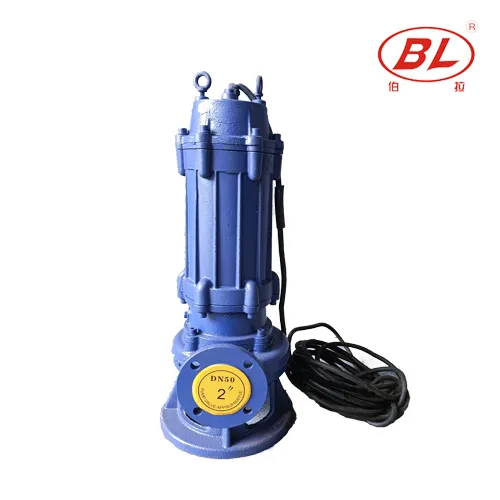
| Sump or pit with dirty water or solids | WQ Submersible Sewage Pump | Confirm solids passage and duty |
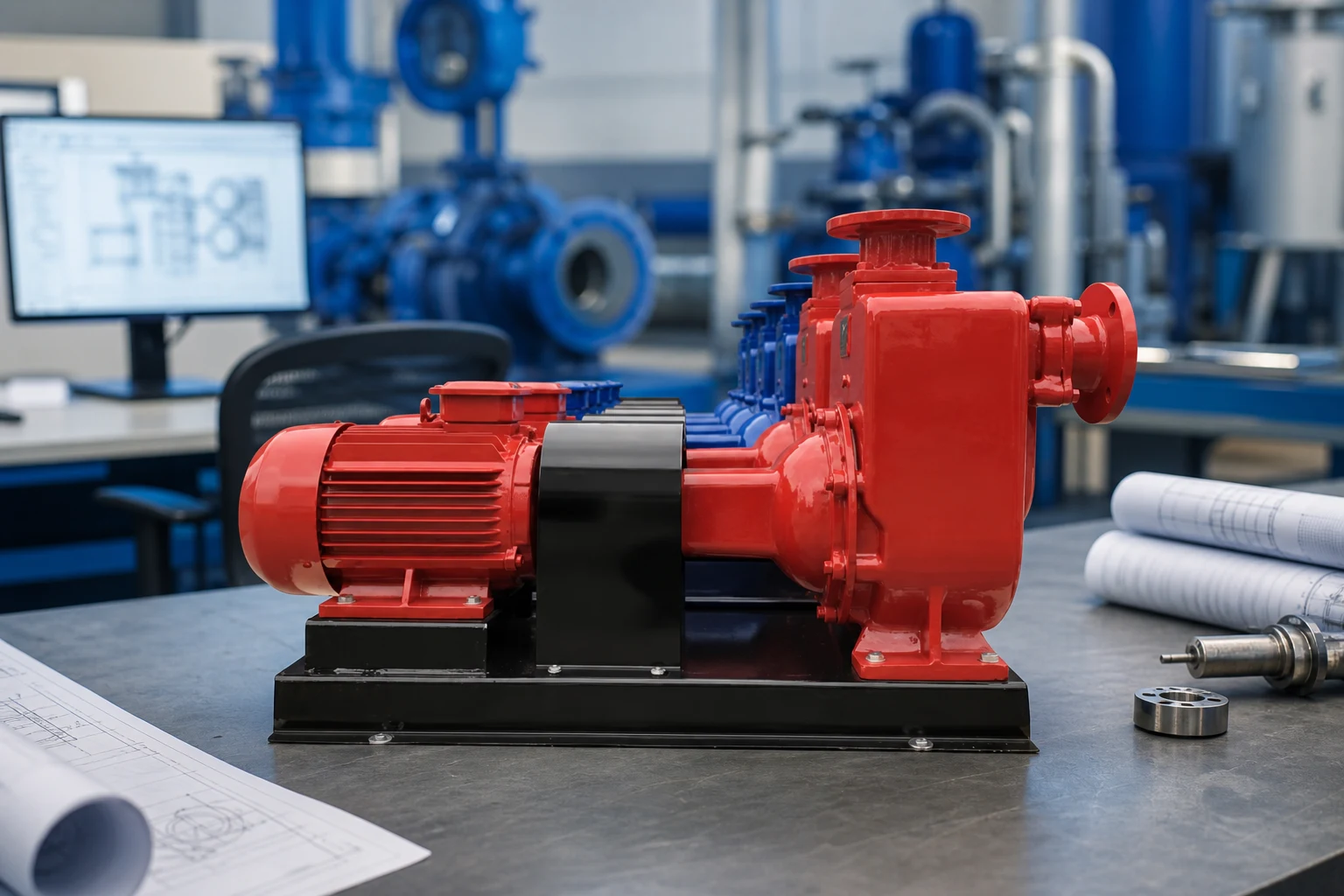
| Open-source clean-water lift | ZX Self-Priming Water Pump for Irrigation | Not a submerged sump default |
| Tank or storage clean-water transfer | IS Clean Water Centrifugal Pump | Flooded suction applications |
RFQ checklist
| Data item | Why the supplier needs it |
|---|---|
| Peak inflow and required flow | Sizes pump |
| TDH breakdown (lift + friction) | Confirms curve fit |
| Basin dimensions and float settings | Validates cycling |
| Liquid type and solids | Selects pump family |
| Discharge location and restrictions | Confirms practical duty |
| Power supply and duty cycle | Matches motor and controls |
| Installation environment | Materials and enclosure |
| Quantity and destination | Export quotation |
Send completed data through contact Borra. For transfer vs pressure boosting elsewhere in the plant, see transfer pump vs booster pump.
Fit Boundary
This article supports installation planning and RFQ preparation. It does not approve a discharge outlet, certify code compliance, or guarantee one model fits every pit.
Part 7. What Are the Fit Boundaries?
Final acceptance depends on local plumbing or stormwater rules, the engineer's layout, and verified pump curves — not on generic installation tips alone.
Do not assume:
- A clean-water sump pump is acceptable for sewage without solids data.
- Discharge to any nearby ditch is permitted without local review.
- Catalogue flow applies at your TDH without a curve check.
Authority having jurisdiction, insurer requirements, and project specifications govern the accepted installation.
FAQ
What is the first step in sump pump drainage installation?
Define water source, basin size, expected inflow, discharge point, vertical lift, pipe route, and solids content before selecting equipment.
Where should sump pump discharge go?
To an approved location that will not return water to the basin or create erosion, nuisance flow, or code conflicts.
Does a sump pump need a check valve?
Most installations use a check valve to reduce backflow into the pit; valve type and location follow the installation design.
How do I size the pump for drainage?
Size from expected flow and total dynamic head, including lift, friction, fittings, and discharge conditions.
Can a clean-water drainage pump handle sewage?
No. Sewage or solids require a pump designed for that medium and stated solids passage.
What causes short cycling in a sump installation?
Small basin volume, tight float differential, leaking check valve, high inflow, or oversized pump for the pit.
Should I use submersible or self-priming equipment?
Submersible pumps fit many sumps; self-priming equipment may fit open-source transfer where the pump stays above the liquid.
What data should I send for a drainage pump quote?
Send flow, TDH, basin depth, liquid type, solids, pipe route, power supply, duty cycle, and installation environment.