
Size diesel fire pump starting batteries from the exact engine and listed controller requirements, including system voltage, battery type, cold-cranking performance at the design temperature, cable length and voltage drop, cranking sequence, charger compatibility, and environmental conditions. Do not substitute a generic amp-hour rule. The engine manufacturer and controller documentation define the minimum starting capability, while the installation must preserve independent, protected starting paths. Keep the calculation and acceptance record with the final project documents so future tests use the same basis.
Seguridad y alcance: Las bombas contra incendios y sus motores son equipos de seguridad para la vida. Los trabajos hidráulicos, eléctricos, diésel, de combustible, de baterías, de presión, de equipos rotativos, de prueba y de deficiencias deben seguir el diseño aprobado vigente, las instrucciones del fabricante, las normas aplicables y la autoridad competente. Esta guía explica la ruta de decisiones de ingeniería; no autoriza cambios en campo, derivaciones ni la operación por personal no calificado.
Start with engine cranking requirements
Obtain system voltage, required cranking current, minimum terminal voltage, cranking duration, and temperature basis from the selected engine package. Treat this as a system condition rather than an isolated component choice. Identify the source of every input, the unit used, the operating condition it represents, and the person responsible for approval. If information is preliminary, mark the assumption and test how the decision changes at a conservative boundary. This prevents a neat calculation from hiding an uncertain water level, pressure, valve position, driver condition, or simultaneous demand.
For diesel fire pump battery sizing, verify this section against the selected pump curve, the actual site arrangement, manufacturer instructions, and the current requirements accepted by the authority having jurisdiction. Check the installed condition as well as the drawing because pipe routes, elevations, supports, controls, and access often change during construction. Record the result in a form that can be repeated during commissioning and later inspection. Do not change a safety-critical setting or isolate fire protection without the approved impairment and restoration process.
Use the correct battery rating
Amp-hours describe stored capacity but do not alone prove starting performance. Check the rating method and cold-temperature cranking capability required by the package. The most useful evidence is measured or approved project data, not a copied rule of thumb. Identify the source of every input, the unit used, the operating condition it represents, and the person responsible for approval. If information is preliminary, mark the assumption and test how the decision changes at a conservative boundary. This prevents a neat calculation from hiding an uncertain water level, pressure, valve position, driver condition, or simultaneous demand.
For diesel fire pump battery sizing, verify this section against the selected pump curve, the actual site arrangement, manufacturer instructions, and the current requirements accepted by the authority having jurisdiction. Check the installed condition as well as the drawing because pipe routes, elevations, supports, controls, and access often change during construction. Record the result in a form that can be repeated during commissioning and later inspection. Do not change a safety-critical setting or isolate fire protection without the approved impairment and restoration process.
Coordinate two starting banks
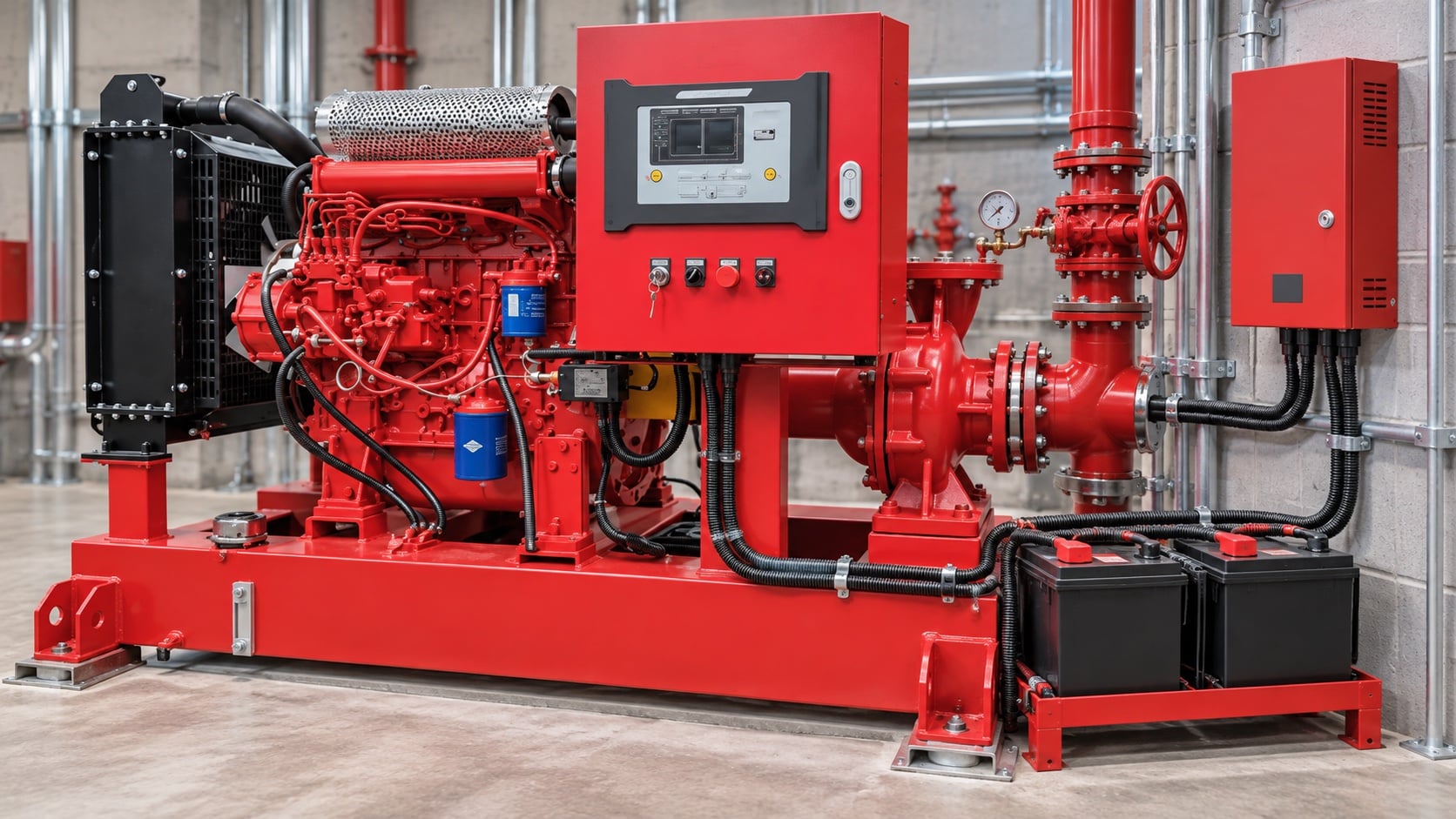
Where the listed arrangement uses two banks, keep cables, isolation, charging, and controller inputs consistent with the approved independent starting sequence. Review this condition at normal, test, and credible abnormal states before procurement. Identify the source of every input, the unit used, the operating condition it represents, and the person responsible for approval. If information is preliminary, mark the assumption and test how the decision changes at a conservative boundary. This prevents a neat calculation from hiding an uncertain water level, pressure, valve position, driver condition, or simultaneous demand.
For diesel fire pump battery sizing, verify this section against the selected pump curve, the actual site arrangement, manufacturer instructions, and the current requirements accepted by the authority having jurisdiction. Check the installed condition as well as the drawing because pipe routes, elevations, supports, controls, and access often change during construction. Record the result in a form that can be repeated during commissioning and later inspection. Do not change a safety-critical setting or isolate fire protection without the approved impairment and restoration process.
Calculate cable voltage drop
Use actual route length, conductor size, terminals, ambient temperature, and cranking current. Short, protected, correctly terminated cables support reliable starting. The design team should turn this point into a traceable calculation or drawing note. Identify the source of every input, the unit used, the operating condition it represents, and the person responsible for approval. If information is preliminary, mark the assumption and test how the decision changes at a conservative boundary. This prevents a neat calculation from hiding an uncertain water level, pressure, valve position, driver condition, or simultaneous demand.
For diesel fire pump battery sizing, verify this section against the selected pump curve, the actual site arrangement, manufacturer instructions, and the current requirements accepted by the authority having jurisdiction. Check the installed condition as well as the drawing because pipe routes, elevations, supports, controls, and access often change during construction. Record the result in a form that can be repeated during commissioning and later inspection. Do not change a safety-critical setting or isolate fire protection without the approved impairment and restoration process.
Tabla de decisiones práctica
| Battery input | Why required | Evidencia |
|---|---|---|
| System voltage | Must match starter and controller | Datos del paquete del motor |
| Cranking current and duration | Defines starting demand | Manufacturer requirement |
| Minimum temperature | Reduces available starting performance | Room design condition |
| Cable route and size | Controls terminal voltage drop | As-built cable schedule |
| Battery type | Must match charger and environment | Approved battery data |
| Test method | Tracks condition over time | Maintenance procedure |
Match the chargers
Confirm charger voltage, chemistry or battery type, capacity, supervision, alarms, and supply. An incompatible charger can undercharge or damage the battery. Treat this as a system condition rather than an isolated component choice. Identify the source of every input, the unit used, the operating condition it represents, and the person responsible for approval. If information is preliminary, mark the assumption and test how the decision changes at a conservative boundary. This prevents a neat calculation from hiding an uncertain water level, pressure, valve position, driver condition, or simultaneous demand.
For diesel fire pump battery sizing, verify this section against the selected pump curve, the actual site arrangement, manufacturer instructions, and the current requirements accepted by the authority having jurisdiction. Check the installed condition as well as the drawing because pipe routes, elevations, supports, controls, and access often change during construction. Record the result in a form that can be repeated during commissioning and later inspection. Do not change a safety-critical setting or isolate fire protection without the approved impairment and restoration process.
Control the environment
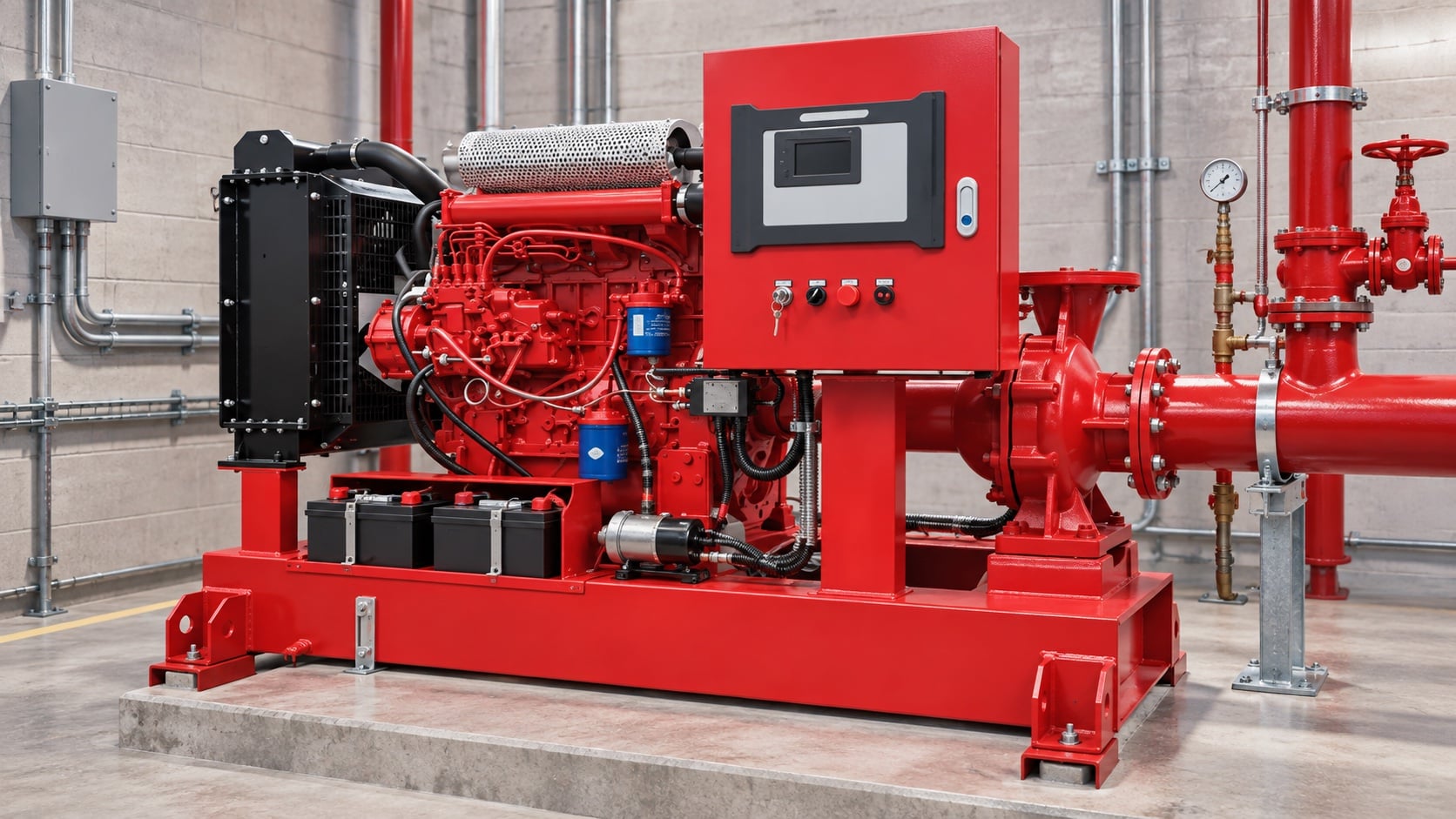
Provide ventilation, temperature protection, containment or trays where appropriate, access, terminal guards, and separation from heat, vibration, water, and fuel hazards. The most useful evidence is measured or approved project data, not a copied rule of thumb. Identify the source of every input, the unit used, the operating condition it represents, and the person responsible for approval. If information is preliminary, mark the assumption and test how the decision changes at a conservative boundary. This prevents a neat calculation from hiding an uncertain water level, pressure, valve position, driver condition, or simultaneous demand.
For diesel fire pump battery sizing, verify this section against the selected pump curve, the actual site arrangement, manufacturer instructions, and the current requirements accepted by the authority having jurisdiction. Check the installed condition as well as the drawing because pipe routes, elevations, supports, controls, and access often change during construction. Record the result in a form that can be repeated during commissioning and later inspection. Do not change a safety-critical setting or isolate fire protection without the approved impairment and restoration process.
Inspect and test condition
Check physical damage, corrosion, electrolyte where applicable, open-circuit and charging behavior, connections, and approved load or conductance tests. Review this condition at normal, test, and credible abnormal states before procurement. Identify the source of every input, the unit used, the operating condition it represents, and the person responsible for approval. If information is preliminary, mark the assumption and test how the decision changes at a conservative boundary. This prevents a neat calculation from hiding an uncertain water level, pressure, valve position, driver condition, or simultaneous demand.
For diesel fire pump battery sizing, verify this section against the selected pump curve, the actual site arrangement, manufacturer instructions, and the current requirements accepted by the authority having jurisdiction. Check the installed condition as well as the drawing because pipe routes, elevations, supports, controls, and access often change during construction. Record the result in a form that can be repeated during commissioning and later inspection. Do not change a safety-critical setting or isolate fire protection without the approved impairment and restoration process.
Document replacement and disposal
Record installation date, model, ratings, test results, charger settings, and replacement criteria. Recycle batteries through an approved route. The design team should turn this point into a traceable calculation or drawing note. Identify the source of every input, the unit used, the operating condition it represents, and the person responsible for approval. If information is preliminary, mark the assumption and test how the decision changes at a conservative boundary. This prevents a neat calculation from hiding an uncertain water level, pressure, valve position, driver condition, or simultaneous demand.
For diesel fire pump battery sizing, verify this section against the selected pump curve, the actual site arrangement, manufacturer instructions, and the current requirements accepted by the authority having jurisdiction. Check the installed condition as well as the drawing because pipe routes, elevations, supports, controls, and access often change during construction. Record the result in a form that can be repeated during commissioning and later inspection. Do not change a safety-critical setting or isolate fire protection without the approved impairment and restoration process.
Cómo se relaciona esto con el equipo BORRAPUMP
BORRAPUMP suministra equipos de bombeo diseñados para proyectos de agua y protección contra incendios. Revise el correspondiente configuración del producto BORRAPUMP como punto de partida, luego presente el flujo requerido, la carga, la fuente de agua, el motor, la potencia, los controles, las condiciones del sitio, los requisitos aplicables, la cantidad y el destino. La selección final debe utilizar la base hidráulica del proyecto y la presentación aprobada; esta guía no afirma que una disposición de catálogo se adapte a todas las jurisdicciones o riesgos.
Guías relacionadas de BORRAPUMP
- Guía de pruebas de aceptación NFPA 20
- Guía de inspección y pruebas de la NFPA 25
- jockey pump package guide
Referencias autorizadas
Las siguientes fuentes establecen el límite normativo, el contexto de seguridad contra incendios y los principios del sistema de bombas utilizados en esta guía. Aplique siempre la edición y la adopción local aceptadas para el proyecto.
- Página de desarrollo de la norma NFPA 20
- Recursos sobre sistemas de bombas del Departamento de Energía de EE. UU.
- Investigación sobre protección contra incendios del NIST
Video educativo
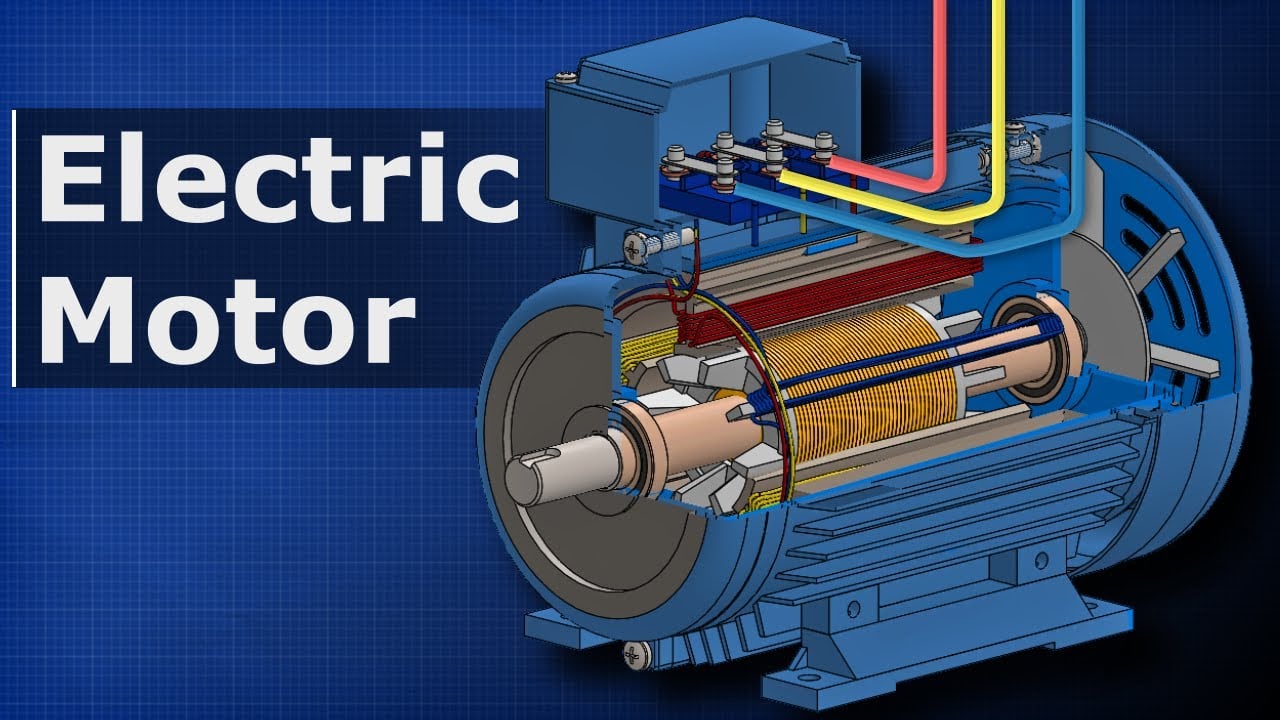
Formación académica por The Engineering Mindset: Cómo funcionan los motores eléctricos: motores de inducción de CA trifásicos. El video respalda el concepto de ingeniería subyacente y no reemplaza los requisitos de protección contra incendios específicos del proyecto.
Preguntas frecuentes
¿Puedo elegir baterías únicamente por amperios-hora?
No. La corriente de arranque, el voltaje durante el arranque, la temperatura, la caída de tensión en los cables y los requisitos del paquete son esenciales.
¿Por qué se utilizan dos bancos de baterías?
El sistema aprobado puede proporcionar trayectorias de arranque independientes para que un banco débil no elimine toda la capacidad de arranque.
¿Puedo mezclar tipos o edades de baterías?
Siga los requisitos del motor y del cargador. La mezcla puede crear una carga desigual y un rendimiento poco confiable.
¿Qué debe registrar un control de rutina?
Registre el estado físico, los terminales, el estado del cargador, el voltaje, las alarmas y el resultado de la prueba de batería aprobada.
Lista de verificación de verificación final
Antes de la aprobación, confirme la base hidráulica, la condición de la fuente de agua, la curva de la bomba seleccionada, los datos del motor y del controlador, las presiones nominales de los componentes, la disposición de las válvulas, el método de prueba, el acceso, el drenaje, las alarmas y el procedimiento de restauración. Resuelva las diferencias entre los planos y el sistema instalado. Durante la puesta en marcha, utilice instrumentos calibrados y registre la presión de succión, la presión de descarga, el caudal, la velocidad, el estado del motor, las alarmas y las observaciones anormales en cada punto requerido. Guarde los resultados aceptados junto con los registros de la sala de bombas para que las inspecciones posteriores comparen elementos equivalentes.