
Diesel dewatering pump refuelling safety starts before the engine is stopped. Confirm that the excavation or work area can tolerate the shutdown, establish approved backup drainage where needed, then shut down and allow the engine to cool according to its instructions. Use the correct fuel, a supervised transfer and suitable spill containment away from drains and watercourses. Check for leaks and restore drainage under controlled conditions. Do not keep a duty pump running during routine tank filling simply because the water level is rising; an inadequate shutdown window needs a revised drainage plan.
This guide covers routine refuelling of temporary diesel-driven drainage equipment. It does not authorize hot refuelling, modify an engine fuel system, or specify a universal cooling time. A fixed remote tank or engineered continuous-fuel arrangement requires its own design and operating procedure.
Treat refuelling as a drainage interruption
A diesel pump may run reliably for hours yet still be vulnerable during its fuel stop. Record the current water level, inflow trend, weather outlook, discharge condition and available storage in the excavation or sump. Determine who will monitor the level while the operator handles fuel. Never rely on a single person noticing both an overflowing tank and a rapidly rising excavation.
If the pump supports groundwater control, the consequences of interruption can include more than wet ground. The project’s geotechnical and temporary-works personnel should determine whether a shutdown could affect stability or access. Do not infer a safe interruption duration solely from pump capacity or an earlier dry-weather observation.
Le dewatering standby pump contingency guide explains how backup duty, discharge routes and changeover arrangements fit together. Refuelling planning uses that provision; it should not become the first occasion on which the standby pump is tested.
Confirm the actual fuel arrangement
Identify the engine and fuel tank, including any remote supply, return line or transfer equipment. Obtain the engine fuel specification and filling instructions. Match the delivery container or bowser to that requirement before opening the filler. A familiar-looking container or nozzle label is insufficient when several fuels or fluids are stored nearby.
Inspect accessible caps, tank surfaces, hoses and connections for damage or leakage. Do not continue routine filling if fuel is already escaping or if the tank condition is uncertain. Make sure that the fill point and vent are understood. Never obstruct a vent to prevent a spill, force a mismatched nozzle into a filler, or improvise a connection to an unfamiliar remote tank.
Record the tank’s permitted filling condition and the means of recognizing the correct fill level. Tank capacity is not an instruction to add that volume. Existing fuel, temperature effects and the installed tank’s design all matter. Avoid using a guessed capacity to plan unattended delivery.
Choose and prepare the filling area
Where practicable, use a designated contained area with stable access and separation from drains, channels, excavations and watercourses. If the pump cannot be relocated without affecting its function, have the site team approve equivalent controls at the actual filling point. Account for rain, uneven ground and the route a spill would follow, rather than placing a drip tray where it is convenient but ineffective.
NetRegs guidance for construction-site refuelling emphasizes controlled fuel storage, spill equipment and practices that reduce releases. It is environmental guidance for Northern Ireland and Scotland. Apply the local site permit and pollution-prevention requirements for the project’s own location.
Have compatible absorbents, drain protection and waste containers ready before transfer begins. The Hawaii construction BMP manual, particularly its vehicle and equipment refuelling section, provides a public construction reference for containment and pollution prevention. Its project requirements should not be copied as universal distances or rules for every site.
Shut down, cool and prevent unexpected starting
Follow the engine and pump instructions for unloading and shutdown. Confirm that stopping the unit will not create an uncontrolled discharge-line movement or unsafe reverse-flow condition. Keep hoses supported and protect the established pumping layout. A refuelling stop is not a reason to disconnect pressurized hoses or leave a discharge route unsecured.
Disable automatic or remote starting by the approved method for that unit. A stopped engine can still restart if a level control or remote command remains active. Maintain any required backup drainage while the duty engine cools. Use the manufacturer’s criteria for safe refuelling rather than inventing a fixed waiting period applicable to every engine, enclosure and ambient condition.
Keep ignition sources and unauthorized people away. Diesel is combustible, and spilled fuel on hot components is a serious concern even though diesel behaves differently from gasoline. If the planned refuelling arrangement cannot keep fuel away from hot surfaces, stop and correct the arrangement before opening the tank.
Use a short readiness table at the pump
This table is a qualitative operational check, not a substitute for the engine manual or the site’s risk assessment.
| Readiness item | What the operator verifies | If the condition is not met |
|---|---|---|
| Drainage continuity | Safe shutdown window or functioning approved backup | Revise the drainage/changeover plan before stopping the duty unit |
| Fuel identity | Engine requirement matches the delivery fuel | Resolve the mismatch before opening the filler |
| Engine condition | Shutdown, cooling and automatic-start controls meet instructions | Keep transfer on hold until the unit is safe to fill |
| Transfer equipment | Compatible nozzle, hose and controllable delivery | Replace damaged or unsuitable equipment |
| Spill route | Drains, watercourses and vulnerable ground are protected | Establish effective containment before delivery |
| Supervision | Trained operator remains able to stop flow | Do not leave the transfer unattended |
| Restart readiness | Caps, hoses, fuel area and pumping route are secure | Correct defects before restoring automatic operation |
Supervise the entire transfer
Position the container, hose or bowser so it cannot overturn, pull on the filler or be struck by passing equipment. Maintain stable footing and a clear escape route. Open the cap according to the engine instructions and avoid leaning over the filler. Prevent dirt and water from entering the tank, especially on muddy sites where a dropped cap can carry contamination directly into the fuel system.
Keep physical control of delivery and watch the fill point throughout. Do not wedge a nozzle open or walk away to inspect the sump while fuel continues to flow. Use an arrangement that allows immediate stopping without reaching over hot equipment. Follow the transfer equipment’s instructions for static and ignition precautions where applicable; do not improvise bonding connections on unknown equipment.
Stop at the specified filling condition. Do not top off after an automatic shutoff simply to extend the next running period. Let residual fuel in the nozzle or hose drain safely as instructed, prevent drips during removal and secure the cap. Inspect the fill point and containment before moving transfer equipment away.
Protect people from exposure
Choose gloves, eye protection and other controls from the fuel safety data sheet and site assessment. Arrange ventilation and avoid inhaling vapor or exhaust. Keep contaminated gloves and clothing from spreading fuel into the cab, welfare areas or clean equipment. Wash exposed skin using the appropriate cleaning method rather than solvents or fuel.
HSE’s fuel-handling guidance SR16 identifies exposure risks from diesel and other vehicle fuels and the need for trained personnel and appropriate controls. Its original context is service and retail work; the useful principles need adaptation to an outdoor construction pumping operation and do not replace a construction-site assessment.
Refuelling and exhaust management are connected but separate tasks. A safe fill does not make an enclosed or poorly ventilated engine location safe. Preserve the approved exhaust route and keep exhaust away from workers, occupied areas and air intakes throughout the restart.
Respond to a spill without washing it away
Stop delivery if it is safe to do so, secure the source and alert the responsible site personnel. Keep people away from contaminated slippery surfaces and ignition risks. Use the site spill procedure to protect drains and watercourses with the prepared equipment. Do not hose spilled fuel into a drain or pump contaminated water through the normal dewatering outlet.
Report the estimated release, affected area, potential water pathways and actions taken. Reporting thresholds and external notification duties depend on the location and permit; the operator should use the site’s current contacts and instructions. Used absorbents and contaminated soil or water need an authorized waste route, not disposal in a general skip without assessment.
A small release inside a tray still needs correction and cleanup before restart. Do not assume containment is effective if rainfall can overflow it or if the tray has a damaged drain plug. Record repeated drips as a maintenance issue rather than accepting them as routine fuel consumption.
Restart with drainage performance in view
Before restarting, confirm that the cap is secure, transfer equipment is clear, fuel residues are removed and no leak remains. Restore the unit’s operating mode using the approved sequence. Check priming and valve positions where the pump procedure requires, then observe discharge, engine behavior and the water-level trend.
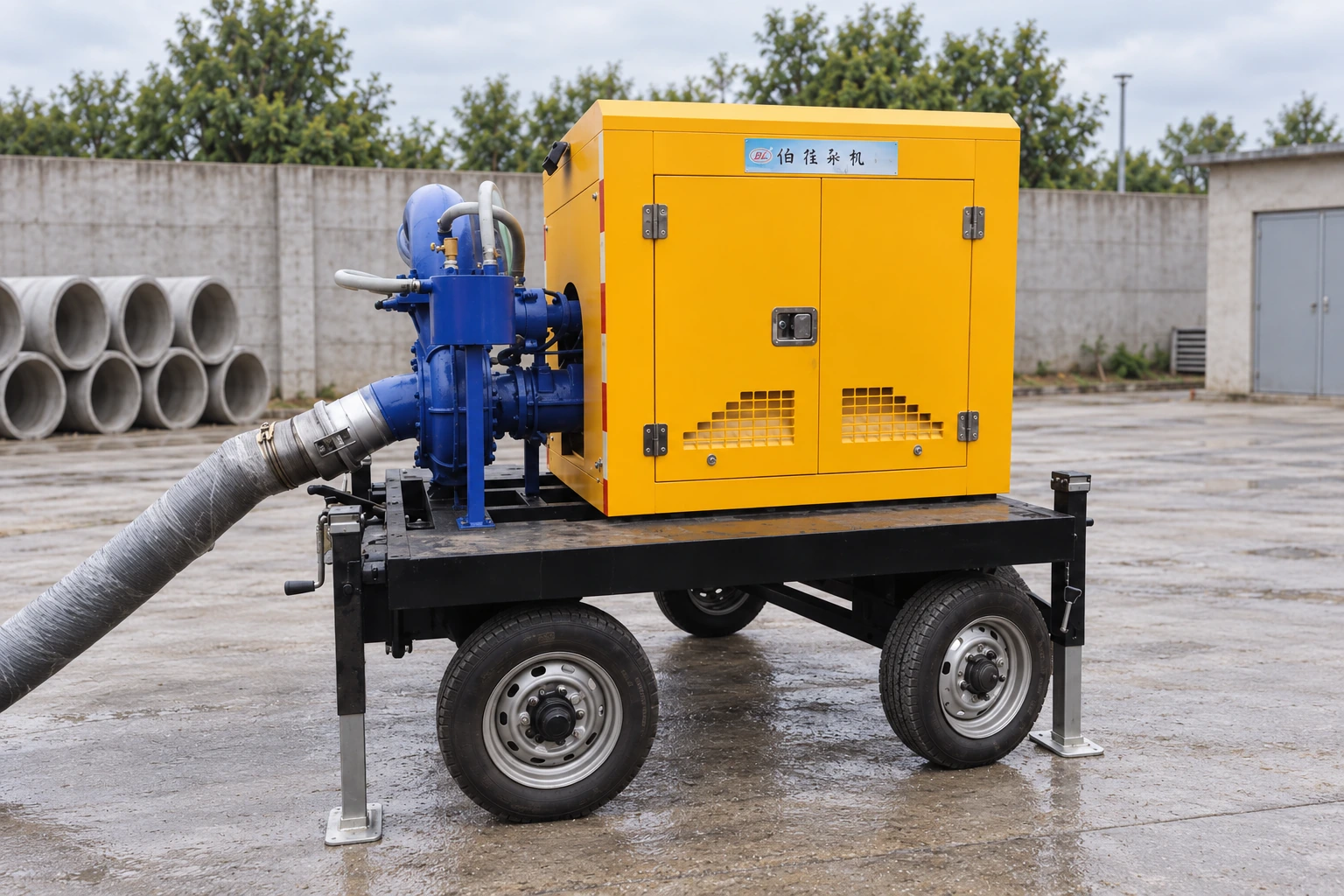
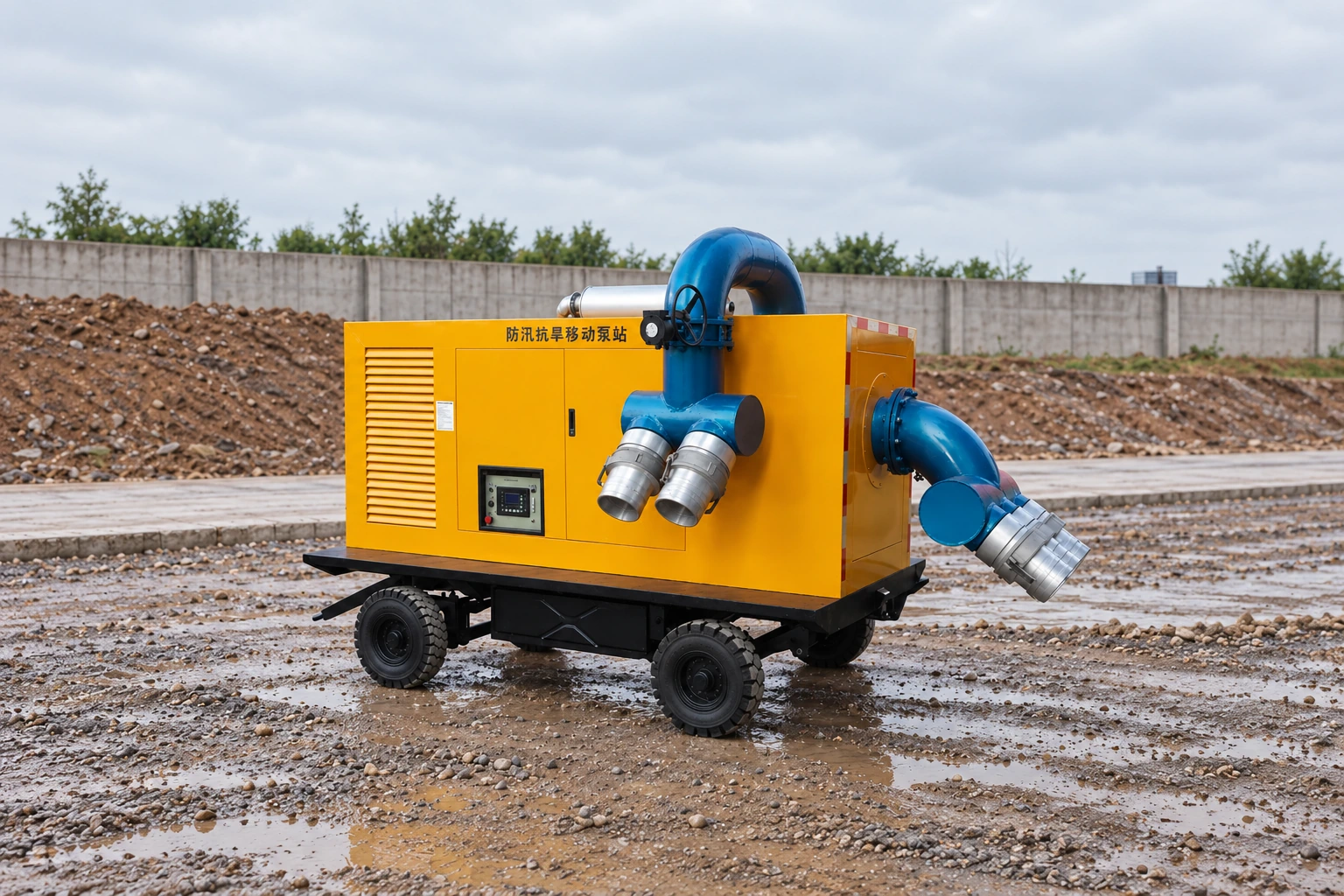
The illustrated Pompe de remorque à moteur diesel mobile ZBCY and other drainage product references show equipment families, not a documented refuelling installation. Verify the delivered engine, tank and control arrangement from the actual package records. The photographs do not establish tank volume, permitted continuous operation or the correct fuel specification.
For the pumping-side restart review, consult the liste de contrôle pour l'installation d'une pompe de relevage. If the unit loses prime or behaves abnormally after the stop, investigate under the pump instructions instead of repeated extended cranking.
Record the next fuel stop before leaving
Log the fuel added, hour-meter reading, water conditions, observed leakage, backup availability and next inspection responsibility. Use actual operating records to plan the next delivery; fuel consumption changes with duty and engine condition. The diesel pump fuel-consumption guide addresses those planning variables separately from the safe transfer process.
The educational video below explains the diesel engine’s combustion cycle. It helps distinguish the engine’s normal internal fuel process from the external tank-filling operation. It is not a refuelling demonstration, and engine shutdown, cooling and fuel-transfer instructions must still come from the installed equipment documentation.

Foire aux questions
Puis-je faire le plein pendant que la pompe diesel fonctionne ?
Routine refuelling should follow engine shutdown and cooling instructions. A rising water level requires a safer drainage or backup arrangement, not an improvised exception for filling a running engine.
Combien de temps le moteur doit-il refroidir avant le ravitaillement ?
Use the installed engine instructions and site conditions. There is no single cooling time that this guide can assign to every enclosure, engine temperature and ambient environment.
Que faire s'il n'y a pas d'endroit sûr pour arrêter la pompe de service ?
Arrange approved standby drainage or revise the temporary-works plan before fuel becomes critical. Escalate the problem while the duty unit still has enough fuel to maintain control.
Le diesel renversé peut-il être lavé dans le puisard et pompé ?
No. Prevent contaminated water entering the normal discharge route, follow the spill plan and arrange appropriate recovery and waste handling through the responsible site personnel.
What should be checked immediately after restart?
Confirm leak-free fuel connections, secure caps, restored operating mode, normal discharge and a controlled water-level trend. Record any abnormal engine or pumping behavior for prompt investigation.